









Choosing a robotic pool cleaner is not just about how well it picks up leaves and dirt. The way a cleaner gets its power can also affect how you use it, how often you need to maintain it, and what it costs to keep running over the years.
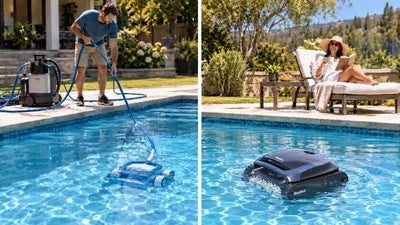
Corded and cordless robotic pool cleaners both handle the main job of cleaning a pool, but they go about it differently. A corded model draws power from an external supply, so it can keep running without waiting for a battery to recharge. A cordless model uses a built-in battery, which means no cable trailing through the water or across the pool deck.
At first, cordless cleaners seem like the easier choice. There is no cable to untangle, no power cord to manage, and fewer restrictions on where the robot can move. But battery life, charging time, and long-term battery replacement are worth considering, especially if you have a large in-ground pool.
So, is going cordless worth it, or does a corded cleaner still make more sense? Let's look at how the two types compare in everyday use.

Corded vs. Cordless Robotic Pool Cleaners: How Do They Work?
The biggest difference between these two types of pool cleaners is where they get their power. That one design choice affects everything from cleaning time to storage and maintenance.
How Does a Corded Robotic Pool Cleaner Work?
A corded robotic pool cleaner connects to an external power supply through a floating cable. The power supply sits outside the pool, while the cable carries power to the robot as it moves underwater.
Because the cleaner does not rely on a built-in battery for its main operation, it can keep running without stopping to recharge. As long as the power supply is connected and the cleaner is operating within its designed conditions, battery capacity is not a limit on cleaning time.
Many corded models also come with a separate control unit. Depending on the model, this unit may let you choose cleaning cycles, set a weekly timer, or adjust other cleaning settings.
The trade-off is the cable. It needs enough length to reach around the pool, and it can twist, tangle, or get in the way if it is not managed properly.
How Does a Cordless Robotic Pool Cleaner Work?
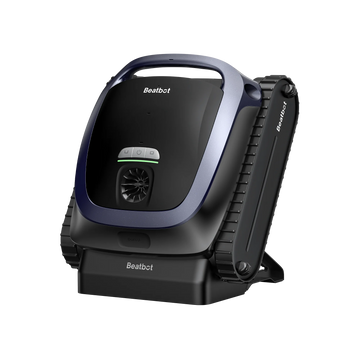
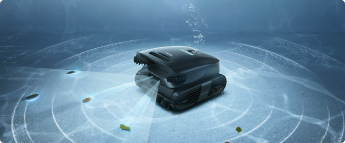
A cordless robotic pool cleaner uses a rechargeable battery built into the unit. Once charged, the robot can move around the pool without being connected to an external power supply.
It's easy to use a robotic pool cleaner without a cable. Simply place it in the water, start a cleaning cycle, and let it work.
The battery does set a limit on how long the robot can run. Once the charge runs low, the cleaner needs to be retrieved and recharged before its next cycle, unless the model has a specific automatic retrieval or docking feature.
Some cordless cleaners also include app controls, smart parking, or automatic water-surface retrieval. These features can make the cleaning process easier, although they vary from one model to another.
Corded vs. Cordless: Key Differences
| Feature | Corded Pool Cleaner | Cordless Pool Cleaner |
|---|---|---|
| Power source | External power supply | Built-in rechargeable battery |
| Cable | Required | Not required |
| Charging | No battery charging for operation | Required |
| Runtime | Not limited by battery capacity | Limited by battery charge |
| Cable management | Required | Not required |
| Cleaning schedule | Available on some models | Depends on the model |
| Retrieval | Cable can help bring the cleaner to the pool edge | Manual or automatic, depending on the model |
| Long-term maintenance | Cable, swivel, motor and other components | Battery, charging system, motor and other components |
If you prefer a corded cleaner, it may simply come down to price and familiarity. It can cost less upfront, and you're already used to plugging it in, running a cleaning cycle, and emptying the filter basket.
A cordless cleaner offers a different experience. No long cable to untangle, pull out of the water, or coil up after cleaning. It's a bit like switching from a traditional vacuum to a robot vacuum at home. Both get the job done, but one makes everyday cleaning much easier.
Cleaning Performance: Power, Suction, and Filtration
Cleaning performance is one of the first things to compare, particularly if your pool collects a lot of leaves, sand, dust, or other debris.
Corded cleaners have an advantage in one important area: they do not need to save battery power to complete a cleaning cycle. But that does not mean every corded model will clean better than every cordless one. Motor design, water flow, brushes, filtration, and navigation all play a part.
Motor Power and Water Flow Rate
A robotic pool cleaner uses its motor and pump system to move water through the cleaner and into its filter. The flow rate describes how much water passes through the system over a given period, usually measured in gallons per hour (GPH).
Higher water flow can help a cleaner move more water through its filtration system, but it does not tell the whole story. A larger GPH figure does not automatically mean stronger suction or better debris collection. Intake design, filter resistance, brush performance, and the way the cleaner moves across the pool all matter.
Corded models can draw power continuously from an external supply, so they do not need to balance cleaning performance against a limited battery charge in the same way. This can give manufacturers more room to design for sustained motor and pump performance.
Cordless models have a different challenge. Their motors, pumps, and cleaning systems all draw energy from the same battery. A design that uses more power may deliver strong cleaning performance, but it can also reduce runtime.

Suction Power and Debris Collection
The type of debris in your pool makes a difference when choosing a cleaner.
Large leaves and twigs need a suitable intake and a basket with enough capacity. Sand, fine dust, and smaller particles place more demands on the filtration system. Some debris also settles into corners or along the pool floor, where the robot needs to reach it with its brushes and suction system.
A corded cleaner can maintain its power supply throughout the cleaning cycle, which is useful when the pool needs a longer cleaning session. A cordless cleaner needs enough battery capacity to maintain its cleaning performance until the cycle ends.
Still, power alone does not decide how much debris a robot collects. Brush contact, intake size, filter design, and navigation all affect the result.
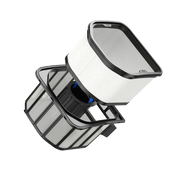
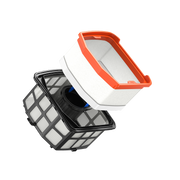
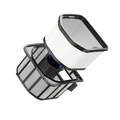
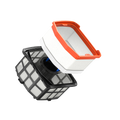
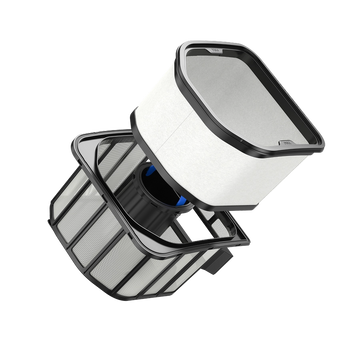
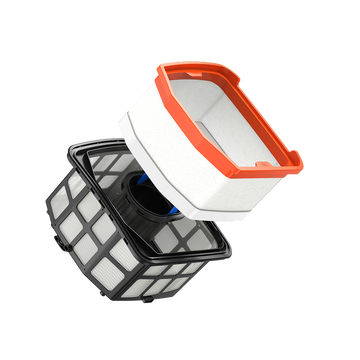
If your pool often collects fine dust and small particles, pay attention to the filter basket and its filtration options. Beatbot offers a double-layer ultra-fine filter accessory for the Beatbot Sora 70, Beatbot Sora 30, and Beatbot Sora 10. It helps capture finer debris that may pass through a standard filter, giving pool owners another option for keeping the water clean.

Filtration Systems: Mesh Filters vs. Fine and Nano Filters
The filter is just as important as the motor. It determines what the cleaner can actually capture as water passes through it.
Basic mesh filters are useful for collecting larger debris such as leaves, insects, and larger dirt particles. They allow water to pass through with relatively little resistance, but they may let finer particles return to the pool.
Fine and ultra-fine filters are designed to capture smaller debris. Some use pleated filter media, which provides more surface area within a compact cartridge. This helps the filter collect finer particles while allowing water to pass through the material.
However, finer filtration can also create more resistance as the filter collects debris. The pump needs to be designed to maintain suitable water flow through that filter. If the filter becomes clogged, performance can drop regardless of whether the cleaner is corded or cordless.
Some pool cleaner discussions suggest that cordless models cannot support fine or Nano filtration because their motors are less powerful. That is too broad a statement. Battery-powered cleaners can use fine filtration too, provided the motor, pump, battery, and filter are designed to work together.
When comparing models, check the available filter options, filtration rating, basket capacity, and whether finer filters are included or sold separately.

Floor, Wall, Waterline, and Surface Cleaning
Power and filtration are only part of the picture. A robotic pool cleaner also needs to reach the areas where dirt and debris collect.
Most in-ground pool owners want more than a robot that moves across the floor. Depending on the model, cleaning coverage may include:
- Pool Floor: Collects settled dirt, sand, leaves, and other debris.
- Pool Walls: Removes dirt and buildup from vertical surfaces.
- Waterline: Scrubs the area where oils, sunscreen, and other residue collect along the water's edge.
- Pool Surface: Collects floating leaves, insects, pollen, and other debris before they sink to the bottom.
- Shallow Areas: Cleans ledges and shallow sections that some robots may struggle to reach.
Surface cleaning and waterline cleaning cover different parts of the pool. Most robotic pool cleaners focus on the floor, walls, and waterline, while floating debris such as leaves, insects, and pollen requires surface skimming.
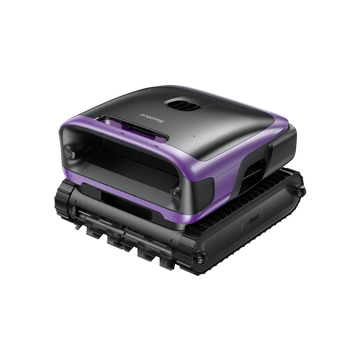
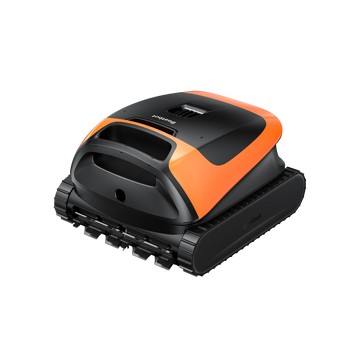
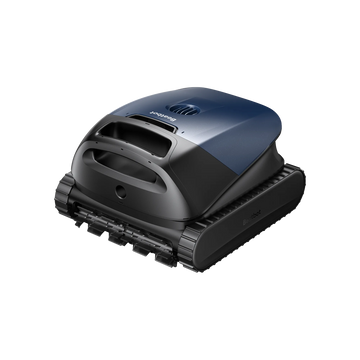
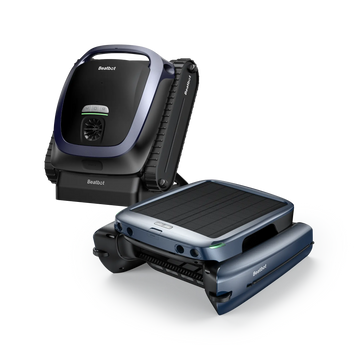
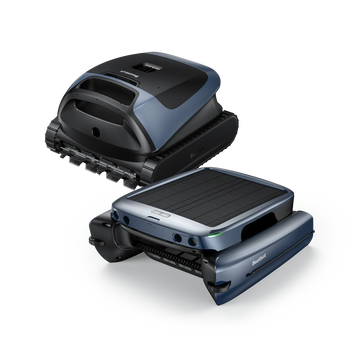
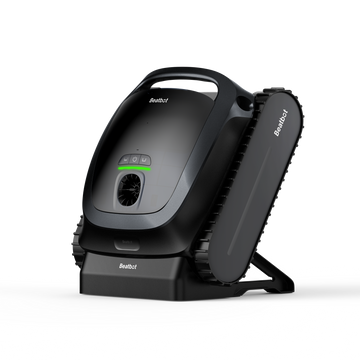
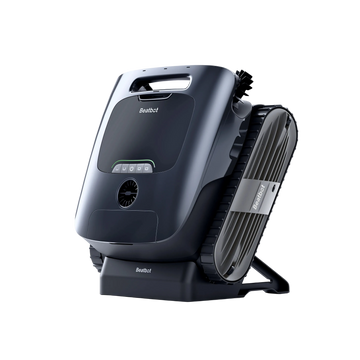
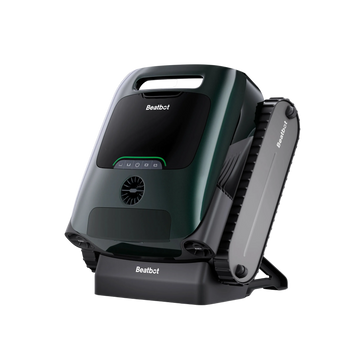
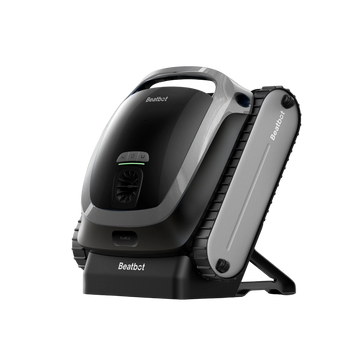
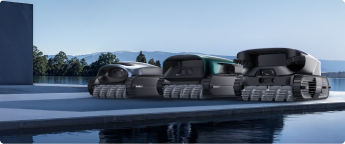
The Beatbot Sora series offers several cleaning options. The Sora 10 and Sora 30, along with the AquaSense 2, provide 3-in-1 cleaning for the floor, walls, and waterline.
The Sora 70 adds surface cleaning and shallow water coverage, while the AquaSense 2 Ultra goes further with a 5-in-1 system that combines floor, wall, waterline, and surface cleaning with water clarification.
If you want one robot to handle more of your pool maintenance, look for models that combine multiple cleaning functions. This can reduce the need for separate cleaning devices and make routine pool care easier.

Runtime and Cleaning Coverage: Continuous Power vs. Battery Limits
Runtime is one of the clearest differences between corded and cordless pool cleaners. A corded model gets power from an external supply, while a cordless model relies on the energy stored in its built-in battery.
This becomes more important when you have a large pool or want the cleaner to handle several areas in one cycle.
How Long Can a Cordless Pool Cleaner Run?
Cordless pool cleaners have different battery capacities and power requirements, so runtime varies by model.
A floor-only cleaning cycle may use less energy than a cycle that also involves climbing walls and scrubbing the waterline. Brush speed, pump operation, pool conditions, and the amount of debris can all affect power consumption and cause the pool cleaner's battery to drain faster.
For example, a cleaner may need more than one cycle to cover a large pool, particularly if it has several cleaning zones or collects a lot of debris. A longer runtime helps, but it does not necessarily mean the robot can clean every part of the pool in one session.
Battery Capacity and Runtime: Examples from Different Brands
Battery capacity is usually measured in milliamp-hours (mAh). A larger battery can store more energy, but it does not automatically mean longer runtime. Motor efficiency, pump power, and cleaning mode all affect how quickly that energy is used.
Here are a few examples of cordless robotic pool cleaners currently available:
| Brand & Model | Battery Capacity | Cleaning Runtime | Charging Time |
|---|---|---|---|
| Aiper Scuba S1 | 7,800 mAh | Up to 3h Standard / 4–4.5h Eco | Approx. 4h |
| Dolphin Liberty 600 | 9,800 mAh | 3h standard cycle / up to 4.5h runtime | Up to 4.5h |
| Beatbot Sora 30 | 10,000 mAh | Up to 5h Floor / 4.5h Floor, Walls & Waterline | Approx. 4.5h |
| Beatbot Sora 70 | 10,000 mAh | Up to 5h Floor / 7h Surface | Approx. 4.5h |
These examples show why it's worth looking beyond battery capacity. The Aiper Scuba S1, for example, uses a 7,800 mAh battery and offers different runtimes in Standard and Eco modes. The Dolphin Liberty 600 has a 9,800 mAh battery and can run for up to 4.5 hours. The Beatbot Sora 30 comes with a 10,000 mAh battery and offers up to five hours of floor cleaning.
The cleaning mode also makes a difference. A robot climbing walls and scrubbing the waterline uses its motor and pump differently from one cleaning only the floor. Some models also have a dedicated surface-cleaning mode, which can run for longer than their underwater cleaning cycles.
What About Robotic Pool Skimmers?
Robotic pool skimmers move across the water surface, collecting leaves, insects, pollen, and other debris before they sink to the bottom.
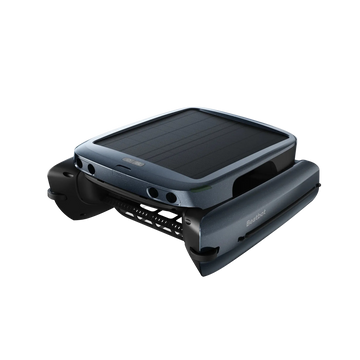
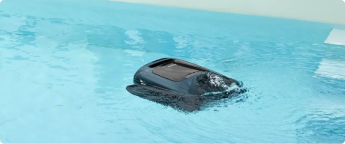
Battery life works a little differently with solar-powered models. For example, the Beatbot iSkim Ultra has a 10,000 mAh battery and a 24W solar panel. It is designed for 24/7 surface cleaning when sunlight is sufficient, with a magnetic wireless charger available when additional charging is needed.
This makes solar-powered skimmers useful for pools that collect leaves and other floating debris throughout the day. Rather than completing one cleaning cycle and returning to the charger, they can stay in the pool and continue working while receiving solar power.
If your pool needs both underwater cleaning and regular surface skimming, a robotic pool cleaner and a separate robotic pool skimmer can work together to handle different types of debris.
How Long Can a Corded Pool Cleaner Run?
Corded pool cleaners draw power from an external supply, so they do not have a battery runtime limit or need to stop for recharging.
Most corded cleaners still operate on preset cleaning cycles. Depending on the cleaner, a cycle may run for a set period before the robot automatically stops. If your pool needs more cleaning, another cycle can usually be started without waiting for a battery to recharge, provided the manufacturer's operating instructions allow it.
This is particularly useful for larger pools or situations where the cleaner needs to run more than once. You still need a suitable power supply and a cable long enough to reach the cleaning areas.
Charging Time and Cleaning Frequency
Battery life is only one part of the equation. Charging time also affects how often you can use the cleaner.
If a cordless robot finishes a cycle and needs several hours to recharge, you may not be able to run another full cleaning cycle straight away. This is not a problem if you only clean the pool a few times a week, but it can become inconvenient during periods of heavy debris or frequent pool use.
A corded cleaner does not have this waiting period. Once the robot is ready and the power supply is connected, it can run another cleaning cycle without needing to recharge a drive battery.
Can a Cordless Cleaner Handle a Large In-Ground Pool?
A cordless robotic pool cleaner can handle a large in-ground pool, but two things matter: the pool's total floor area and its layout. A cleaner designed for a 1,500 sq. ft. pool may not be the right choice for a 3,000 sq. ft. pool, especially if it needs to clean the floor, walls, and waterline in one session.
How Large a Pool Can a Cordless Cleaner Handle?
Most manufacturers list a recommended maximum pool size in square feet (sq. ft.) or square meters (m²). This usually refers to the pool's floor area rather than its water volume. Some brands also specify the maximum pool length, so check how the rating is measured before comparing models.
For example, the Beatbot Sora 10, Sora 30, and Sora 70 are rated for pools up to 3,229 sq. ft. (300 m²). The AquaSense 2 has a similar recommended coverage of up to 3,230 sq. ft. (300 m²). Other brands have different limits. The Aiper Scuba S1, for instance, is designed for pools up to 1,600 sq. ft. (150 m²), while the Dolphin Liberty 600 is rated for pools up to 50 feet long.
These figures give you a useful starting point when choosing a cleaner. If your pool is close to the manufacturer's maximum recommended size, look at the robot's runtime and cleaning modes as well. A cleaner may cover the entire floor in one session but need more time or another cycle to handle the walls and waterline.
If your pool is larger than the recommended coverage, the robot may still be able to clean it, but you could need multiple cycles and additional charging time. Choosing a model with enough coverage for your pool makes regular cleaning much easier.
Can It Handle Deep Ends, Slopes, and Complex Pool Shapes?
Pool size is only part of the picture. In-ground pools come in many shapes, from simple rectangles to round, kidney-shaped, and freeform designs. Some also have sloped floors, deep ends, built-in steps, tanning ledges, and raised platforms.
Most modern cordless robotic pool cleaners are designed to navigate different pool shapes. However, moving across a flat pool floor is not the same as climbing a wall or following a steep slope into the deep end. A robotic pool cleaner for sloped pools needs good traction, effective navigation, and enough motor power to move between shallow and deep areas without slipping or getting stuck.
The working depth is another detail worth checking. For example, the Beatbot Sora 70 operates in water depths from approximately 0.7 to 11.5 feet and can clean shallow platforms in water as low as 8 inches. The AquaSense 2 has a working depth of approximately 1.6 to 9.8 feet. These specifications help determine whether a robot can operate in both the shallow and deep sections of your pool.
Steps and tanning ledges can be challenging for robotic pool cleaners, even if they are designed to climb walls. The robot needs enough traction and clearance to move onto these shallow areas. The Beatbot Sora 70 and Sora 30 both support shallow-water cleaning at depths as low as 8 inches. For platform cleaning, the area needs to be at least 3.3 ft × 3.3 ft (1 m × 1 m), with a water depth greater than 8 inches.
A cordless design can make navigation easier because there is no cable to drag behind the robot or get caught around pool features. Still, the ability to clean a complex pool depends more on the robot's navigation, traction, working depth, and cleaning design than on whether it has a cord.
If your pool has a steep deep end, several steps, or an unusual layout, check the manufacturer's compatibility information for those specific features before buying.
Does Pool Surface Material Affect Cleaning?
Cordless robotic pool cleaners can clean a variety of pool surfaces, including concrete, plaster, pebble, fiberglass, vinyl, and tile. These materials are commonly found in in-ground pools, and most modern robotic cleaners are designed to work across different pool finishes. Just check the manufacturer's recommended pool surfaces before choosing a cleaner.

Automation and Convenience: Which Is Easier to Use?
Convenience is where the two designs start to feel very different. A cordless cleaner removes the cable from the process, but a corded model may offer more scheduling options and does not need to be recharged between cycles.
The better choice depends on what you find more inconvenient: managing a cable or managing a battery.
Weekly Smart Timer and Automated Cleaning
Some corded robotic pool cleaners come with a weekly timer that lets you schedule cleaning sessions in advance. Depending on the model, you may be able to set the robot to run every day, every other day, or on selected days of the week.
Once the schedule is set, the cleaner can start its cycle without you needing to put it in the pool and connect it each time. You still need to check the filter basket and take care of routine maintenance, but the cleaning schedule itself can be largely hands-off.
Cordless cleaners vary more in this area. Some offer app-based scheduling and smart features, while others need to be placed in the pool and started manually for each cycle. Battery charging also needs to be part of the routine.
Managing a Corded Pool Cleaner Cable
The main inconvenience of a corded cleaner is the cable.
During a cleaning cycle, the cable floats behind the robot and moves around as the cleaner travels across the pool. Some models use a swivel connection to help reduce twisting, but that does not mean tangling is impossible.
After use, the cable may need to be laid out and straightened before storage. Leaving it tightly coiled or repeatedly twisting it can put unnecessary stress on the cable over time.
The cable can also stretch across the pool deck, so its position matters if people are walking around the pool. You may need to move it out of the way before using the surrounding area.
There is one small benefit, though. The cable can make it easier to bring the cleaner toward the pool edge for retrieval. You still need to follow the manufacturer's instructions and avoid pulling the robot by the cable if the manual does not allow it.
Retrieving, Charging, and Storing the Cleaner
A corded cleaner usually needs to be switched off and disconnected before you remove it from the pool. After that, you can bring it to the edge, empty the filter basket, and arrange the cable for storage.
A cordless cleaner removes the cable from this routine, but it still needs attention after a cleaning cycle. Depending on the design, you may need to retrieve it manually or use an automatic parking feature. The filter basket needs cleaning, and the battery may need to be connected to its charger.
Some cordless models can move to the water surface or another retrieval point when the cycle ends. This makes removal easier, especially if the cleaner is heavy or the pool is deep. Beatbot also offers Smart Parking on supported models. With a tap in the app, you can guide the cleaner from the middle of the pool to the edge, making it easier to retrieve.
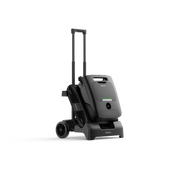
Storage is another difference. A corded cleaner needs space for the robot, cable, and power supply. A cordless cleaner needs space for the robot and charger, and its battery should be stored according to the manufacturer's instructions.
Which Type Requires Less Daily Attention?
There is no single answer for every model. A corded cleaner with a weekly timer can run on a regular schedule without daily setup. A cordless cleaner with app scheduling and automatic parking may also need very little attention.
The difference comes down to the features included with the specific model.
If you want to set a cleaning schedule and leave the robot to work, check its timer and automation features. If you want to avoid cables around the pool, cordless operation has a clear advantage.
Battery Life, Durability, and Long-Term Reliability
A pool cleaner is something you may use for several seasons, so it makes sense to think beyond the first few cleaning cycles. Both designs have parts that wear out, but they have different components to look after.
Battery Degradation and Replacement
Cordless pool cleaners rely on rechargeable batteries, which lose capacity gradually as they go through charge and discharge cycles.
As a battery ages, the cleaner may run for less time between charges. A cycle that once covered the pool comfortably may eventually need more frequent charging or a shorter cleaning program.
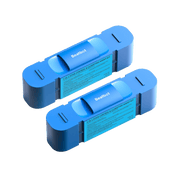
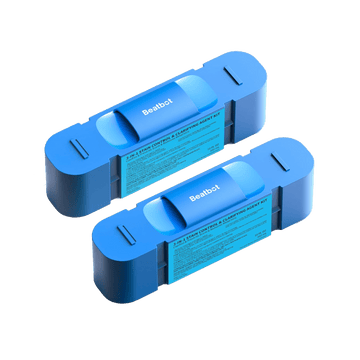
Before buying, check whether the battery can be replaced separately, whether replacement batteries are available, and how much they cost. It is also worth checking whether the warranty covers the battery and for how long.
These details can make a real difference to the cost of keeping the cleaner over several years.
Cable, Swivel, and Component Failures
Corded cleaners avoid the need for a drive battery, but they still have parts that can wear out.
The cable is exposed to regular movement, bending, and twisting. Over time, damage can occur if it is pulled, stored incorrectly, or repeatedly left tangled. Some models also use a swivel connection to help prevent the cable from twisting. This component can wear out and may need servicing or replacement.
The external power supply is another part to consider. It should be kept in the recommended location and protected from conditions that could damage it.
Both corded and cordless cleaners also have motors, brushes, wheels, tracks, filters, and electronic components. These parts can wear out regardless of the power source.
The useful question is not whether one type has no maintenance needs. It is which parts are likely to need attention, how easy they are to replace, and whether the manufacturer can supply them.
Which Type Lasts Longer?
It is tempting to assume that corded cleaners last longer because they do not have a battery that gradually loses capacity. That can be an advantage, but it does not guarantee a longer overall lifespan.
A corded cleaner may still need a replacement cable, swivel, motor, or control unit. A cordless cleaner may need a new battery, but its other components can remain in good condition.
Owner experiences also vary. Some pool owners report using corded cleaners for many years, while others have had problems with cables or electronic components. Cordless owners may have similar differences in experience, depending on the model and how it is used.
For a better idea of long-term reliability, look at warranty coverage, replacement part availability, repair options, and the manufacturer's support history. These are more useful than assuming that every cleaner of one type will outlast the other.
Total Cost of Ownership: Which Is Cheaper?
The purchase price is only the starting point. A cheaper cleaner may cost more to maintain over time, while a more expensive model may offer features that reduce the amount of work involved.
With a corded cleaner, possible future costs include cable or swivel replacement, repairs to the power supply, and other worn components.
With a cordless cleaner, the battery is an additional cost to consider. You may eventually need a replacement, depending on its condition and whether the battery is replaceable. The charger and other electronic components may also need attention.
When comparing prices, consider:
- Initial purchase price.
- Battery replacement cost, if applicable.
- Cable and swivel replacement cost, if applicable.
- Filter and brush replacement.
- Warranty coverage.
- Availability of spare parts and repair services.
A corded model may be cheaper to maintain if its components remain in good condition and it does not need a battery replacement. A cordless model may be worth the extra cost if avoiding cable management makes a noticeable difference to your daily routine.
The best value comes from the cleaner that fits your pool and remains practical to maintain over the years.
Safety: Battery Charging vs. Wired Power Systems
Both types of robotic pool cleaners are designed for use around water, but they have different safety considerations. Cordless models need proper battery care, while corded models rely on an external power supply and a cable connected to the cleaner.
Lithium-Ion Battery Charging Risks
Most cordless robotic pool cleaners use rechargeable lithium-ion batteries. These batteries store a lot of energy in a compact space, but they need to be charged and stored correctly.
Damaged batteries, unsuitable chargers, excessive heat, or incorrect charging conditions can increase the risk of overheating. In severe cases, a damaged lithium-ion battery can experience thermal runaway, which may lead to fire.
Use the charger supplied or approved by the manufacturer, and follow the stated temperature and storage requirements. Do not charge a battery that shows signs of swelling, physical damage, or unusual heat. Keep the charging area suitable for the product and avoid exposing the charger or battery to water.
It is also worth checking whether the battery can be serviced or replaced through the manufacturer rather than attempting repairs yourself.
Electrical Safety of Corded Pool Cleaners
A corded cleaner uses an external power supply, which normally sits outside the pool while a cable connects it to the robot.
The power supply, cable, and electrical protection system must be suitable for pool use. Follow the manufacturer's instructions for placement, connection, and operation. Check the cable regularly for cuts, cracks, or other damage, and do not use the cleaner if any electrical component appears faulty.
Keep the power supply away from water and use the required protective electrical equipment for your location. If the installation or power connection is unclear, ask a qualified electrician rather than improvising an extension or connection.
A corded cleaner does not have the same built-in battery charging concerns as a cordless model, but that does not make it free from electrical risks.
The safer choice is the one that is properly designed, maintained, and used according to its instructions.

Pool Compatibility: Cords, Skimmers, and Automatic Covers
The layout of your pool can affect which type of cleaner is easier to live with. A cord that is manageable in one pool may become a nuisance in another, especially if you have other equipment operating at the same time.
Can a Corded Pool Cleaner Interfere with a Robotic Skimmer?
A robotic pool cleaner works underwater, while a robotic skimmer moves across the water surface. Since they operate in different areas, they can often be used as part of the same pool-cleaning setup.
The cable on a corded cleaner can still create an issue. It may float near the surface or move through areas where the skimmer travels. Depending on the pool layout and the movement of both robots, the cable could get in the skimmer's way or become caught around it.
A cordless cleaner removes the cable from the equation, making it easier to run alongside a robotic skimmer. You should still check the operating instructions for both devices and watch how they move during their first few shared cleaning cycles.
Can You Use a Corded Cleaner with an Automatic Pool Cover?
An automatic pool cover adds another detail to consider.
The cable from a corded cleaner needs to stay clear of the cover's moving parts. If it runs across the cover's path, the cover could catch or pinch it when closing. Depending on the pool layout, you may also need to plan where the power supply sits and how the cable reaches the water.
Some pools can accommodate a corded cleaner without much trouble. Others may need a different cable route or may not have enough space to keep the cable clear.
Never assume that an automatic cover can close safely over a cleaner cable. Follow the instructions for both the cover and the pool cleaner, and remove or reposition equipment before closing the cover unless the manufacturers specifically allow otherwise.
A cordless cleaner avoids this particular cable problem, although you still need to make sure the robot has been retrieved or parked safely before closing the cover.
Does Pool Size and Layout Affect Your Choice?
Pool size is important, but the surrounding setup matters too.
If your pool is far from the power supply, a corded cleaner may need a longer cable or a more carefully planned setup. The cable also needs enough room to move without catching on steps, ladders, or other equipment.
A cordless cleaner removes those cable restrictions, which can be useful in pools with unusual shapes or limited deck space. However, you still need enough battery capacity to cover the entire pool.
Think about how you use the pool as well. If you have an automatic cover, a robotic skimmer, or several other pieces of equipment, a cordless cleaner may make the overall setup easier to manage.
Corded or Cordless: Which Robotic Pool Cleaner Should You Choose?
After looking at the differences, the choice between corded and cordless cleaners comes down to how you prefer to maintain your pool.
A corded cleaner can be a practical choice if you want to spend less upfront and are already comfortable with the cleaning routine. Connect the power supply, start a cleaning cycle, and empty the filter basket when the job is done. You don't need to check battery levels or wait for the next charge. If you're happy with this setup, a corded model can still be a reliable option.
A cordless cleaner offers a more convenient way to handle everyday pool cleaning. There's no long cable floating in the water, stretching across the pool deck, or getting tangled around other equipment. Once the cleaning cycle is finished, you simply retrieve the robot, empty the basket, and recharge it. There's no wet cable to pull out and coil up after every use. For pool owners who also use a robotic skimmer or have an automatic pool cover, going cordless can make the whole setup easier to manage.
It's similar to the shift from traditional vacuum cleaners to robot vacuums at home. Both get the job done, but a robot vacuum takes more of the daily work off your hands. Cordless pool cleaners offer a similar change in how you look after your pool.
Before making a decision, think about your pool size, cleaning requirements, and how often you plan to run the robot. A corded model gives you continuous power without battery charging, while a cordless model gives you more freedom around the pool. The right choice is the one that fits your pool and the way you want to maintain it.
What Should You Check Before Buying?
Before choosing a model, look beyond whether it is corded or cordless. A few product details will tell you much more about how well it will work in your pool.
| Buying Factor | What to Check |
|---|---|
| Pool Size | Recommended pool size and cleaning capacity |
| Pool Shape | Navigation and coverage in corners, steps, and curved areas |
| Cleaning Coverage | Floor, walls, waterline, surface, and shallow areas |
| Motor Performance | Water flow and overall cleaning performance |
| Filtration | Filter type, filtration level, and basket capacity |
| Runtime | Actual cleaning time per cycle |
| Charging | Charging time and battery replacement options |
| Automation | Weekly timer, app control, and automatic parking |
| Maintenance | Replacement filters, brushes, cables, or batteries |
| Warranty | Coverage for the battery, cable, motor, and other components |
It is also worth checking how easy it is to retrieve the cleaner and clean its filter basket. A robot that performs well but is difficult to remove or maintain can become frustrating over time.
The best choice is the one that matches your pool, cleaning habits, and willingness to handle either cable management or battery charging.
FAQs
Are Cordless Robotic Pool Cleaners as Powerful as Corded Models?
They can be, but it depends on the design. Corded models have a continuous power supply, while cordless models need to balance motor performance with battery capacity. Motor efficiency, water flow, brushes, and filtration all affect cleaning results, so compare individual models rather than judging by power source alone.
Do Cordless Pool Cleaners Have Enough Battery Life for Large Pools?
Some do. Check the manufacturer's recommended pool size, advertised runtime, and cleaning coverage. A cleaner that handles the floor, walls, and waterline may use more energy than one running a floor-only cycle. Make sure its runtime suits the size and shape of your pool.
Do Corded Robotic Pool Cleaners Get Tangled Easily?
They can, although the risk depends on cable length, pool shape, navigation, and whether the model has a swivel connection. Some cable twisting is normal, and regular straightening and proper storage can help reduce problems. A swivel can help manage twisting, but it does not eliminate every chance of tangling.
Are Corded Pool Cleaners More Reliable Than Cordless Models?
Not necessarily. Corded models avoid battery degradation, but their cables, swivel connections, motors, and power supplies can still wear out. Cordless models add a battery and charging system, which may need attention over time. Warranty coverage, replacement parts, and repair support are useful indicators when comparing long-term reliability.
Can You Run a Robotic Pool Cleaner and Pool Skimmer at the Same Time?
In many pools, yes. However, a corded cleaner's cable may interfere with a floating robotic skimmer, depending on how both devices move. A cordless cleaner removes this cable-related issue, but you should still check the instructions for both products before running them together.
Are Cordless Robotic Pool Cleaners Worth the Extra Cost?
They can be worth it if avoiding cables makes cleaning easier for you. You get more freedom around the pool and do not need to manage a floating cable. However, you also need to consider battery runtime, charging time, and eventual battery replacement. Compare the full cost and features rather than looking at the purchase price alone.