Most Popular


 Sora Series


 AquaSense Series

 Skimmer & Bundle

 Retail Edition


 Accessories


Choosing the best salt water pool system comes down to matching the system to your pool, not picking one brand off a list. A salt water pool system is a salt chlorine generator that turns dissolved pool salt into chlorine, so your water stays sanitized without buying, storing, or dosing chlorine every week. The right one for you depends on your pool's gallons, whether it sits above ground or in-ground, and how it plumbs into your existing equipment. A salt water system is worth it if you want softer water and far less weekly chemical work, and you accept a higher upfront cost plus a salt cell you replace every few years. The one thing it will not do is remove leaves, sand, and algae, so you still need a way to physically clean the pool.

What Is a Salt Water Pool System and How Does It Work?
A salt water pool system is a chlorine generator, not a chlorine-free pool. It dissolves ordinary pool-grade salt into the water and uses electrolysis to split that salt into chlorine, which sanitizes the pool the same way traditional chlorine does. The salt is not consumed in the process. After the chlorine does its job, it reverts to salt and gets reused, which is why you rarely add more.
The system has two main parts. A control box mounts near your pump and filter and sets how much chlorine the pool produces. A salt cell plumbs into the return line, where coated metal plates carry a low-voltage charge that generates chlorine as water passes through. Most residential salt water pools run best at a salinity of around 3,000 to 3,400 parts per million, roughly a tenth as salty as the ocean and closer to the salinity of a human tear. That low level is why the water feels soft rather than briny.
The real value is consistency. Instead of a weekly dose that spikes and then fades, the cell produces a steady stream of chlorine around the clock. Stable sanitizer levels help prevent algae blooms and the sharp chlorine smell that comes from chloramine buildup in an unbalanced pool.

Are Salt Water Pool Systems Worth It?
Salt water pool systems are worth it for most owners who want lower weekly effort and a more comfortable swim, and who plan to keep the pool for several years. The upfront cost runs higher than a chlorine setup, usually over $1,000 for the unit before installation, but you stop buying tablets and shock and no longer handle harsh chemicals by hand.
The comfort difference is why many people switch. The water feels softer and gentler on skin, eyes, and hair, without the heavy chemical odor that comes from chloramines. Because chlorine is generated on a schedule, sanitizer stays consistent, which cuts the swings that lead to cloudy water and green algae.
A salt water system is not maintenance-free. You still test and balance pH and alkalinity, clean the salt cell periodically, and boost chlorine during heat waves. The salt cell also wears out and gets replaced every few years at a cost of a few hundred dollars, and salt is mildly corrosive to metal over time. For an owner who keeps the pool long enough to offset the equipment cost, the lower chemical workload usually makes a salt system pay off.
What to Look For in the Best Salt Water Pool System
The best salt water pool system is the one sized and plumbed for your specific pool, so the decisions that matter most are cell capacity, system type, and the cell wear that drives long-term cost. Getting those three right matters far more than any single feature on the box.
The single most useful move is to size the cell above your pool's actual volume, not exactly to it. A salt cell is rated for a maximum number of gallons, and matching that rating to your pool is a common mistake. Sizing the cell for roughly 1.5 to 2 times your real volume lets it make the chlorine you need at a lower duty cycle, so it runs fewer hours at full output, holds up better through peak summer heat and heavy swimmer loads, and wears out more slowly. A cell run constantly at its limit is the most frequent reason owners feel let down by salt, since it struggles to keep chlorine up in the hottest weeks and reaches replacement sooner.
System type is the next decision, and it usually follows from whether your pool is above ground or in-ground. There are three common ways a salt system connects to a pool, and each carries a real trade-off.
|
System Type |
Best For |
Installation |
Pool Type |
|---|---|---|---|
|
Return-Jet |
Simplest setup |
Connects to return fitting |
Above ground |
|
Hard-Plumbed Inline |
Permanent installs |
Plumbed into return line |
In-ground |
|
Drop-In |
No plumbing needed |
Hangs over pool wall |
New or existing |
Return-jet units attach to a pool's existing return fitting and install in under an hour, which makes them the practical default for most above-ground pools, though their output and cell size are geared to smaller volumes. Hard-plumbed inline systems cut into the return line and pair with a flow switch, giving in-ground pools permanent, automated operation and the widest output range, at the cost of a more involved install. Drop-in units hang over the wall and need no plumbing at all, so they fit an existing pool or a quick conversion, with the trade being a visible unit in the water and generally lower capacity than a plumbed system.
The part that decides your long-term cost is the salt cell, so treat it as a wear item, not permanent hardware. The cell holds titanium plates coated with trace metals such as ruthenium and iridium, and electrolysis slowly erodes that coating until the cell stops making chlorine. Most titanium cells are rated for around 10,000 operating hours, which works out to roughly 3 to 7 years in normal use depending on run time and water balance. Replacing one is the single biggest recurring expense of a salt water pool, commonly several hundred to over a thousand dollars, and cell prices have climbed in recent years as the rare metals in the coating get more expensive. Two habits stretch that life in practice. A reverse-polarity self-cleaning cell flips its charge on a cycle to shed scale before it hardens, and holding calcium hardness in range, generally under about 400 ppm, slows the scaling that eats into the coating. When you compare two systems, a longer rated cell life and a longer cell warranty lower what you actually spend over the years more than a lower sticker price does.
Chlorine output is the last spec to check, and it has to cover your pool at its hardest, not its easiest. Salt systems are rated by how much chlorine they can produce per day, and a large pool under strong sun with daily swimmers needs far more daily output than a shaded, lightly used pool of the same size, since warmer water and heavier bather loads both raise chlorine demand. Under-buying on output leaves you dosing chlorine by hand in midsummer, which defeats the reason for going salt. Confirm the unit works with your existing pump and filter flow so the flow switch reads enough water movement to run, and decide up front how you will physically clean the floor, walls, and waterline, since the salt system handles chemistry only.

What Salt Water Does to Your Pool Equipment
Salt water is gentle on swimmers but hard on equipment, and over time it can corrode metal ladders, light fixtures, heaters, screws, and unsealed stone coping. The corrosion is manageable, but it is the reason a salt water pool asks for a bit more care around anything metal in or near the water.
The standard protections are straightforward. Bonding all metal components to a common ground, sealing porous stone and natural-stone decking, and rinsing salt off fixtures all slow the wear. Fiberglass and vinyl surfaces handle salt with no issue, and concrete, plaster, and pebble finishes are fine as long as the porous materials around them stay sealed.
The same rule reaches past the salt cell and fixtures to anything that lives in the water. Equipment submerged in salt water for hours at a time has to be built to resist corrosion, so a pool cleaner meant for a salt pool should be salt-tested and cordless, which spares it the wet electrical connections that salt attacks first.

How to Keep a Salt Water Pool Clean
A salt water system controls your water chemistry, but it does nothing about physical debris, so keeping a salt water pool clean still means removing leaves, sand, dirt, and algae from the floor, walls, and waterline. Brushing and skimming by hand works, and many owners pair the salt system with a robotic pool cleaner to automate that job.
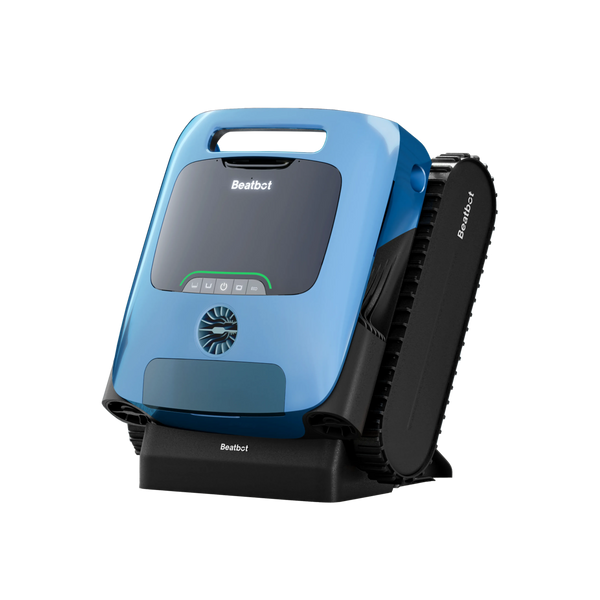
In a salt pool, the cleaner itself sits in corrosive water for hours, so how well it resists salt matters as much as how it cleans. The Beatbot Sora 70 robotic pool cleaner is validated through 480 hours of salt-spray testing, a standard accelerated-corrosion test for salt durability, and it charges through titanium contacts, which hold up at the metal connection points where salt corrosion tends to start. It cleans the whole pool, using its JetPulse system to pull floating debris off the surface before it sinks and becomes floor debris, then working the waterline, walls, floor, and shallow areas as low as 8 inches. A 6L basket and up to 5 hours of floor cleaning per charge suit pools under heavy leaf fall, and it carries a 3-year warranty.
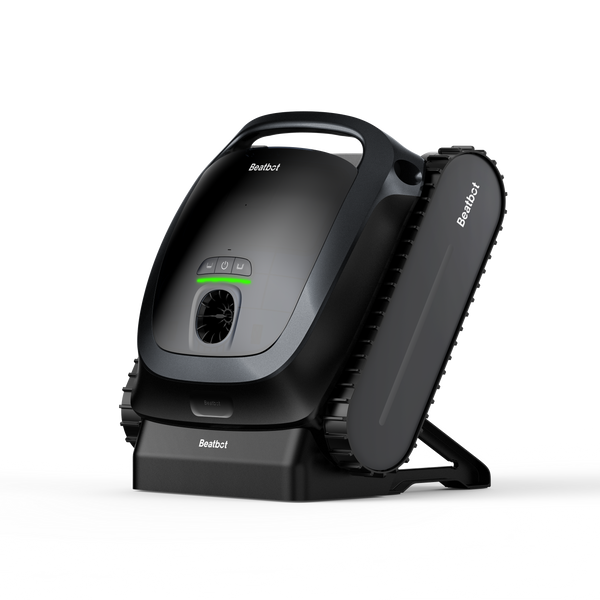
The Beatbot Sora 30 cordless robotic pool cleaner meets the same salt standard, with the same 480-hour salt-spray validation and titanium charging contacts, and focuses on the floor, walls, waterline, and shallow or platform areas down to 8 inches. Its 5L basket and up to 5 hours of floor cleaning cover pools up to about 3,200 square feet, with a 2-year warranty. The choice between the two is the water surface. The Beatbot Sora 70 skims floating leaves as part of its cycle, while the Beatbot Sora 30 cleans everything below it, so choose the Sora 70 for a pool under trees and the Sora 30 where surface debris is not the issue.

FAQs
Does salt water pool water taste salty?
Not really. A salt water pool sits around 3,000 to 3,400 parts per million, while the ocean is more than ten times saltier at about 35,000 ppm. The water feels soft and silky rather than briny, closer to the mild salinity of a tear than a mouthful of sea water.
Can I convert my chlorine pool to a salt water pool?
Yes, and it is a common upgrade. A technician installs the salt chlorine generator into your existing plumbing, you balance the water, then add pool-grade salt and switch the system on. No new pool shell is needed, and the same pump and filter usually stay in place.
How often do I need to add salt?
Rarely. Salt is recycled continuously as the generator converts it to chlorine and back, so you only top it off after losing water to heavy splash-out, filter backwashing, or a big rain overflow. A salinity test a few times a season tells you when a bag or two is due.
Are salt water systems safe for above-ground pools?
They are, but the pool has to be built for salt. Look for above-ground models with corrosion-resistant walls, panels, or resin frames, since standard steel and some fixtures degrade faster in salt water without that protection.