Most Popular


 Sora Series


 AquaSense Series

 Skimmer & Bundle

 Retail Edition


 Accessories


The best robotic pool cleaners for inground pools clean floors, walls, and the waterline in a single cycle, handle debris ranging from fine sand to heavy leaves, and float to the surface when the job is done. A few models now go further by skimming floating debris off the water surface and clarifying water chemistry between filter runs.
The three cordless models covered here, the Beatbot AquaSense 2 Ultra, the Beatbot Sora 70, and the Beatbot Sora 30, each target a different priority: full-coverage automation, heavy-debris performance, and core cleaning value. The sections below establish how to evaluate each dimension, then rate each model against it.
What to Look For in a Robotic Pool Cleaner for Inground Pools

Cleaning Coverage
Floor-only robots miss the waterline, which is where algae and bacteria accumulate fastest. For any inground pool, floor, wall, and waterline coverage is the minimum standard in 2026. Models that also clean the water surface eliminate manual skimming.
Suction Power and Filtration
Suction power, measured in gallons per hour (GPH), determines whether a cleaner captures debris or just pushes it around. Below 4,000 GPH, most robots struggle with wet leaves and acorns. Mid-range models sit between 4,000 and 5,500 GPH; higher-performance cleaners reach 6,000 GPH and above. Fine filtration at 150 microns or below traps the sand and pollen that coarse filters miss.
Navigation
Random-pattern robots waste time and miss spots in larger inground pools. Sensor-based or AI-driven path planning maps the pool and routes the cleaner efficiently, reducing overlap and eliminating missed patches.
Runtime
Pools under 1,000 square feet can get by with 90 to 120 minutes. Between 1,000 and 2,000 square feet, plan for at least 3 hours. Pools over 2,000 square feet benefit from 4 to 5 hours of continuous cleaning.
Retrieval
Lifting a 20-plus-pound machine out of a deep end multiple times a week gets old fast. Smart surface parking, where the robot floats up and drains its internal water automatically, cuts the retrieval weight roughly in half and brings the robot to the pool edge for you.
Pool Surface Compatibility
Inground pools are built from concrete, gunite, ceramic tile, vinyl, or fiberglass. Track-based treads with roller brushes grip rough concrete and tile. Guide wheels and non-abrasive brushes protect smoother vinyl and fiberglass from scuffing. A mismatch means poor wall climbing on textured pools or surface damage on smooth ones.
Warranty and After-Sales
Robotic pool cleaners run in a harsh environment of water, chemicals, and UV exposure. A longer warranty reduces the long-term cost of ownership, and a full machine replacement policy means less downtime than a repair-and-return process. Two years is standard in 2026; three years with full replacement is the strongest coverage currently available.
Best for Full Coverage: Beatbot AquaSense 2 Ultra
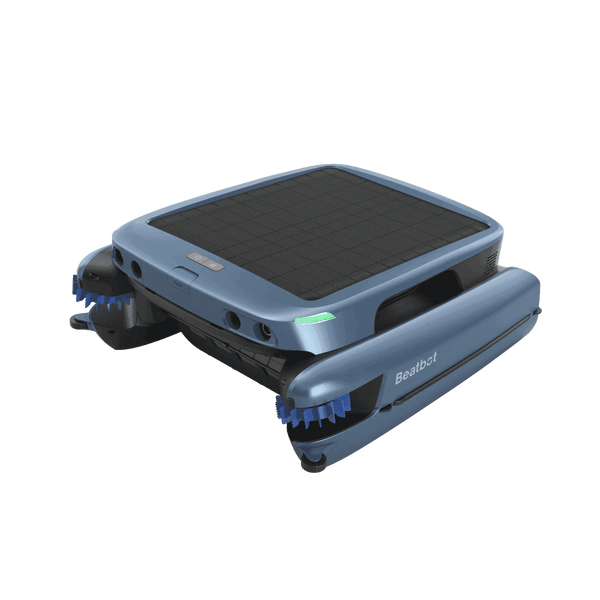
The Beatbot AquaSense 2 Ultra robotic pool cleaner covers all five pool zones: floor, walls, waterline, water surface, and water clarification. That means one robot handles submerged cleaning, floating debris, and water chemistry in a single cycle, removing the most manual tasks from a pool owner's routine.
Its HybridSense Pool Mapping uses an AI camera combined with 27 sensors, including dual time-of-flight, infrared, and ultrasonic sensors, to build a real-time map of the pool. S-shaped patterns cover the floor; N-shaped patterns handle walls and the waterline.
Pools with complex layouts, islands, steps, or L-shapes get full coverage without repeated missed corners. AI-powered cruise debris detection identifies remaining debris like leaves and targets them directly, so the robot spends time where dirt actually is rather than following a fixed route.
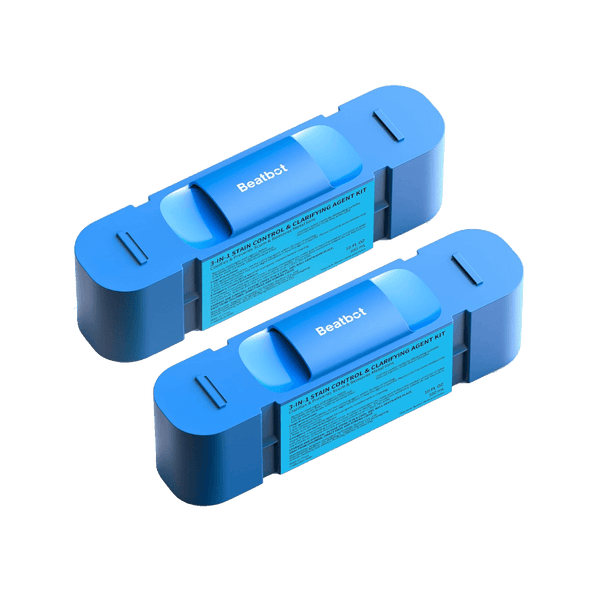
Surface cleaning runs through dedicated propellers and dual side brushes that sweep floating leaves and insects toward the top-front suction port, eliminating the daily skimming chore. The ClearWater clarification system automatically dispenses a natural, skin-safe clarifier derived from recycled crab shells, binding microscopic particles into larger clumps so they sink and get vacuumed up. One 300ml kit lasts about a month with weekly use, replacing manual clarifier dosing.
The 13,400mAh battery delivers up to 5 hours of floor cleaning and up to 10 hours of surface cleaning, covering pools up to 3,875 square feet. Dual-layer filtration captures particles down to 150 microns. Six side guide wheels and track-based treads maintain grip across concrete, tile, vinyl, and fiberglass.
AI-powered path planning detects and cleans platforms with water depths greater than 13.7 inches. When the cycle finishes, SmartDrain technology floats the robot to the surface and releases internal water for a one-hand lift from the pool edge. A wireless charging dock keeps the robot ready between cycles.
The 3-year full machine replacement warranty covers defects with a new unit rather than a repair-and-return process, reducing downtime for a robot that runs across this many cleaning zones.
Best for: Large or complex inground pools where full automation, AI navigation, surface skimming, and water clarification are all priorities.
Best for Heavy Debris: Beatbot Sora 70
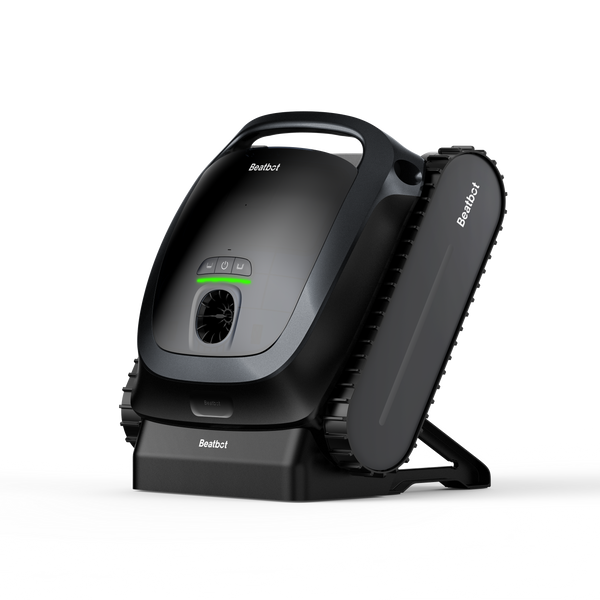
The Beatbot Sora 70 robotic pool cleaner delivers 6,800 GPH of suction through its center-mounted HydroBalance pump. That flow rate powers through fine sand, whole leaves, and post-storm debris without clogging. The ultra-large 6L filter basket handles full autumn cleanups or post-storm passes start to finish without mid-cycle emptying.
Floating debris is still debris. The Sora 70 handles water surface cleaning alongside floor, wall, and waterline coverage. Its JetPulse technology uses twin water jets to create converging streams that push floating leaves and pollen toward the central suction inlet while blocking debris from bypassing around the sides. Four guide wheels bring the robot closer to walls and corners where debris collects, and app-controlled targeting lets you direct it to problem areas.
Dual ultrasonic sensors (SonicSense) detect obstacles at the front and measure platform heights at the bottom, keeping the robot moving through cluttered environments without getting stuck or missing sections. Twin 5-inch roller brushes with independent left-right control create a 10-inch cleaning path, maintaining scrubbing contact even on debris-covered floors. The Sora 70 works across concrete, ceramic tile, vinyl, and fiberglass.
The 10,000mAh battery provides up to 5 hours of floor cleaning and up to 7 hours of surface cleaning, covering pools up to 3,230 square feet. Smart surface parking with SmartDrain brings the robot to the surface and releases internal water for easy retrieval. The Sora 70 comes with a 3-year warranty.
Best for: Pools with heavy leaf fall, large debris loads, or frequent post-storm cleanup where suction power and filter capacity matter most.
Best Value Robotic Pool Cleaner for Inground Pools: Beatbot Sora 30
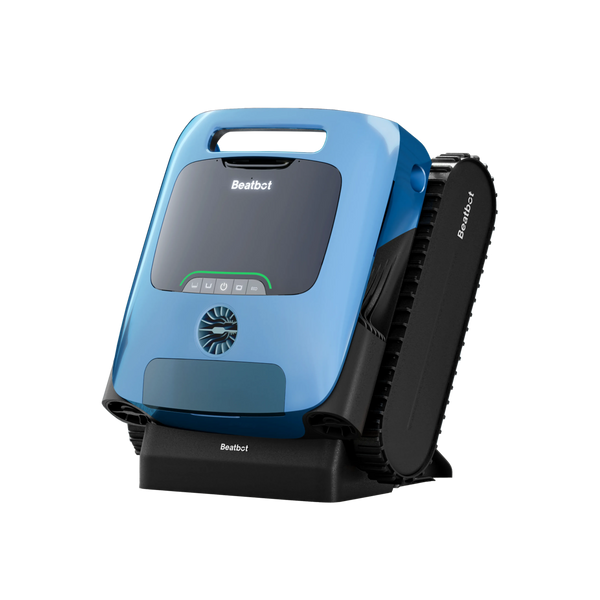
The Beatbot Sora 30 robotic pool cleaner delivers the same 6,800 GPH suction and 5-hour floor runtime as the Sora 70, along with compatibility across all pool shapes and materials. What the Sora 30 skips is water surface cleaning and water clarification, two features that pools without heavy floating debris or persistent cloudiness may never need. The core cleaning performance stays intact at a lower cost.
A 5L filter basket with 150-micron filtration captures over 650 leaves in a single session. The four-roller brush system achieves a 100% wall climbing success rate across concrete, fiberglass, vinyl, and ceramic tile. The Sora 30 cleans platforms and shallow areas with water as shallow as 8 inches, reaching tanning ledges and shallow entries that many cleaners skip.

Dual ultrasonic sensors (SonicSense) handle obstacle avoidance and platform detection, routing the robot around obstructions and up slopes. The 10,000mAh battery covers pools up to 3,200 square feet in a single charge. Smart surface parking with SmartDrain handles retrieval.
OTA software updates keep performance improving over time. The Sora 30 comes with a 2-year warranty and weighs 19.6 lbs, the lightest of the three models.
Best for: Pool owners who want 6,800 GPH suction and reliable floor-to-waterline cleaning at a lower cost, without paying for surface skimming or water clarification.
Beatbot AquaSense 2 Ultra vs. Sora 70 vs. Sora 30
|
Feature |
Beatbot AquaSense 2 Ultra |
Beatbot Sora 70 |
Beatbot Sora 30 |
|
Cleaning Coverage |
Floor, walls, waterline, surface, water clarification |
Floor, walls, waterline, surface |
Floor, walls, waterline |
|
Suction Power |
5,500 GPH |
6,800 GPH |
6,800 GPH |
|
Filter Capacity |
3.7L |
6L |
5L |
|
Battery |
13,400mAh |
10,000mAh |
10,000mAh |
|
Floor Runtime |
Up to 5 hours |
Up to 5 hours |
Up to 5 hours |
|
Max Pool Size |
3,875 sq ft |
3,230 sq ft |
3,200 sq ft |
|
Navigation |
AI camera + 27 sensors (HybridSense) |
Dual ultrasonic (SonicSense) |
Dual ultrasonic (SonicSense) |
|
Surface Cleaning |
Yes (propellers + side brushes) |
Yes (JetPulse twin water jets) |
No |
|
Water Clarification |
Yes (ClearWater) |
No |
No |
|
Platform Cleaning |
AI-powered (13.7 in+ depth) |
Sensor-based detection |
Shallow areas (8 in+ depth) |
|
Weight |
29.1 lbs |
22.9 lbs |
19.6 lbs |
|
Warranty |
3-year full replacement |
3-year |
2-year |
If your pool has a complex layout, platforms, or you want to eliminate surface skimming and water clarification from your routine, the AquaSense 2 Ultra covers the most ground. If heavy debris is your main challenge and you want the highest suction and filter capacity, the Sora 70 is the stronger pick. If your pool rarely collects floating debris and you want solid floor-to-waterline cleaning at a lower cost, the Sora 30 delivers the same suction power without the extras.
Corded vs. Cordless Robotic Pool Cleaners for Inground Pools
Corded cleaners like the Dolphin Premier and Dolphin Sigma, made by Maytronics, draw power directly from an outlet, which gives them unlimited runtime and consistently high suction throughout a cycle. The Premier's multi-media filtration system lets owners swap between NanoFilters, an oversized leaf bag, and disposable debris bags depending on the season.
Dolphin's strongest advantages are decades of market presence, widely available replacement parts, and consistently positive reviews from independent testing outlets.
Cordless models like the Beatbot lineup trade unlimited runtime for a different set of advantages: no cord to tangle, coil, or store; smart surface parking with SmartDrain that floats the robot up and drains it automatically instead of requiring deep-end retrieval; water surface cleaning that no Dolphin model offers; and app-controlled scheduling and remote navigation that let you start, direct, and retrieve the robot without being poolside.
Current Beatbot models deliver 4 to 5 hours of floor runtime per charge, enough for pools up to 3,875 square feet, with a full recharge in about 4.5 hours.
Corded models still lead in sustained suction consistency and never need recharging. Cordless models lead in setup convenience, retrieval, surface cleaning capability, and cable-free operation. Battery safety is a fair concern with any cordless appliance; the Beatbot AquaSense 2 series is backed by 200-plus rigorous quality tests and 15 industry certifications.
How to Keep Your Robotic Pool Cleaner Running Well
Empty the filter basket after every cycle. A clogged filter reduces suction and forces the motor to work harder, shortening battery life over time. For heavy leaf seasons, shorter and more frequent cleaning cycles work better than letting debris pile up.

Store the robot out of direct sunlight when not in use. UV exposure degrades plastic and rubber over time, even on models with UV-resistant coatings like the Beatbot AquaSense 2 Ultra's automotive-grade IMR coating. Check brushes and treads for wear every few months. Worn rollers lose scrubbing power on walls, and worn treads reduce climbing ability.
FAQs
Are cordless robotic pool cleaners safe to leave in the pool overnight?
Most manufacturers, including Beatbot, recommend removing the robot after each cleaning cycle. Prolonged submersion accelerates wear on seals and exposes the unit to unnecessary chemical contact. Smart surface parking makes retrieval quick, so pulling the robot out after each run is the simplest way to extend its lifespan.
How often should I run a robotic pool cleaner in an inground pool?
Two to three times per week during normal conditions. During heavy leaf season, after storms, or when pollen is high, daily or shorter targeted cycles keep debris from building up. Models with app scheduling automate this entirely.
How long do robotic pool cleaners typically last?
With proper maintenance, most robotic pool cleaners last 3 to 5 years. Lifespan depends on run frequency, filter and brush maintenance, and sun and chemical exposure between cycles. A longer warranty, like the Beatbot AquaSense 2 Ultra's 3-year full replacement policy, covers the period where defects are most likely to surface.