Most Popular


 Sora Series


 AquaSense Series

 Skimmer & Bundle

 Retail Edition


 Accessories


Maintaining the chemical balance in a pool is no small task. It requires attention to a myriad of chemical indicators and can be overwhelming with the technical jargon associated with pool chemicals.
While you might be exhausted from managing the chlorine levels in your water, there's a substance that can help maintain the stability and effectiveness of chlorine—cyanuric acid. Known as a stabilizer, it plays a crucial role in preserving the sanitation level of the water.
However, excessive levels of cyanuric acid can also cause problems, so it's essential to learn how to regulate it.
What is Cyanuric Acid?
Cyanuric acid (CYA), also known as a pool stabilizer, conditioner, or chlorine stabilizer, is often referred to as the "sunscreen for sanitizers." This is because the primary chemical used for disinfection in pools relies on free chlorine.
Free chlorine, however, is not stable and can be degraded by up to 90% within a few hours under the influence of ultraviolet (UV) light, significantly reducing its disinfecting power and creating a window of opportunity for algae and other microorganisms to thrive.
Cyanuric acid combines with free chlorine in the water, forming a more stable and less decomposable form of chlorine that is more resistant to UV radiation, thus working for a longer duration.While cyanuric acid is often found in powder form in stores, most chlorine tablets already contain significant amounts of cyanuric acid to maintain the stability of their disinfecting properties.
Ideal Cyanuric Acid Levels in Pool Water
In traditional chlorine pools with normal free chlorine levels ( 1-3 ppm ), the ideal range for cyanuric acid is 30 to 50 ppm, although this can vary depending on the local level of sunlight exposure.
The stronger the sunlight, the higher the cyanuric acid concentration required.However, in saltwater pools, where free chlorine is generated by built-in salt chlorinators, there is no need to add chlorine tablets containing cyanuric acid. These pools require higher levels of cyanuric acid to ensure the effectiveness of chlorine, with the ideal range being 60-80 ppm.
What Happens with Abnormal Cyanuric Acid Levels?
As mentioned, free chlorine needs to combine with cyanuric acid to remain stable under sunlight. If there is too little cyanuric acid, chlorine levels will drop under sunlight, leading to a decrease in disinfecting power. Conversely, too much cyanuric acid can also be problematic.
Cyanuric acid protects chlorine by combining with it to form a stable form of chlorine, but this stable chlorine is less effective at disinfection than free chlorine. When your CYA levels are too high, it can hinder the effectiveness of chlorine. Therefore, it's also important to know how to address this situation.
What Raises Cyanuric Acid Levels in Your Pool?
Over-application of Cyanuric Acid
In most cases, if you find abnormally high levels of cyanuric acid in your pool water, the most likely cause is over-application. It's a common mistake among novices: since cyanuric acid is widely recognized as an important chemical, many pool owners continuously introduce stabilizers into the water.
However, because most chlorine tablets are already composed of trichlor and dichlor, which include significant amounts of cyanuric acid, such layering can cause cyanuric acid levels to exceed the threshold.
Evaporation
Unlike other unstable chemicals, cyanuric acid is quite stable in water and does not break down under sunlight or evaporate with water. Therefore, in conditions of high temperature and intense evaporation, or after a draining incident, cyanuric acid can become more concentrated as it remains behind.
How to Lower Cyanuric Acid Levels
While it's easy to add and overdo cyanuric acid, reducing its levels is not a simple task due to its stable chemical nature. Most reducers claiming to lower cyanuric acid levels on the market have mixed results. Therefore, the most effective method is to drain some pool water and refill it with fresh water.
How to Test Cyanuric Acid Levels?
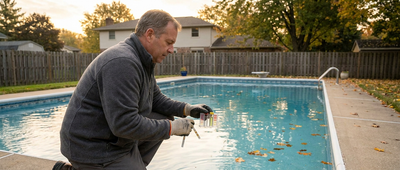
As outlined, before you have to incur the significant cost of replacing water due to high cyanuric acid levels, it's best to ensure that the levels in your water remain within a normal range. Therefore, you should test the levels weekly. Most pool test kits on the market can measure cyanuric acid levels, including pool test strips and liquid reagent kits.Pool test strips are more common and easy to use; simply immerse them in the water and read the current CYA level based on their color.Liquid reagent kits are more complex to use but provide more accurate results. You need to obtain a sample from the pool and add reagents to color the water.
Conclusion
Cyanuric acid plays an indispensable role in maintaining the chemical balance, disinfection effectiveness, and stability of chlorine in pools. If you don't want the active ingredients in the chlorine tablets you've just added to break down by 90% within an hour, you need to add an appropriate amount of cyanuric acid to maintain their stability, ensuring the disinfection effect and the quality of the pool water.