Flagship


 Sora Series


 AquaSense Series


 Skimmer & Bundle

 Retail Edition


 Accessories


 Extended Warranty


The short answer is yes. Our robotic pool cleaners are built to work across above-ground and in ground pools, all major surface materials, and virtually every common pool shape. If you have a rectangular backyard pool or a freeform resort-style design, a concrete gunite shell or a vinyl liner, the real question is not whether a Beatbot can handle your pool but which model fits how you want it cleaned.
Above-Ground vs. In Ground Pools
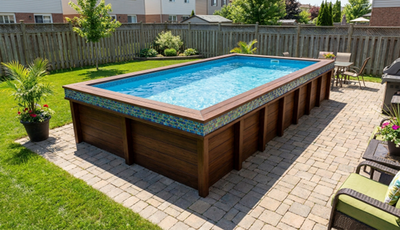
Both the Beatbot AquaSense 2 Ultra robotic pool cleaner and the Beatbot Sora 70 robotic pool cleaner are compatible with above-ground and in ground pools.
Above ground pools tend to have smoother, flatter floors and lower sidewall height, so a robot needs solid floor coverage and easy retrieval more than aggressive wall-climbing ability.
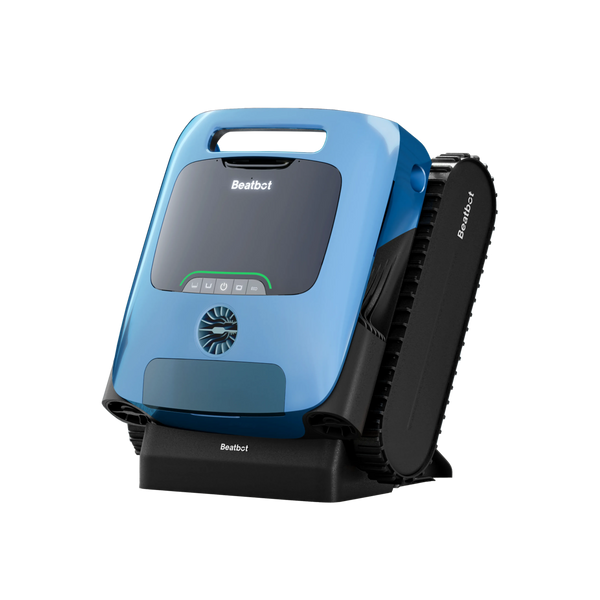
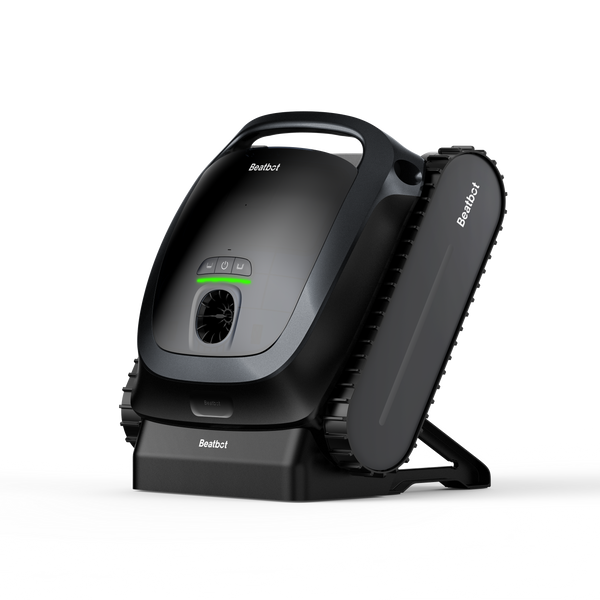
in ground pools often feature sloped floors, curved or tiled walls, and transitions between shallow and deep ends. We designed the Beatbot AquaSense 2 Ultra to handle both because its track-wheel system and navigation logic were built for varied geometry rather than a single pool profile.
One thing worth checking: if you have a portable or seasonal soft-sided above-ground pool with very thin walls or flexible floor panels, confirm that the robot's weight and brush contact pressure suit it. We build the AquaSense 2 Ultra and the Sora 70 for structural pools, not inflatable play pools.

Pool Shapes: Rectangular, Round, Kidney, and Freeform
Both the Beatbot AquaSense 2 Ultra and the Beatbot Sora 70 are compatible with all pool shapes, including rectangular, round, kidney-shaped, and freeform designs.
Both robots handle irregular shapes through sensor-driven path planning rather than a fixed cleaning pattern. The Beatbot AquaSense 2 Ultra uses HybridSense Pool Mapping, which combines ultrasonic sensors, infrared sensors, and an AI camera to map the pool floor before optimizing its S-shaped cleaning path.
That mapping step lets it adapt its route to curved walls and irregular footprints instead of running a preset grid that leaves gaps in curved sections.
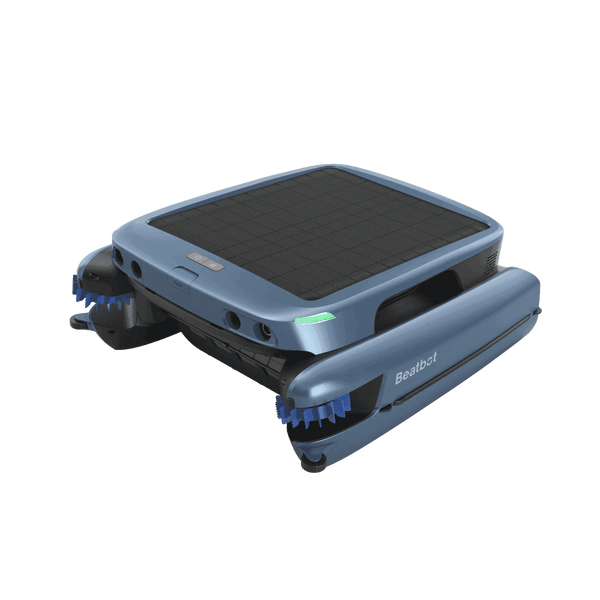
The Beatbot Sora 70 uses SonicSense obstacle avoidance powered by dual ultrasonic sensors to read pool boundaries and adjust its path in real time as it meets walls, steps, and curves. It does not generate the AI floor map that the AquaSense 2 Ultra produces, but its adaptive navigation reads and follows the contours of freeform residential and commercial pools.
If your pool has a highly complex layout, such as irregular peninsula sections or very tight radii, some configurations may not support full map-based S-pattern cleaning. In those cases the AquaSense 2 Ultra switches to DeepSense mode, which still delivers thorough coverage without the map visualization.
How Large a Pool Can These Robots Handle?
The Beatbot AquaSense 2 Ultra is rated for pools up to 3,875 square feet of pool bottom area (360 square meters). The Beatbot Sora 70 is rated for pools up to 3,230 square feet (300 square meters).
For reference, a standard residential in ground pool in the United States is typically between 400 and 900 square feet of bottom area. Both robots comfortably cover that range on a single charge. The size ratings become relevant for larger custom pools, commercial pools, or resort pools where bottom area climbs above 2,000 square feet.
Battery runtime drives the practical pool size limit more than any other factor. The Beatbot AquaSense 2 Ultra delivers up to 5 hours of continuous floor cleaning and up to 10 hours of water surface cleaning. The Beatbot Sora 70 delivers up to 5 hours of floor cleaning and up to 7 hours of surface cleaning.
|
AquaSense 2 Ultra |
Sora 70 |
|
|
Recommended Pool Size |
3,875 sq ft (360 m²) |
3,230 sq ft (300 m²) |
|
Floor Cleaning Runtime |
Up to 5 hours |
Up to 5 hours |
|
Surface Cleaning Runtime |
Up to 10 hours |
Up to 7 hours |
|
Pool Type |
Above ground & in-ground |
Above ground & in-ground |
|
Pool Shape |
All shapes |
All shapes |
Pool Surface Materials: Concrete, Vinyl, Fiberglass, and Tile
Both the Beatbot AquaSense 2 Ultra and the Beatbot Sora 70 are built for all major pool surface materials: concrete, ceramic tile, vinyl, and fiberglass.

Concrete Pools
Concrete and gunite pools have a rough, porous texture that gives track wheels strong traction but wears brush bristles faster over time.
The AquaSense 2 Ultra uses TPU track wheels and a dual-group roller brush system with PVC bristles built to handle abrasive surfaces while keeping steady suction contact. Fine debris and algae also settle into concrete's surface pores, so its layered filtration matters here: the AquaSense 2 Ultra runs a 150 μm outer and 250 μm inner filter to capture both coarse and fine debris.
Vinyl Liner Pools
Vinyl liner pools are sensitive to sharp edges and heavy brush pressure, since punctures and tears are expensive to repair. We tuned the brush system to hold cleaning contact without the kind of force that damages a liner. Vinyl surfaces are also smooth enough to challenge traction on walls, which is where the track-wheel drive system holds grip on sloped vinyl better than simple wheel-based robots.
Fiberglass Pools
Fiberglass surfaces are smooth and non-porous, so debris rests on top instead of embedding in the surface. Lifting it cleanly depends on steady suction contact rather than mechanical scrubbing. Both the AquaSense 2 Ultra and the Sora 70 use a bottom-hugging body design that keeps the suction port pressed close to smooth floors, so debris is drawn in rather than pushed around.
Ceramic Tile Pools
Tiled pools, common in commercial settings and high-end residential builds, have grout lines that trap debris and algae. Our brush system is built to clean ceramic tile and grout without scratching the glaze. The AquaSense 2 Ultra also cleans walls and the waterline, which matters more for tiled pools because the tile waterline band collects calcium buildup, sunscreen, and oil residue.
Platform Cleaning, Tanning Ledges, and Shallow Areas
Many pools have platforms, tanning ledges, or step areas that standard pool robots skip because the water sits too shallow for the robot to submerge properly. Both the Beatbot AquaSense 2 Ultra and the Beatbot Sora 70 clean these areas.
The Beatbot AquaSense 2 Ultra cleans standalone multi-level platforms with AI-powered detection that identifies platform height and transitions automatically. For platform floor cleaning, the water depth must exceed 13.7 inches, and steps should measure at least 1 m x 1 m for the robot to navigate effectively. Wall cleaning on platforms needs a minimum water depth of 19.7 inches.
The Beatbot Sora 70 cleans platforms and shallow areas in water as shallow as 8 inches. Its dual ultrasonic sensors include a bottom-facing sensor that reads platform heights and slope angles, letting it move between zones without getting stuck. That 8-inch minimum operating depth is especially useful for very shallow ledges, below the AquaSense 2 Ultra's 13.7-inch floor-cleaning threshold.

What Areas Does a Beatbot Clean?
Both models clean far more than the pool floor. The Beatbot AquaSense 2 Ultra delivers 5-in-1 coverage: water surface, floor, walls, waterline, and platforms. Its Pro cleaning mode runs floor, walls, waterline, and water surface in a single cycle. It also carries two side brushes that sweep debris from pool corners and edges toward the main suction port, which improves corner coverage in rectangular pools.
The Beatbot Sora 70 delivers 4-zone coverage in one cycle, floor, walls, waterline, and water surface, plus platform and shallow-area cleaning. Its 6L debris basket and 6800 GPH flow rate are built to take on heavy leaf fall and large debris without interruption.
Both robots park on the water surface at the end of a cleaning cycle. Our SmartDrain automatic water release system lightens the robot before you pick it up, which makes a real difference when you are lifting it from a high-sided pool deck.
When to Check Compatibility More Carefully
Most pools fall well inside the range both models support. A few situations are worth a closer look before you buy.
Saltwater pools are fully compatible. Beatbot robots clean through their own mechanical system and do not interact with your salt chlorinator or water chemistry, so a salt system places no limits on either the AquaSense 2 Ultra or the Sora 70. Our robots are built for saltwater conditions, and the Sora 70 is tested through 480 hours of salt-spray exposure.
Very large pools above 3,875 square feet of bottom area sit outside the rated range for either model. For a commercial pool near that size, check whether the robot can finish a full cleaning cycle on one charge given the pool's actual dimensions.
Pools with very complex custom geometry, such as multiple connected basins, irregular peninsulas, or extreme depth transitions, may call for the AquaSense 2 Ultra's MultiZone Mode or DeepSense navigation rather than standard map-based cleaning. These pools still get a thorough clean, though the app may not show the full floor map.
FAQs
Can my pool's pump and filter run while the robot is cleaning?
Yes. Beatbot robotic pool cleaners filter water through their own onboard system and work independently of your pool's circulation equipment, so you do not need to shut anything down. Many owners run a robot cycle and the pool's filtration on separate schedules.
Can a Beatbot clean a pool with several different water depths?
Yes. The Beatbot AquaSense 2 Ultra detects multi-level platforms and transitions between depths automatically, while the Sora 70 uses its bottom-facing sensor to move across raised and shallow zones. Both move between deep ends, shallow ends, and ledges within a single cycle.
Should I choose the AquaSense 2 Ultra or the Sora 70 for my pool?
The AquaSense 2 Ultra suits larger pools and owners who want AI mapping, full 5-in-1 coverage, and side-brush corner cleaning. The Sora 70 suits pools with shallow ledges down to 8 inches and high debris loads, thanks to its large basket and strong flow rate.
What if my pool is slightly larger than the recommended size?
A pool modestly above the rated bottom area can usually still be cleaned, though the robot may need a second cycle to cover it fully. For pools well beyond the rating, splitting the pool into zones or scheduling more frequent cycles keeps coverage consistent.