Most Popular


 Sora Series


 AquaSense Series

 Skimmer & Bundle


 Retail Edition


 Accessories


A plunge pool is a small, compact pool designed for soaking, cooling off, and low-impact exercise rather than swimming laps. Typically ranging from 6 to 12 feet wide and 12 to 21 feet long, with depths between 4 and 8 feet, it gives homeowners most of the relaxation and recovery benefits of a full-size pool at a fraction of the footprint and cost.
Plunge pools fit in yards that cannot accommodate a standard pool, heat faster, and use significantly less water. They are also increasingly common in rehabilitation settings and among homeowners who want a cold-water recovery option.
Plunge Pool Sizes and Dimensions
A plunge pool is defined less by a single measurement and more by its purpose. It is a pool too small for lap swimming but deep enough for full-body immersion, with dimensions that prioritize depth and soaking comfort over surface area. Most fall between 7x7 feet on the small end and 13x21 feet at the larger end, with a common middle-ground size of around 7x13 feet.
Depth is what separates a plunge pool from a wading pool or shallow spa. Most run 4 to 8 feet deep, giving users enough depth to stand, submerge fully, or perform water resistance movements. Some cold plunge installations are shallower and bench-seated, but anything designed for standing immersion typically sits at 4 feet or deeper.
How Much Does a Plunge Pool Cost?
Installation cost depends heavily on whether you go above-ground or in-ground, and on the material. Above-ground plunge pools, including stock-tank-style cold plunge setups, start around $3,000 installed. In-ground options typically run from $15,000 to $40,000, with custom concrete builds easily reaching $70,000 or more.

Typical cost ranges across the main categories:
|
Type |
Installed Cost Range |
Key Factor |
|
Above-ground / stock tank |
$3,000 – $30,000 |
Material and filtration system |
|
Fiberglass in-ground (prefab) |
$20,000 – $40,000 |
Faster install, fixed shell shapes |
|
Concrete in-ground (custom) |
$40,000 – $70,000+ |
Fully customizable, highest durability |
|
Vinyl in-ground |
$15,000 – $35,000 |
Lower upfront, liner replacement over time |
On top of installation, budget for ongoing maintenance. Professional service typically runs $3,000 to $5,000 per year. Homeowners who handle their own chemical balancing and cleaning can save over $1,000 annually. Site access, excavation difficulty, and local permit requirements all add cost — hillside or tight-access backyards can push in-ground projects significantly above the baseline estimates.
What Are the Different Types of Plunge Pools?
Material is the biggest structural decision because it affects durability, customization options, installation timeline, and long-term cost.
Concrete plunge pools are the most durable and fully customizable option. You can shape them to fit unusual spaces, integrate benches or jets, and finish the interior surface in tile, plaster, or pebble aggregate. The trade-off is cost and timeline — concrete pools take longer to install and require resurfacing every 10 to 15 years.
Fiberglass plunge pools arrive as prefabricated shells and drop into a prepared excavation. Installation is faster than concrete, and the non-porous surface resists algae growth better than plaster, which can reduce chemical use. The limitation is shape — you choose from the manufacturer's available molds, so highly custom footprints are not possible.
Above-ground options, including steel stock tanks, galvanized tubs, and purpose-built cold plunge units, require no excavation and can often be placed on a patio or deck with adequate structural support. They are also removable. The downside is aesthetics — most look utilitarian rather than integrated.
Plunge Pool vs. Traditional Pool
A plunge pool gives you most of the therapeutic and recreational benefits of pool ownership at a smaller physical and financial footprint, but does not replace a full-size pool for lap swimming, pool games, or large gatherings.
|
Feature |
Plunge Pool |
Traditional Pool |
|
Typical size |
7x7 ft to 13x21 ft |
12x24 ft to 20x40 ft+ |
|
Depth |
4–8 ft |
3–6 ft (varies) |
|
Installation cost |
$3,000–$70,000+ |
$35,000–$100,000+ |
|
Annual maintenance |
$1,500–$5,000 |
$3,000–$7,000+ |
|
Heating speed |
Faster |
Slower |
|
Water volume |
Lower |
Higher |
|
Lap swimming |
Not suitable |
Yes (in longer pools) |
|
Hydrotherapy |
Well suited |
Possible |
What Is a Plunge Pool Best For?
A plunge pool performs best in four situations: small or unusually shaped yards where a standard pool will not fit; homeowners who want cold-water immersion for athletic recovery or circulation; rehabilitation and hydrotherapy use where controlled-temperature water matters more than size; and households that want pool access without the full maintenance burden of a large pool.

Cold plunging — immersion in water between 50 and 59°F — has gained attention for its potential effects on muscle recovery, mental alertness, and circulation. Many dedicated cold plunge users install above-ground units precisely because they do not need depth or width, only adequate temperature control and easy access.
Plunge Pool Maintenance
Plunge pools require consistent attention to water chemistry, filtration, and debris removal. Because the surface-area-to-volume ratio is higher in a small pool, chemical levels can shift faster than in a large pool — most owners test pH, chlorine, and alkalinity two to three times per week.
Debris accumulates even in well-maintained pools, particularly in outdoor installations surrounded by trees. Leaves, organic matter, insects, and fine sediment settle on the floor and walls between service visits. In a plunge pool, the floor-to-water-volume ratio means this debris concentrates faster than in a large pool — a single session without cleaning can noticeably affect water clarity.
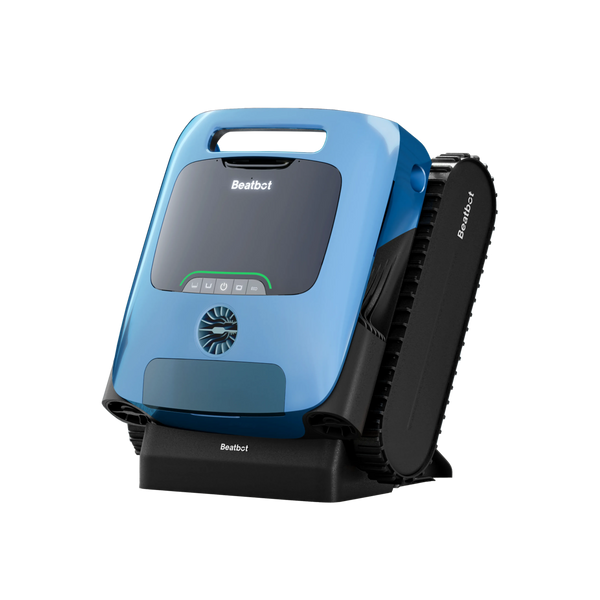
The Beatbot AquaSense 2 robotic pool cleaner covers floor, walls, and waterline with 5,500 GPH suction and a 4-brush system, running automatically so debris does not accumulate between manual cleaning visits.
For plunge pools used for cold therapy, dedicated chilling units cycle constantly to maintain target temperatures, which puts a heavier load on filtration and makes water chemistry management more important.
Can You Heat a Plunge Pool?
Yes. A small gas heater or heat pump can bring a 7x13 ft plunge pool to target temperature in a few hours, compared to a day or more for a large pool, making year-round use practical in most U.S. climates. Some homeowners install both a heater and a chiller to alternate between warm soaking and cold plunging.
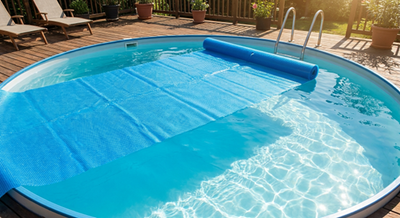
Either way, an insulated cover is worth using — heat loss through an uncovered surface is significant, and a well-fitted cover cuts heating costs substantially over a season.
How Clean Does a Plunge Pool Stay?
A plunge pool's water quality depends on bather load, surrounding landscaping, and how consistently filtration runs. Small pools reach chemical saturation faster when bather load is high relative to volume — a pool used daily by two or three people will need more frequent chemical adjustments than the same pool used twice a week.

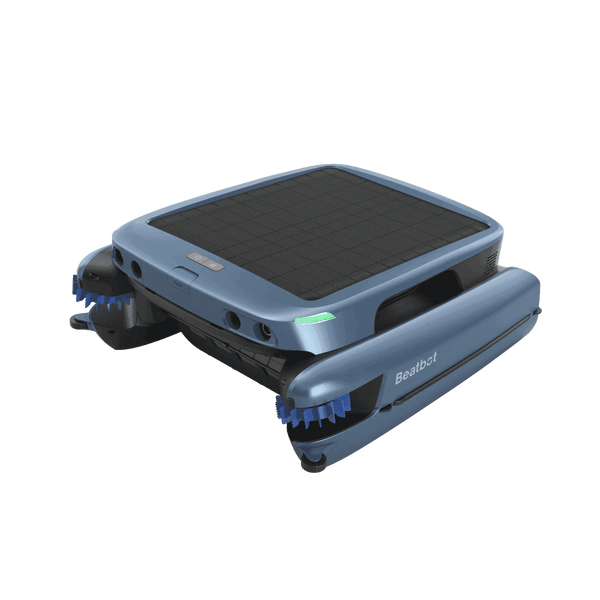
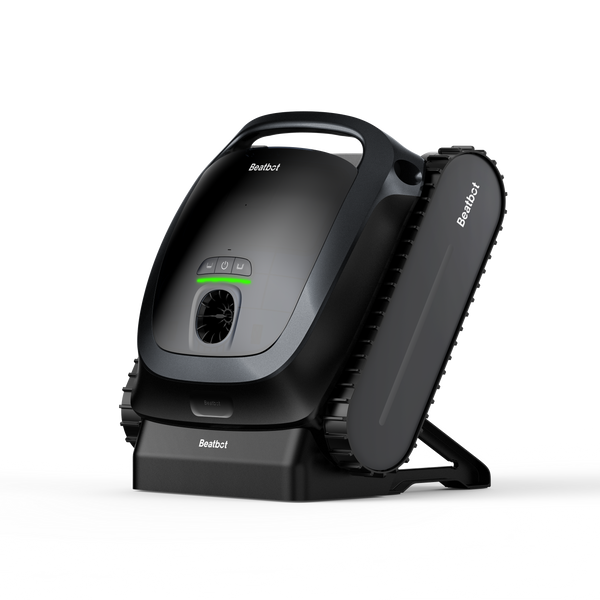
Outdoor plunge pools collect organic debris from wind and rain. With 6,800 GPH suction powered by an 8-motor system, the Beatbot Sora 70 robotic pool cleaner captures debris from fine sand through whole leaves — its 6.7-inch suction inlet is specifically wider than standard inlets to handle larger debris without clogging. For a plunge pool where a single day's leaf fall can visibly affect water quality, that consistent throughput makes a measurable difference.
Biofilm buildup on pool walls is a common issue in pools that run at warmer temperatures or see lower chlorine levels. Regular wall brushing — manual or automated — prevents biofilm from establishing and reduces the risk of algae blooms.
Is a Plunge Pool Worth It?
A plunge pool is worth it if the primary goal is therapeutic use, cold-water recovery, or adding pool access to a yard that cannot fit a larger installation. It is not worth it if you want to swim laps, host pool parties for 10 people, or expect the same experience as a traditional pool.
For owners who want to reduce ongoing maintenance time, the Beatbot AquaSense 2 Ultra robotic pool cleaner handles all five cleaning zones — floor, walls, waterline, water surface, and water clarification — in a single cycle.
Its HybridSense pool mapping combines an AI camera, infrared sensors, and ultrasonic sensors to scan and map the pool before cleaning, so the robot plans an optimized path rather than operating on a fixed pattern. In a plunge pool, where the wall-to-floor ratio is higher than in a large pool, the dual side brushes and double-pass waterline scrubbing mean wall and waterline coverage is not sacrificed for speed.
FAQs
What are the disadvantages of a plunge pool?
The main limitations are size and capacity. A plunge pool cannot accommodate lap swimming, water sports, or large groups. Chemical balance can also shift faster than in a large pool because of the lower water volume, which means more frequent testing. For cold plunge use, a chiller adds ongoing electricity costs.
Are plunge pools warm or cold?
Neither by default. A plunge pool is an empty vessel — water temperature is whatever you set it to. Most owners heat them to 78–85°F for year-round soaking, or chill them to 50–59°F for cold therapy. Some install both a heater and a chiller to switch between the two uses.
How often do you change the water in a plunge pool?
Most plunge pool owners drain and refill every one to three years with proper chemical maintenance. Pools with high bather loads or those used for cold plunging at lower sanitizer levels may need more frequent water changes. Consistent filtration and weekly chemical testing extend the time between full water changes.
Do plunge pools add value to homes?
It depends on the buyer and the market. In warmer climates and among buyers who prioritize outdoor living, a well-integrated in-ground plunge pool can add value. Above-ground installations typically add less. Buyers who do not want pool maintenance may view any pool as a liability, so the value impact is not universal.
How long does it take to install a plunge pool?
Above-ground models can be set up in a day or two once delivered. Prefab fiberglass in ground pools typically take one to three weeks from excavation to fill. Custom concrete pools require six to twelve weeks, sometimes longer depending on site conditions and permitting timelines.
Do plunge pools require a permit?
In most U.S. jurisdictions, in-ground plunge pools require a building permit. Above-ground installations may or may not require permits depending on local codes and pool depth. Check with your local building department before purchasing.