Most Popular


 Sora Series


 AquaSense Series

 Skimmer & Bundle

 Retail Edition


 Accessories


The right pool pump and filter size depends on pool volume, target turnover time, plumbing layout, and filter type. The standard approach is to size the pump so it can turn over the full pool in about 8 hours, then pair it with a filter large enough to hold that flow rate without high pressure.
A typical 16,000 to 20,000 gallon residential pool lands on a 1.0 to 1.5 HP variable-speed pump and a 200 to 350 sq ft cartridge filter. A bigger pump rarely fixes problems and usually creates new ones: higher pressure, faster filter clogging, and a louder, more expensive system to run.
The basic flow rate formula:
Pool volume ÷ turnover hours ÷ 60 = required flow rate in GPM.
A 24,000-gallon pool with an 8-hour turnover target needs about 50 GPM.
Pool Pump and Filter Size Chart by Pool Volume
Use the chart below as a starting point for residential pools. Plumbing diameter, fitting count, elevation changes, and added equipment such as heaters or salt cells will shift the final numbers. For cartridge filters, a useful minimum is 100 sq ft of filter area per 10,000 gallons of water; going larger pays off in lower pressure and less frequent cleaning.
|
Pool Size |
Target Flow Rate |
Typical Pump Size |
Cartridge Filter |
Sand Filter |
DE Filter |
|
5,000 gallons |
10–15 GPM |
0.5 HP or small variable-speed |
50–100 sq ft |
14–16 inch tank |
24 sq ft |
|
10,000 gallons |
20–25 GPM |
0.75–1.0 HP or variable-speed |
100–150 sq ft |
18–21 inch tank |
24–36 sq ft |
|
15,000 gallons |
30–35 GPM |
1.0 HP or variable-speed |
150–250 sq ft |
21–24 inch tank |
36–48 sq ft |
|
16,000–17,000 gallons |
33–36 GPM |
1.0–1.5 HP variable-speed |
200–300 sq ft |
24 inch tank |
48 sq ft |
|
20,000 gallons |
40–45 GPM |
1.5 HP or variable-speed |
250–350 sq ft |
24–27 inch tank |
48–60 sq ft |
|
25,000 gallons |
50–55 GPM |
1.5–2.0 HP or variable-speed |
300–400 sq ft |
27–30 inch tank |
60 sq ft |
|
30,000 gallons |
60–65 GPM |
2.0 HP or variable-speed |
400–500 sq ft |
30–32 inch tank |
60–72 sq ft |
|
40,000 gallons |
80–85 GPM |
2.0–3.0 HP variable-speed |
500+ sq ft |
32–36 inch tank |
72+ sq ft |
Within the pump column, a variable-speed pump is almost always the better choice over a single-speed pump at the same horsepower, since it can throttle down for daily filtration and ramp up only when needed.
Example: What Size Pump and Filter for a 16,000-Gallon Pool?
A 16,000-gallon pool needs about 33 GPM for an 8-hour turnover (16,000 ÷ 8 ÷ 60). A 1.0 HP variable-speed pump handles that comfortably; a 1.5 HP variable-speed pump leaves headroom for a heater, spa, or water feature. A 2 HP single-speed pump will work but is more power than the system needs for routine filtration, and the energy bill shows it.
On the filter side, match this pool with a 200 to 300 sq ft cartridge, a 24 inch sand tank, or a 48 sq ft DE filter. A small 90 sq ft cartridge will technically circulate the water, but it clogs quickly and restricts flow long before the pump is the bottleneck. Weak return flow on a 16,000-gallon pool is more often a filter problem than a pump problem.

Is a Bigger Pool Pump Always Better?
No. A bigger pump usually hurts a residential system more than it helps. The right question is what flow rate the pool actually needs, and whether the filter and plumbing can carry that flow without elevated pressure.
An oversized pump pulls more wattage than the system uses, raises pressure inside the filter and plumbing (which shortens the life of o-rings, gaskets, and cartridges), pushes water through the filter media too fast for fine particles to be caught, and strains weak fittings until small leaks become visible.
Variable-speed pumps avoid most of this by running at low RPM for the long daily filtration cycle and ramping up only when workload demands it. ENERGY STAR-certified pool pumps run quieter and use significantly less energy over their lifetime than older single-speed models.
Pump Size vs. Filter Size: Which One Matters More?
Both matter, but a slightly oversized filter is safer than a slightly oversized pump. When circulation goes wrong, the cause is almost always at the filter or plumbing, not the pump.
A strong pump with an undersized filter runs at high pressure, loses flow quickly as the cartridge or grids load, and forces frequent cleaning.
A large filter with an underpowered pump moves water too slowly to keep debris in suspension, so the floor and waterline never look quite clean. Correct equipment paired with restrictive plumbing (too many elbows, undersized pipe, partly closed valves) underperforms regardless of what is on the spec sheet.
A right-sized variable-speed pump paired with a generously sized filter delivers the most stable flow, the longest cleaning intervals, and the lowest monthly energy cost.
Weak Pool Flow Is Usually Not a Pump Sizing Problem
Weak return flow is almost never the pump itself. In most cases it traces back to the filter or the suction side, and a new pump will not solve it.

A dirty cartridge, sand bed, or DE grid set is the single most common cause. Clean or backwash before anything else.
A clogged pump basket or skimmer basket reduces flow upstream of the filter and can mimic a pump problem.
An air leak on the suction side (loose pump lid, cracked union, failed shaft seal) lets the pump pull air instead of water. Bubbles in the pump lid are the giveaway.
A partially closed valve or stuck multiport handle quietly throttles the system. Walk every valve and confirm its position.
A salt cell, heater, or check valve packed with debris adds resistance that has to be overcome before flow reaches the returns.
A worn impeller, undersized plumbing, or a filter too small for the pump will produce the same symptoms as any of the above.
A quick diagnostic: with a clean filter, high pressure plus low flow points downstream of the pump; low pressure plus low flow points upstream.
Recommended Setup by Pool Size
Each setup below assumes typical residential plumbing and no unusually demanding accessories. Pools with heaters, spas, water features, or in-floor cleaning systems should size up from these ranges.
Small Pools: 5,000–10,000 Gallons
A 0.5 to 1.0 HP pump (or a small variable-speed pump) paired with a 50 to 150 sq ft cartridge, an 18 to 21 inch sand tank, or a 24 to 36 sq ft DE filter. This is the size range where over-buying is most common and least useful.
Medium Pools: 15,000–20,000 Gallons
A 1.0 to 1.5 HP variable-speed pump paired with a 150 to 350 sq ft cartridge, a 21 to 27 inch sand tank, or a 36 to 60 sq ft DE filter. For a 16,000-gallon pool specifically, a 200 to 300 sq ft cartridge is the most reliable cartridge size.
Large Pools: 25,000–30,000 Gallons
A 1.5 to 2.0 HP variable-speed pump paired with a 300 to 500 sq ft cartridge, a 27 to 32 inch sand tank, or a 60 to 72 sq ft DE filter. Running a high-horsepower single-speed pump 8 hours a day on a 30,000-gallon pool is one of the costliest setups on a monthly energy bill.
Extra-Large Pools: 40,000+ Gallons
A 2.0 to 3.0 HP variable-speed pump paired with a 500+ sq ft cartridge, a 32 to 36 inch sand tank, or a 72+ sq ft DE filter. At this scale, plumbing diameter, total dynamic head, and filter flow rating start to matter as much as pump horsepower, and a professional spec is usually worth the cost.
Even when the pump and filter are sized correctly, debris that reaches the skimmer still loads the main filter and shortens the interval between cleanings. A cordless robotic cleaner intercepts that debris inside the pool before it ever reaches the filtration system. Two scenarios are worth calling out.
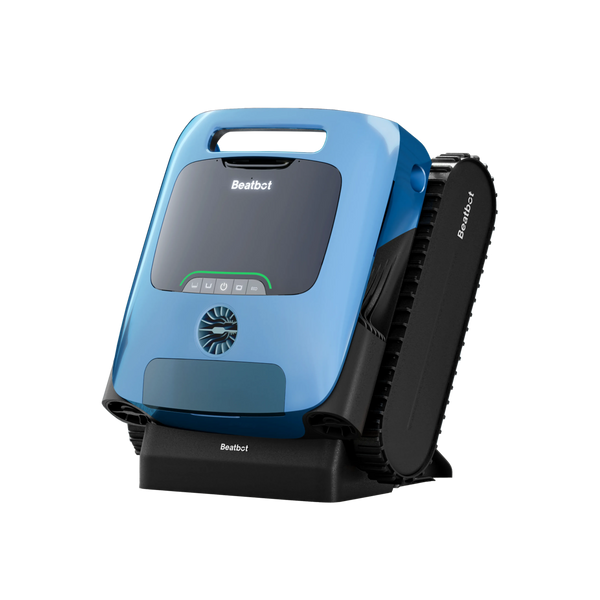
For pools where leaves, seeds, and fine plant debris regularly settle on the floor, the Beatbot AquaSense 2 Ultra robotic pool cleaner uses HybridSense™ Pool Mapping (27 sensors with an AI camera, ultrasonic, and infrared) to scan the pool, then runs AI Cruise Debris Detection after the main pass to re-target any missed organic debris. The result is less material reaching the main filter across pools up to 3,875 sq ft.
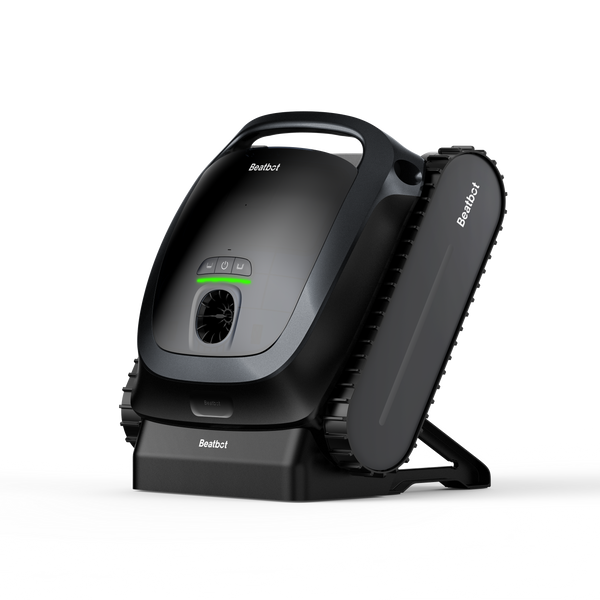
For pools that collect heavy surface debris from overhanging trees or high bather load, the Beatbot Sora 70 cordless robotic pool cleaner uses an industry-first JetPulse™ system with dual converging jets to actively pull floating leaves and insects inward on the first pass. A 6L basket holds the catch, and the 10,000 mAh battery supports up to 7 hours of water-surface cleaning on pools up to 3,230 sq ft.
How to Choose the Right Pump and Filter Size
Size the pump to the flow target, size the filter generously, and prefer variable-speed over single-speed at the same horsepower. For a 16,000 to 17,000 gallon pool, that means a 1.0 to 1.5 HP variable-speed pump and a 200 to 300 sq ft cartridge filter. Quieter, easier to maintain, and noticeably cheaper to run than a 2 HP single-speed pump on a small cartridge.
A right-sized pump and filter handle circulation; a robotic cleaner handles debris before it reaches them. They solve different problems, and the cleanest residential pools usually run both.
FAQs
Can I replace a 1.5 HP pool pump with a 2 HP?
Only if the filter and plumbing can handle the extra flow. A 2 HP pump moves about 30 to 40 percent more GPM than a 1.5 HP, which can exceed a small filter's rated flow and raise system pressure.
Can a pool pump be too strong for a sand filter?
Yes. Every sand filter has a maximum design flow rate printed on the tank label. A 24 inch sand filter typically tops out around 50 to 55 GPM. Above that, sand can channel and fine debris passes through.
How long should a 1 HP pool pump run on a 5,000 gallon pool?
Around 4 to 6 hours a day. A 1 HP pump turns over 5,000 gallons well under the 8-hour target, so longer runtimes mostly waste electricity. Split into two cycles during heavy bather load or sun exposure.
What size pump for a 20,000 gallon inground pool?
A 1.5 HP variable-speed pump targeting 40 to 45 GPM. Inground pools usually have more plumbing length and elevation change than above ground pools of the same volume, so size toward the upper end of the GPM range.