Most Popular


 Sora Series


 AquaSense Series

 Skimmer & Bundle

 Retail Edition


 Accessories


The right pool type depends on three trade-offs: upfront price, yearly maintenance effort, and shape flexibility. Fiberglass pools install fastest and need the least day-to-day care, but shapes come from a catalog. Concrete pools allow any shape and last longest structurally, at a higher upfront price and with a heavier maintenance routine. Vinyl liner pools have the lowest entry cost, with a liner replacement due every 7 to 12 years.

What's the Real Difference Between Fiberglass, Concrete, and Vinyl Liner Pools?
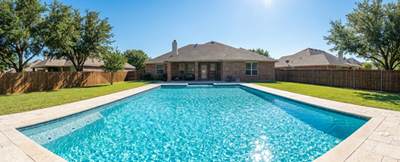
The three pool types differ in how they are built, how long the build takes, and what the surface actually feels like. A fiberglass pool is a one-piece pre-manufactured shell made of reinforced fiberglass with a gelcoat finish, dropped into a prepared hole.
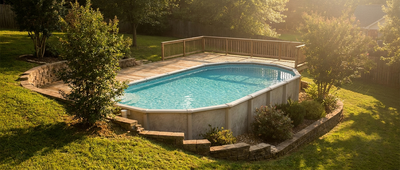
A concrete pool is built on site by pouring or shooting concrete (often gunite or shotcrete) over a steel rebar frame, then finishing it with plaster, pebble, or tile. A vinyl liner pool uses steel or polymer walls over a sand or concrete floor, with a custom vinyl sheet stretched across the inside.
|
Attribute |
Fiberglass |
Concrete |
Vinyl Liner |
|
Construction |
One-piece pre-molded shell |
Rebar frame + gunite/shotcrete |
Steel/polymer walls + vinyl sheet |
|
Install Time |
3 to 6 weeks |
3 to 6 months |
4 to 8 weeks |
|
Surface Feel |
Smooth gelcoat |
Rough plaster or pebble |
Soft vinyl |
|
Shape Options |
Pre-molded designs |
Fully custom |
Mostly rectangular/geometric |
|
Typical Lifespan |
25+ years shell |
50+ years structure |
20+ years structure |
|
Liner/Surface Refresh |
Gelcoat at 15–20 years |
Replaster at 10–15 years |
Liner every 7–12 years |
Which Pool Type Installs the Fastest?
Fiberglass pools install fastest, often 3 to 6 weeks from excavation to swimming. The shell arrives on a truck in one piece, so once the hole is dug and plumbing is set, the pool is largely a drop-in job. Vinyl liner pools take 4 to 8 weeks because the walls and floor are built on site before the liner goes in.
Concrete pools take 3 to 6 months because the gunite has to cure and the interior finish has to be applied and cured in separate stages.
A longer build means a longer window of a torn-up yard, more weather risk, and more exposure to permit or material delays. In climates with short outdoor seasons, a 3-month concrete build can push completion into the following summer. Homeowners who want to swim the same year usually narrow the choice to fiberglass or vinyl.

How Do Upfront Cost and Long-Term Ownership Cost Compare?
Vinyl liner is cheapest to install, fiberglass sits in the middle, and concrete is the most expensive. Over a 15-year horizon the order can flip, because vinyl liner replacement and concrete replastering both add meaningful recurring costs that fiberglass largely avoids.
In the US market, a turn-key vinyl liner pool typically runs $35,000 to $65,000, fiberglass runs $50,000 to $85,000, and a custom concrete or gunite pool runs $60,000 to $120,000 or more depending on size and features.
Recurring costs vary by type: a vinyl liner replacement costs $5,000 to $8,000 every 7 to 12 years, a concrete acid wash runs $300 to $1,000 every 3 to 6 years, and concrete replastering is a larger expense every 10 to 15 years. Fiberglass shell repairs are rare but specialized when they do occur.
In the southern US, concrete is often the most competitively priced because local workforce and materials are readily available. In colder northern markets, fiberglass and vinyl liner are usually cheaper than concrete because shorter building seasons and freeze-thaw cycles add to gunite costs.
Which Pool Type Is Easiest to Maintain Day to Day?
Fiberglass is the easiest to maintain day to day. Its smooth, non-porous gelcoat surface resists algae adhesion, which means less brushing, fewer chemicals, and lower pump runtime. Vinyl liners share most of that algae resistance because the vinyl surface is also non-porous, though liners can stain and wrinkle over time.
Concrete is the highest-maintenance surface. Plaster and pebble finishes are porous, so algae takes hold in microscopic pits, especially at the waterline and in corners. Concrete pools need more chemical adjustments and more brushing, and owners have to watch calcium hardness because calcium leaches from the plaster into the water.
Chemical costs on concrete typically run well above those on fiberglass, often 60 to 70 percent higher over a typical season.
Pool material also affects heating. Fiberglass holds heat best because the insulating shell loses less warmth to the surrounding ground, which usually means lower heater runtime in cool-climate regions. Vinyl liner is next. Concrete loses heat fastest because the mass absorbs and dissipates it, so heater bills tend to be highest on concrete builds.

Which Pool Material Lasts Longest, and How Do They Fail?
Concrete pools last the longest structurally, often 50+ years. Fiberglass shells typically last 25+ years. Vinyl liner pool structures (the walls and floor system) last 20+ years. Structural lifespan is separate from surface lifespan, and each pool type fails on the surface long before the structure does.
Failure modes by pool type: concrete plaster degrades, the tile line loosens, and rebar can eventually corrode in aging pools, with the fix being replastering and tile repair rather than rebuilding. Fiberglass shells can develop gelcoat blistering, osmotic staining, spider-line cracks in the finish, or color fading in high-UV regions, and matching a repair to the original gelcoat color is often difficult.
Vinyl liners fade, wrinkle, and eventually tear; tear-through from a sharp object or improper winterization can force an early replacement.
Which Pool Type Lets You Customize Shape, Depth, and Features?
Concrete is the clear winner for customization. Because the shell is built on site, you can specify any shape, any depth, tanning ledges, vanishing edges, attached spas, beach entries, and multi-level layouts. Pool depth over 8 feet for diving or deep-end use is effectively concrete-only, since fiberglass shells are shipping-limited and vinyl liner depth is constrained by wall panel height.
Fiberglass pools offer dozens of pre-molded shapes and often include built-in features like benches, tanning ledges, and steps, but you are choosing from a catalog. Shipping rules cap the shell width at about 16 feet and depth around 8 feet. If the catalog has what you want, fiberglass works; if you want something custom, it will not.
Vinyl liner pools fall in the middle. Layouts are usually rectangular or modified rectangles with straight walls, but modern panel systems allow curves, tanning ledges, and custom liner patterns. Deep ends and diving configurations are possible, though complex shapes require skilled liner seaming and cost more.

Which Pool Is Best for a Saltwater System?
Fiberglass and vinyl liner pools are the safest fits for saltwater systems. Saltwater generators convert salt to chlorine through electrolysis, and the non-porous surfaces of fiberglass and vinyl are not affected by the mild salinity the system produces.
Concrete pools can run saltwater, but the salt gradually accelerates erosion of plaster, grout, and some stone finishes at the waterline and in tile joints. Owners who want saltwater on concrete often choose more resilient finishes like pebble or quartz and plan for slightly more frequent waterline maintenance.
Vinyl liner compatibility with salt is strong, though the metal wall panels and fasteners on older systems can corrode if salinity runs too high. Modern vinyl pool systems use polymer panels or stainless hardware rated for salt environments.
How Do You Match a Robotic Pool Cleaner to Your Pool's Surface, Size, and Shape?
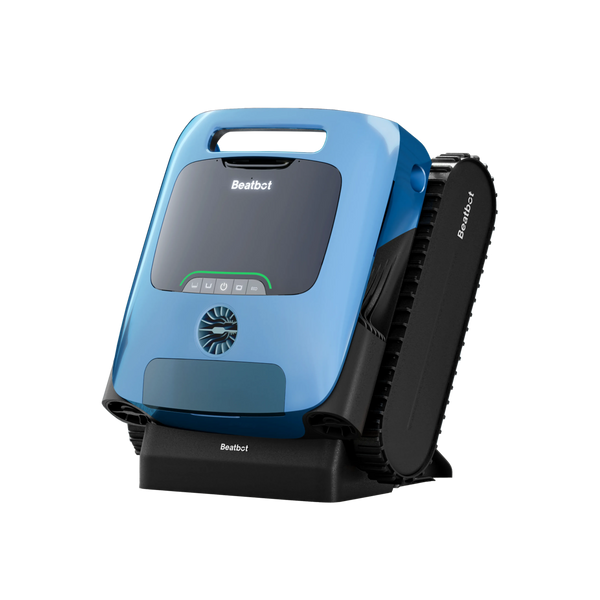
The right cleaner depends on four variables: surface sensitivity, pool size, debris exposure, and layout complexity. All four Beatbot models below work on concrete, fiberglass, vinyl, and ceramic tile.
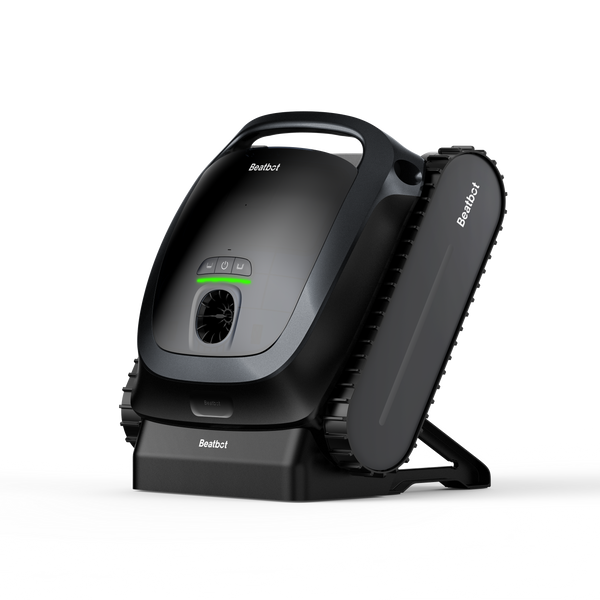
Surface sensitivity: the Beatbot Sora 30 robotic pool cleaner. For vinyl liner pools and standard layouts, the Sora 30 scrubs floor, walls, and waterline with a four-roller brush system, avoiding hard side-brush contact that can chafe a liner. Its 6,800 GPH suction covers pools up to 3,200 sq ft, and Smart Surface Parking with SmartDrain releases internal water before pickup for easier retrieval.
Debris exposure: the Beatbot Sora 70 pool cleaning robot. For pools under trees or near heavy landscaping, the Sora 70 adds JetPulse twin-jet surface cleaning, which pulls leaves and pollen off the water before they sink and stain the floor. Its 6L filter holds a heavy autumn drop in one session, and the robot reaches tanning ledges in as little as 8 inches of water.
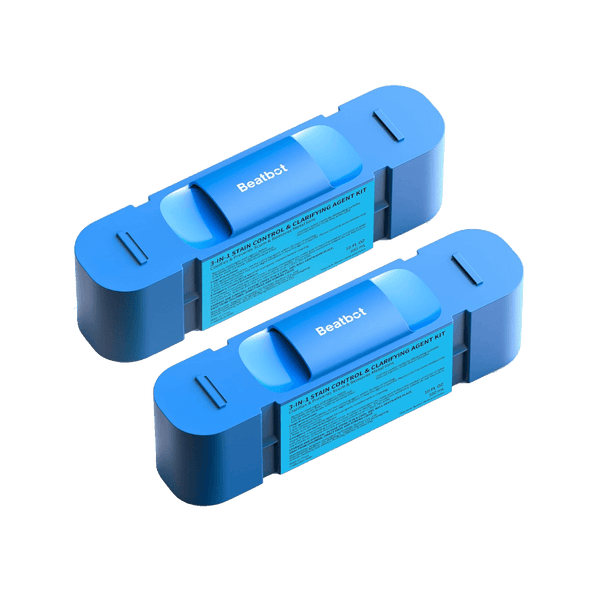
Pool size and water clarity: the Beatbot AquaSense 2 Pro cordless pool robot. For larger pools where fine particulates cloud the water, the AquaSense 2 Pro runs the ClearWater clarification system, which dispenses a biodegradable clarifier during cleaning to bind the fine particles that porous plaster tends to hold. Dual-layer 150 μm outer and 250 μm inner filtration then captures what the clarifier flocculates.
Layout complexity: the Beatbot AquaSense 2 Ultra automated pool cleaner. For custom shapes with tanning ledges and multi-level layouts, the AquaSense 2 Ultra uses HybridSense AI mapping to build a 2D layout of the pool and route around freeform curves, attached spas, and elevated platforms. Two side brushes sweep debris from edges and corners where algae starts.

Which Pool Type Is Right for Me?
Choose fiberglass if a catalog shape fits your yard and you want to swim this season with minimal ongoing work. Choose concrete if you need a specific custom shape, an attached spa, a tanning ledge, or a multi-level design, and you plan to own the home long enough for the investment to earn out. Choose vinyl liner if upfront price is the primary constraint and a scheduled liner replacement every 7 to 12 years fits your budget.
In cold-climate regions with short pool seasons, vinyl liner often makes more sense than fiberglass because the install window fits a tighter schedule and the per-year utility is lower. In homes that will be resold within 5 to 7 years, concrete rarely earns back the premium, even with a custom shape, because the buyer pool narrows.
FAQs
Is an Uneven Floor Normal in a Vinyl Liner Pool?
Yes, for vinyl liner pools built over a vermiculite or sand base. Minor waves or soft spots in the floor are normal settling and do not indicate liner failure. True failures show as sharp indentations, visible tears, or water loss behind the liner.
Does Pool Material Change How Much You Spend on Chemicals?
Yes. Concrete pools use the most chemicals because porous plaster holds algae and pushes pH upward as calcium leaches into the water. Fiberglass uses the least because the non-porous gelcoat resists algae and keeps chemistry stable. Vinyl liner sits between the two.
Which Pool Type Heats Up Fastest and Holds Heat Best?
Fiberglass holds heat best because the insulating shell loses less warmth to the surrounding ground. Vinyl liner is next. Concrete loses heat fastest because the mass absorbs and dissipates it, which usually means longer heater runtime and higher energy bills in cooler regions.
Can You Convert a Vinyl Liner Pool to Fiberglass or Concrete Later?
Not practically. A conversion requires removing the wall panels and starting over on the base structure, so the total cost lands close to a new build. Most owners stay with the original material and replace the liner on schedule.