Most Popular


 Sora Series


 AquaSense Series

 Skimmer & Bundle

 Retail Edition


 Accessories


Most above ground pools in the US require a permit. The rule that triggers it is almost always the same: the pool holds more than 24 inches of water, sits on the property semi-permanently, or needs an electrical hookup for a pump or heater.
The application is filed with your local city or county building department, not a state agency, and what they ask for is fairly predictable: a site plan, the pool model and dimensions, fencing details, and electrical drawings if a circuit is being added.
When Does an Above-Ground Pool Require a Permit?
Four conditions trigger a permit, and most homeowners hit at least two of them. The first is water depth above 24 inches, which is the threshold the International Swimming Pool and Spa Code (ISPSC) uses to define a regulated pool, and which most municipalities have adopted into their building code.
A 30-inch, 48-inch, or 52-inch steel-wall pool clears that line immediately, even if the manufacturer markets it as portable.
The second is electrical work. Adding a 120V or 240V circuit for a pump, heater, salt cell, or any equipment requiring a GFCI-protected circuit pulls the project under National Electrical Code (NEC) Article 680, even when the pool itself might have qualified for a size-based exemption.
The third is permanence. A pool installed on a poured pad, set into a deck, or left up year-round is treated as permanent for code purposes.
A small inflatable pool drained nightly usually is not. The fourth is location: setbacks from property lines, septic systems, easements, and overhead power lines all create permit conditions, and pool volume above a few thousand gallons is regulated in some jurisdictions regardless of depth.
Narrow exemptions exist. New York City does not require a building permit for one- and two-family homes installing an outdoor pool of 400 square feet or less, provided setback and plumbing rules are met. Most jurisdictions are stricter. Confirm with your local building department before assuming yours qualifies.

What Documents Do You Need to File?
Most building departments ask for the same five-document package: a site plan, the pool's manufacturer specifications, a barrier and gate plan, an electrical plan, and an HOA approval letter where applicable. The site plan is the document rejected most often, usually for missing dimensions or setbacks.
The site plan is a top-down drawing of your lot showing the house, property lines, the proposed pool location with measured distances to each line, and the placement of pump equipment and fencing. It does not have to be drafted by an engineer for a typical backyard install.
A clean hand drawing with measurements is accepted in most counties, provided it includes setbacks, wetland buffers if relevant, and the location of any septic system. Several US counties publish sample drawings to copy from.
The electrical plan typically requires a licensed electrician, even when the pool itself is being installed by the homeowner. The electrician's scope is set by NEC Article 680, which is detailed in its own section below.
Common rejection reasons go beyond missing dimensions. Pools placed inside a utility easement, within the setback to a septic system or leach field, or under overhead power lines are denied at plan review.
So are submissions where the proposed barrier height does not match the pool wall height, where the electrical plan lacks GFCI specification, or where HOA approval is missing in covenant-controlled communities. Wetland buffer encroachment is the slowest reason to recover from, since it pulls a separate agency into the review.

What Are the Pool Barrier and Fencing Requirements?
Inspectors check three things on every above-ground pool: barrier height, the four-inch sphere rule, and gate behavior. These come from ISPSC Section 305, which most US jurisdictions adopt with light amendments.
The barrier must be at least 48 inches high measured from the side facing away from the pool. For an above-ground pool with walls already 48 inches or taller, the pool wall itself can serve as the barrier, provided the ladder is removable, retractable, or surrounded by its own compliant gate. If the wall is shorter than 48 inches at any point, fencing has to be added on top of the wall or around the pool.
Openings in the barrier cannot allow a four-inch sphere to pass through. Pedestrian gates have to swing outward, away from the pool, and must be both self-closing and self-latching. The latch release must sit at least 54 inches above the ground for residential pools.
California adds a layer through the Swimming Pool Safety Act. Beyond the 48-inch barrier, the home must include at least two of seven approved drowning-prevention features, such as an ASTM F1346-compliant safety cover, exit alarms on doors leading to the pool area, and self-closing devices on those doors. The building department typically hands homeowners the seven-item list at intake.

What Does NEC Article 680 Require?
NEC Article 680 covers every electrical component within five feet of the pool water, plus the pump motor circuit and any receptacle within twenty feet of the inside pool wall. Three rules get checked at inspection: GFCI protection, equipotential bonding, and receptacle placement.
GFCI protection is required on the pump motor circuit and on any 15A or 20A, 125V to 250V receptacle within twenty feet of the inside pool wall. The 2023 NEC, now adopted in California and being adopted across other states through 2026, applies GFCI requirements to virtually all pool-related circuits.
Equipotential bonding ties together every conductive part within five feet of the water using #8 AWG solid copper. The goal is to eliminate voltage differences between metal items a swimmer might touch at the same time, such as a metal ladder, the pump housing, and a metal handrail. Aluminum is not permitted as a bonding conductor.
Receptacle placement is geometric. A general-purpose 125V outlet must be located between 6 and 20 feet from the inside pool wall when a permanently installed pool is present, and NEC explicitly prohibits extension cords for pool equipment. An existing deck receptacle often needs to be moved or replaced with a GFCI-protected one in the correct distance band.
Permit Cost and Timeline
Plan on two to six weeks from application to approved permit for a typical residential above-ground pool, with another inspection cycle after installation. Permit fees in most US jurisdictions land between $100 and $500 for the building permit, plus $75 to $200 for the electrical permit. Los Angeles, the New York metro, and other higher-cost markets run higher, particularly when grading, hillside review, or coastal zoning is involved.
Two factors stretch the timeline. The first is HOA review, which runs separately from the city, and many HOAs require architectural committee approval before the city will accept the application. The second is wetland or septic review. Lots within an upland review area, or with a septic system within ten feet of the proposed pool location, need an additional clearance from the health or wetlands department.
Skipping the permit is the worst option financially. Cities routinely require unpermitted pools to be removed, drained, or retroactively brought to code, with daily fines during the violation period. A homeowners' policy can also deny a drowning or shock-injury claim if the pool was installed without permits or the required barrier.
Pool Maintenance After Permit Approval
After the final permit closes, the work shifts from regulation to maintenance. above ground pools change the math here: the pool sits on the lawn, every backyard receptacle has to respect the NEC 6-to-20-foot rule, and there is no plumbed-in skimmer. Cordless robotic pool cleaners are the default answer, with no new circuit and no dependency on a built-in filtration path.
The hardest part of cleaning an above-ground pool is retrieval. Pool walls run 48 to 52 inches tall, and a cleaner that finishes on the floor is unreachable from outside the wall, leaving you on a ladder with a hook pole.
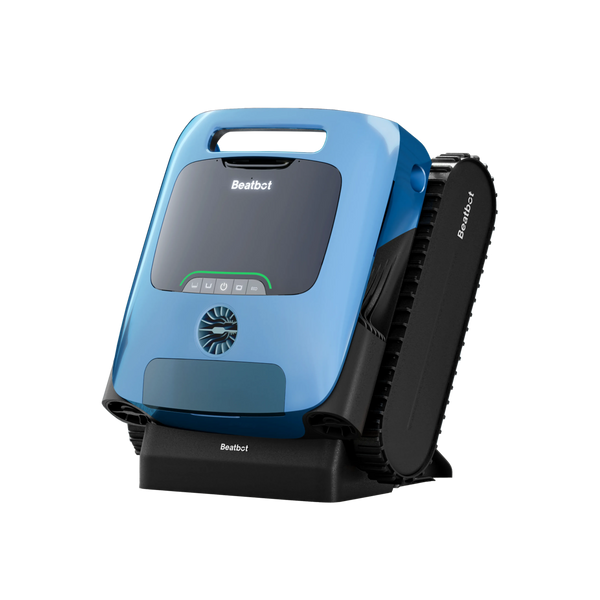
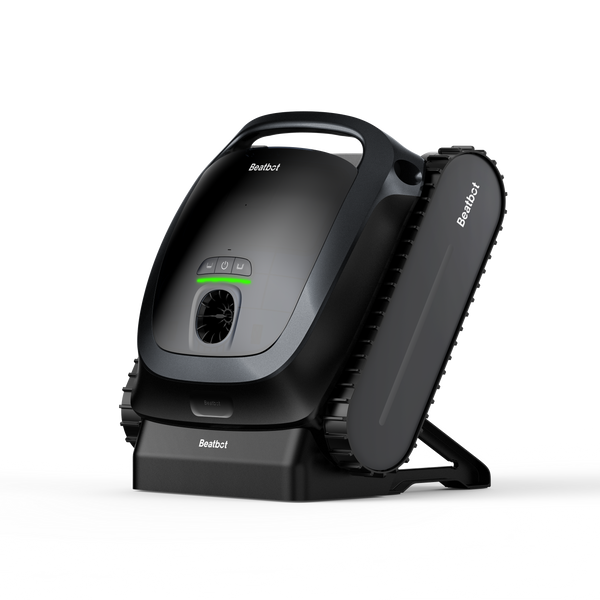
The Beatbot Sora 10 cordless pool robot solves this with smart waterline parking: at the end of the cycle, the robot navigates to the pool's edge within 10 minutes and holds itself at the waterline. Floor, wall, and waterline coverage run in the same cycle.
Above-ground installs with a connected deck, side-entry step, or integrated wading platform are a separate case, since standard cleaners ignore these areas as too shallow to track. The Beatbot Sora 30 robotic pool cleaner is rated to operate in water as shallow as 8 inches and clean platforms with a minimum area of 3.3 ft × 3.3 ft, which fits the typical step or platform footprint.
Most above ground pools have no plumbed-in skimmer, so surface debris from leaves and pollen stays on the water until it sinks or is netted by hand. For pools near deciduous trees or in heavy-pollen seasons, that becomes the dominant maintenance load.
The Beatbot Sora 70 pool cleaning robot adds JetPulse water-surface cleaning to the floor, wall, and waterline cycle, paired with a 6L filter at 150 µm so a full leaf-drop session is captured in one run.

FAQs
Can I Install an Above-Ground Pool Myself Without Hiring a Contractor?
Yes in most US jurisdictions, as long as you pull the permits in your own name as the homeowner-builder. The electrical work usually still has to be done by a licensed electrician because NEC Article 680 inspections require signed-off bonding and GFCI protection. North Carolina and a few other states have narrow homeowner electrical exemptions.
Does an Inflatable Pool Need a Permit?
Usually no, if the water depth stays under 24 inches and there is no electrical hookup. A small ring-style inflatable that drains nightly is exempt almost everywhere. A larger inflatable with an external pump can cross the threshold, particularly when the pump requires a dedicated GFCI receptacle.
Do I Legally Need a Fence Around My Pool?
In almost every US jurisdiction, yes, although the fence does not always have to be a separate structure. ISPSC Section 305 allows the pool's own wall to serve as the barrier when the wall is at least 48 inches high and the ladder can be locked or removed. Existing yard fencing can also count if it fully encloses the pool area, is 48 inches or taller, has openings under four inches, and has a self-closing, self-latching gate.
Do Appraisers Look for Unpermitted Pool Work?
Yes. Appraisers and home inspectors flag unpermitted pools, missing barrier compliance, and electrical work without an inspection record, and the affected square footage is typically excluded from valuation. Buyers' lenders may require remediation or a permit close-out before approving the loan, which can delay or kill a sale.
Can I Bury an Above-Ground Pool Partially in the Ground?
Sometimes, but most jurisdictions then re-classify the install as in-ground or semi-in-ground and apply the stricter ISPSC Chapter 8 rules, including engineered drawings and excavation review. Manufacturer approval is also required, since burying a steel-wall pool can void the warranty if the wall is not rated for soil pressure.
What Happens at the Final Inspection?
An inspector verifies that the barrier height, gate latch, and openings meet ISPSC 305, that the pool is sited per the approved site plan, and that the electrical contractor's bonding and GFCI work matches the filed plan. If the ladder is meant to retract or lock, the inspector will test it. Most failures are barrier-related rather than electrical.