Most Popular


 Sora Series


 AquaSense Series

 Skimmer & Bundle

 Retail Edition


 Accessories


If your pool sits under a ring of mature trees, the mesh-versus-solid decision comes down to one trade-off: a solid cover blocks every leaf, needle, and speck but collects water on top and needs a pump, while a mesh cover drains itself and is easy to handle but lets fine debris and some sunlight pass into the pool. Solid gives you the cleanest spring opening. Mesh gives you the lowest winter effort. Which one is right depends on the kind of trees you have, when you open and close the pool, and how much attention you are willing to give a cover through the off-season.

Mesh, Solid, or Hybrid: The Quick Answer
For a yard that drops a lot of organic material, choose a solid cover if a clean spring opening matters most, a mesh cover if low winter effort matters most, or a hybrid or tight-weave mesh if you want most of the solid's debris protection without the pump. The deciding factor is usually your trees: fine droppers like pine needles and oak tassels favor solid or tight-weave, while big leaves and open, breezy exposure make mesh the easier call.
What Happens to Leaves and Debris Under Each Cover
The real difference in a wooded yard is not whether a cover stops big leaves, because both types do, but whether it stops the fine material that turns pool water dark. A solid cover is a complete barrier. It blocks large leaves and the small stuff that causes most spring headaches: pine needles, pollen, oak tassels and catkins, and the tannins that leach out of decaying leaves and stain a liner. Nothing reaches the water, so the chemistry you set at closing stays put.
A mesh cover keeps whole leaves out of the pool but works more like a strainer than a seal. When leaves and rain sit on top of it over the winter, the water that drips through carries dissolved tannins, silt, and pollen with it, which is how a mesh-covered pool ends up tea-colored or cloudy by spring. The weave also lets a fraction of sunlight through, and even cool water will start growing algae once light and warmth combine in early spring.
This is where the type of tree matters more than the number of trees. Big deciduous leaves from maples and oaks mostly land and stay on top of any cover, where you can blow or rake them off. Fine droppers are the harder case. Pine needles, oak tassels, and catkins are small enough to work into a mesh weave and wash through with the rain, so a yard dominated by evergreens and oaks pushes the decision toward a solid or tight-weave cover.

Winter Maintenance: Pump vs. Set and Forget
The biggest ongoing difference between the two covers is that a solid cover asks for attention all winter and a mesh cover mostly does not. Because a solid cover holds water, it needs a submersible cover pump running on top to clear rain and snowmelt. If that water is left to build up, its weight can stretch the cover, sag it into the pool, or in a heavy storm pull it down entirely. Pumps also fail, freeze, or clog, so a solid cover is a low-effort but not zero-effort commitment through the cold months, and the pump itself is a recurring cost that usually needs replacing every few years.
A mesh cover drains through its own surface, so in most cases there is no pump, no standing water, and very little to do between closing and opening beyond blowing leaves off the top now and then. For anyone who travels in winter, has limited mobility, or simply does not want a cover to think about until spring, that hands-off quality is the single strongest argument for mesh in a leafy yard.
Spring Opening: Which Cover Opens Cleaner?
A solid cover almost always wins the opening-day comparison, but a mesh cover can come close if you time the season well. Pull a solid cover in spring and the water underneath is usually close to how you left it, so the pool often needs only reconnecting, balancing, and a short run of the filter before it is swimmable.
Open a mesh-covered pool and you are more likely to face cloudy or greenish water that needs vacuuming, brushing, a shock treatment, and a day or two of filtering to clear. The way experienced owners manage this is timing rather than equipment: close the pool late, once the water is cold, with the chemistry fully balanced, and open it early, before the water warms enough to bloom. Closing late and opening early gives algae a much smaller window, and many mesh users report opening to nearly clear water because of it. In a heavy-leaf yard the debris load still bites either way, but good timing narrows the gap between the two covers considerably.
Handling, Weight, and Safety
Mesh covers are easier and safer to live with day to day, while solid covers protect the water better at the cost of being heavier to manage. A solid vinyl cover is made of dense coated material and, once wet, is heavy enough that installing or removing it is a two-person job. The standing water it holds is also a hazard: it can drown small animals and becomes a mosquito breeding spot in early spring if the pump is off.
A mesh cover is light enough for one person to handle and, because it drains, never carries a puddle. A proper mesh safety cover also anchors tight to the deck and is rated to hold the weight of a person or pet, which a tarp cannot. So in a yard where kids or animals are around, an anchored mesh or solid safety cover is the safer barrier regardless of the debris debate.
Cost and Lifespan
Mesh covers usually cost less up front and last longer, while solid covers cost more and carry the extra ongoing expense of a pump. A solid vinyl cover typically runs a few hundred dollars more than a comparable mesh cover, commonly on the order of $200 to $600, and it tends to last around 7 to 11 years. A mesh cover generally lasts longer, in the range of 10 to 15 years, because its lighter woven material resists UV and tearing better than heavy vinyl under constant water weight.
The pump belongs in the math too. A solid cover requires one, it adds to the purchase, and it needs replacing periodically, so the real comparison is a solid cover plus its pump over time against a mesh cover plus more spring chemicals, not just the sticker price.
These are the factors that change the decision in a wooded yard.
| Factor | Mesh cover | Solid vinyl cover | Hybrid / tight-weave mesh |
|---|---|---|---|
| Large leaves | Kept out | Kept out | Kept out |
| Fine debris and tannins | Passes through | Blocked | Mostly blocked |
| Sunlight and early algae | Some light passes | Fully blocked | Mostly blocked |
| Winter upkeep | Self-draining, usually no pump | Needs a cover pump | Self-draining, usually no pump |
| Weight and handling | Light, one person | Heavy, two people | Heavier than plain mesh |
| Spring opening | Often dirty, needs cleanup | Usually clear | Cleaner than plain mesh |
| Typical lifespan | About 10 to 15 years | About 7 to 11 years | Similar to mesh |
| Up-front cost | Lower | Higher, plus a pump | Between the two |
If your winters are wet and you will not tend a pump, mesh's self-draining advantage can outweigh a cleaner opening. If a spotless opening matters most to you, the reverse holds.
The Hybrid Cover Option for Heavy Leaf Fall
A hybrid cover fits the yard that drops a lot of fine debris but where a pump is a dealbreaker. Manufacturers make covers that block most sunlight and fine material like a solid cover while still letting water drain through, either by using a much tighter mesh weave rated to block a high percentage of light, or by building a mostly solid cover with mesh drainage panels. The result is cleaner water than plain mesh without the standing water and pump that come with a fully solid cover.
The catch is that a hybrid weave is heavier and usually costs more than standard mesh, it can be awkward to install once debris weighs it down, and it still passes a little fine sediment. For a backyard ringed by pines and oaks, it is often the closest thing to having both.
Leaves Still Mean Cleanup With Any Cover
No winter cover ends the cleaning job, because a cover only protects the pool while it is closed. Through the swim season the same trees keep dropping leaves and pollen into an open pool, and at opening there is almost always debris to clear off the floor and out of the water. That ongoing reality, more than the cover choice, is what determines how much time you spend fishing debris out of the water in a leaf heavy yard.
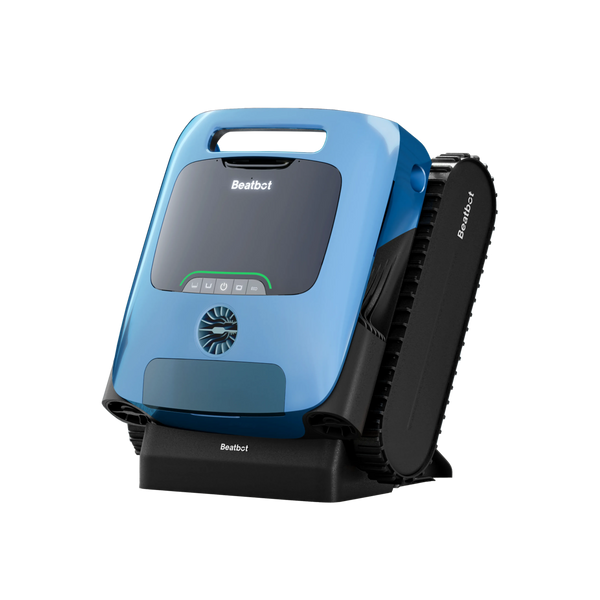
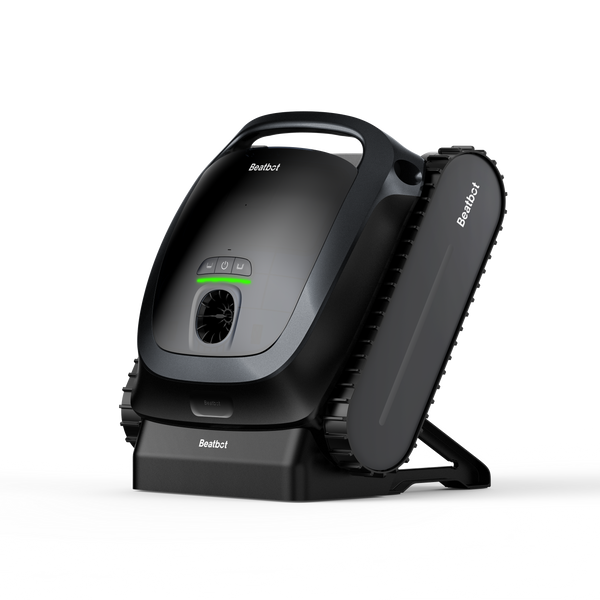
This is where a capable robotic pool cleaner does the recurring work the cover cannot. The Beatbot Sora 70 robotic pool cleaner is built for exactly this kind of debris load: it cleans the water surface as well as the walls, waterline, and floor, so floating leaves get collected before they sink and stain, and its water-surface remote control lets you steer it straight to a pile of leaves or a problem corner.
A 6.7 inch suction port swallows whole leaves without clogging, and a 6L basket holds enough to get through the heavy days after a storm, so a tree-lined pool stays clear during the season no matter which cover you use in winter. When it finishes, the Beatbot Sora 70 rises to the surface and returns to the edge for an easy lift-out, which matters when you are cleaning a leafy pool often.
How to Choose the Right Cover for Your Yard
The choice comes down to how fine your debris is, how much attention you will give a cover in winter, and how clean you need the water on opening day.
If you want the cleanest possible spring opening and you are willing to run and check a cover pump through the winter, choose a solid vinyl cover. It is the strongest fit for a yard heavy with pines, oaks, and other fine droppers where tannin staining is a concern.
If you want a cover that takes care of itself and lifts easily, and you are comfortable with a couple of days of spring cleanup, choose a mesh safety cover and lean on the close-late, open-early routine to keep algae in check. This is usually the better pick if you travel in winter, want the simpler handling, or prioritize the safety of a self-draining anchored cover.
If your yard drops heavy fine debris but a pump is a dealbreaker, choose a hybrid or tight-weave mesh cover for most of the debris and light protection of solid without the standing water. And whichever winter cover you land on, plan for in-season debris removal separately, since that is the part of a leafy pool no cover solves.
FAQs
Do mesh pool covers let leaves into the pool?
Whole leaves stay on top of a mesh cover, but fine material gets through. As leaves and rain sit on the cover over winter, the water that drains through carries dissolved tannins, silt, and pollen into the pool, which is why a mesh-covered pool often opens cloudy or tea-colored even though large leaves never reached the water. A tighter-weave or hybrid mesh reduces how much fine debris passes through.
Is a solid or mesh cover better if I have pine trees?
Pine trees push the decision toward a solid or tight-weave cover. Pine needles are small and stiff enough to work into a standard mesh weave and wash through with rainwater, so a yard dominated by pines and other fine droppers gets more benefit from the complete seal of a solid cover, or from a hybrid weave if you want to avoid a pump.
Can I use a solid cover without a pump?
No. A solid cover holds all the rain and snowmelt that lands on it, and even a few inches of water weighs enough to stretch, sag, or tear the cover and stress its anchoring. A submersible cover pump running on top to clear that water is a required part of using a solid cover, not an optional accessory.
Which pool cover lasts longer, mesh or solid?
Mesh covers generally last longer. A mesh safety cover commonly lasts around 10 to 15 years, while a solid vinyl cover tends to last about 7 to 11 years, because the heavier vinyl and the constant load of standing water wear it out faster. The pump a solid cover requires also needs periodic replacement, which adds to its long-term cost.