Most Popular


 Sora Series


 AquaSense Series

 Skimmer & Bundle

 Retail Edition


 Accessories


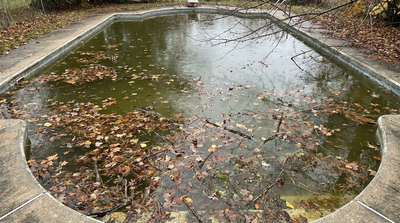
Closing a pool in fall works in a set order: clear floating debris and baskets while leaves are still dropping, vacuum sunken acorns off the floor, get the water clear, then balance, shock, clear the lines, and cover. The rule that ties it together is simple. Never put the cover on over debris. Leaves and acorns left in the water break down all winter, consume chlorine, stain surfaces, and open the pool green in spring. Before you start the closing steps, the water should be clean enough to hold a winter chlorine level, and the heaviest leaf drop should be behind you. Work through the stages in order, because each one sets up the next.

Stay Ahead of Falling Leaves Before Closing
During peak leaf drop, skim the surface daily and empty the skimmer and pump baskets at least twice a day so debris never sinks or chokes circulation. Staying on top of it here is what keeps the closing itself short.
A deep-bagged leaf rake clears heavy shedding faster than a flat skimmer net, since it scoops large volumes of leaves and seed pods without spilling them back into the water. Angling your return jets into a gentle circular flow pushes floating debris toward the skimmer, and an in-line leaf canister on the suction side keeps acorns and wet clumps from jamming the pump basket.
Baskets can fill within hours during the worst weeks, so a single daily check is rarely enough. You are ready to start closing once the trees are nearly bare and the surface stays clear between skims.
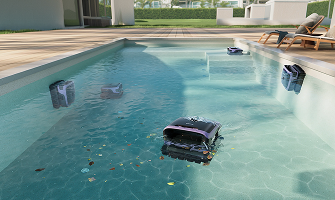
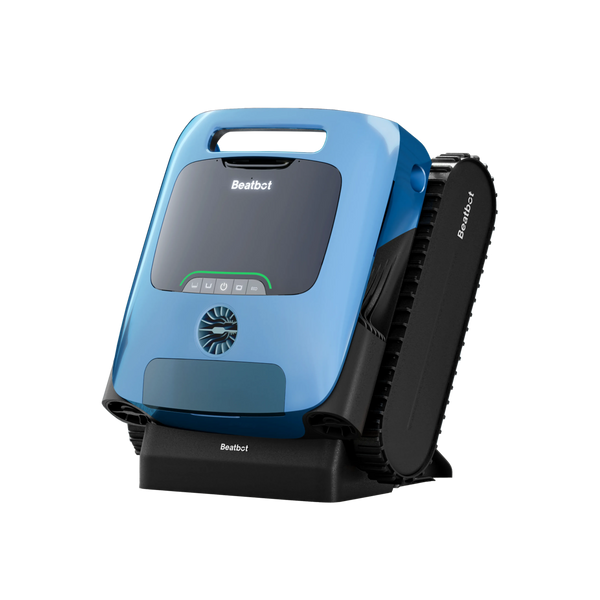
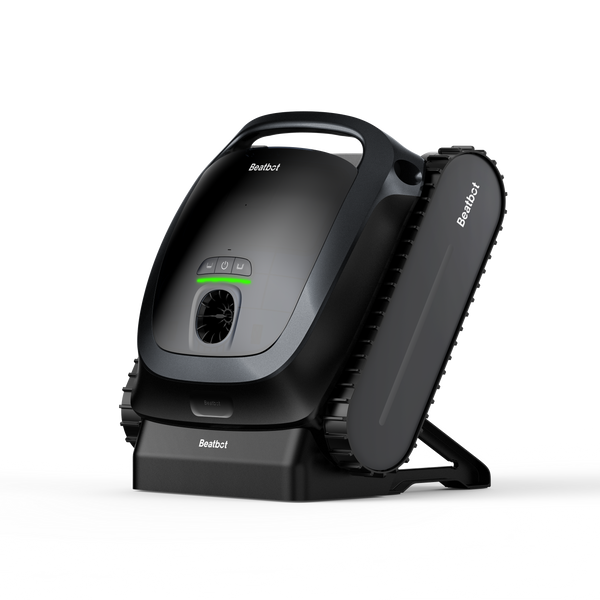
To cut the daily skimming during peak weeks, a cordless robotic pool cleaner that cleans the water surface can catch leaves before they sink. The Beatbot Sora 70 robotic pool cleaner uses a JetPulse™ water-surface system with dual converging jets that pull floating leaves toward the intake and capture them on the first pass, with no skimmer running. It also cleans the floor with a 6.7-inch suction inlet and a 6L debris basket sized for autumn loads, so heavy drop rarely fills it mid-cycle. It does not replace the final manual check before closing, but it removes most of the daily hands-on time.
Vacuum Sunken Acorns and Floor Debris
Vacuum the entire floor, working the corners and dead zones where circulation pushes debris to settle, until nothing visible remains on the bottom. Acorns sink fast and their tannins stain plaster and vinyl if they rest against the surface, so the floor has to be clear before the water can be balanced.
A pool leaf vacuum on a telescopic pole handles wet leaves and acorns well. Wind and circulation pile debris in the same low-flow spots, so start there and you usually clear the bulk of it quickly.
The floor is done when the bottom is visibly clear, the dead zones are checked, and the baskets are empty.

Clear Cloudy Water Before Balancing the Chemistry
Get the water clear before you touch the chemistry, because chlorine and shock work far more effectively in clear water than in water clouded with suspended organics. Fall haze usually comes from pollen, dust, and broken-down leaf matter that coarse filtration passes straight through, and it signals organic material is still in the pool.
Extend the daily filter run time during heavy shedding and clean or backwash the main filter more often, which clears most of the cloudiness without extra chemicals. If haze lingers after the visible debris is gone, a clarifier binds the smallest particles into clumps the filter can catch.
The water is ready for balancing when it looks clear to the bottom and the filter runs clean.
Balance, Shock, Clear the Lines, and Cover the Pool
With the pool clear, balance the water to winter levels, shock it, blow out the skimmer lines, and put the cover on. Each part protects a pool that will sit untouched for months.
Balancing and shocking sets a chlorine reserve that lasts through the cold season. Clearing the skimmer lines is the step owners skip most often. Trapped acorns and leaf fragments hold water in the plumbing, and that water can freeze and crack fittings over winter, turning a debris oversight into a spring repair. If trees are still dropping, stretch a mesh leaf net over your winter cover so late foliage catches on top and shakes off easily.

Do not cover a pool that is still green or cloudy after shocking. That means chlorine is being consumed by organics you have not fully removed, so re-treat and clear the water first.
Use this final check before the cover goes on:
-
Water is clear to the bottom with no visible debris
-
Chemistry is balanced and shocked to winter levels
-
Skimmer and return lines are blown out and empty
-
Cover is secured, with a leaf net on top if drop continues
FAQs
Should I keep the pump running while leaves are falling?
Keep it running while you can empty the baskets often, since circulation helps the skimmer pull in floating leaves. In heavy drop or storms, shut it off if the basket clogs faster than you can clear it.
Do I still need to clear the cover after it is on?
Yes, if you use a mesh cover or a leaf net on top. Shake or blow off collected leaves before their weight drags the cover into the water. A plain solid cover needs standing water and litter pumped off.
When should I have a professional close the pool instead?
Call a professional if you cannot clear the skimmer lines, if staining or algae will not resolve, or if you are unsure how to winterize the plumbing against freezing. Frozen water in the lines can crack fittings, a costly repair.