Flagship


 Sora Series


 AquaSense Series


 Skimmer & Bundle

 Retail Edition


 Accessories



 Extended Warranty


Plain, unscented Clorox bleach can be used to sanitize a swimming pool. It contains sodium hypochlorite, the same active ingredient found in pool-grade liquid chlorine.
The key difference is concentration: household bleach typically contains 5% to 8.25% sodium hypochlorite, while pool-grade liquid chlorine runs between 10% and 12.5%. That gap means you need roughly twice as much bleach to achieve the same sanitizer level, and the lower concentration makes it degrade faster in direct sunlight.
For a pool owner in a pinch, bleach is a valid short-term option. For routine weekly maintenance on a mid-size or large pool, pool-grade chlorine or a stabilized chlorine product is more practical and usually more cost-effective per dose.
How Does Bleach Compare to Pool-Grade Chlorine?
A gallon of 12.5% pool chlorine delivers about 50% more available chlorine than a gallon of 8.25% household bleach. For a 15,000-gallon pool that needs a 2 ppm chlorine boost, you would use approximately 77 ounces of standard household bleach compared to roughly 51 ounces of pool-grade liquid chlorine.
Pool chlorine is also packaged for outdoor conditions and tends to hold its potency longer on store shelves. Bleach stored in a hot garage can lose significant strength within weeks, making accurate dosing harder over time.
What Type of Bleach Is Safe for Pools?
Only plain, unscented bleach with no added thickeners or surfactants is safe for pool use. The label should list sodium hypochlorite as the sole active ingredient, typically at a concentration between 5% and 8.25%.
Any bleach labeled "splash-less," "scented," "with fabric softener," or "with added cleaners" should never go near a pool. These formulas contain additives that can cause foaming, cloud the water, or react unpredictably with other pool chemicals.

How Much Bleach Do You Need for Your Pool?
A common target for everyday swimming is free chlorine between 1 and 3 ppm. As a reference point, raising free chlorine by 1 ppm in 10,000 gallons of water requires about 12.8 ounces (roughly 1.5 cups) of 8.25% household bleach. For a 20,000-gallon pool, double that figure. A pool chemical calculator or test kit reading gives the most accurate dose, since pH, temperature, and existing chlorine levels all affect how much you need.
For winter closing or algae prevention, super-chlorinating with 6 to 12 cups of bleach per 5,000 gallons helps suppress algae growth, using the higher end if the pool will sit unused for months. For a 33,000-gallon pool, that works out to roughly five 121-ounce bottles at the high end.
Why Does Bleach Break Down So Quickly in Sunlight?
Household bleach is unstabilized, meaning it contains no cyanuric acid (CYA) to shield the chlorine from ultraviolet radiation. When UV rays hit unstabilized chlorine in pool water, the hypochlorous acid breaks apart rapidly. On a bright summer day, an unprotected pool can lose up to 90% of its free chlorine within just a few hours.
Pool-grade chlorine tablets and granules often contain a built-in stabilizer that slows this breakdown. If you use liquid bleach instead, you will need to add cyanuric acid separately and maintain it between 30 and 50 ppm. Without that stabilizer, you are essentially re-dosing your pool daily.

Does Bleach Affect Your Pool's pH Balance?
Yes. Household bleach has a pH of around 12 to 13, which is highly alkaline. Every time you add bleach, it pushes the pool's pH upward. If pool water climbs above 7.8, the chlorine becomes significantly less effective at killing bacteria and algae, even if your free chlorine reading looks normal on a test strip.
Pool owners who use bleach regularly need to monitor pH more frequently, often after every addition, and keep muriatic acid or dry acid on hand to bring the pH back down.
Is Bleach Cost-Effective for Pool Maintenance?
At first glance, household bleach looks cheaper per bottle than pool chlorine. A 121-ounce bottle of Clorox bleach costs a few dollars at most grocery stores. A gallon of pool-grade liquid chlorine runs slightly more at a home improvement store.
The math changes when you account for the lower concentration, the separate cyanuric acid purchase, and the more frequent dosing required due to UV breakdown. For small above ground pools or inflatable setups, bleach can still be a reasonable option. For in ground pools above 15,000 gallons, pool-grade chlorine or a salt chlorine generator usually costs less per season when total chemical spending is compared.
What Bleach Cannot Clean in Your Pool
Bleach sanitizes the water, but leaves, pollen, insects, and sediment still settle on the pool floor, cling to the walls, and float across the surface. Waterline buildup from sunscreen, body oils, and environmental residue requires separate scrubbing, especially on textured surfaces like pebble or tile.
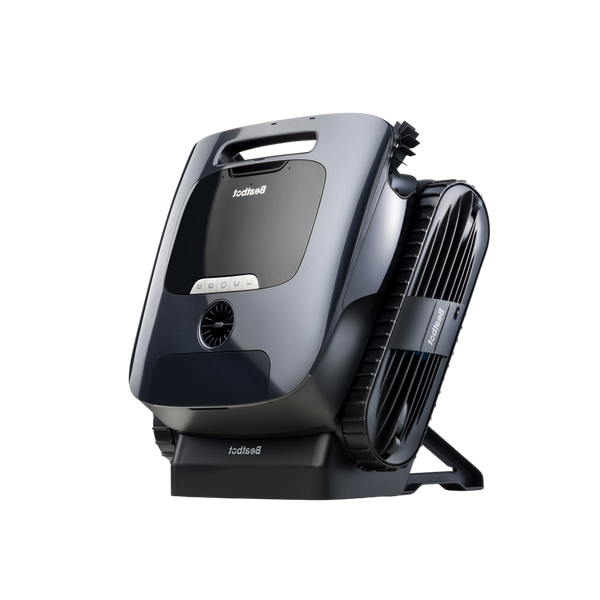
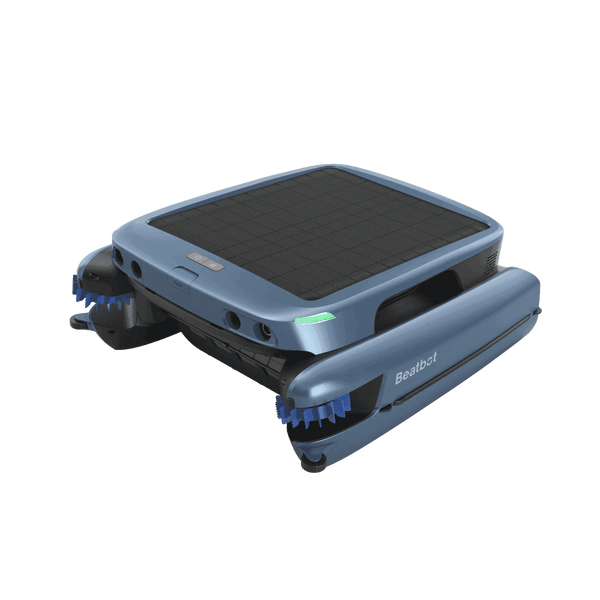
The Beatbot AquaSense 2 Pro robotic pool cleaner consolidates those tasks into one device, covering the floor, walls, waterline, and water surface in a single cycle for pools up to 3,875 sq ft.
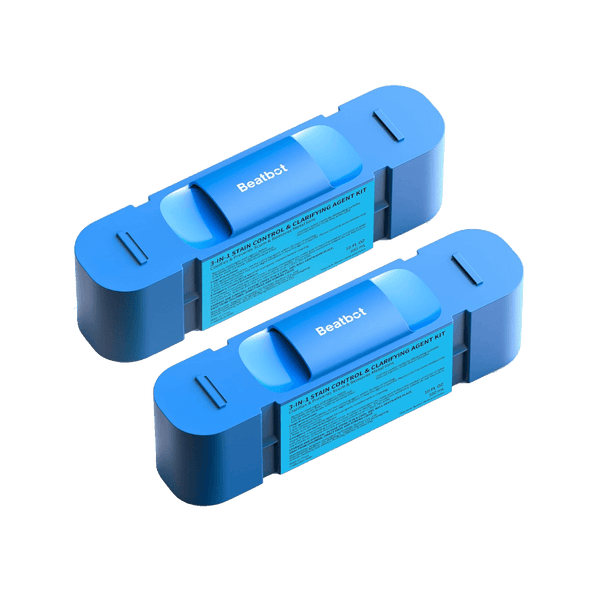
Its onboard ClearWater™ system also adds water clarification: a built-in dispenser releases a natural chitosan-based clarifier (derived from recycled crab shells) that binds dirt, oils, and microscopic particles into larger clumps, which then sink and get vacuumed up. One kit covers up to 99,000 gallons and lasts about a month with weekly use.

When Is Bleach the Right Choice?
Bleach makes the most sense in a few specific situations. If you run out of pool chlorine and need to treat your water before a swim, a few cups of plain bleach will restore sanitizer levels while you restock. For small above-ground or inflatable pools under 5,000 gallons, the volume of bleach required is manageable and the cost difference compared to pool chemicals is minimal.
Bleach also works for seasonal shock treatments, such as closing a pool for winter or opening it in spring when algae is already visible. Super-chlorinating at 6 to 12 cups per 5,000 gallons provides a strong initial dose. Test and rebalance pH, alkalinity, and stabilizer levels afterward.
Cleaning a Pool Beyond Chemical Treatment
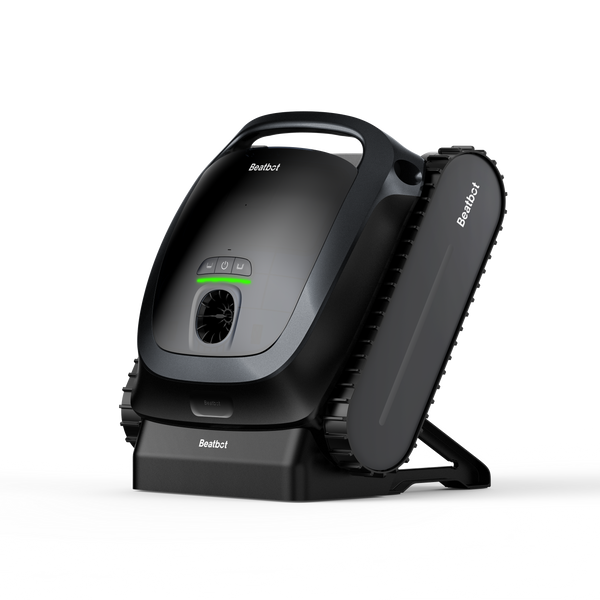
Pool owners with tree cover, seasonal pollen, or heavy wind exposure deal with floating debris that lands on the surface faster than manual skimming can keep up. The Beatbot Sora 70 robotic pool cleaner targets exactly this problem with JetPulse™ twin-jet technology, which projects four coordinated water streams from two side jets.
Inward streams funnel leaves, insects, and pollen toward the central suction inlet, while outward streams form barriers that block debris from slipping past the robot's sides. It also cleans floors, walls, and waterline, with 6,800 GPH of suction power and a 6L filter basket that holds an entire autumn leaf drop without mid-cycle emptying.
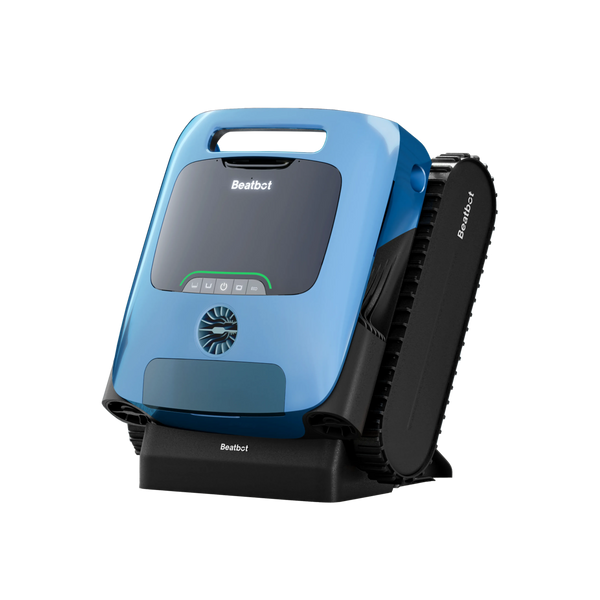
For pool owners focused on underwater cleaning, the Beatbot Sora 30 robotic pool cleaner covers floors, walls, waterline, and shallow platforms as low as 8 inches deep. It runs up to 5 hours of continuous floor cleaning on its 10,000 mAh battery for pools up to 3,200 sq ft, with a 5L filter that holds 650+ leaves per session and smart surface parking that brings the robot to the pool edge automatically when the cycle ends.
FAQs
Can I mix bleach with other pool chemicals?
No. Never combine bleach with muriatic acid, calcium hypochlorite, or any other pool chemical directly. Add bleach to the pool water on its own, wait for it to circulate, then adjust pH or alkalinity separately. Mixing bleach with acids produces toxic chlorine gas.
How often should I add bleach to my pool?
If bleach is your only sanitizer and the pool has no cyanuric acid stabilizer, you may need to add it daily during summer. With a CYA level of 30 to 50 ppm, dosing every two to three days is more typical. Test free chlorine levels before each addition rather than adding on a fixed schedule.
Will bleach damage my pool liner or equipment?
Plain unscented bleach at proper dilution does not damage vinyl, fiberglass, or concrete pool surfaces. The sodium hypochlorite is identical to what pool chlorine delivers. Problems arise only from overdosing or using bleach with additives, which can stain surfaces or corrode metal fittings over time.
Is it safe to swim right after adding bleach?
Wait until the bleach has circulated through the filtration system for at least 30 minutes, then test free chlorine with a kit or strips. Swimming is safe once the level reads 3 ppm or below. After a super-chlorination treatment, wait until chlorine drops back into the 1 to 3 ppm range before entering the water.
Will bleach clear up cloudy pool water?
Sometimes. If cloudiness comes from low chlorine letting bacteria or algae bloom, raising free chlorine with bleach can help. If the cause is fine particulates, high pH, or imbalanced alkalinity, bleach alone will not resolve it. Test the water first to identify the cause, then address chemistry imbalances or use a clarifier alongside chlorination.
What can you use instead of chlorine in a pool?
Common alternatives include bromine (popular for indoor pools and spas), saltwater chlorine generators (which produce chlorine on-site from salt), mineral systems paired with low-dose chlorine, and UV or ozone systems used as supplements. Fully chlorine-free options like biguanide exist but cost more and need specific compatible products. Most non-chlorine systems still rely on a backup oxidizer for shock treatments.