Most Popular


 Sora Series


 AquaSense Series

 Skimmer & Bundle

 Retail Edition


 Accessories


A large wrinkle in your vinyl pool liner is annoying, but fully draining the pool is usually the wrong move. Once the water weight is gone, the liner can shrink, shift, or tear. If the liner slips out of its track, the repair becomes much more expensive than the wrinkle itself. For most large floor wrinkles, the better fix is a partial drain down to a few inches of water, followed by a careful vinyl reset.
Why You Should Not Fully Drain a Vinyl Pool to Fix a Wrinkle
A vinyl liner pool should almost never be fully drained, even when the wrinkle is large. The water inside the pool is what keeps the liner pressed tight against the walls and floor.
Take that weight away, and the vinyl can contract in the sun, lift off the floor in spots, and pull out of the track at the top of the wall. If the liner shifts even an inch, it may not seat correctly when the pool is refilled. That turns a cosmetic wrinkle into a much bigger structural headache.
A partial drain is different. Lowering the water to about two to four inches above the shallow-end floor leaves enough weight in the deepest area to keep the liner anchored, while giving you enough room to work the wrinkle out by hand.
There is one case where a full drain may be unavoidable: the liner is so badly wrinkled or displaced that a reset is not possible, or a pool builder is replacing the liner entirely. In those cases, the work should be handled by a vinyl liner specialist, ideally in one day, so the vinyl is not left exposed to direct sun and groundwater pressure for long.
Why Large Wrinkles Form in Vinyl Liners
Large wrinkles usually come from one of three problems: groundwater pressure, a previous full drain, or harsh water chemistry. Knowing which one caused the wrinkle matters because it tells you whether this is a one-time repair or a sign of an ongoing issue.
Groundwater Pushing the Liner Up
When the water table around the pool rises after heavy rain, snowmelt, or a high seasonal groundwater level, that water can push against the underside of the vinyl. The liner lifts off the floor in places. When it settles back down, it does not always return to its original position.
That leaves slack in the floor, which shows up as a large, soft wrinkle, usually in the deep end. Pools in low-lying yards, clay soils, or without a working hydrostatic relief valve are most at risk.
A Prior Full Drain
If the pool was ever drained completely, even for a short time, the vinyl had a chance to shrink in the heat and stretch unevenly during refill. Once the liner is no longer sitting in its original position, wrinkles can form on the floor or in the corners and stay there until the liner is physically reset. This is the most common reason older pools develop large floor wrinkles and the reason full draining should be treated as a last resort.
Water Chemistry Problems
Low pH, high free chlorine, or repeated chemistry swings can soften and stretch vinyl over time. Chemistry-related wrinkles are usually smaller and more common on the walls than the floor, but ongoing imbalance makes the liner more likely to develop larger wrinkles when groundwater or temperature stress gets involved.
Small Wall Wrinkles vs Large Floor Wrinkles
Not every wrinkle calls for a partial drain. The key question is simple: can you flatten the wrinkle by hand with light pressure while the pool is full? If yes, treat it as a small wall wrinkle. If no, it is a large floor wrinkle, and the water level needs to come down.
Small wall wrinkles, the soft ripples that run a few inches across, often come from water chemistry rather than a liner that has shifted out of place. If possible, get the pool water above 85°F, balance pH and alkalinity, and use a pool brush, plunger, or flat squeegee to push the wrinkle downward toward the floor and outward toward the closest wall.
Working barefoot in the pool gives you the most control. If the wrinkle moves, keep working it slowly. If it does not move within a few minutes, stop instead of forcing it.
Large floor wrinkles sit under the full weight of the water column, which is why pressure from above usually will not reset them. Pushing harder only stretches the vinyl sideways and can make the shape worse. Partial draining is the safer way to release that pressure and give the liner room to return to its proper position.

How to Fix a Large Liner Wrinkle Without Damaging It
The safer process is straightforward: lower the water, move the slack back into place, and use suction to hold the liner tight while the pool refills. The steps below walk through the process in order.
Pick a Warm Day
Choose a day when the air temperature is above 75°F, ideally with the pool water in the mid-80s. Warm vinyl is softer, more flexible, and much less likely to crease or tear while you work with it. Cold vinyl is brittle and should not be handled.
Drain Partially, Not Fully
Lower the water level to roughly two to four inches above the shallow-end floor. Use a submersible pump instead of the pool's main filter system, since draining through the skimmer can damage the pump if it runs dry. Stop as soon as you can comfortably reach the wrinkle.
Pull the Slack Toward the Nearest Wall
With one or two helpers, grip the loose vinyl at the wrinkle and walk it slowly toward the closest wall. The goal is not to smash the wrinkle flat in place. The goal is to move the extra material into the wall-to-floor seam, where the corner can absorb it. Wear soft shoes or work barefoot so you do not scuff the liner.
Use a Shop Vacuum Behind the Liner
Insert a wet/dry shop vac hose behind the liner, usually through the skimmer faceplate, to create suction between the vinyl and the pool wall. That suction pulls the liner tight against the floor and walls while the pool refills, helping lock the reset in place.
Refill Slowly with the Vacuum Running
Keep the shop vac running while the pool refills. Once the water reaches about a foot deep, the weight of the water takes over and the vacuum can be removed. Continue filling at a normal rate from there.
If the wrinkle is in a corner, near a step, around a return fitting, or close to a main drain, stop and call a vinyl liner specialist. Cutouts and fittings are where most DIY liner repairs go wrong.

When to Call a Vinyl Liner Specialist
Some wrinkles are not good DIY candidates. Trying to fix them yourself can void a liner warranty or turn a $300 service call into a $2,500 liner replacement. Call a vinyl liner specialist if any of the following apply:
-
The wrinkle runs near a skimmer, main drain, return fitting, light niche, or step, where the vinyl is cut and sealed and tension in the wrong direction can pull the gasket or tear the cutout.
-
The wrinkle is more than a few feet long, or multiple wrinkles intersect at right angles, which usually means the liner has shifted significantly rather than just developed slack.
-
There is visible staining, fading, or thinning along the wrinkle, since stretched or chemically damaged vinyl can tear during a reset.
-
The pool has been drained completely in the past and the liner is more than five years old, because older vinyl loses elasticity and may not seat correctly after another reset.
-
Groundwater is visible behind the liner or you can hear water sloshing when you press on it, which is a hydrostatic pressure problem rather than a wrinkle problem and needs to be addressed first.
A professional reset typically takes a few hours and includes the shop vac procedure, a hydrostatic relief valve check, and a water chemistry assessment. Installed replacement liners can cost several thousand dollars, so paying for a reset is almost always the cheaper move.
How Cordless Cleaning Protects a Vinyl Liner Long-Term
Vinyl liners often fail because of sideways force. In many pools, the cleaner is the biggest source of that force. A corded suction or pressure cleaner drags a stiff hose across the floor on every cycle, and that hose can pull against the same seams and old wrinkles that the partial-drain reset just put back in place.
A cordless robotic cleaner removes the hose entirely and returns itself for retrieval, so nothing is dragged across the liner.
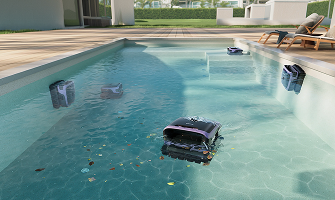
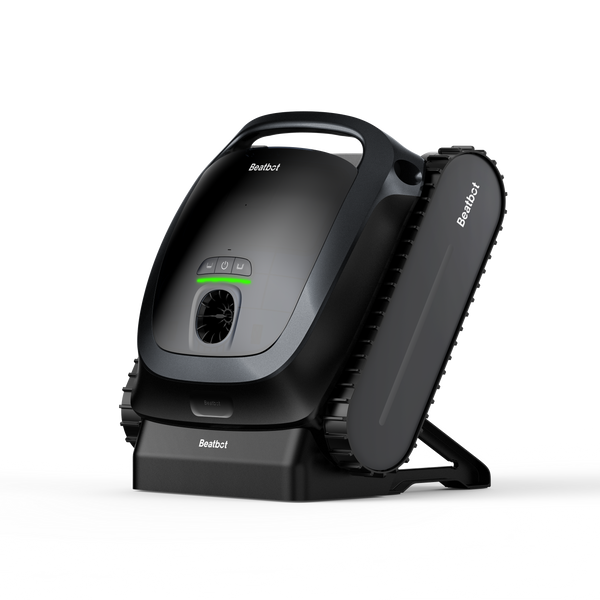
The Beatbot Sora 30 cordless robotic pool cleaner is built around that retrieval problem. When the cycle ends, Smart Water-Surface Parking lifts the robot to the surface using a submarine-style floating chamber and guides it to the pool edge, so you do not have to fish it out with a pole or wade into the deep end.
The robot is rated for vinyl as well as concrete, fiberglass, and ceramic tile, with dual-group roller brushes that hold traction without raking the floor. A 5L basket and 6,800 GPH suction handle a full pool in one cycle, keeping contact with the liner edge to a single retrieval per clean.
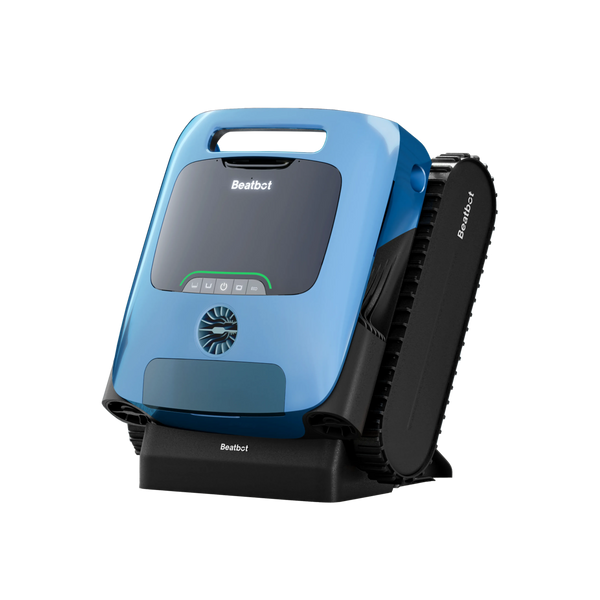
For pools where Smart Water-Surface Parking is not needed, the Beatbot Sora 10 robotic pool cleaner offers the same cordless, no-hose principle in a simpler setup. It cleans the floor, walls, waterline, and shallow areas down to 12 inches, supports vinyl among other surfaces, and uses smart waterline parking to return itself to the wall at the end of a cycle for a no-stretch lift-out.
FAQs
How long can a vinyl pool be drained before the liner is damaged?
Vinyl can begin to shrink in direct sun within a few hours, with noticeable shifting in less than a day in hot, dry weather. Refill the pool the same day any drain is performed, even a partial one.
Will a large wrinkle hurt my liner if I just leave it?
A large wrinkle wears thin along its raised edge as feet and debris pass over it, and that thinning can become a tear within a season or two. Plan to reset it within a few weeks of noticing it.
How can I tell if I have a groundwater problem under the liner?
Press on the floor with your foot or hand near the wrinkle. If you feel give, hear water sloshing, or see the vinyl billow upward, water is sitting behind the liner. Check the hydrostatic relief valve before any reset.
Will the wrinkle come back after a partial-drain reset?
A correctly executed reset should hold long term, but the wrinkle can return if the original cause is still active. Fix the groundwater path, stabilize pH and chlorine, and avoid future full drains to keep the liner seated.