Most Popular


 Sora Series


 AquaSense Series

 Skimmer & Bundle

 Retail Edition


 Accessories


Most in ground pools should almost never be fully drained, and plenty go three to seven years between full water changes, if not longer. A drain is a high-risk job: done at the wrong time, it can crack plaster, float the whole shell out of the ground, or ruin a liner.
That is why it is a last resort, saved for problems no amount of chemicals or filtering will fix. For everything else, a partial water change or simply keeping up with maintenance handles the issue without ever emptying the pool.
When Do You Actually Need to Drain Your Pool?
There are really only two reasons to fully drain a pool: major repairs, or water chemistry that has drifted past the point dilution can fix. Replacing a liner, resurfacing plaster, or getting at the floor, walls, or plumbing under the shell all call for an empty pool. So does an acid wash for staining or scale that will not come off any other way.
The chemistry side usually comes down to two numbers. The first is total dissolved solids, or TDS. Year after year of evaporation, topping off, and adding chemicals leaves minerals and dissolved material behind in the water, and it keeps stacking up.
Once TDS gets past roughly 2,500 ppm in a freshwater pool, your sanitizer starts losing its punch, the water turns dull, and balancing it takes more product than it should. Nothing you pour in will lower TDS, so the only fix is to swap old water for fresh, lower-TDS fill.
The second is cyanuric acid, or CYA. CYA shields chlorine from the sun, but it never breaks down or evaporates on its own, so it just keeps climbing. The APSP-11 industry standard caps it at 100 ppm and puts the sweet spot at 30 to 50 ppm.
Push past 100 and the chlorine gets so locked up it can barely sanitize, which leaves you with cloudy or green water even when your chlorine test reads fine. As with TDS, dilution is the only thing that reliably brings it down, and that usually means a partial drain rather than a full one.
When Should You Never Drain Your Pool?
Never drain your pool in hot weather, after heavy rain or with a high water table, or just because the water looks nasty.
Draining on a hot, sunny day bakes the plaster and tile in direct heat. As a rule of thumb, hold off any time the daytime high is above 80°F. Plaster is built to stay wet, and once it dries out in the sun it can crack, craze, or pit, while a vinyl liner left dry and exposed can shrink or tear in under a day.
The bigger danger is hydrostatic pressure. When the ground around the pool is saturated, after a downpour, or anywhere with a naturally high water table near lakes, rivers, or low-lying land, the groundwater presses up against the shell from below.
A full pool is heavy enough to push back. An empty one is not, and in the worst case it can lift, or pop, clean out of the ground, which is the kind of damage you do not come back from. Most in ground pools have a hydrostatic relief valve at the bottom to bleed off that pressure, but it only helps if it is actually working, and it will not save every part of the pool from sitting empty.

What you have built the pool from raises the stakes even further. Vinyl liner and fiberglass pools should almost never be drained all the way. A liner that dries out shrinks and usually will not seat right again, and an empty fiberglass shell is the one most likely to pop under groundwater pressure.
Above ground pools lean on the water for structure too, and emptying one can let the walls buckle or shift. With any of these, a full drain belongs in the hands of a professional, normally as part of a planned liner swap or repair.
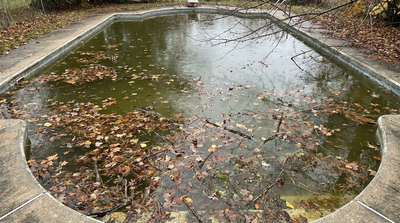
Green, cloudy, or debris-filled water is a water-quality problem, not a reason to start over. Algae clears up with shock and a good brushing. Cloudiness clears with balancing, filtration, and a clarifier. Debris comes out with a skimmer and a vacuum. Draining to deal with dirty water trades a routine afternoon of cleaning for a real shot at wrecking the pool.
When Is It Okay to Change Pool Water Without Fully Draining?
A partial water change is the right call any time a chemical has built up but the pool itself is fine. You let out some of the water, refill with fresh, and dilute whatever was causing trouble, all while leaving enough in the pool to hold the shell down and keep the surfaces wet.
Three things tend to trigger it. High CYA over 100 ppm only comes down by dilution, since there is no chemical that removes it. Creeping TDS works the same way, swapping out aged water in stages until the reading settles back. High calcium hardness, the culprit behind scale and chronic cloudiness, also has no additive that fixes it and clears up once you replace some water with softer fill.
In all three cases, running the refill through a hose filter keeps minerals out of the new water, so you are not right back where you started in a season or two.
When you do a partial change, never let out more than half the water at once, and refill right away. A lot of owners drop the level a foot at a time, or replace somewhere between a quarter and half the volume, then test and rebalance once the fresh water is in.
CYA reducer products are out there, and they are worth knowing about, but go in with eyes open. They can take weeks to do anything, the results are hit or miss, and for a lot of pool sizes they cost about what a partial drain would, except the drain is guaranteed to work. Where they earn their keep is in areas with water restrictions that limit how much you can drain and refill in the first place.
How to Drain a Pool Safely When You Have To
When a full drain really is unavoidable, the timing and the speed are what save the pool. Plan it for the mild stretch of spring or fall, when the surfaces are not cooking in the sun and the ground is less likely to be waterlogged. Check that your hydrostatic relief valve is open and working before you pull a single gallon.
Once it is empty, get it back to full as fast as you can, ideally within a day or two, and refill the moment the repair or acid wash wraps up. Before you commit to any of it, call your local water utility about discharge and refill rules, which change from one area to the next. And if you are not sure about your water table or whether that relief valve still works, hand the job to a pool pro rather than gamble with the shell.
How Regular Cleaning Keeps You From Draining
Staying on top of the water is what keeps a full drain years away instead of months. Nearly every reason people end up draining, cloudy water, algae, piled-up debris, climbing chemical levels, traces back to maintenance that slipped.
Three habits carry most of the weight: keeping the chemistry balanced, pulling debris before it breaks down, and filtering out the fine stuff around the clock. Balanced chemistry holds off scale and corrosion and keeps the sanitizer doing its job.
Clearing debris fast stops leaves and organic gunk from feeding algae and piling more work onto your chemicals. Steady fine filtration keeps the tiny particles that cloud the water from building up between cleanings. Together they slow the dissolved-solids creep that eventually forces a water change.
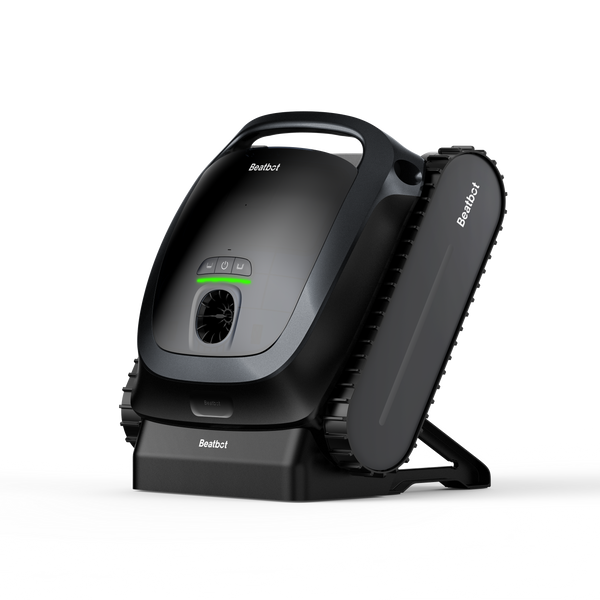
This is where a robotic pool cleaner pays for itself. The Beatbot AquaSense 2 Pro robotic pool cleaner runs dual-layer filtration that pulls debris and ultra-fine particles down to 150 μm on every pass, so the fine matter that clouds water and feeds dissolved solids gets caught before it ever settles in.
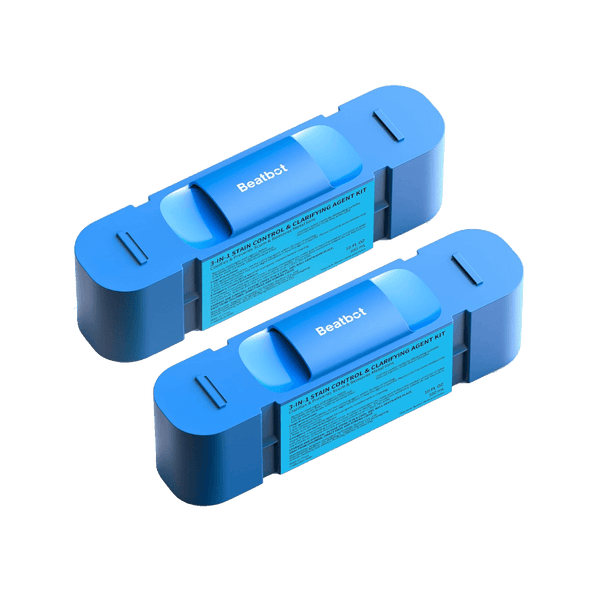
It works the floor, walls, waterline, and water surface in one machine, and its ClearWater system can dispense a clarifying agent that clumps fine particles together so the filter grabs them. The cleaner your water stays day to day, the slower TDS creeps toward the point a drain becomes the only option left.

Most of that organic load comes in through the surface. Leaves, pollen, and bugs that float on top eventually sink, rot, and turn into the very stuff that throws your chemistry off over time.
The Beatbot Sora 70 robotic pool cleaner gets to that debris before it breaks down with its JetPulse system, which uses converging water jets to herd floating debris toward the suction inlet while the robot also handles the floor, walls, and waterline. Its 6,800 GPH suction and 6L debris basket chew through heavy seasonal loads without clogging, keeping rotting material out of the water that would otherwise push you toward a drain.
FAQs
How do I know if my pool needs draining or just rebalancing?
Test your TDS and cyanuric acid first. Only think about a water change when TDS climbs past about 2,500 ppm or CYA tops 100 ppm and dilution cannot hold them in range. Green, cloudy, or off-balance water is almost always a chemistry fix, not a drain.
Can I drain my pool myself or should I hire a professional?
A partial change is fine to do yourself: drop the level no more than half and refill. A full drain is better left to a pro, who can read your water table and pool type before there is any risk to the structure.
Will draining my pool get rid of algae for good?
Not on its own. Spores and stains hang on to the surfaces even after the water is gone, so a drain for bad algae usually needs an acid wash too. For most blooms, shocking, brushing, and filtering works better and a lot more safely.
Does a saltwater pool need draining more often than a freshwater pool?
Not really. Saltwater pools sit at a higher baseline TDS by design, so the action point is different. What counts is how much the dissolved solids climb beyond the salt itself, not the total number on the meter.