Most Popular


 Sora Series


 AquaSense Series

 Skimmer & Bundle

 Retail Edition


 Accessories


Itchy skin after swimming is one of the most common pool complaints, and the cause is almost never what most people assume.
The instinct is to blame too much chlorine, but in most cases the real culprit is chloramines (the byproduct of chlorine reacting with organic matter), pH that is out of range, or skin that has been stripped of its natural moisture barrier by prolonged chemical exposure.
Each of these has a different fix, and adding more chlorine to a pool that already has a chloramine problem makes the irritation worse, not better.

What Causes Itchy Skin After Swimming?
Several distinct conditions produce post-swim itching, and they require different responses. Identifying the right cause before making any adjustment to pool chemistry is what distinguishes an effective correction from one that compounds the problem.
Chloramines (combined chlorine)
Chloramines form when free chlorine reacts with nitrogen-containing compounds introduced by swimmers: sweat, urine, sunscreen, and body oils. The result is combined chlorine, which is no longer an effective sanitizer but is a significant skin and eye irritant. The characteristic strong chemical smell most people associate with over-chlorinated pools is almost always chloramines, not free chlorine.
A well-maintained pool with adequate free chlorine has little odor. When combined chlorine rises above 0.5 ppm, itching, redness, and irritation follow for many swimmers, particularly those with sensitive skin. The fix is not to add more chlorine on top of the existing chloramine load: it is to shock the pool to breakpoint chlorination, which oxidizes the chloramine compounds and clears them from the water.
pH out of range
The human skin has a natural pH of approximately 4.5 to 5.5, which is mildly acidic. Pool water at the target pH of 7.4 to 7.6 is slightly alkaline relative to skin, but within a range that most people tolerate without issue.
When pool pH rises above 7.8 or drops below 7.0, the difference between water pH and skin pH becomes large enough to disrupt the skin's surface chemistry. High pH is the more common problem in residential pools and produces dry, itchy skin by stripping the skin's natural acid mantle. Low pH causes a more acute stinging irritation. Both resolve when pH is brought back into the correct range.
Skin dehydration from prolonged chemical exposure
Even well-maintained pool water is chemically different from the skin's natural moisture environment. Extended exposure to any chlorinated water removes lipids from the skin's surface barrier, reducing its ability to retain moisture. This is not an allergy or a chemistry malfunction: it is a physical effect of prolonged immersion in treated water.
The irritation tends to appear as dryness and itchiness that develops or worsens in the hours after swimming rather than immediately on exit. It is more common in people who swim for extended periods or multiple sessions per day, and in those with pre-existing dry skin conditions.
Calcium or mineral residue on skin
In pools with high calcium hardness (above 400 ppm), calcium carbonate can deposit on skin during swimming, leaving a fine residue that contributes to dryness and mild itching after rinsing. Hard tap water used to fill the pool compounds this effect.
The residue is typically not visible on skin but can cause a tight, dry, or mildly irritated feeling that persists after showering. Reducing calcium hardness through partial dilution and keeping pH in the lower end of the target range (7.4 rather than 7.6) reduces precipitation and the resulting skin deposit.
Swimmer's itch (cercarial dermatitis)
Swimmer's itch is a distinct condition from general pool irritation. It is caused by microscopic parasites called cercariae, which burrow into the skin and trigger an immune response. The result is a rash of small, red, raised welts that appear within hours of swimming and intensify over the following day or two.
Swimmer's itch is specific to natural bodies of water (lakes, ponds, oceans) where the parasites are shed by infected birds and snails. It does not occur in properly maintained chlorinated pools. If itching after swimming produces a visible raised rash that worsens over 24 to 48 hours, and the swimming was in a natural body of water, swimmer's itch is the likely cause and the reaction resolves on its own within a week.
Contact allergy or sensitivity to a specific pool chemical
True allergic reactions to pool chemicals are uncommon but not unheard of. Some individuals develop contact sensitivity to specific chemical compounds used in pool maintenance, including certain algaecides, clarifiers, or enzyme-based products.
A contact allergy typically produces a localized rash at areas of direct contact rather than diffuse itching, and the pattern repeats consistently in the same pool while not occurring in others. Identifying a contact allergy requires eliminating specific products from the maintenance routine and observing whether the reaction resolves, or consulting a dermatologist for patch testing.

How to Tell Which Cause Is Behind Your Itching
The pattern, timing, and location of itching provide useful clues before a test kit confirms the chemistry.
Itching during or immediately after swimming, with a strong chemical smell
This pattern strongly suggests chloramines. The smell is the most reliable indicator: a harsh chemical odor from a pool is almost always combined chlorine, not free chlorine. Test the water for total chlorine and free chlorine. If total chlorine is higher than free chlorine by more than 0.5 ppm, combined chlorine is elevated. The pool needs shock treatment, not more routine chlorine.
Itching that is diffuse, dry, and develops or worsens hours after swimming
Delayed, dry itching without redness or rash is more consistent with pH imbalance or skin dehydration from chemical exposure.
Test pH before any other parameter. If pH is above 7.8, bring it down to 7.4 to 7.6 and observe whether the irritation improves over subsequent swims. Applying a moisturizer immediately after showering post-swim reduces dehydration-related itching regardless of the chemistry cause.
Itching accompanied by a visible raised rash after swimming in a lake or ocean
A raised, bumpy rash worsening over 24 to 48 hours after swimming in a natural body of water is swimmer's itch (cercarial dermatitis), which is unrelated to pool chemistry. The rash is an immune response to parasite larvae and resolves on its own. Antihistamines and hydrocortisone cream manage the symptoms. Avoid scratching, which prolongs the reaction.
Itching consistently in the same pool but not others
Pool-specific irritation that does not occur in other pools with similar chlorine levels suggests a sensitivity to a specific additive in that pool's maintenance routine. Review what products have been recently added (algaecides, clarifiers, enzyme treatments) and eliminate them one at a time to identify the trigger. Standard chlorine and pH adjustment chemicals are less likely culprits than specialty additives.
How to Prevent Itchy Skin After Swimming
Most pool-related skin irritation is preventable through consistent water chemistry management and a few straightforward habits around swimming.
Keep combined chlorine below 0.5 ppm
Test for combined chlorine (total chlorine minus free chlorine) as part of routine water testing, not just free chlorine alone. When combined chlorine rises above 0.5 ppm, shock the pool to breakpoint chlorination to oxidize the chloramine compounds.
The threshold for breakpoint chlorination is typically 10 times the combined chlorine reading in free chlorine. Shocking before combined chlorine becomes a persistent problem prevents the cycle of irritation that builds when chloramines accumulate over weeks of heavy use.
Maintain pH between 7.4 and 7.6 consistently
pH is the single parameter with the most direct effect on skin comfort. Test it alongside chlorine every time and correct drift before it reaches the edges of the acceptable range. pH tends to rise in most pools over time from aeration and CO2 loss, making downward correction with muriatic acid or sodium bisulfate the most frequent adjustment. Targeting 7.5 rather than the upper boundary of 7.6 leaves more room for upward drift before the next test.
Shower before and after swimming
Showering before swimming removes the sweat, sunscreen, and body oils that react with chlorine to form chloramines. The CDC estimates that pre-swim showering for 60 seconds removes the majority of the organic material that would otherwise drive chloramine formation.
Showering after swimming removes residual chlorine and pool chemicals from the skin before they continue stripping moisture after you have left the water. Applying moisturizer immediately after the post-swim shower, while skin is still slightly damp, reduces dehydration-related itching significantly.
Reduce the organic load on pool surfaces
Chloramines form when chlorine contacts organic matter, and a meaningful portion of that organic matter is not floating in the water but adhered to pool surfaces: the waterline tile band collects body oil and sunscreen residue from every swimmer, and the pool floor accumulates fine organic sediment that resuspends during swim sessions.
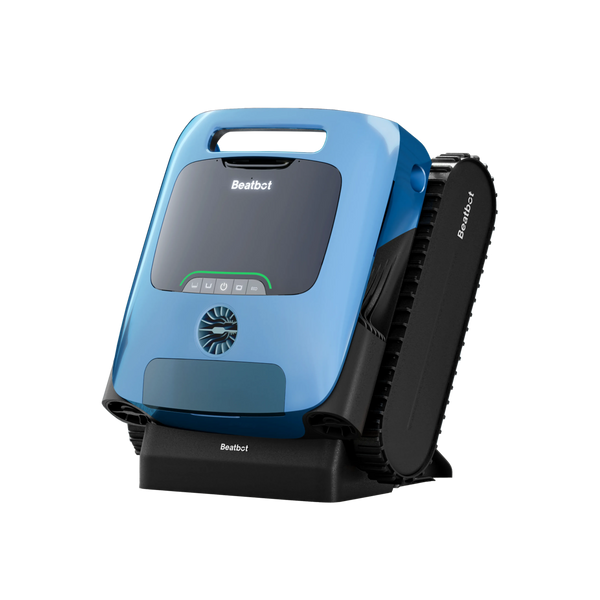
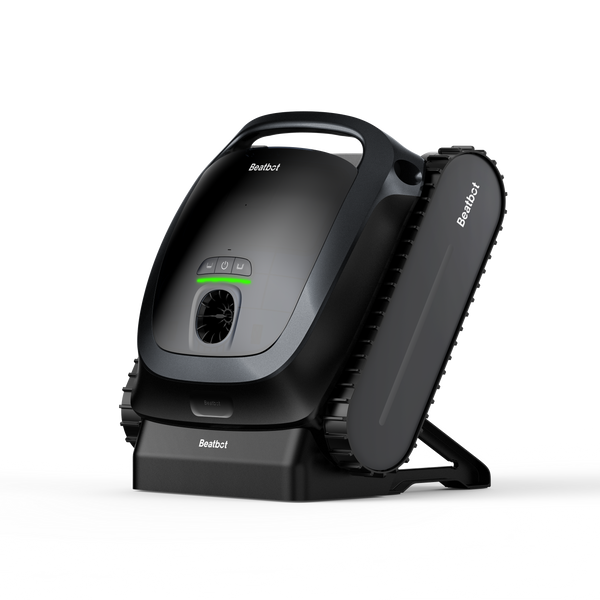
Physical cleaning of these surfaces reduces the source material available for chloramine formation, which in turn reduces the chloramine burden the water chemistry has to manage. The Beatbot AquaSense 2 Ultra addresses this with its dual-pass waterline cleaning system, which scrubs the waterline twice per pass to remove the oil and organic residue that accumulates there between sessions.
Its ClearWater natural clarification system disperses a skin-safe, eco-friendly clarifier during each cleaning cycle that binds fine organic particles into larger clusters for removal, reducing the dissolved organic load that drives chloramine production.
Pools maintained with consistent waterline and surface cleaning require less frequent shocking to control combined chlorine, and swimmers in those pools report less irritation over a season of regular use.
Limit session duration during high-bather-load periods
Chloramine concentration in pool water rises throughout a heavy-use session as more organic material enters the water and reacts with available chlorine. The irritation risk is not uniform across a swim session: it is lower at the start when combined chlorine is at its baseline, and higher after hours of heavy use when the chloramine load has accumulated.
For sensitive swimmers, limiting session length or swimming earlier in the day before bather load has built up reduces cumulative exposure. Pools that test and dose chlorine mid-session during large gatherings maintain better chemistry stability and reduce end-of-session irritation for all swimmers.

When to See a Doctor About Post-Swimming Skin Irritation
Most post-swim itching resolves within a few hours to a day and does not require medical attention. Certain patterns indicate something more than routine chemistry irritation and warrant a medical evaluation.
See a doctor if a rash appears with raised, distinct welts that worsen significantly over 24 to 48 hours, particularly after swimming in a natural body of water. This presentation is consistent with swimmer's itch or another parasitic or bacterial skin infection rather than chemistry irritation, and while most cases resolve without treatment, severe reactions benefit from medical assessment.
See a doctor if the same rash or irritation pattern repeats consistently after pool use despite correct water chemistry, particularly if it is localized to specific areas of the body rather than diffuse. Localized, repeating contact reactions suggest a sensitization to a specific chemical compound and may benefit from patch testing to identify the trigger.
See a doctor if skin symptoms are accompanied by respiratory symptoms (coughing, throat irritation, shortness of breath) after swimming in an indoor pool.
High chloramine concentrations in poorly ventilated indoor pool facilities are an occupational health concern for frequent swimmers and pool staff, and persistent respiratory symptoms following indoor swimming warrant evaluation for chloramine-related respiratory sensitization.

FAQs
Is itchy skin after swimming caused by too much chlorine?
Rarely. The more common causes are chloramines (combined chlorine formed when free chlorine reacts with sweat and body oils), pH that is too high or too low, or skin dehydration from prolonged chemical exposure.
A pool with very high free chlorine (above 5 ppm) can cause direct irritation, but most residential pools are not maintained at those levels. Test combined chlorine and pH before assuming free chlorine is the problem.
Why does my skin itch after swimming in a pool that smells strongly of chlorine?
A strong chlorine smell is a sign of chloramines, not excess free chlorine. Well-maintained pools with adequate free chlorine have very little odor. The harsh chemical smell comes from combined chlorine reacting with nitrogen compounds from swimmers. The irritation and smell both improve after the pool is shocked to breakpoint chlorination, which oxidizes the chloramine compounds.
How do I stop my skin from itching after swimming?
Shower before swimming to remove body oils and sweat that form chloramines. Shower immediately after swimming to remove chemical residue from skin. Apply moisturizer while skin is still damp after the post-swim shower.
For the pool itself, test and correct combined chlorine if it is above 0.5 ppm, bring pH back to 7.4 to 7.6 if it has drifted, and maintain consistent surface cleaning to reduce the organic load that drives chloramine formation.
Can pool water cause a skin rash?
Yes, in several distinct ways. Chloramine irritation produces diffuse redness and itching. Contact sensitivity to a specific pool chemical produces a localized rash at points of direct contact.
Hot tub rash (folliculitis from Pseudomonas) produces a bumpy, itchy rash within 12 to 48 hours of exposure to inadequately sanitized water. Swimmer's itch produces raised welts after swimming in natural bodies of water. Each has a different cause and a different response.
Does showering after swimming help with itchy skin?
Yes, consistently. Rinsing off pool water immediately after swimming removes residual chlorine and chemical compounds from the skin surface before they continue stripping moisture.
The benefit is greatest when the shower happens within a few minutes of leaving the pool, before the chemicals have had additional time to dry on the skin. Following the shower with a moisturizer while the skin is still slightly damp amplifies the benefit significantly.
What is the difference between swimmer's itch and pool rash?
Swimmer's itch (cercarial dermatitis) occurs in natural bodies of water and is caused by parasitic larvae burrowing into the skin, producing raised, intensely itchy welts that worsen over 24 to 48 hours and resolve within a week.
Pool rash most commonly refers to hot tub folliculitis from Pseudomonas bacteria in inadequately sanitized water, or to general chloramine irritation. The key distinction is the location: swimmer's itch does not occur in properly chlorinated pools, and hot tub folliculitis does not occur in natural bodies of water.