Most Popular


 Sora Series


 AquaSense Series

 Skimmer & Bundle

 Retail Edition


 Accessories


To winterize an above ground pool: balance the water chemistry, clean the pool thoroughly, lower the water level two to four inches below the return jet, blow out and plug all plumbing lines, remove and store the pump, filter, and heater indoors, add winterizing chemicals, install a winter cover, and secure it against wind.
The goal is to leave the pool with no standing water in any equipment line (water expands when it freezes and cracks fittings, pumps, and filter tanks) and with chemistry balanced well enough to prevent algae from establishing under the cover over winter. Done correctly, it takes three to four hours and saves significantly more time on spring opening.

How to Winterize an Above Ground Pool: Step by Step
Work through the steps in this order. Chemistry is adjusted first because some winterizing chemicals require balanced water to work correctly. Cleaning is done before lowering the water level. Equipment is removed after plumbing is blown out. The cover goes on last.
Step 1: Test and balance water chemistry
Test free chlorine, pH, alkalinity, calcium hardness, and cyanuric acid before adding any winterizing chemicals. Adjust alkalinity first (target 80 to 120 ppm), then pH (7.4 to 7.6), then chlorine (raise to 3 to 5 ppm at minimum). Calcium hardness should be between 175 and 225 ppm for vinyl liner pools.
Balanced water at closing is what prevents scale deposits from forming on the liner and fittings over winter and makes the water easier to balance at opening. Do not add winterizing chemicals to poorly balanced water: the base chemistry must be correct first.
Step 2: Clean the pool thoroughly before closing
Vacuum the floor, brush the walls and waterline, and skim the surface to remove all debris before closing. Any organic material left on the pool floor or walls over winter decomposes slowly under the cover, consuming residual chlorine, staining the liner, and producing a significantly heavier algae and debris load at spring opening.
This is the step most owners underestimate: ten minutes of cleaning in fall saves hours of treatment in spring.
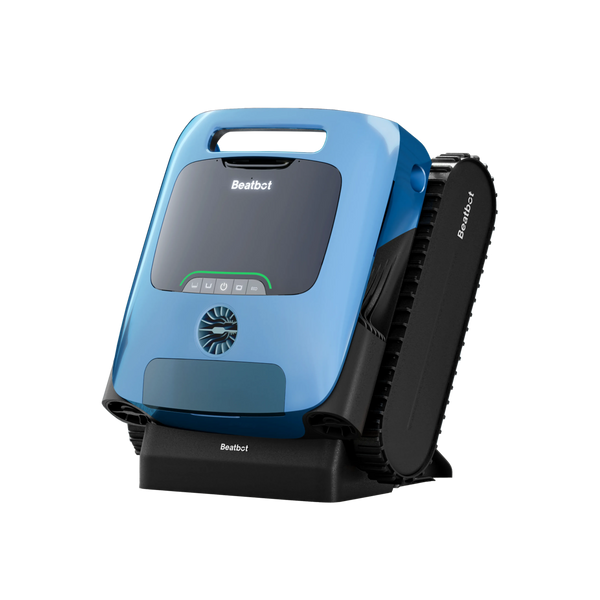
A robotic pool cleaner run the day before closing ensures the floor, walls, waterline, and platform areas are cleaned systematically rather than relying on manual vacuuming that often misses corners and shallow areas.
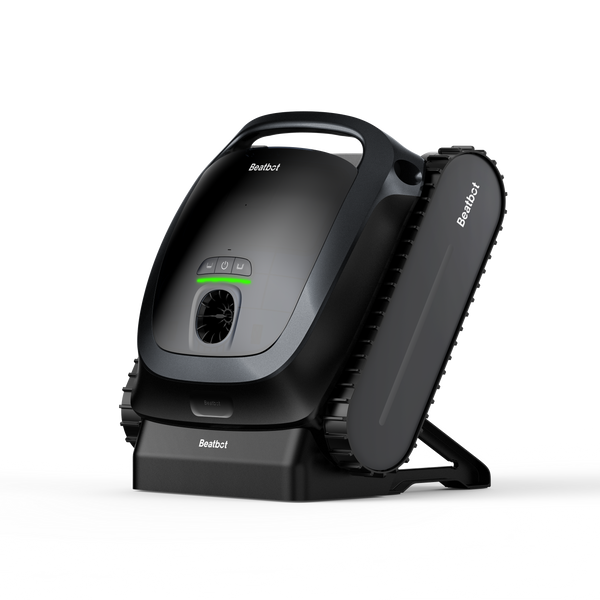
The Beatbot Sora 30 covers all four zones, including shallow platforms as low as 8 inches, with 6,800 GPH suction that captures fine sediment and organic debris in a single cycle. Running it the day before closing removes the fine organic layer that a manual vacuum tends to leave behind and that becomes the primary driver of liner staining and algae growth under the winter cover.
Step 3: Add a winterizing algaecide
Add a winter algaecide formulated for extended dormant periods, typically a 60 percent polyquat algaecide rather than a copper-based product. Copper-based algaecides can stain vinyl liners if the chemistry drifts out of range over winter when no one is actively managing the water.
Follow the dosage instructions based on pool volume. Add the algaecide with the pump running so it distributes through the water before the equipment is removed.
Step 4: Add a winter shock
Shock the pool to raise free chlorine to 10 to 12 ppm immediately before closing. Use calcium hypochlorite or liquid chlorine. The elevated chlorine will degrade over the first few weeks under the cover, leaving a residual that, combined with the algaecide, keeps the water protected through the winter.
Do not add shock at the same time as the algaecide: add shock first, run the pump for 30 minutes, then add algaecide. High chlorine degrades some algaecide formulations on direct contact.
Step 5: Lower the water level
Lower the water level two to four inches below the skimmer opening and return jet fitting. This prevents water from sitting in the skimmer throat over winter, where it would freeze and crack the skimmer housing.
Do not drain the pool below the return jet: the liner needs water weight to hold its shape against the pool wall. Lower the level using the pump on the waste or drain setting, or by using a submersible pump.
Step 6: Blow out all plumbing lines and plug them
Use a shop vac or air compressor set to low pressure to blow water out of every plumbing line: the skimmer line, the return line, and any additional lines for cleaners or water features.
Starting from the pump end, blow air through each line until no more water exits at the pool end, then immediately plug the pool-end fitting with an expansion plug or a Gizmo (a threaded foam plug inserted into the skimmer to absorb any ice expansion).
Even a small amount of water remaining in a plumbing line can crack fittings when it freezes. This step is the most important freeze protection measure for above ground pools.

Step 7: Remove and store the pump, filter, and heater
Disconnect the pump and filter from the plumbing, drain them completely, and store them in a location that will not freeze. For sand filters, set the multiport to the winter position (between settings, with all ports partially open) to prevent the valve body from cracking if any residual moisture freezes inside.
For cartridge filters, remove the cartridge, rinse it, allow it to dry completely, and store it indoors. For above ground pool heaters, follow the manufacturer's winterization instructions. Any component with internal water passages that is left outdoors in freezing conditions without being fully drained is at risk of cracking.
Step 8: Remove and store accessories
Remove ladders, handrails, return jet fittings, and skimmer baskets. Rinse them, allow them to dry, and store them indoors.
Remove any pool toys, floats, and cleaning equipment. Leaving metal hardware in contact with the pool structure over winter can cause galvanic corrosion and staining on the liner or pool wall, particularly if the chemistry drifts during the months when it is not actively managed.
Step 9: Install and secure the winter cover
Install a winter cover sized for the pool and secure it according to the manufacturer's instructions. For above ground pools, this typically means threading the cover cable or strap through the cover grommets and tightening it below the pool top rail.
The cover must be tight enough that it cannot be pushed down into the water by accumulated rainwater or debris weight, which would allow debris to contaminate the water through the cover.
Use a cover pump or a siphon to remove standing water that accumulates on top of the cover during winter. Do not allow heavy standing water or ice to sit on the cover for extended periods: it stresses the cover seams and can pull the cover into the pool.
When to Winterize an Above Ground Pool
Winterize before the first hard frost, when nighttime temperatures consistently drop below 32°F (0°C). The exact timing depends on your climate: in colder regions this may be late September or October, in more temperate areas it may be November or later. The key threshold is not the calendar date but the temperature forecast for the next several weeks.
Do not close too early
Closing the pool while water temperatures are still above 60°F (15°C) creates ideal conditions for algae growth under the cover over winter. Algae requires warmth to establish: water below 60°F significantly slows algae growth and allows winterizing chemicals to hold through the full dormant period.
Closing when the water temperature has dropped below 60°F, rather than closing based on calendar date, is the most reliable way to arrive at spring opening with clear water.
Do not close too late
Waiting until a hard frost has already arrived risks freeze damage to equipment before it can be properly winterized. If the forecast shows a sustained hard freeze arriving within the next 48 hours and the pool has not been winterized, prioritize blowing out the plumbing lines and removing the pump and filter above all other steps.
Equipment damage from a single hard freeze is significantly more expensive to repair than a pool that opens green in spring.
Mid-season closures in mild climates
In climates where temperatures do not drop below freezing, above ground pools are sometimes partially closed for winter rather than fully winterized. In this case, the pool can be left with equipment connected if the pump runs regularly, but water chemistry still needs to be maintained at a reduced frequency and the water level and cover should be managed to prevent debris accumulation.
Full winterization with equipment removal is still the lower-risk approach even in mild climates, because it eliminates the possibility of equipment damage from an unexpected cold snap.
Common Winterizing Mistakes and How to Avoid Them
Most spring opening problems trace directly to specific winterizing mistakes. The five most common ones follow a predictable pattern: chemistry or cleaning steps skipped under time pressure in fall produce compounding problems that require significantly more effort to correct in spring.
Skipping the pre-close cleaning
Leaves, algae, and fine organic debris left on the pool floor over winter decompose slowly in the low-chlorine environment under the cover. By spring, what was a minor cleaning job in fall has become a layer of decomposed organic material that stains the liner and requires a full SLAM process to address.
Cleaning the pool thoroughly the day before closing is the single most impactful thing an owner can do to reduce spring opening effort.
Not blowing out the plumbing lines completely
Water left in any plumbing line, fitting, or valve body will freeze and crack the component if temperatures drop far enough. The most common result is a cracked multiport valve body, split return fitting, or damaged pump housing discovered at spring opening.
Run the shop vac or compressor through each line long enough to confirm no more water is coming out at the pool end before installing the plug. One pass is often not enough.
Storing the pump and filter outdoors
Above ground pool pumps and filter tanks contain internal water passages that drain incompletely even after the external plumbing is removed. A pump or filter left outdoors in a location that reaches sustained sub-freezing temperatures will almost always sustain internal freeze damage.
The cost of bringing them indoors for winter is essentially zero. The cost of replacing a pump or filter tank that cracked over winter is significant.
Adding algaecide and shock at the same time
High chlorine concentration degrades many algaecide products on direct contact, particularly polyquat formulations. Adding both products simultaneously or within a short interval reduces the effectiveness of the algaecide before it has a chance to distribute and bind to pool surfaces. Add shock first, run the pump for a minimum of 30 minutes, then add the algaecide.
Allowing the cover to sag into the pool
A winter cover that sags under the weight of accumulated rainwater or debris will eventually touch the pool water, providing a pathway for debris contamination and allowing the cover material to degrade in contact with pool chemistry.
Use a cover pump to remove standing water from the cover surface before the weight causes it to sag significantly. Air pillows placed under the cover before installation help displace water toward the edges and reduce center sagging on round pools.

What to Monitor During Winter
A closed above ground pool is not completely maintenance-free. Three things require periodic attention: cover condition, water level under the cover, and standing water on top of the cover.
Check the cover every two to three weeks after significant rain or snowfall. Heavy standing water on the cover surface should be pumped off before it accumulates enough weight to pull the cover cable loose or push the cover into the pool water. A cover pump set on a float switch handles this automatically and is worth the investment in high-rainfall climates.
Check the water level under the cover in early spring before removing it. If the water level has dropped significantly below where it was at closing, there may be a liner leak that developed over winter or cover drainage pulling water out. A significant drop in water level discovered at opening is easier to trace before debris and algae from the cover removal complicate the inspection.
Inspect the cover for tears or holes after any significant storm or after heavy ice load. A damaged cover that is not replaced before spring allows debris to enter the pool for the remaining weeks of the closed season, which compounds the opening workload. A small tear repaired with a cover patch kit in mid-winter is far easier to address than a pool full of winter debris at opening.
How to Open an Above Ground Pool After Winter
Spring opening reverses the winterizing steps. Remove and store the cover, reinstall the pump, filter, and equipment, reconnect plumbing, refill to the correct water level, balance chemistry from scratch, and run the filter continuously until the water is clear. The condition of the water at opening depends almost entirely on how well the pool was closed.
Remove and clean the cover before storing it
Pump standing water off the cover surface before removing it. Lift the cover off carefully to avoid dumping accumulated debris into the pool.
Rinse the cover thoroughly, allow it to dry completely, and store it folded in a bag or container away from rodents. A cover stored wet will mildew and degrade. A cover damaged by rodents over summer will need replacement at the next closing.
Reinstall equipment and refill to the correct level
Reinstall the pump, filter, and heater, reconnect plumbing, and remove all winter plugs from the return and skimmer fittings.
Refill the pool to the normal operating level, which is midway up the skimmer opening. Prime the pump before starting it: most above ground pool pumps are not self-priming and will run dry and overheat if started without water in the pump basket and housing.
Balance chemistry before shocking
Test the water and adjust alkalinity, then pH, before adding shock or algaecide. Winter chemistry often drifts, particularly pH and alkalinity, due to rain introduction and the absence of active management.
Shocking a pool with pH above 7.8 wastes a significant portion of the shock before the chlorine can do its job. If the pool opens green, apply the full SLAM process rather than a single shock dose.
FAQs
Do I need to completely drain an above ground pool for winter?
No. Draining an above ground pool completely for winter is not recommended and can damage the liner. Without the weight of water, the liner can shrink, shift, or develop permanent wrinkles, particularly in cold temperatures.
Lower the water level two to four inches below the skimmer and return jet fittings, but leave the pool substantially full. The water weight is what keeps the liner properly seated against the pool walls and floor through winter.
Can I leave my above ground pool pump outside in winter?
Not in climates where temperatures drop below freezing. Above ground pool pumps contain internal water passages that do not drain completely when disconnected from the plumbing. Water remaining inside will freeze and crack the pump housing or impeller housing.
Remove the pump, drain it completely, and store it indoors in a location that will not freeze. The same applies to filter tanks, heaters, and any equipment with internal water passages.
How much shock should I add when closing the pool?
Raise free chlorine to 10 to 12 ppm at closing. For most above ground pools in the 5,000 to 15,000 gallon range, this requires 2 to 4 pounds of calcium hypochlorite shock or the equivalent volume of liquid chlorine, depending on the starting chlorine level.
Calculate the dose based on pool volume and the gap between current chlorine and the 10 to 12 ppm target using a pool calculator rather than estimating by eye.
What happens if I do not winterize my above ground pool?
In climates with freezing winters, not winterizing an above ground pool almost guarantees equipment damage. Water in pump housings, filter tanks, plumbing lines, and valve bodies expands when it freezes and cracks or splits the component.
The cost of replacing cracked equipment is typically several times the cost and effort of proper winterization. In addition, a pool left without cover and winterizing chemicals will arrive at spring with severe algae growth that requires a full SLAM process to clear.
When should I remove the winter cover in spring?
Remove the winter cover when nighttime temperatures have consistently stayed above freezing for at least two weeks and you are ready to begin the opening process.
Do not remove the cover and leave the pool open before you are ready to reinstall equipment and start the pump: an uncovered pool without active filtration and chemistry management will develop algae growth within days in warm spring weather.
Remove the cover only when the full opening process can be completed within the same day or the next morning.