Most Popular


 Sora Series


 AquaSense Series

 Skimmer & Bundle

 Retail Edition


 Accessories


To add baking soda to a pool correctly: calculate the dose based on pool volume and how far alkalinity is below the 80 to 120 ppm target, pre-dissolve the measured amount in a bucket of pool water, pour it slowly around the pool perimeter with the pump running, and wait at least six hours of full circulation before retesting.
Never dump the full dose in one spot, and never add more than 10 pounds per 10,000 gallons in a single treatment. If alkalinity needs a large correction, split it across two sessions 24 hours apart to avoid overshooting and driving pH unpredictably high.

How to Add Baking Soda to a Pool: Step by Step
Work through these steps in order. Calculating the dose before adding anything prevents the most common mistake, which is adding too much at once and overshooting the alkalinity target. The six-hour wait before retesting is not a guideline: baking soda distributes slowly through the water column and a reading taken too soon after addition does not reflect the actual chemistry of the full pool volume.
Step 1: Test alkalinity and confirm baking soda is the right product
Test total alkalinity before adding anything. Baking soda (sodium bicarbonate) raises total alkalinity with a minimal effect on pH. If alkalinity is in range (80 to 120 ppm) but pH is low, the correct product is sodium carbonate (washing soda or pH increaser), not baking soda.
Using baking soda to try to raise pH directly is inefficient: it raises alkalinity significantly before it produces a meaningful pH change, which often results in alkalinity overshooting the target while pH barely moves. Confirm alkalinity is below 80 ppm before reaching for baking soda.
Step 2: Calculate the dose based on pool volume
As a general guideline, 1.5 pounds of baking soda raises total alkalinity by approximately 10 ppm in a 10,000-gallon pool. Use this ratio to calculate the full dose needed, then add no more than 10 pounds per 10,000 gallons in a single treatment.
For corrections larger than that, split the addition across two sessions at least 24 hours apart and retest between them. Adding the full required amount at once when the correction is large risks overshooting the alkalinity target, which then requires acid to bring back down.
The table below gives approximate doses for common pool sizes and alkalinity deficits.
|
Pool Size (gallons) |
Raise alkalinity by 10 ppm |
Raise alkalinity by 20 ppm |
Raise alkalinity by 30 ppm |
|
10,000 |
1.5 lbs |
3 lbs |
4.5 lbs |
|
15,000 |
2.25 lbs |
4.5 lbs |
6.75 lbs |
|
20,000 |
3 lbs |
6 lbs |
9 lbs |
|
25,000 |
3.75 lbs |
7.5 lbs |
11.25 lbs (split doses) |
|
30,000 |
4.5 lbs |
9 lbs |
13.5 lbs (split doses) |
Amounts are approximate. Actual results vary with water temperature, existing chemistry, and product purity. Always retest after each addition before adding more.
Step 3: Pre-dissolve in a bucket of pool water
Fill a clean five-gallon bucket with pool water. Add the measured baking soda to the bucket and stir until it is fully dissolved or as dissolved as it will get within a few minutes. Pre-dissolving reduces the risk of undissolved powder settling on the pool floor in a concentrated pile.
On vinyl liner pools in particular, a pile of undissolved baking soda sitting on the liner can temporarily bleach or damage the liner material at the contact point. On plaster or concrete pools the risk is lower, but pre-dissolving still results in faster and more even distribution.
Step 4: Pour slowly around the pool perimeter with the pump running
With the pump running and water actively circulating, walk slowly around the pool perimeter and pour the dissolved baking soda in a steady stream close to the water surface.
Distributing it across the full perimeter rather than pouring it in a single location ensures it enters the circulation pattern from multiple points and mixes more evenly through the water column. Do not pour it directly in front of or near a return jet, where the concentrated stream would be pushed into one zone of the pool before it has a chance to dilute.
Step 5: Run the pump for at least six hours before retesting
Leave the pump running for a minimum of six hours after the addition before taking a new alkalinity reading. Baking soda distributes more slowly through pool water than many other pool chemicals, and a sample taken within the first hour or two after addition will reflect a higher-than-actual reading near where the product entered the water.
After six hours of full circulation, take the test sample from elbow depth at least 12 inches away from any return jet for an accurate reading.
Step 6: Assess the result and decide whether a second dose is needed
If alkalinity is still below 80 ppm after the first dose and six hours of circulation, calculate and add a second dose using the same process. Wait another six hours before retesting again.
Never add a second dose within six hours of the first without testing: the first dose may still be distributing, and adding more without a reliable reading risks overshooting the target. If alkalinity has reached the 80 to 120 ppm range, retest pH and adjust it if needed before adding anything else.
How to Calculate the Right Baking Soda Dose for Your Pool
The dose calculation depends on two things: accurate pool volume and the size of the alkalinity deficit. An overestimated pool volume leads to adding too much product. An underestimated deficit leads to adding too little and requiring a second correction sooner than expected. Both are worth getting right before buying product.
Calculate pool volume accurately
Pool volume is the foundation of every chemical dose calculation. For a rectangular pool, multiply length by width by average depth and multiply by 7.48 to convert cubic feet to gallons. For round pools, use the formula: diameter squared, multiplied by average depth, multiplied by 5.9.
For kidney or irregular shapes, divide the pool into approximate rectangular or circular sections, calculate each separately, and add them together. A 10 percent error in volume estimate translates directly into a 10 percent dosing error. If the pool volume is not known precisely, measure it rather than estimating from memory.
Determine alkalinity deficit and dose in increments for large corrections
Subtract the current alkalinity reading from 100 ppm (the middle of the target range) to determine how much adjustment is needed. If alkalinity reads 60 ppm, the deficit is 40 ppm. For a 10,000-gallon pool, that is approximately 6 pounds of baking soda.
Rather than adding all 6 pounds at once, add 3 pounds, wait six hours, retest, then add the remainder if needed. This staged approach catches any testing error in the original reading and prevents a single large addition from overshooting a corrected target.
Account for pH interaction
Adding baking soda raises alkalinity and has a mild upward effect on pH. In a pool with pH already at 7.6 or above, raising alkalinity with baking soda may push pH above 7.8, reducing chlorine effectiveness.
Test pH after alkalinity is corrected and before adding anything else. If pH has risen above 7.6 following the baking soda addition, use muriatic acid or sodium bisulfate to bring it back to 7.4 to 7.5 before adjusting any other parameters.

Baking Soda vs. pH Increaser: Which One Does Your Pool Actually Need?
Baking soda (sodium bicarbonate) and pH increaser (sodium carbonate, also called washing soda) are both white powders sold for pool use, and they are frequently confused. They do different things, and using the wrong one produces the wrong result. The choice between them depends entirely on what the test shows needs correcting.
Use baking soda when alkalinity is low
Baking soda's primary effect is raising total alkalinity. It raises pH only slightly relative to the alkalinity increase it produces, because sodium bicarbonate is itself a mild buffer that resists pH change. If alkalinity reads below 80 ppm and pH is in the acceptable range (7.4 to 7.6), baking soda is the correct product.
Using pH increaser (sodium carbonate) in this situation raises pH sharply with a proportionally smaller effect on alkalinity, which can push pH to 8.0 or higher and make chlorine less effective before alkalinity reaches the target range.
Use pH increaser (sodium carbonate) when pH is low but alkalinity is in range
If alkalinity tests between 80 and 120 ppm but pH is below 7.4, the correct product is sodium carbonate (pH increaser). Sodium carbonate raises pH more aggressively than baking soda and has a larger effect on pH relative to the alkalinity increase it produces.
Adding baking soda in this situation raises alkalinity above the target range while pH moves only minimally, leaving the pool with both high alkalinity and still-low pH.
When both are low
If both alkalinity and pH are below target, correct alkalinity first with baking soda, allow full circulation and retest, then assess pH. Alkalinity acts as the buffer that stabilizes pH: correcting alkalinity first makes the subsequent pH correction smaller and more predictable.
Trying to raise both simultaneously with a combination of products makes it difficult to attribute results to either product and often results in overcorrection of one parameter while the other remains out of range.
Why Total Alkalinity Matters and What Happens When It Is Wrong
Total alkalinity measures the water's capacity to resist pH changes. It is the buffer that keeps pH stable between treatments. When alkalinity is correct, pH changes slowly in response to rain, bather load, and chemical additions. When alkalinity is wrong in either direction, the pool becomes harder to maintain and other chemistry problems follow.
Low alkalinity: pH becomes unstable
Alkalinity below 80 ppm makes pH highly sensitive to any input. A small addition of acid or a heavy rain event drops pH dramatically. A small addition of shock or pH increaser swings it sharply upward.
Pool owners with low alkalinity often describe their pool as impossible to keep balanced, with pH that requires constant correction but never stays in range between adjustments. The solution is not more frequent pH adjustments but raising alkalinity to the point where the buffer is sufficient to moderate pH swings naturally.
High alkalinity: pH locks high and resists correction
Alkalinity above 120 ppm pushes pH upward and makes it resistant to downward correction. High-alkalinity water tends to sit at pH 7.8 or above even after acid additions that would normally lower it significantly.
High pH combined with high alkalinity also accelerates calcium carbonate scaling on surfaces, fittings, and filter media. Lowering alkalinity requires muriatic acid added carefully in small doses with the pump running, retesting after each addition.
The correct correction sequence
Always adjust alkalinity before adjusting pH. Alkalinity is the foundation that makes pH corrections predictable. A pool with low alkalinity that receives a pH adjustment will see pH swing unpredictably rather than moving to a specific target.
Raise alkalinity to the 80 to 120 ppm range first, retest after full circulation, then make pH adjustments. With alkalinity in range, pH corrections are proportional and hold longer between adjustments.
Common Baking Soda Mistakes and How to Avoid Them
Adding baking soda to raise pH directly
Baking soda is not an effective pH increaser at typical dose rates. To raise pH by 0.2 units in a 10,000-gallon pool using baking soda would require adding enough to raise alkalinity well above the target range.
Pools with low pH and normal alkalinity need sodium carbonate, not baking soda. Using baking soda in this situation results in alkalinity overshooting the target with minimal pH improvement.
Dumping the full dose in one spot without pre-dissolving
A concentrated pile of undissolved baking soda on the pool floor creates a localized high-alkalinity zone that can bleach vinyl liner material and takes significantly longer to distribute through the water than pre-dissolved product. On any pool surface, but especially vinyl, pre-dissolving in a bucket of pool water before adding is the safer and more effective approach.
Retesting too soon after adding
A test taken within one to two hours of adding baking soda gives a falsely elevated alkalinity reading near the addition zone. Pump circulation distributes the product through the full water volume over four to six hours.
Testing too soon and concluding that alkalinity has reached the target leads to under-dosing: the actual full-pool reading after complete distribution is often lower than the early sample suggested.
Adding too much at once for large corrections
Adding the full required amount for a large alkalinity deficit in a single dose risks overshooting the target, particularly if the original test reading had any error. Alkalinity above 120 ppm is harder to correct than low alkalinity: bringing it down requires acid, which also affects pH, creating a second correction that then needs to be addressed.
Splitting large doses across two sessions with a retest between them costs one extra day but eliminates the overshoot risk entirely.
Not accounting for the pH effect of baking soda
Baking soda has a mild upward effect on pH in addition to its primary alkalinity-raising effect. In pools where pH is already at 7.5 or 7.6 before the addition, a significant baking soda dose can push pH above 7.8. Testing pH after alkalinity is corrected, rather than assuming it is unchanged, prevents chlorine from losing effectiveness due to an unnoticed pH rise from the alkalinity treatment.

Keeping the Pool Clean While Correcting Chemistry
Chemistry corrections work most effectively in a pool that is physically clean. When fine sediment and organic debris sit on the pool floor, they slowly dissolve and release compounds that consume alkalinity and drive pH shifts, meaning the alkalinity correction made today has a shorter effective life in a dirty pool than in a clean one.
Cleaning the pool alongside chemistry corrections maintains the correction for longer between adjustments.
After adding baking soda and waiting the six-hour circulation period, any undissolved residue or disturbed sediment from the addition process settles on the pool floor. Running a robotic pool cleaner after the retest step removes that settled material before it can dissolve back into the water and introduce variability into the next test reading.
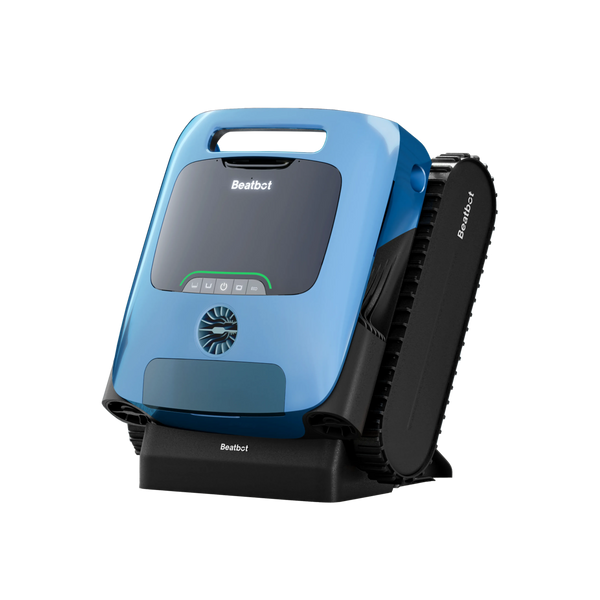
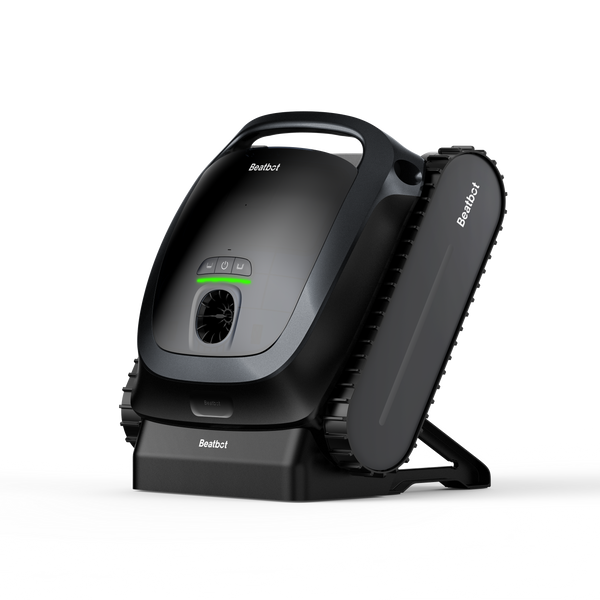
The Beatbot Sora 30 covers the floor, walls, waterline, and shallow platforms down to 8 inches in a single automated cycle, with 6,800 GPH suction that captures fine sediment including any undissolved chemical residue from the pool floor.
Running a Sora 30 cycle as part of the post-treatment routine gives a cleaner baseline for the follow-up chemistry test and removes the organic material that would otherwise slowly deplete the alkalinity buffer between adjustments.

FAQs
How much baking soda do I add to raise alkalinity by 10 ppm?
Approximately 1.5 pounds of baking soda per 10,000 gallons of pool water raises total alkalinity by about 10 ppm. For a 20,000-gallon pool, that is 3 pounds for a 10 ppm increase. These are approximations: actual results vary with water temperature and existing chemistry.
Always retest after the addition and allow six hours of circulation before concluding that the target has or has not been reached.
Can I use household baking soda from the grocery store instead of pool-grade?
Yes. Household baking soda (sodium bicarbonate) is chemically identical to pool-grade sodium bicarbonate. The main practical difference is price per pound: pool-grade baking soda sold in bulk bags is typically cheaper per pound than grocery store baking soda sold in small boxes.
For occasional use, grocery store baking soda works fine. For frequent alkalinity management in a larger pool, buying in bulk from a pool supply store is more cost-effective.
Will adding baking soda make the pool cloudy?
Temporarily, yes. Adding baking soda can cause brief cloudiness as the product dissolves and distributes. This typically clears within a few hours of pump circulation as the product fully dissolves and the filter removes any fine particles.
If cloudiness persists beyond 12 to 24 hours after the addition with continuous pump operation, the cause is more likely a pH or calcium hardness issue than the baking soda itself.
How long after adding baking soda can I swim?
Most pool-grade sodium bicarbonate products are safe for swimming within 15 to 30 minutes of addition, once the product has visibly dissolved and the pump has distributed it through the water.
For practical purposes, waiting until the pump has run for at least an hour after addition gives the chemistry time to stabilize before testing. There is no health concern with swimming shortly after adding baking soda at correct dose rates.
Why does my alkalinity keep dropping even after I add baking soda?
Alkalinity is consumed by acid additions, by rain introducing low-pH water, by the natural off-gassing of CO2 that lowers pH and alkalinity over time, and by the breakdown of chlorine compounds in the water. In pools that are heavily used or in regions with acidic rainfall, alkalinity depletion is a recurring maintenance item rather than a one-time correction.
Consistent testing at least twice a week allows small deficits to be caught and corrected before they require large additions. If alkalinity drops unusually fast, check whether pH is also consistently low, which could indicate an acid feed system malfunction or an unusually high organic load consuming alkalinity rapidly.
Should I adjust alkalinity or pH first?
Always adjust alkalinity first. Alkalinity is the buffer that makes pH corrections predictable and stable. Adjusting pH in a pool with low alkalinity produces unpredictable results because the water has no resistance to pH change.
A small acid or base addition causes a large pH swing that overshoots the target in either direction. Raise alkalinity to 80 to 120 ppm, retest after six hours of circulation, then assess pH and make adjustments from a stable alkalinity baseline.