Most Popular


 Sora Series


 AquaSense Series

 Skimmer & Bundle

 Retail Edition


 Accessories


A strong storm can turn a clean pool into a cloudy, debris-filled mess in a matter of hours. Wind-blown dirt, dust, leaves, and organic matter settle on every surface, and if you wait too long, fine silt works its way into your filter system and makes the problem worse.
The fastest way to recover is to follow a clear sequence: remove large debris first, brush surfaces, vacuum to waste, run the pump continuously, and rebalance your chemicals only after the water is physically clean.
Getting the order right matters more than any single step. Shocking a dirty pool wastes chlorine, and running a clogged filter just pushes silt back into the water.
Check for Hazards Before You Start
Before touching anything in or around your pool, inspect the area for electrical hazards, broken glass, and displaced sharp objects. Storms can shift patio furniture, crack tiles, and move electrical connections. If floodwater reached your pool equipment pad, do not turn on the pump until a qualified electrician has confirmed everything is dry and safe.
Walk the full perimeter and look for downed branches resting on the pool cover or pressed against the fence. Check your skimmer lid, pump basket lid, and any exposed wiring. If everything looks intact, you can move on to cleanup. If you see standing water around your breaker panel or equipment, call a professional first.
Remove Large Debris First
Large debris like branches, clumps of leaves, and blown-in trash will clog your skimmer and pump basket within minutes if you turn on the pump first. That is why the first physical step is always manual removal with a leaf rake or heavy-duty skimmer net.

Work from the surface down. Skim off floating leaves and twigs, then drag the net along the bottom to collect anything that has already sunk. Empty your skimmer basket and pump strainer basket at the same time. If your pool has a heavy leaf load, you may need to clean these baskets two or three times during the initial removal pass.
A pump basket packed with wet leaves restricts water flow and can cause the pump to overheat or lose prime.
Brush Walls and Floor Before Vacuuming
Once the large debris is out, brush the walls, waterline, steps, and floor. Storm dust clings to pool surfaces, and stuck particles are much harder for your vacuum and filter to capture than suspended ones.
Brush toward the main drain so the loosened sediment collects in one area. Pay extra attention to corners, behind ladders, and along the waterline where wind-blown grime tends to build up the most. On plaster or concrete pools, use a stiff-bristle brush. On vinyl or fiberglass, a softer nylon brush avoids surface scratching.
If your pool has a tanning ledge, shallow platform, or spa spillover, brush those areas too. Sediment collects fast on horizontal surfaces with less water circulation.
Vacuum to Waste or Through the Filter?
If the water is heavily silted or you can barely see the bottom, vacuum to waste. This sends dirty water straight out of the pool instead of pushing fine particles through your filter media. Sand and DE filters have a "waste" setting on the multiport valve. Cartridge filter owners can disconnect the return line or use a dedicated waste adapter.
Vacuuming to waste does lower your water level, so keep a garden hose running to replace what you send out. Move the vacuum head slowly across the floor. Fast movements stir up the silt and make the water cloudier rather than cleaner.
If the pool is only lightly dusty, you can vacuum through the filter on its normal setting, but watch your pressure gauge closely and backwash or clean the cartridge as soon as pressure rises 8 to 10 PSI above the clean baseline.

For pools with extremely fine dust, like the kind left behind by desert haboobs or wildfire ash, a pool flocculant can help. Add the flocculant according to the package directions, run the pump for two hours to circulate it, then shut the pump off for 8 to 12 hours. The floc binds to suspended particles and drops them to the floor in a thick layer you can then vacuum to waste in one pass.
How Long to Run the Pump After a Storm
Run the pump continuously for at least 24 to 48 hours after a major storm. Normal daily schedules of 8 to 12 hours are not enough when the water is carrying a heavy particle load.
During this period, check the filter pressure gauge every few hours. Backwash a sand or DE filter when pressure climbs 8 to 10 PSI above the clean starting pressure. For cartridge filters, pull the cartridge and hose it off when flow drops noticeably. You may need to clean the filter two or three times in the first 24 hours if the storm brought in a lot of fine sediment.
If your water is still hazy after 48 hours of continuous filtration, add a pool clarifier. Clarifiers cause microscopic particles to clump together so the filter can trap them. Give it another 12 to 24 hours of filtration before reassessing.
When to Shock and Rebalance Pool Chemistry
Wait to adjust chemicals until the water is physically clean. Chlorine added to water still loaded with organic matter gets consumed by the contaminants before it can sanitize, so you end up doubling or tripling your shock dose.

Once the water is mostly clear, test for free chlorine, pH, alkalinity, and stabilizer (cyanuric acid). Storm runoff tends to lower pH and dilute chlorine levels. Add shock at a rate appropriate for your pool volume, typically 1 pound of calcium hypochlorite per 10,000 gallons for a standard post-storm treatment. Run the pump while shocking and retest the next morning.
If rain significantly raised your water level, drain some water to bring it back to the middle of the skimmer opening. High water levels reduce skimmer efficiency because water flows over the weir too fast to trap surface debris effectively.
Common Post-Storm Pool Cleaning Mistakes
Shocking the pool before removing physical debris is the most common post-storm error. A second or third shock treatment adds up fast when the first dose gets consumed by organic matter instead of sanitizing the water.
Vacuuming through the filter with heavily silted water is another costly mistake. Fine particles from desert storms or construction sites can pass right through sand media and return to the pool through the jets, and cartridge filters can be permanently damaged by the load.

A third mistake is ignoring the filter pressure gauge. When it reads 8 to 10 PSI above normal, water flow drops and circulation stalls. Check the gauge every few hours during recovery and backwash or rinse the cartridge as soon as pressure spikes.
Using a Robotic Pool Cleaner After Storm Cleanup
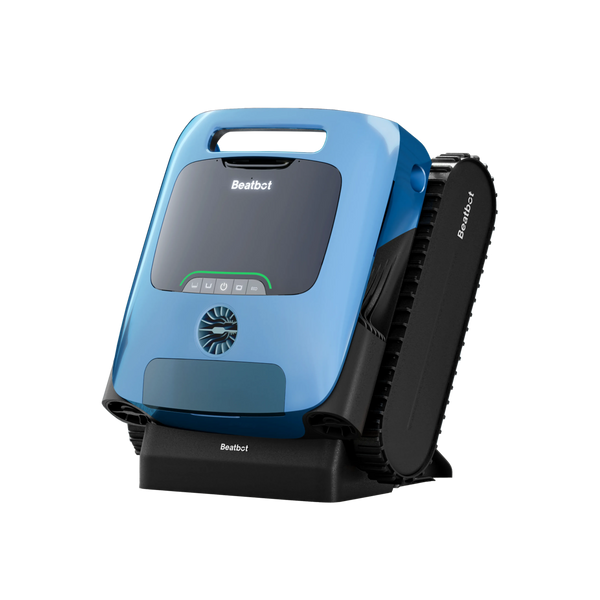
Once branches and large debris are out, the most time-consuming part of storm recovery is vacuuming fine sediment off the floor, scrubbing the walls, and cleaning the waterline. A cordless robotic pool cleaner can take over that work and cover all three zones in a single automated cycle.
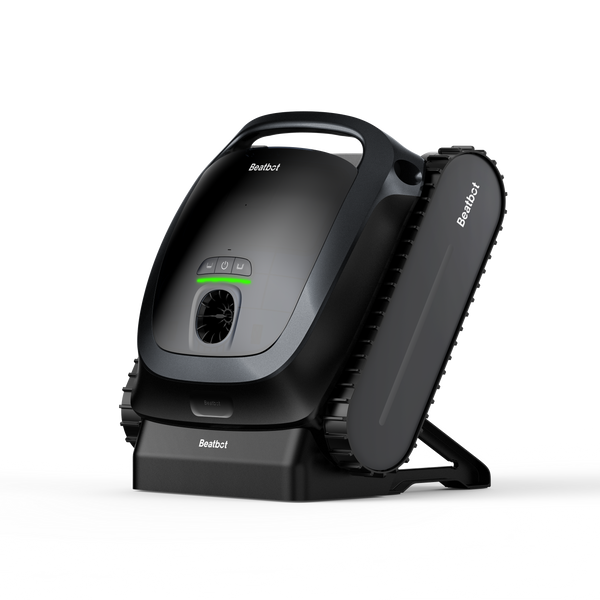
The Beatbot Sora 30 robotic pool cleaner generates 6,800 GPH of suction through a center-mounted HydroBalance pump design, which is strong enough to lift settled sand, silt, and fine dust off the pool floor without just stirring it back into suspension.
Everything it picks up goes into a 5L filter basket with 150-micron filtration, so even particles too small for some pool filters to catch stay trapped. The Sora 30 also reaches tanning ledges and shallow platforms as low as 8 inches deep, the same areas where storm sediment builds up fastest due to limited water circulation.
A 10,000mAh battery gives it up to 5 hours of floor cleaning per charge, enough to cover pools up to 3,200 square feet without interruption.
The Beatbot Sora 10 robotic pool cleaner shares the same 6,800 GPH suction and 5L filter capacity, with a 7,800mAh battery that runs up to 300 minutes on floors. It cleans floors, walls, waterline, and shallow areas down to 12 inches.
FAQs
Will shocking a pool get rid of dirt?
No. Shock is a chemical sanitizer that kills bacteria and algae, but it does not remove physical dirt, sand, or silt. Those particles need to be vacuumed out or captured by the filter. Shocking before the dirt is removed just wastes chlorine.
How soon after a storm should I start cleaning the pool?
As soon as it is safe to be outside. The longer dirt and organic debris sit in the water, the more chlorine they consume and the more likely algae will take hold. Removing large debris within the first few hours keeps the recovery manageable and reduces total chemical cost.
How long does it take to clean a pool after a storm?
The hands-on work, removing debris, brushing, and vacuuming, usually takes one to three hours depending on pool size and debris load. After that, the pump needs to run continuously for 24 to 48 hours to clear remaining suspended particles through the filter.
Is pool flocculant better than clarifier for post-storm cleanup?
Flocculant works faster on heavily cloudy water because it drops particles to the floor for manual vacuuming. Clarifier is better for mild haze because it clumps particles small enough for the filter to capture. If the water is severely clouded and you need results the same day, flocculant paired with vacuuming to waste is the more effective option.
Do I need to drain my pool after a storm?
Full draining is rarely necessary. Most pools recover with debris removal, vacuuming, and extended filtration. You may need to lower the water level if heavy rain raised it above the skimmer opening, but draining more than a third of the pool can cause structural damage to vinyl liners and fiberglass shells from groundwater pressure underneath.