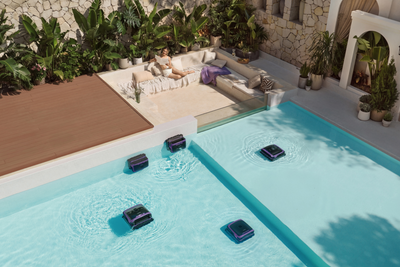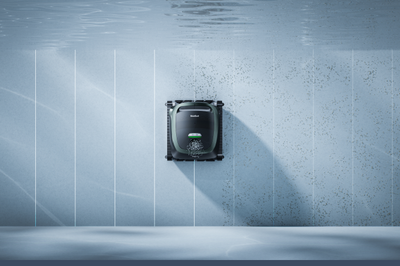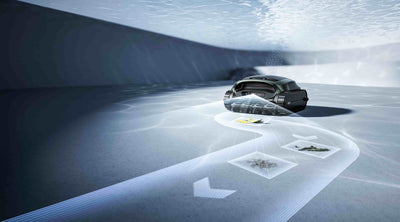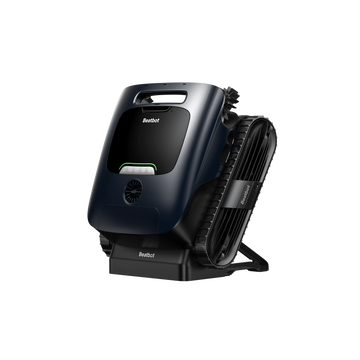









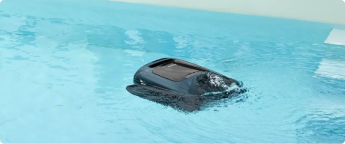







Robotic pool cleaners can travel across the pool floor, climb vertical walls, and scrub the waterline without manual assistance. But climbing a smooth, submerged surface requires more than powerful suction. Water flow, traction, motor control, weight distribution, and navigation all influence how well a robot climbs and cleans.
Pool construction also matters. A robot that climbs concrete walls easily may struggle on slippery fiberglass or algae-covered tiles. Understanding how wall climbing works can help you choose the right cleaner, improve cleaning performance, and avoid common problems.
What Is a Wall Climbing Robotic Pool Cleaner?
A wall climbing robotic pool cleaner is an automatic pool cleaner designed to move across both horizontal and vertical underwater surfaces. Unlike basic floor cleaning robots that primarily collect settled debris, wall climbing models use driven wheels or tracks, active scrubbing brushes, and water circulation systems to clean submerged pool walls.
Most robotic pool cleaners fall into three categories:
| Cleaning capability | Floor | Walls | Waterline |
|---|---|---|---|
| Floor cleaning | Yes | No | No |
| Floor and wall cleaning | Yes | Yes | Not necessarily |
| Floor, wall and waterline cleaning | Yes | Yes | Yes |
A floor cleaning robot can collect leaves, insects, sand, and sediment that settle at the bottom of the pool. However, it leaves the vertical surfaces untouched.
A wall climbing robot extends cleaning coverage by actively brushing the pool walls and collecting loosened debris. More advanced models can also maintain their position near the water surface, allowing their brushes to scrub along the waterline.
Some robotic pool cleaners go further by cleaning shallow platforms, tanning ledges, and even the water surface. These functions require additional capabilities beyond conventional wall climbing.
How Do Robotic Pool Cleaners Climb Walls?
A robotic pool cleaner climbs walls by combining hydrodynamic forces, mechanical traction, motor driven movement, and controlled weight distribution. These systems work together to keep the robot in contact with the pool wall and move it upward against gravity.
Water Flow and Hydrodynamic Force

Inside a robotic pool cleaner, an impeller draws water through the intake, directs it through the filtration system, and discharges it back into the pool.
In certain designs, the direction of discharged water generates a reaction force that pushes the robot toward the surface it is cleaning.
When the robot travels across the pool floor, this force helps maintain downward contact. When the robot rotates into a vertical position, the same principle can help press its wheels, tracks, and brushes against the pool wall.
This is an application of Newton's third law of motion. When the robot expels water in one direction, the water exerts a force on the robot in the opposite direction.
Pressure differences around the intake and the underside of the robot may also contribute to its ability to remain attached to a submerged surface, depending on the hydraulic design.
However, the force that keeps a robot against the wall is not identical to its debris suction capacity. A suction specification of 6,800 GPH describes water flow volume, not the actual force holding the robot against a vertical surface.
The design of the intake, pump, discharge outlet, and underside of the robot all influence how effectively water flow contributes to wall climbing.
Wheels, Tracks and Traction
Once the robot establishes contact with the pool wall, it needs sufficient traction to move upward.
Most wall climbing robotic pool cleaners use rubber wheels, continuous tracks, or driven roller brushes. These components create friction against the pool surface, allowing the drive motors to convert rotational movement into upward motion.
Tracks provide an extended contact area and can help maintain consistent contact when the robot moves across curved surfaces or uneven transitions. Wheeled designs can also climb effectively when their materials, geometry, and hydraulic systems provide sufficient grip.

The main differences between these designs are not simply the number of wheels or the size of the tracks.
| Component | Function during wall climbing |
|---|---|
| Drive wheels | Transfer motor torque to the pool surface |
| Continuous tracks | Maintain contact across a longer section of the surface |
| Roller brushes | Scrub the surface and may assist movement |
| Guide wheels | Help guide the robot around walls and transitions |
| Rubber or foam contact materials | Provide grip on submerged surfaces |
Surface conditions play an equally important role. Rubber tracks may perform well on textured plaster but lose traction on polished tiles covered with biofilm.
The relationship between surface friction and the force pressing the robot against the wall determines how much usable traction is available.
Increasing motor power alone cannot solve a traction problem. If the tracks cannot grip the wall, additional torque may simply cause them to spin.
Buoyancy and Weight Distribution
A robotic pool cleaner weighs less effectively when submerged than it does when lifted out of the water.
Water exerts an upward buoyant force on the robot. This force offsets part of its weight, reducing the downward force that the drive system must overcome during vertical movement.
The robot's effective underwater weight depends on its mass and the volume of water it displaces.

Weight distribution is also important. The position of the battery, motors, water pump, and other internal components affects how the robot behaves when it transitions from a horizontal floor to a vertical wall.
An unsuitable balance of forces can cause one end of the robot to lift away from the wall, reducing contact between its cleaning components and the surface.
A well designed climbing system must maintain enough contact at both ends of the robot while allowing its body to change orientation during movement.
Some robotic pool cleaners also use dedicated buoyancy systems for surface movement or retrieval. These are additional functions and should not be confused with the basic buoyant force that acts on every submerged robot.
Drive Motors and Pump Control
The drive motors provide the torque needed to rotate the tracks or wheels. During wall climbing, they must overcome the robot's effective underwater weight and resistance from the brushes and surrounding water.
The water pump may operate differently during horizontal and vertical cleaning.
For example, one patented pool cleaning robot design describes adjusting pump power according to the surface the robot is cleaning. This allows the system to balance its energy consumption with the hydraulic requirements of different cleaning positions.
A robot moving across a relatively flat floor may not require the same operating conditions as one climbing a vertical wall.
The effectiveness of this approach depends on the specific pump, drive system, and control design. Not every robotic pool cleaner uses adjustable pump power.
Sensors and Navigation
Mechanical climbing ability determines whether a robot can move up a wall. Navigation determines when, where, and how it climbs.
Without effective movement control, a robot may repeatedly approach the same wall, miss sections of the pool, or spend unnecessary time attempting to climb an unsuitable surface.
Depending on the model, robotic pool cleaners may use gyroscopes, accelerometers, ultrasonic sensors, or other sensing technologies to detect obstacles and monitor changes in orientation.
These systems can help the robot recognize when it reaches a wall, adjust its approach, and transition between different cleaning areas.
More advanced navigation can also help reduce repeated cleaning of the same section and improve overall coverage.
This becomes particularly important in pools with curved walls, irregular shapes, benches, and multiple levels.
What Happens When a Pool Robot Climbs a Wall?
Wall climbing is a continuous movement that involves several changes in the robot's orientation.

Stage 1: Approaching the wall. The robot travels across the pool floor until its front cleaning components reach the wall or the curved transition between the floor and wall.
Stage 2: Changing orientation. The front wheels, tracks, or rollers begin moving upward. The robot's body gradually rotates from a horizontal position toward a vertical one. This is often one of the most mechanically demanding stages, particularly in pools with sharp corners.
Stage 3: Vertical climbing. Once the robot is positioned against the wall, its hydraulic system helps maintain contact while the drive system moves it upward. The roller brushes scrub the submerged surface as loosened particles enter the intake.
Stage 4: Reaching the waterline. Depending on its design, the robot may reverse direction, descend to the floor, remain near the waterline to scrub, or change orientation to clean horizontally along the water surface boundary.
Repeated wall climbing does not necessarily indicate a problem. Many robots clean vertical surfaces through a series of overlapping upward and downward passes.
However, repeatedly slipping at the same point or failing to complete the transition may indicate insufficient traction, restricted water flow, or incompatible pool geometry.
How Well Do Robotic Pool Cleaners Clean Pool Walls?
Wall climbing robotic pool cleaners combine mechanical scrubbing with suction and filtration. The brushes loosen material attached to the surface, while the water circulation system carries suspended debris into the basket.
Their effectiveness depends on the type of buildup and how strongly it adheres to the pool wall.
| Type of buildup | Cleaning effectiveness | Additional treatment |
|---|---|---|
| Loose dirt and dust | Generally effective | Usually unnecessary |
| Pollen | Generally effective | Fine filtration may help |
| Fine sediment | Depends on filtration capability | Ultra fine filtration may help |
| Light algae film | Can loosen and remove surface buildup | Maintain proper sanitizer levels |
| Biofilm | May remove some surface buildup | Additional brushing may be necessary |
| Heavy algae growth | Limited | Chemical treatment and manual brushing |
| Calcium deposits | Generally limited | Scale removal treatment |
| Metal stains | Generally ineffective | Appropriate stain treatment |
Light Dirt and Organic Buildup
Pool walls gradually accumulate dust, pollen, organic particles, and other contaminants.
Active roller brushes disturb this material as the robot passes across the wall. The suction system then collects particles released into the surrounding water.
Regular wall cleaning can reduce the amount of material that accumulates on the surface and decrease the frequency of manual brushing.
Algae and Biofilm
A robotic pool cleaner can remove some light algae growth and surface film through mechanical scrubbing.
However, algae can also make pool walls slippery, creating a situation where the robot struggles to climb the very surfaces that require cleaning.
During a severe algae outbreak, the pool may require manual brushing, appropriate chlorine treatment, and proper circulation before the robot can resume effective wall cleaning.
Robotic cleaning removes physical contaminants but does not replace pool sanitization.
Stubborn Stains and Calcium Scale
Calcium scale forms when dissolved minerals deposit on pool surfaces. Unlike loose dirt, these deposits can become firmly bonded to tiles, plaster, or other materials.
Metal stains and certain organic stains can also penetrate or discolor the surface itself.
Even a robot with strong traction and active brushes may not remove these deposits. Increasing cleaning frequency will not necessarily solve a water chemistry or staining problem.
Such conditions usually require treatment appropriate to the pool surface and the underlying cause.
Wall Climbing vs Waterline Cleaning: What Is the Difference?
Wall climbing and waterline cleaning are often listed

together, but they involve different cleaning movements and address different types of buildup.
Wall climbing refers to the robot's ability to move vertically along submerged pool walls. Waterline cleaning requires the robot to maintain an effective cleaning position where the water meets the pool wall.
This distinction matters because the waterline is particularly prone to accumulating body oils, sunscreen residue, cosmetics, pollen, and other floating contaminants.
| Feature | Wall Climbing | Waterline Cleaning |
|---|---|---|
| Cleaning location | Submerged pool walls | Water and wall boundary |
| Primary movement | Vertical movement | Repeated scrubbing or lateral movement |
| Main contaminants | Dirt, sediment and light algae | Oils, sunscreen residue and organic buildup |
| Technical requirements | Traction and stable wall contact | Waterline detection and position control |
| Available on all wall climbing robots | Yes | No |
A basic wall climbing robot may travel upward before reversing direction near the waterline. Although it cleans most of the submerged wall, it may leave a visible ring of buildup around the pool.
A robot with dedicated waterline cleaning can spend additional time scrubbing this area. Depending on its design, it may perform repeated passes, adjust its body orientation, or move horizontally along the wall.
Maintaining contact near the waterline presents an additional engineering challenge. As part of the robot emerges from the water, its buoyancy changes. If air enters the intake, water circulation and hydraulic performance may also be affected.
The robot must manage these changes while maintaining effective brush contact.
For pool owners who frequently scrub away sunscreen residue or organic buildup along the waterline, dedicated waterline cleaning is particularly useful.
Can Robotic Pool Cleaners Climb All Types of Pool Walls?
Different pool materials create different climbing conditions. Surface texture, friction, curvature, and the condition of the pool finish can affect the robot's ability to maintain contact.
Concrete, Gunite and Plaster Pools
Concrete and gunite pools commonly feature plaster, aggregate, or other textured finishes.
These surfaces generally provide good traction for rubber tracks and roller brushes. However, rough or deteriorating finishes can increase resistance and accelerate wear on the robot's cleaning components.
Porous surfaces may also accumulate algae more easily, making regular brushing and proper water chemistry important.
A robotic pool cleaner designed for concrete pools should balance sufficient grip with effective scrubbing and consistent movement across uneven surfaces.
Fiberglass Pools
Fiberglass pools typically have a relatively smooth gel coat finish. This smooth surface makes routine pool maintenance easier but can provide less traction for certain robotic pool cleaners.
A robot that performs well on textured plaster may experience slipping on fiberglass, particularly when a thin layer of algae or biofilm is present.
The material and design of the robot's tracks and brushes become especially important in these conditions.
Some manufacturers offer specialized brush materials or climbing rings designed to improve traction on smooth pool surfaces.
Fiberglass pools also frequently incorporate molded stairs, curved walls, benches, and tanning ledges. Cleaning these features requires both climbing capability and effective navigation.
Vinyl Liner Pools
Vinyl pools use a flexible liner to create a waterproof interior surface. Unlike concrete or tile, the liner can be vulnerable to punctures, abrasion, and damage from sharp objects.
Many robotic pool cleaners are designed to operate on vinyl surfaces. However, compatibility with vinyl does not mean that every robot can be used safely under all conditions.
The condition of the liner, the materials used in the robot's cleaning components, and the presence of trapped debris all influence the risk of damage.
Soft contact materials and controlled movement are particularly useful when cleaning vinyl surfaces.
Tiled Pools
Ceramic and glass tiles can provide challenging climbing conditions, especially when their surfaces are polished or covered with organic buildup.
Grout lines introduce small variations in surface texture, which may influence how the robot's wheels or tracks maintain contact.
Some robotic pool cleaners use specialized brush materials to improve grip on particularly smooth surfaces.
The cleanliness of the tiles also matters. A thin, nearly invisible layer of biofilm can reduce traction considerably, even when the pool water appears clear.
| Pool material | Typical climbing conditions | Main considerations |
|---|---|---|
| Concrete and plaster | Relatively good traction | Rough surfaces and component wear |
| Fiberglass | Smooth surface | Slipping and curved pool features |
| Vinyl liner | Variable traction | Liner protection and trapped debris |
| Ceramic tile | Depends on tile finish | Smooth surfaces and biofilm |
| Glass tile | Potentially low traction | Suitable brush materials and stable contact |
Pool material compatibility should be evaluated alongside the robot's brush design, drive system, and navigation capabilities.
Are Wall Climbing Robotic Pool Cleaners Safe for Vinyl Liners?
Robotic pool cleaners designed for vinyl pools can generally be used on properly installed liners in good condition. However, liner damage remains a concern for some pool owners, especially those who have recently installed a replacement liner.
Discussions among pool owners reveal a mixture of long-term positive experiences and occasional reports of scratches, discoloration, or tears.
The potential risks extend beyond the robot's ability to climb walls.
Sharp Debris Trapped in the Robot
A small branch, sharp piece of plastic, or other hard object can become trapped between a cleaning component and the pool surface.
As the robot moves, the trapped object may be dragged across the liner, creating scratches or punctures.
Removing large sticks, sharp debris, and pool toys before running the robot helps reduce this risk.
Inspecting the tracks, wheels, and brushes after cleaning is also useful, particularly after storms or periods of heavy debris accumulation.
Repeated Scrubbing in the Same Location
A robot that becomes stuck near a ladder, step, or pool fitting may continue attempting to move while its brushes remain in contact with the same area.
Prolonged friction can potentially cause localized wear or discoloration.
An owner in a pool maintenance discussion reported that a robotic cleaner had worn away some of the printed color beneath a pool ladder after becoming stuck there. Although the damage was described as cosmetic, it illustrates why obstacle handling matters when cleaning vinyl pools.
If the robot repeatedly gets stuck in a particular location, address the obstruction before continuing to run automated cleaning cycles.
Loose or Damaged Liner Beads
In many vinyl pools, the liner bead fits into a retaining track around the upper edge of the pool.
A properly installed liner should remain securely positioned during normal use. However, an aging, loose, or partially detached liner may be more vulnerable to additional disturbance.
Pool owners should inspect areas where the liner is already lifting, wrinkling, or separating from its retaining track.
Existing liner problems should be repaired before operating a robotic pool cleaner in the affected area.
Are Wheels Safer Than Tracks for Vinyl Pools?
Neither wheels nor tracks are automatically safer for vinyl liners.
Continuous tracks distribute contact across a longer portion of the robot, while wheels concentrate contact at individual points. However, actual surface pressure and abrasion also depend on material softness, robot weight, drive torque, hydraulic force, and movement control.
Reports from pool owners include both successful long-term use and damage involving wheeled and tracked designs.
Choosing a robot specifically compatible with vinyl pools is more useful than making a decision based solely on its drive system.
If you have recently installed a new liner, monitor the first few cleaning cycles. Start with floor cleaning if the robot offers that option, then observe how it transitions onto the walls and moves around pool fittings.
Can Wall Climbing Pool Robots Clean Stairs, Benches and Shallow Areas?
The ability to climb a vertical wall does not automatically mean a robotic pool cleaner can clean every step, bench, or tanning ledge.
Vertical climbing and shallow platform cleaning present different mechanical and hydraulic challenges.

Pool Stairs
Pool stairs contain multiple horizontal surfaces connected by short vertical rises.
A robot must climb each rise, establish sufficient contact on the next step, and have enough space to continue moving.
Narrow steps may not provide enough room for the robot's body or drive system. In some cases, the robot can clean the vertical face of a step without successfully moving onto its horizontal surface.
Benches and Swim-Outs
Built-in benches are generally wider than individual pool steps, making them more accessible to compatible robotic pool cleaners.
However, the robot must recognize the transition, climb onto the platform, and navigate back into deeper water after cleaning.
The bench dimensions and surrounding wall geometry influence whether the robot can complete this movement.
Tanning Ledges and Baja Shelves
Tanning ledges introduce a different challenge because they are often covered by only a few inches of water.
If a conventional robotic pool cleaner enters water that is too shallow, its intake may draw in air. Reduced water circulation can affect suction and hydraulic performance.
Changes in buoyancy may also influence the robot's ability to move across the platform.
A dedicated shallow water cleaning capability allows compatible robots to operate in these areas at a specified minimum water depth.
Sharp Corners and Curved Transitions
Pools with rounded floor to wall transitions generally allow a robot to change orientation more gradually.

A sharp 90-degree transition requires the robot's front cleaning components to engage the wall before the rest of the body can rotate upward.
The size of the front rollers, chassis geometry, ground clearance, and traction all influence this movement.
For pools with complex layouts, the robot's ability to handle transitions can be just as important as its ability to climb a straight vertical wall.
Why Is My Robotic Pool Cleaner Not Climbing Walls?
A robotic pool cleaner that previously climbed walls successfully may begin slipping, climbing only halfway, or remaining on the pool floor.
The following conditions are among the most common causes.

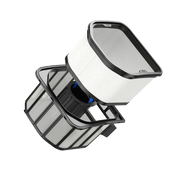
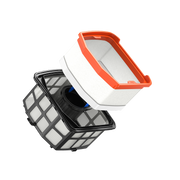
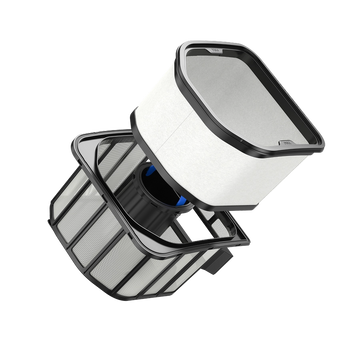
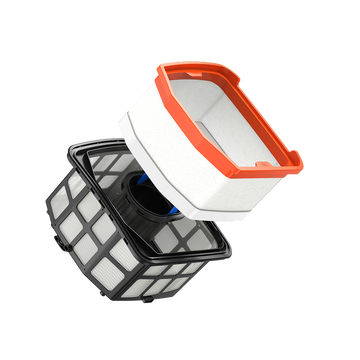
A Full Debris Basket or Clogged Mesh
As leaves, dirt, and fine particles accumulate inside the debris basket, they can restrict the circulation of water through the robot.
Reduced water flow may weaken the hydraulic forces that help maintain contact with the pool wall.
The robot may continue attempting to climb but slide downward before reaching the waterline.
Remove the debris basket, empty its contents, and rinse the mesh thoroughly. Fine sediment can obstruct the mesh even when the basket appears relatively empty.
Beatbot's troubleshooting guidance also identifies debris accumulation as a common cause of reduced wall climbing performance.
Slippery Walls Caused by Algae or Biofilm
A pool wall can appear clean while still having a thin, slippery layer of organic buildup.
When the tracks or brushes lose grip, the robot cannot effectively convert motor torque into upward movement.
Manually brush the affected walls using a brush suitable for the pool finish. Check the water chemistry and address any algae growth before restarting the robot.
Worn Wheels, Tracks or Brushes
Cleaning components gradually wear through repeated contact with pool surfaces.
Rubber tracks may lose their original tread pattern, while roller brushes can become flattened or damaged.
These changes reduce traction and may prevent the robot from climbing surfaces it previously handled without difficulty.
Inspect the components for excessive wear, cracking, loose tracks, and trapped objects. Replace worn parts with compatible components.
Incorrect Cleaning Mode
Many robotic pool cleaners offer separate cleaning modes for different pool areas.
A robot operating in Floor Mode may intentionally avoid climbing walls, even when it is fully capable of doing so.
Check the selected cleaning program through the control panel or app. Choose a mode that includes walls or waterline cleaning.
Incompatible Wall Geometry
Some pool features are difficult to climb because of their shape rather than the condition of the robot.
A protruding drain cover, sharp corner, narrow stair, or unusual wall profile can interrupt the transition from the floor.
If the robot climbs other walls successfully but consistently fails in one location, the shape or structure of that area may be responsible.
Restricted Movement or Mechanical Problems
For corded robots, insufficient cable length or a tangled cable can restrict movement and prevent the robot from reaching the upper wall.
For any robotic pool cleaner, debris wrapped around a roller brush or track can interfere with the drive system.
If the robot cannot climb any wall after the basket and cleaning components have been inspected, there may be a problem with the pump, drive motors, or internal control system.
Contact the manufacturer's technical support team if routine troubleshooting does not resolve the issue.
Do You Really Need a Robotic Pool Cleaner That Climbs Walls?
A wall climbing robotic pool cleaner is particularly useful for pools with large vertical surface areas, frequent organic buildup, or waterlines that require regular manual scrubbing.
For an inground pool that is 40 feet long and 20 feet wide, the perimeter alone measures 120 feet. Depending on the pool depth and shape, the vertical walls can represent a substantial additional cleaning area.
A floor cleaning robot leaves all of this surface maintenance to the pool owner.
Wall climbing is especially beneficial when the pool receives frequent sunlight, is used regularly by swimmers, or tends to develop visible buildup along its walls.
However, wall climbing does not necessarily need to be included in every cleaning cycle.
If most of the debris consists of leaves and sand settled on the floor, a dedicated floor cleaning cycle may be sufficient for everyday maintenance. Wall and waterline cleaning can then be scheduled when those areas require attention.
This flexibility is particularly useful for cordless robotic pool cleaners, as different cleaning programs place different demands on the battery and drive system.
Wall Climbing Technology in Beatbot Robotic Pool Cleaners
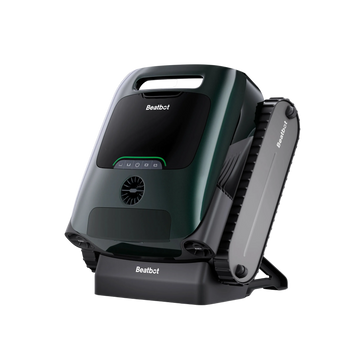
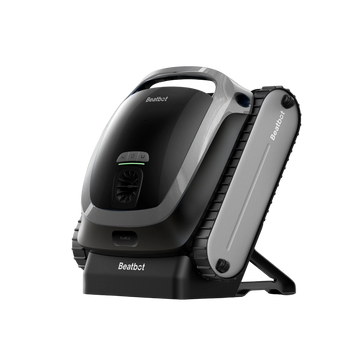
Beatbot robotic pool cleaners combine active roller brushes, powerful water circulation, intelligent navigation, and multiple cleaning modes to handle pool floors, walls, and waterlines.
Different models provide additional capabilities for shallow platforms, surface cleaning, and complex pool layouts.
Beatbot Sora Series
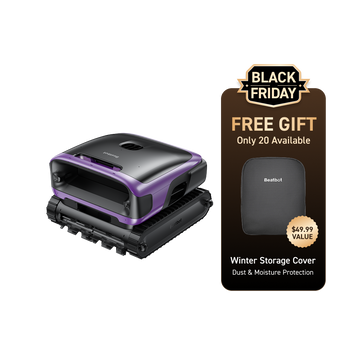
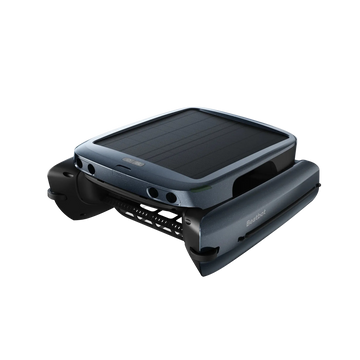
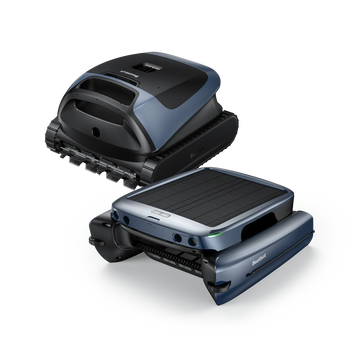
The Beatbot Sora series includes the Sora 10, Sora 30, and Sora 70. All three models support wall climbing and waterline cleaning, with suction flow reaching 6,800 GPH.
Their differences become particularly relevant when cleaning shallow areas and pools with additional structural features.
| Feature | Sora 10 | Sora 30 | Sora 70 |
|---|---|---|---|
| Floor cleaning | Yes | Yes | Yes |
| Wall climbing | Yes | Yes | Yes |
| Waterline cleaning | Yes | Yes | Yes |
| Water surface cleaning | No | No | Yes |
| Minimum shallow cleaning depth | 12 inches | 8 inches | 8 inches |
| Suction flow | 6,800 GPH | 6,800 GPH | 6,800 GPH |
| Cordless operation | Yes | Yes | Yes |
The Sora 10 provides floor, wall, and waterline cleaning, along with shallow area cleaning in water as shallow as 12 inches. It offers an accessible option for pool owners who want to reduce manual wall brushing without requiring water surface cleaning.
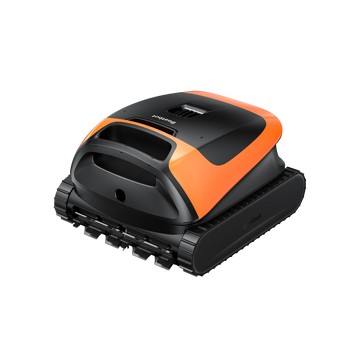
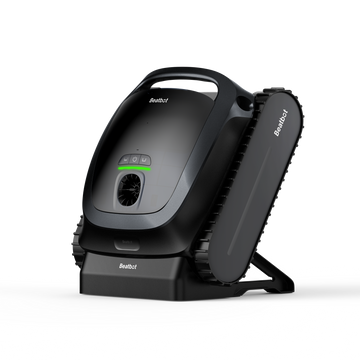
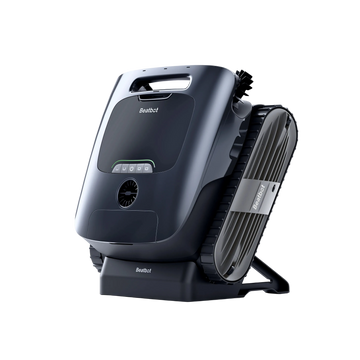
The Sora 30 extends cleaning coverage to shallow platforms with water depths as low as 8 inches. Its dual group roller brushes, ultrasonic sensors, and dedicated cleaning modes support routine wall maintenance and navigation around pool features.
Floor Mode and Wall Mode allow users to select the areas that require cleaning rather than running the same full cleaning program every time.
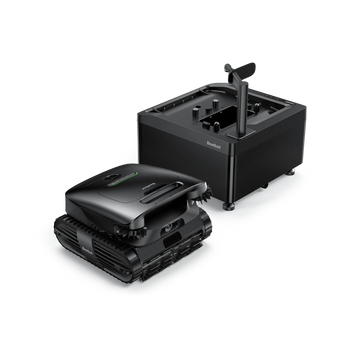
The Sora 70 combines floor, wall, waterline, shallow platform, and water surface cleaning.
Its side guide wheels assist movement around pool boundaries, while its navigation system helps it handle different cleaning zones.
Like the Sora 30, it can clean compatible shallow platforms in water as shallow as 8 inches. Suitable platforms must also provide sufficient space for the robot to move, with a minimum specified area of 3.3 × 3.3 feet.
The additional surface cleaning capability allows it to collect floating contaminants before they settle or accumulate around the waterline.
Beatbot AquaSense 2 Series
The AquaSense 2 series combines wall climbing with more advanced navigation and cleaning capabilities.
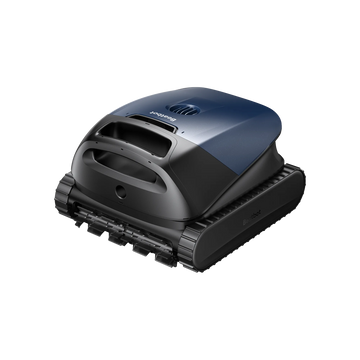
The Beatbot AquaSense 2 cleans the floor, walls, and waterline. Its waterline cleaning system performs two scrubbing passes across the targeted area, helping remove accumulated oils and organic residue.
The Beatbot AquaSense 2 Ultra adds HybridSense® AI Pool Mapping, combining an AI camera with additional sensing technologies to identify pool features, optimize cleaning routes, and improve obstacle handling.
For pools with irregular walls, multiple levels, or complex layouts, intelligent navigation helps the robot determine how to approach and move between different cleaning areas.
Both mechanical climbing capability and intelligent movement control contribute to effective wall cleaning.
Final Thoughts
An effective wall climbing robotic pool cleaner relies on more than suction power. Traction, hydraulic design, buoyancy, brush contact, and navigation all determine how well it climbs and cleans.
Consider your pool's material, wall geometry, waterline buildup, and shallow features when choosing a robot. A model suited to these conditions can reduce manual brushing and provide more complete pool cleaning.
FAQs
Can robotic pool cleaners climb vertical 90-degree walls?
Yes. Robotic pool cleaners designed for wall climbing can climb vertical pool walls. However, their ability to transition from a flat floor onto a sharp 90-degree wall depends on the chassis design, front rollers, traction, and hydraulic system.
Do robotic pool cleaners climb walls using suction alone?
No. Wall climbing depends on a combination of water circulation, hydraulic forces, traction, drive motor torque, and buoyancy. Strong suction alone does not guarantee effective climbing.
Do all wall climbing pool robots clean the waterline?
No. Some robots climb the submerged walls but reverse direction before effectively scrubbing the waterline. Look for dedicated waterline cleaning if you want to remove buildup where the water meets the pool wall.
Why does my pool robot climb halfway up the wall and fall back down?
Restricted water flow, slippery walls, worn tracks, or insufficient traction can cause the robot to lose contact. Empty and rinse the debris basket, inspect the drive components, and check the wall for algae or biofilm.
Can robotic pool cleaners damage vinyl liners?
Compatible robotic pool cleaners can generally be used on vinyl liners in good condition. However, sharp trapped debris, prolonged scrubbing in one location, or existing liner damage can increase the risk of abrasion or tearing.
Can a robotic pool cleaner climb out of the swimming pool?
Conventional wall climbing robotic pool cleaners are designed to operate in water rather than travel onto the surrounding pool deck. Some models can partially emerge for waterline cleaning or remain near the surface for retrieval.
Are tracks better than wheels for climbing pool walls?
Tracks can provide extended surface contact, but wheeled robots can also climb effectively. Grip material, hydraulic design, weight distribution, and pool surface conditions are more informative than the drive system alone.
How often should a pool robot clean the walls?
Once or twice a week is a reasonable starting point for routine residential pool maintenance. Pools with frequent use, organic buildup, or recurring algae may require more frequent wall cleaning.
Can I stop my robotic pool cleaner from climbing walls?
Yes, if the model supports a dedicated Floor Mode. This allows the robot to focus on settled debris without including wall cleaning in every cycle.
Does higher GPH mean better wall climbing performance?
Not necessarily. GPH measures the volume of water circulated by the robot. Wall climbing also depends on how that water flow generates useful hydraulic forces, how effectively the tracks grip the wall, and how the robot controls its movement.