

 Sora Series


 AquaSense Series



 Skimmer & Bundle

 Retail Edition


 Accessories

 Extended Warranty


Baking soda can quickly and safely raise total alkalinity in pool water when you use the right dose. A practical rule is about 1.5 pounds of baking soda per 10,000 gallons of water to raise total alkalinity by about 10 ppm. Test the water first, add the dose in parts, let the pump run, then test again before you add more.
How to Use Baking Soda to Raise Alkalinity in a Pool
If your total alkalinity is below range, the safest way to correct it is to test first, calculate the dose carefully, and add baking soda in stages instead of all at once.
Step 1: Test total alkalinity and pH
Start with a full water test. Check total alkalinity and pH before you add anything. A practical target for most pools is pH 7.2 to 7.8and total alkalinity around 80 to 120 ppm. pH below 7.2 is low, and total alkalinity below 80 ppm is low.
Low pH and low total alkalinity are linked, but they are not the same problem. If total alkalinity is low, baking soda is often the right fix. If pH is low and total alkalinity is already in range, baking soda may not be the best product for that job.
A liquid test kit usually gives a clearer reading than test strips when you are trying to make a controlled adjustment.

Step 2: Calculate how much baking soda you need
The right amount depends on your pool size, your current total alkalinity, and how much you want to raise it. Start by confirming your pool volume in gallons.
If you need a quick estimate for a rectangular pool, multiply the length by the width by the average depth, then multiply that number by 7.5.
Once you know the volume, test both total alkalinity and pH. A practical rule is that about 1.5 pounds of baking soda per 10,000 gallons of water raises total alkalinity by about 10 ppm.
Baking soda can give pH a small lift, but it is mainly used to raise alkalinity, not to make a large pH correction.
For example, if your pool holds 20,000 gallons and your total alkalinity is 60 ppm, raising it to 80 ppm usually takes about 6 pounds of baking soda.
For a more precise adjustment, the exact amount should be calculated with a reliable pool chemistry calculator.
Step 3: Add baking soda in small, controlled doses
Split the full dose into two or three smaller additions instead of adding everything at once. This gives the water time to adjust and lets you retest before you add more.
It also lowers the chance of pushing alkalinity too high, which can make pH harder to control and increase the risk of cloudy water or scale.
There are two common ways to add baking soda to pool water.
-
Direct to the pool:with the pump off, slowly pour it into the deep end so it spreads more evenly and avoids temporary clouding in one spot.
-
Through the skimmer:with the pump on, slowly pour it into the skimmer and make sure it does not clump.

Step 4: Run the pump and let the water circulate
Keep the pump running after each addition. Circulation helps move the bicarbonate through the whole pool, breaks up any remaining particles, and gives you a more reliable reading when you test again. If your pool has weak circulation or dead spots, give the system more time before you retest.
Step 5: Retest before the next round
Wait a few hours, then test total alkalinity and pH again. If the reading is still low, repeat the same process with another measured partial dose.
What If You Add Too Much Baking Soda to a Pool
Too much baking soda usually won't cause an emergency, but it can throw your water out of balance.
The most common result is high total alkalinity. When alkalinity gets too high, pH can become harder to adjust. Water may turn cloudy. Scale starts to form on tile, pool surfaces, heaters, and other equipment.
Baking soda does not raise pH as quickly as soda ash, but overuse can still raise pH. That can leave you with two problems at once: high alkalinity and drifting pH.
If you add too much, stop there and retest the water. Check total alkalinity, pH, and calcium hardness if you can.
In many cases, the fix is a small, controlled acid treatment followed by circulation and another test. The goal is to bring alkalinity down in steps, not force a quick correction.

Baking Soda vs Soda Ash vs Borax
These products do not do the same thing. Baking soda is used to raise total alkalinity with only a mild effect on pH.
Soda ash is used to raise pH more strongly and can also increase alkalinity.
Borax can raise pH with a smaller effect on alkalinity.
If total alkalinity is low and pH is not far out of range, baking soda is usually the better choice. If pH is very low and needs a stronger lift, soda ash may make more sense. If pH is low but total alkalinity is already close to its target, borax can be a more controlled option.

When You Should Add Baking Soda to a Pool
Baking soda is a good choice when your total alkalinity is below the target range, and you want to bring it up without pushing pH too high.
For many residential pools, total alkalinity runs best around 80 to 120 ppm. The ideal range can shift slightly depending on surface type, sanitizer system, and local water conditions.
Low alkalinity often shows up as unstable pH. You adjust the water, test again later, and the reading moves more than it should. Water balance may feel harder to hold steady. In some pools, low alkalinity can add to dull water or make chemical changes feel less predictable.
It makes sense to correct alkalinity before you fine tune pH. Total alkalinity acts as a buffer. Once it is back in range, pH usually becomes easier to control.
How Beatbot Helps Make Pool Care Easier
Water balance is easier to manage when the pool stays consistently clean. Leaves, pollen, insects, and fine debris do not directly set alkalinity, but once they sit in the water too long, they add to daily maintenance and make the pool harder to monitor clearly.
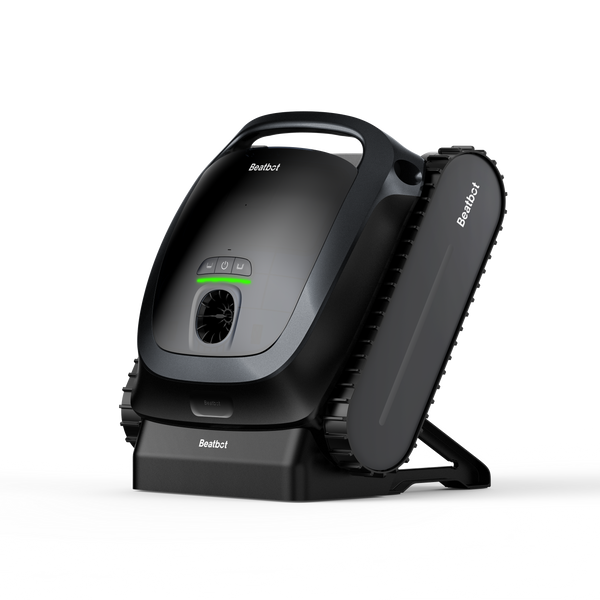
The Beatbot Sora 70 cordless pool cleaner helps reduce that burden by cleaning the water surface, floor, walls, and waterlinein one cycle, rather than leaving floating debris and surface buildup behind. It also delivers 6,800 GPH of suction power, has a 6L debris basket for heavier debris, and supports up to 7 hours of continuous water-surface cleaning, makingit more effective for routine cleanup.
Final Takeaway
Keeping pool water balanced gets easier when you pair the right chemical adjustments with a consistent cleaning routine. If you want more help with pool care, explore Beatbot’s other posts on pool chemistry, maintenance, and seasonal cleaning tips, or browse Beatbot pool robotic cleaner products to find a setup that fits your pool and maintenance routine.
FAQ
Why is baking soda used to raise alkalinity?
Baking soda raises total alkalinity well and has a milder effect on pH than soda ash. That makes it a good fit when alkalinity is low and pH does not need a big increase.
How long does it take to raise pH in pool after adding baking soda?
Let the pump circulate the water for a few hours, then test again. The exact timing can vary with pool size and circulation, but testing too soon can give you a misleading reading.
How much baking soda to raise alkalinity in hot tub?
To raise total alkalinity in a hot tub, add 1 level tablespoon of baking soda per 100 gallons of water, increasing alkalinity by approximately 10–20 ppm. For a typical 400-gallon hot tub, 4 tablespoons (1/4 cup) will raise the alkalinity by about 10–20 ppm.
Can I swim after adding baking soda to pool?
Yes, you can generally swim 20 to 30 minutes after adding baking soda to a pool, as it is a mild chemical that dissolves quickly.
Does pool temperature affect how baking soda works?
Temperature does not change its basic role, but it can affect how fast it dissolves and how quickly the water mixes. Good circulation matters more than temperature in most cases.
Why is my alkalinity still low after adding baking soda?
The usual reasons are underdosing, poor circulation, testing too soon, or an incorrect pool volume estimate. If the number is still low, retest and add another measured amount instead of guessing.


