Most Popular


 Sora Series


 AquaSense Series

 Skimmer & Bundle

 Retail Edition


 Accessories


To lower pH in a swimming pool, test your water, then add either muriatic acid or sodium bisulfate in measured doses while the pump is running, and retest after 4 to 6 hours of circulation. The ideal pool pH sits between 7.4 and 7.6. High pH reduces chlorine effectiveness, triggers scale on tile and equipment, and leaves swimmers with itchy skin and stinging eyes.

What pH Level Should a Swimming Pool Have?
A swimming pool should have a pH between 7.2 and 7.8, with 7.4 to 7.6 as the ideal target. Water below 7.2 corrodes metal fittings, etches plaster, and irritates swimmer eyes. Water above 7.8 lets chlorine lose its sanitizing strength and causes calcium to precipitate out as visible scale.
Total alkalinity should stay between 80 and 120 ppm. It controls how stable pH is day to day, so check it at the same time you check pH.
What Are the Signs Your Pool pH Is Off?
The most reliable sign of unbalanced pool pH is a test reading outside 7.2 to 7.8, but several visible and physical cues show up before most owners reach for a test kit. Cloudy or dull water, white scale along the tile line, and red or stinging eyes after a swim all point to pH above 7.8. Etched plaster, corroded metal fittings, and a vinyl liner that feels unusually slippery point to pH below 7.2.
Chlorine behavior is the other early indicator. If you are adding your normal chlorine dose and the water still looks hazy or smells strongly of chloramines, pH is probably too high and cutting chlorine's sanitizing strength. Rapid chlorine consumption with no visible debris often signals pH has drifted into a range where chlorine is working overtime to stay effective.
Why Does Pool pH Rise?
Pool pH rises because most common inputs to pool water are alkaline. Liquid chlorine (sodium hypochlorite) has a pH near 13, and calcium hypochlorite sits near 11, so every chlorination event pushes pH up. Saltwater pools climb faster because the salt cell generates sodium hydroxide as a byproduct day after day.
Over-correcting alkalinity is another frequent cause. Baking soda raises alkalinity but also nudges pH upward, so adding too much while trying to stabilize water chemistry leaves you with both values too high at once. Fresh fill water, rainwater in some regions, and carbon dioxide outgassing from the surface add smaller but continuous upward pressure. New pools with fresh plaster leach calcium hydroxide for the first year, which keeps pH stubbornly high even with regular acid additions.
How Do You Test Pool pH?
Test pool pH with a liquid test kit, a digital pH meter, or test strips, taking the sample from elbow-deep in the pool and away from return jets. Surface water reads differently than the bulk of the pool because of gas exchange at the air-water interface. Hold the sample container upside down, push it roughly 18 inches below the surface, then turn it upright to fill.
Liquid reagent kits using phenol red are the most accurate for residential use and read pH in the 6.8 to 8.2 range. Digital meters are faster but need regular calibration with buffer solutions. Test strips are the least precise because they rely on matching a printed color, but they are acceptable for routine checks between deeper water tests.

How to Lower Pool pH
To lower pH in a pool, measure your water volume, test pH and alkalinity, calculate the correct acid dose, add it to water (not the other way around), pour it near a return jet with the pump running, and retest after 4 to 6 hours. The chemical is either muriatic acid or sodium bisulfate.
Step 1: Know Your Pool Volume
For a rectangular pool, multiply length by width by average depth, then multiply by 7.5 to convert cubic feet to gallons. A 16 by 32 foot pool with a 5 foot average depth holds about 19,200 gallons. Round pools use pi times radius squared times depth times 7.5.
Step 2: Test Both pH and Total Alkalinity
If alkalinity is above 120 ppm, lower it first. The buffering capacity will push pH right back up within hours otherwise. If alkalinity is in range and only pH is high, treat pH directly.
Step 3: Calculate Your Acid Dose
For muriatic acid at 31.45 percent strength, about 5 ounces lowers pH by 0.1 in a 10,000 gallon pool. For sodium bisulfate, 5 to 7 ounces achieves the same drop. Start with 75 percent of the calculated dose. Overshooting into the 6s forces you to buy soda ash and correct upward.
Step 4: Dilute and Add
Fill a clean plastic bucket with about 4 gallons of pool water, then slowly pour the measured acid into the water. Never reverse this order. Pouring water into concentrated acid triggers a violent exothermic reaction that splashes acid out of the bucket. Wear chemical splash goggles, acid-resistant gloves, and closed-toe shoes.
Step 5: Pour Near a Return Jet
With the pump running, pour the diluted solution slowly into the deep end near a return jet. Moving water dilutes the acid immediately and prevents a concentrated pocket from settling on the floor, where it can etch plaster or damage vinyl liners.
Step 6: Circulate, Wait, and Retest
Run the pump for at least 4 to 6 hours before retesting. For larger doses or larger pools, wait 24 hours. Swim only after a second test confirms pH between 7.2 and 7.8.

Muriatic Acid vs. Sodium Bisulfate for Lowering Pool pH
Muriatic acid works faster and costs less. Sodium bisulfate is safer to handle and easier to measure. The choice comes down to dosing frequency and comfort with liquid acid.
Muriatic acid (hydrochloric acid at 14.5 to 31.45 percent) dissipates quickly and does not add sulfates to the water, which makes it the default for in ground pools. It fumes aggressively, damages concrete decks on contact, and contributes chlorides to total dissolved solids over time.
Sodium bisulfate, sold as dry acid or pH Down, is granular. You scoop it, broadcast it across the pool surface with the pump running, and let circulation handle the rest. Costs more per dose, and in warm high-calcium water its sulfates can precipitate as calcium sulfate scale on heaters and salt cells.
For owners correcting pH once or twice a month, sodium bisulfate is the safer default. For commercial pools or weekly dosing schedules, muriatic acid wins on cost and water quality despite the handling requirements.
What if Your Pool Alkalinity Is Too High?
If total alkalinity is above 120 ppm alongside high pH, lower alkalinity first using the acid and aeration method. High alkalinity buffers pH back up within a day or two of any direct correction.
Add muriatic acid at the dose needed to bring alkalinity down to 90 to 100 ppm. This drives pH into the 6.8 to 7.0 range. Then aerate the pool aggressively by running water features, aiming return jets upward to break the surface, or using a handheld aerator. Let this run for 24 to 48 hours.
As carbon dioxide outgasses, pH rises naturally toward 7.4 to 7.6 without alkalinity rising with it. This is the only reliable way to physically lower total alkalinity without partially draining and refilling the pool.
How to Keep Pool pH Stable After You Correct It
Keep pool pH stable by holding alkalinity between 80 and 100 ppm and removing organic debris before it decomposes. A corrected pool with clean circulation and consistent sanitizer demand will hold pH for a week or more between adjustments.
Leaves, pollen, sunscreen residues, and insect bodies that sit on the water or settle to the floor continuously break down, which consumes chlorine and skews your test readings. The faster you remove debris, the less chlorine the pool demands, and the less pH gets dragged around by cycles of heavy chlorination.

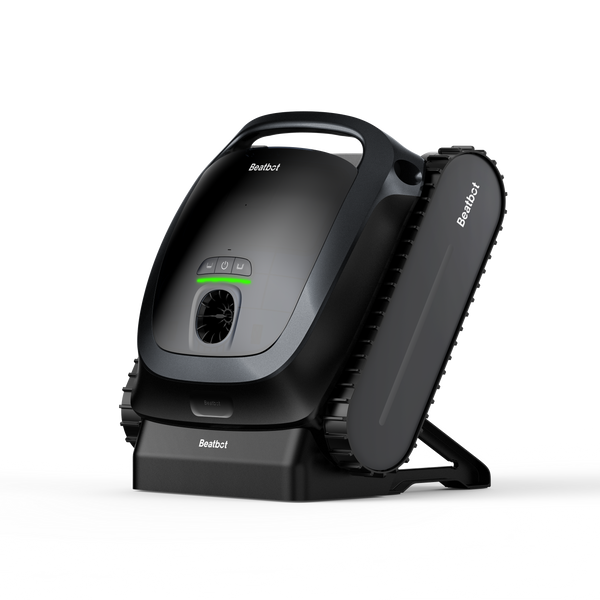
For larger pools under heavy tree cover or seasonal leaf drops, the Beatbot Sora 70 robotic pool cleaner pulls floating organics off the water before they sink and rot. Its JetPulse system uses two water jets, one on each side of the robot, that fire inward and outward at the same time.
The inward streams funnel leaves, pollen, and insects into the central suction inlet, while the outward streams form barriers that block debris from drifting past the robot. Removing that material before it decomposes is what keeps chlorine demand from spiking, which is the biggest single driver of pH instability week to week.
For standard residential pools up to 3,200 square feet, the Beatbot Sora 30 pool cleaning robot covers floor, wall, and waterline cleaning in a single cycle and reaches accessible platforms and shallow areas as low as 8 inches deep.
Its 5L debris basket holds roughly 650 leaves per session, so during autumn drops or after storms the robot keeps cleaning instead of stopping at half capacity. Debris that sits on the floor for days rots and feeds a chlorine demand surge, and a surge in chlorine is what pulls pH out of range between tests.
For smaller pools where heavy leaf loads are less common, the Beatbot Sora 10 cordless pool robot covers floor, wall, waterline, and platforms down to 12 inches of water, with up to 300 minutes of floor cleaning on a single charge.
At this pool size, daily consistency matters more than large-capacity filtration, and a cleaner that finishes the whole pool in one cycle keeps organic load low and chlorine demand predictable.
FAQs
How Long After Lowering pH Can You Swim in the Pool?
Wait at least 1 hour after a small acid dose and up to 24 hours after a large correction, then retest. The pool is safe once pH sits between 7.2 and 7.8 and you can no longer smell acid near the return jets. Early swimming risks skin and eye irritation from acid hot spots that have not fully dispersed.
Can You Use Vinegar or Lemon Juice to Lower Pool pH?
Vinegar and lemon juice can technically lower pH, but the doses required are enormous and they introduce sugars and organics that feed algae and burn through chlorine. A 10,000 gallon pool would need several gallons of vinegar to move pH meaningfully. Use muriatic acid or sodium bisulfate instead.
Will Shocking a Pool Lower pH and Alkalinity?
Shocking usually raises pH, not lowers it. Most shock products are calcium hypochlorite or sodium hypochlorite, both of which are alkaline. Expect pH to spike for several hours after a shock treatment and then settle. If pH and alkalinity are already high, correct them before shocking so the chlorine has maximum sanitizing strength when it enters the water.
How Long After pH Down Can You Shock the Pool?
Wait at least 4 to 6 hours after adding a pH decreaser before shocking, and retest pH first. Adding shock while acid is still concentrated in parts of the pool can cause localized reactions that damage the shock's effectiveness. Shocking works best when pH is already in the 7.2 to 7.4 range, where chlorine is most active.
Is Baking Soda a pH Stabilizer?
Baking soda raises total alkalinity, which indirectly stabilizes pH by making it more resistant to swings. It is not a direct pH stabilizer, and adding too much will push both alkalinity and pH above their ideal ranges. Use baking soda only when alkalinity is below 80 ppm, and expect to correct pH downward afterward if it rises past 7.8.
Will Pool pH Go Down on Its Own?
Pool pH rarely drops on its own because most inputs to pool water are alkaline. The one natural mechanism that lowers pH is acidic rainfall in some regions, and even that is usually offset within a few days by continued chlorination and aeration. For any pH reading above 7.8, plan on an acid correction rather than waiting for a natural drop.