Most Popular


 Sora Series


 AquaSense Series

 Skimmer & Bundle

 Retail Edition


 Accessories


Raising total alkalinity without pushing pH out of range is one of the most common chemistry challenges pool owners face. The two measurements are chemically linked: most alkalinity increases also shift pH upward, which can leave you chasing one number while the other drifts.
The good news is that sodium bicarbonate (baking soda) raises alkalinity with only a small pH impact, and aeration can correct any residual pH movement without touching alkalinity at all. This guide walks through why low alkalinity happens, how to fix it with minimal pH disruption, and what ongoing habits keep both numbers stable so you spend less time testing and more time swimming.
What Does Total Alkalinity Do and Why Does It Matter?
Total alkalinity (TA) measures the concentration of bicarbonates, carbonates, and hydroxides dissolved in your pool water. Its primary function is to buffer pH, meaning it absorbs small chemical changes and prevents pH from swinging erratically. The ANSI/APSP/ICC-11 2019 Standard published by the Pool & Hot Tub Alliance (PHTA) sets the acceptable alkalinity range at 60 to 180 ppm, with an ideal target of 80 to 120 ppm depending on your sanitizer type.
When TA drops below this range, pH loses its stability. A rain shower, a heavy swim session, or even routine chemical additions can send pH bouncing between 7.0 and 8.0 within a single day. The CDC's Healthy Swimming program recommends maintaining pool pH between 7.0 and 7.8 for effective disinfection and swimmer comfort. Staying inside that window becomes nearly impossible once alkalinity falls too low, because every small acid or base introduction causes an outsized pH shift.
The downstream consequences are significant. High pH reduces chlorine's germ-killing effectiveness. Low pH makes water corrosive to metal fixtures, heater cores, and plaster surfaces. Swimmers notice it as eye sting or skin irritation. Pool owners who find themselves repeatedly adjusting pH are often treating a symptom. The root cause is typically alkalinity that has drifted out of range.
Why Does Pool Alkalinity Drop?
Rainwater is one of the most common causes. Data from the U.S. Environmental Protection Agency shows that normal rainfall across much of the eastern United States falls between pH 4.2 and 4.8. A single heavy storm can dilute pool water enough to lower alkalinity by 10 to 20 ppm.
Frequent acid dosing is the second major driver. Muriatic acid and sodium bisulfate both consume bicarbonates as they lower pH. Pool owners who add acid regularly to combat rising pH are inadvertently eroding their own alkalinity buffer, which in turn makes pH even harder to control. This creates the frustrating cycle many pool owners experience.
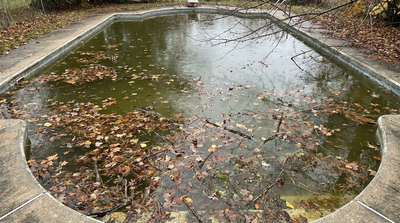
Organic debris also contributes. Leaves, pollen, dead algae, and other contaminants that settle on the pool floor decompose into organic acids over time. The longer debris sits in the water, the more acid is produced, and the faster alkalinity drops. Pools surrounded by trees or pools that go uncleaned for several days often show measurable alkalinity loss that cleaner pools in the same area do not.
Backwashing and water replacement can compound the issue. If your fill water tests below 60 ppm alkalinity, every top-off dilutes the existing buffer. Over a season, these small dilutions add up.
How Do You Raise Alkalinity Without Raising pH?
Sodium bicarbonate (baking soda) is the most effective chemical for raising alkalinity while keeping pH movement to a minimum. Its own pH sits around 8.3, which means it nudges pool pH only slightly. Soda ash (sodium carbonate), by comparison, has a pH above 11 and raises both alkalinity and pH aggressively. Choosing the wrong product is one of the most common mistakes pool owners make.
Step 1: Test your water. Use a DPD liquid test kit or digital photometer to measure your current alkalinity and pH. The CDC recommends DPD-based testing for the most accurate results. Record both numbers before adding any chemicals.
Step 2: Calculate your dose. A PHTA fact sheet on total alkalinity confirms that approximately 1.5 pounds of sodium bicarbonate per 10,000 gallons of water raises alkalinity by about 10 ppm. Determine how far your current TA is from the 80 to 120 ppm target, calculate the amount needed, and plan to add roughly three-quarters of that amount in the first round. It is easier to add a second small dose than to correct an overshoot.
Step 3: Dissolve and distribute. Pre-dissolve baking soda in a bucket of pool water to prevent cloudiness. Broadcast the solution across the deep end with the circulation pump running. This ensures even distribution throughout the water volume.
Step 4: Wait and retest. Allow at least six hours of full circulation before retesting. Chemical distribution is uneven in the first few hours, and testing too early produces a reading that does not reflect the true pool-wide concentration. If alkalinity is still low, add the remaining quarter-dose and wait another six hours.
Step 5: Aerate to correct pH drift. If pH has climbed above 7.6 after adding baking soda, aeration brings it back down without reducing the alkalinity you just built up. Running a fountain, pointing return jets upward to break the water surface, or activating a spillover feature all release dissolved CO2 from the water. CO2 loss is what lowers pH. This process is gradual and self-limiting, making it far safer than adding acid, which would pull alkalinity back down along with pH.
Chemical Comparison at a Glance
|
Chemical |
Effect on TA |
Effect on pH |
Best Use Case |
|
Sodium Bicarbonate (Baking Soda) |
Raises significantly |
Raises slightly |
Raise TA with minimal pH change |
|
Sodium Carbonate (Soda Ash) |
Raises moderately |
Raises significantly |
Raise both TA and pH together |
|
Borax |
Minimal impact |
Raises moderately |
Raise pH without raising TA |
|
Aeration |
No impact |
Lowers high pH via CO2 release |
Correct pH drift after TA adjustment |
How Do You Keep Pool Alkalinity Stable Long Term?
Weekly testing is the single most effective habit for preventing alkalinity problems. A 10 ppm drop caught early requires only a small baking soda addition. A 40 ppm drop discovered after weeks of neglect requires a full rebalancing cycle that takes days to resolve.
Reducing the organic load in your pool protects alkalinity indirectly. Debris that decomposes on the pool floor generates acids that consume your bicarbonate buffer. A pool that stays physically clean holds its chemistry longer between adjustments. Running an automated pool cleaning robot on a regular schedule removes leaves, pollen, and sediment before they break down into acid-producing material.
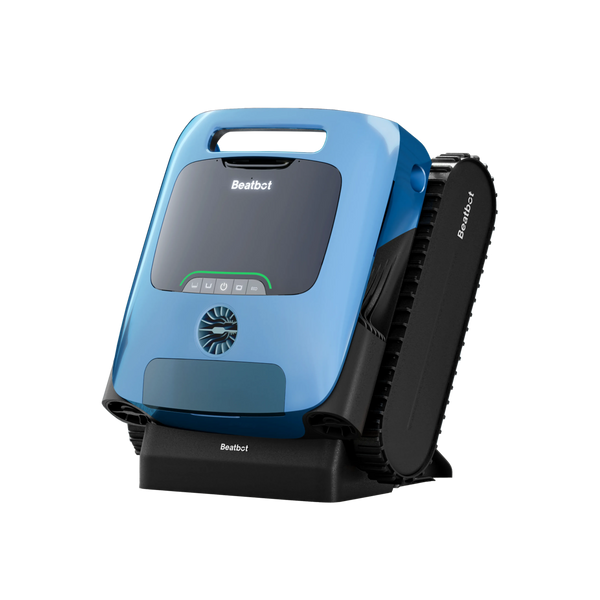
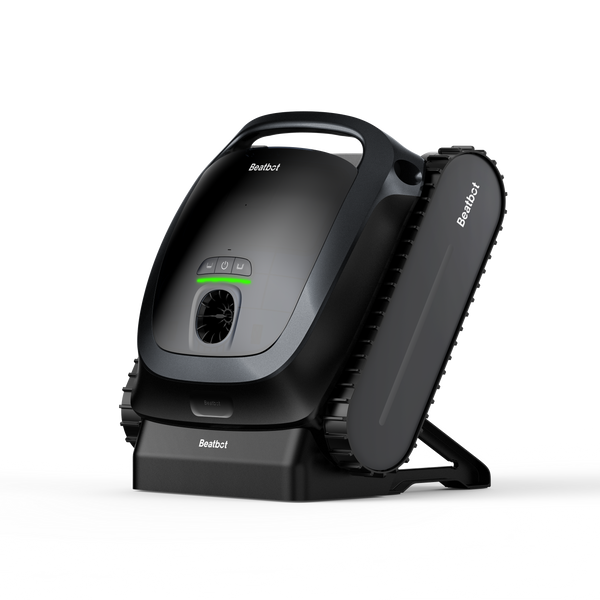
The Beatbot Sora 70 robotic pool cleaner covers floors, walls, waterline, and the water surface in a single cycle, pulling floating leaves and fine pollen out of the water before they sink and decompose. Its 6,800 GPH suction and JetPulse surface cleaning system address debris at every level of the pool.
For pools that do not require surface cleaning, the Beatbot Sora 30 robotic pool cleaner handles floors, walls, waterline, and shallow platforms with the same 6,800 GPH suction power. The Beatbot Sora 10 robotic pool cleaner delivers 6,800 GPH suction as an entry-level option for floor, wall, and waterline coverage, making automated debris removal accessible for any pool setup.
Covering the pool when it is not in use limits rainwater dilution and slows CO2 exchange, both of which affect alkalinity and pH stability. A solar cover or solid safety cover keeps acidic rain out and reduces the frequency of chemical corrections after storms.
What Mistakes Make Low Alkalinity Worse?
Using soda ash instead of baking soda is the most common error. Soda ash raises pH roughly twice as much as baking soda for the same alkalinity increase. Pool owners who grab the wrong product end up with pH above 8.0 and a second problem to solve.
Dumping the full calculated dose at once is the second most frequent mistake. Adding all the baking soda in one shot can overshoot alkalinity and push pH into a stubborn high range. Dosing in stages with retesting between each round provides control and prevents overcorrection.
Reaching for muriatic acid to fix a small pH overshoot after raising alkalinity undoes much of the work. Acid lowers both pH and alkalinity simultaneously. If pH has drifted to 7.8 after a baking soda addition, aeration is a better first response because it targets pH without affecting alkalinity.
Neglecting to test fill water is an overlooked mistake. If your tap water has low alkalinity, every time you top off the pool after backwashing or evaporation, you dilute your buffer. Knowing your fill water's alkalinity allows you to anticipate and offset these losses before they accumulate.
FAQs
Does Baking Soda Expire or Lose Effectiveness?
Sodium bicarbonate is a stable compound that does not degrade under normal storage conditions.
An unopened container stored in a dry location will work the same whether it is one month old or five years old. Once opened, baking soda can absorb moisture and clump, but this does not change its chemical effectiveness for raising pool alkalinity. If it dissolves cleanly in water, it still works.
How Long After Adding Baking Soda Should You Retest?
Wait at least six hours with the circulation pump running. Baking soda dissolves quickly, but even distribution through the full water volume takes time.
Testing before the six-hour mark often produces a reading that does not reflect the true pool-wide concentration. If you need to add a second dose, wait another full six hours before testing again.
Is Pool-Grade Baking Soda Different From Grocery Store Baking Soda?
The active ingredient is identical. Both pool-grade sodium bicarbonate and household baking soda are NaHCO3.
The difference is packaging size and purity labeling. Food-grade baking soda from the grocery store meets stricter purity standards and works perfectly in pools, often at a lower cost per pound than products marketed specifically for pool use.