Most Popular


 Sora Series


 AquaSense Series

 Skimmer & Bundle

 Retail Edition


 Accessories


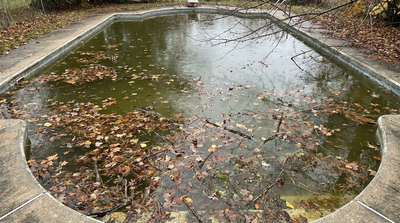
Before you drag the winter cover across the pool, take out anything that can stain the liner, rot, corrode, or crack in the cold: ladders and handrails, toys and floats, skimmer and pump baskets, chemical floaters, filter cartridges or grids, the solar cover, and any automatic cleaner and its hoses. Then clear the water itself of leaves, sediment, and algae, and give it one last clean. Everything left in the pool over winter either feeds algae, bleeds color into vinyl, or holds water that expands and splits plastic when it freezes. Clearing it now is what makes spring opening quick instead of a green, stained mess.

Why Everything Has to Come Out Before You Cover the Pool
A winter cover seals the pool for months with no circulation, no filtration, and no sunlight. Anything trapped underneath keeps reacting the whole time. Leaves and organic debris break down and feed algae, so a pool that looked clear in October can open cloudy or green in April. Inflatable floats and colored toys pressed against a vinyl liner slowly leach dye and leave permanent marks. Chlorine tablets sitting in a floater against one spot of the liner or steps bleach and etch the surface. And any part still holding water, from skimmer baskets to a cleaner's housing, can crack when that water freezes and expands.
Removing these items isn't about tidiness. Each one prevents a specific, and often expensive, spring problem. The checklist below is grouped by where things live, so you can work around the pool once and not miss anything.
Clear the Water and Give the Pool a Final Clean
Start with the water, because you want the pool as clean as possible the moment it's sealed. Skim the surface, brush the walls, steps, and floor to knock loose any algae film, then vacuum the settled sediment off the bottom. After it's physically clean, balance the water and shock it, then let the pump run a full cycle so the chemicals circulate before you close.
Aim for balanced water in these ranges before closing: free chlorine around 2 to 4 ppm, pH 7.4 to 7.6, total alkalinity 80 to 120 ppm, and calcium hardness 200 to 400 ppm. Test roughly a week ahead so you have time to adjust. Don't close too early, either. Water needs to stay consistently below about 65°F, or the sanitizer burns off fast and algae gets a head start under the cover.
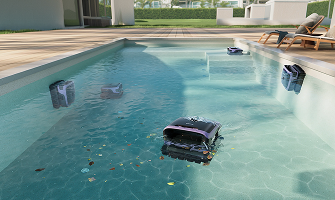
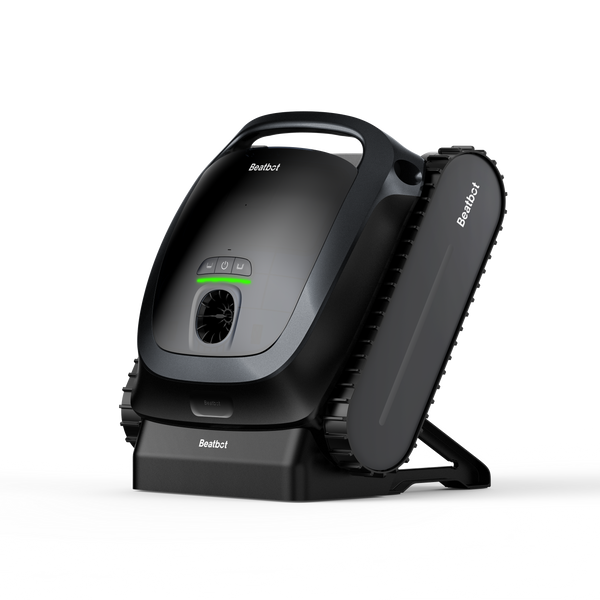
This final pass is the step most people rush, and it's the one that decides how the pool looks in spring. A cordless robotic pool cleaner makes it far more thorough than a quick skim. The Beatbot Sora 30 robotic pool cleaner works the floor, walls, waterline, and shallow platforms in one cycle and pulls debris down to 150 microns into a 5L basket, so leaves and fine sediment come out instead of settling under the cover. It reaches steps and swim-outs as shallow as 8 inches, which are exactly the spots that get skipped by hand and turn into stained corners by opening day.

Pool Accessories and Floats to Remove and Store
Take out everything that sits in or over the water and store it somewhere dry. Metal accessories rust, plastics get brittle in the cold, and floats stain the liner, so none of it should spend winter in the pool.
-
Ladders, handrails, and drop-in steps: unbolt them, rinse off pool chemicals, dry them, and store them indoors so metal parts don't corrode over the off-season.
-
Inflatable toys, loungers, and dive rings: pull all of them out. Left against the liner, colored vinyl can bleed dye that won't come off in spring.
-
Solar cover and reel: remove it, rinse it, let it dry completely, then roll it up for indoor storage. A solar cover left on under a winter cover traps heat and breaks down.
-
Thermometers, chair floats, and anything else loose:
clear the surface entirely so the winter cover lies flat.
Baskets, Filters, and Chemical Dispensers to Remove
Anything that holds water or holds chemicals against a surface needs to come out. This is the group that quietly causes freeze cracks and bleaching if you skip it.
-
Skimmer and pump baskets: remove them, clean out the debris, and store them indoors. Left in place, they trap water that freezes, and the brittle plastic splits.
-
Chemical floaters and inline chlorinators: take out every floating dispenser and drain any inline chlorinator. A tablet floater that drifts to one spot will bleach and etch the liner or steps beneath it.
-
Filter cartridges or D.E. grids: remove them, clean them thoroughly, inspect for tears, and store them somewhere that won't freeze. Cartridges left wet can crack, and clean media means the filter is ready to go in spring.
For high-risk items, the reason to remove them and the reason to store them dry are the same: trapped water and freezing temperatures. If a part can hold even a little water, it belongs inside for the winter.

Automatic Pool Cleaners and Hoses to Remove and Store
Run your final clean first, then remove the cleaner. Whether it's a pressure-side unit, a suction cleaner, or a cordless robotic pool cleaner, it shouldn't stay in the pool or connected to the plumbing over winter.
-
Automatic and robotic cleaners: take the unit out after that last clean, drain any water from inside it, dry it, and store it indoors. Water left in a cleaner's housing or motor can freeze and cause damage.
-
Cleaner hoses: disconnect them and lay them out straight in a non-freezing space like a garage or basement. Coiled or kinked hoses hold their shape and can crack.
-
Over-the-top skimmers and surface attachments: remove these along with the cleaner so nothing sits on the water under the cover.
If you used a robot for the final clean, this is simply the last step of that same process: clean, lift out, drain, store.
Final Checks Before the Cover Goes On
Once the water is clean and everything is out, only a couple of items go back toward the pool, and both protect the cover itself.
- Air pillow (above ground pools): inflate it, center it under the cover, and tie it off. It relieves the pressure of expanding ice and helps rainwater and snowmelt run off instead of pooling.
- Deck protection: if your coping or deck has sharp edges, lay foam or old solar-cover material around the perimeter so the winter cover doesn't wear through where it rubs.
Then position the cover, secure it with water bags, cover blocks, or deck anchors depending on your cover type, and keep a cover pump on top to clear standing water through the winter. At that point the pool is genuinely closed, not just covered.
FAQs
Can I leave the automatic pool cleaner in the pool over winter?
No. Leave it in and any water trapped inside can freeze and crack the housing, and the unit sits against the liner for months where it can leave marks. Run your final clean, then remove it, drain it fully, dry it, and store it indoors. Do the same with a cordless robotic cleaner.
Do I remove the filter cartridge or just clean it in place?
Remove it. A cartridge left in the tank stays damp and can crack if the tank isn't fully drained and freezes. Take it out, clean it, check for splits or worn pleats, and store it somewhere that won't freeze. The same applies to D.E. grids.
When should I do the final clean, right before covering or a few days earlier?
Do the physical cleaning and the shock treatment close to closing day, but give the shock time to circulate through a full pump cycle before you seal the cover. Test and balance the water about a week ahead so the chemistry is settled, then clean, brush, vacuum, and shock in the final day or two.
What happens if I leave a chlorine floater in over winter?
It drifts, settles in one spot, and the concentrated chlorine bleaches and etches whatever it rests against, usually the liner, a fiberglass step, or the pool floor. Remove all floating dispensers and drain any inline chlorinator before you cover the pool.