Most Popular


 Sora Series


 AquaSense Series

 Skimmer & Bundle

 Retail Edition


 Accessories


A swimming pool is a system, not just a vessel. The shell holds the water. The plumbing moves it. The pump and filter clean it. The chemistry keeps it safe. Each layer of the pool,from the structural wall to the surface skimmer,serves a defined role, and when one part fails, the effects ripple through the rest. Whether you are troubleshooting an existing pool or trying to understand what you are maintaining, the starting point is the same: knowing what the components are, what they do, and how they connect.

What Makes Up a Pool
A pool has three layers of components, each responsible for a different function.
The first is the structure: the shell, coping, and deck. These define the pool's shape, hold the water in place, and form the physical boundary between the pool and the surrounding environment. The shell material determines long-term durability and surface maintenance demands. The coping caps the pool wall. The deck frames the entire installation and affects drainage and safety.
The second is the circulation and filtration system: the skimmer, main drain, pump, filter, and return jets. This is what keeps water moving. Water exits through the skimmer at the surface and the main drain at the floor, passes through the pump and filter, and returns through the jets. Without active circulation, water stagnates, chemistry drifts, and debris builds up at the bottom and waterline.
The third is the water surface and coverage zone: the layer of water that sits above the main body of the pool. This is where leaves, pollen, oils, and organic debris collect first. Skimmers address part of it, but the surface between skimmer pull points is largely unmanaged between pump cycles. How well a pool handles its surface determines how fast the rest of the system gets loaded with debris.
These three layers are interdependent. A structural crack changes water chemistry. A clogged filter reduces circulation. Debris left on the surface for days increases the sanitizer demand across the entire water volume. Understanding the pool as a system, rather than as individual components, is what makes maintenance decisions predictable.
What Is a Pool Shell Made Of, and Which Material Holds Up Best?
The pool shell is the structural layer that contains the water. Its material determines surface texture, durability, algae resistance, and how often it needs repair or replacement. There are four main types, and each has a clear use case and a clear set of trade-offs.
Concrete (gunite or shotcrete) is the most customizable option. The shell is sprayed in place and finished with plaster, aggregate, or tile. It can be built in any shape and size, and it handles heavy use well over decades. The trade-off is surface maintenance: plaster roughens over time, creating texture that traps algae, and typically needs resurfacing every 10 to 15 years. Concrete pools also require more attention to pH and calcium hardness, because both low and high readings attack the surface chemistry. For a permanent, custom-shaped pool that will outlast most other types structurally, concrete is the standard choice.
Fiberglass uses a prefabricated shell manufactured in a factory and installed as a single unit. The gel coat surface is smooth and non-porous, which resists algae adhesion better than plaster and reduces chemical demand. Installation is faster than concrete, and the surface is easier to clean. The limitations are fixed shape options and the risk of gel coat osmotic blistering if water chemistry runs acidic for extended periods. Fiberglass is the most practical choice for homeowners who want low day-to-day maintenance and can work within standard shape options.
Vinyl liner pools use a rigid frame (steel, polymer, or aluminum) with a flexible vinyl liner stretched over it. The liner is the waterproof surface, not the frame itself. Liners are smooth, relatively low-cost to install, and available in many patterns, but they are vulnerable to punctures, UV degradation, and chemical damage from chlorine concentrations that are too high. A liner typically lasts 7 to 12 years before replacement. Vinyl is most common in above-ground pools and lower-budget in-ground installations.
Tile and aggregate finishes are not pool types on their own but surface treatments applied over concrete. Glass tile is the most durable and visually striking finish, with near-zero porosity and excellent stain resistance. Pebble and quartz aggregate finishes sit between plaster and tile in durability and texture. They last longer than standard plaster (often 15 to 25 years) and provide a natural appearance, but the rougher surface texture increases the cleaning effort required. Many high-end concrete pools use tile at the waterline specifically because tile resists the calcium scaling and biofilm that plaster struggles with in that zone.
One material to approach carefully is standard white plaster on its own, without a protective aggregate or tile accent at the waterline. It is the most common entry-level concrete finish but the least durable. It stains easily, etches in low-pH conditions, and can become rough enough to tear swim gear or abrade skin within a few years of installation if water chemistry is not consistently managed.
How Does Pool Circulation Work?
Pool circulation is the continuous loop that keeps water moving through the filtration system and back into the pool. It is what prevents stagnation, distributes sanitizer evenly, and keeps debris from settling.

Water exits through two paths: the skimmer and the main drain. The skimmer sits at the waterline and pulls in the top layer of water, which is where surface oils, debris, and contaminants concentrate. The main drain sits at the pool's lowest point and draws from the bottom. Both feed into the pump basket, which catches large debris before water reaches the pump impeller.
From the pump, water moves through the filter under pressure. After filtration, it passes through the heater (if installed) and returns to the pool through return jets. The angle of those jets is deliberate: aimed in the same rotational direction, they create a circular flow that keeps the full pool volume in motion, preventing dead zones where sanitizer is absent and algae can establish.
Most residential pools need six to eight hours of pump run time per day to turn over the full water volume through the filter at least once. Pools with heavier bather loads, warmer water temperatures, or high debris input require more. Undersized pumps or pumps running too few hours are one of the most common causes of chronic clarity and algae problems.
What Do Pool Filters Remove, and How Are They Different?
Pool filters remove suspended particles from the water, but the type of filter determines how fine those particles need to be before they are captured.
Sand filters pass water through a bed of silica sand that traps particles down to 20 to 40 microns. They require backwashing when internal pressure rises, which reverses flow to flush captured debris out through a waste line. Sand filters are reliable and low maintenance, but they are the coarsest of the three main types. Cartridge filters use a pleated polyester element and catch particles down to 10 to 15 microns without backwashing. They require periodic cartridge removal and rinsing, and eventual replacement as the media degrades. Diatomaceous earth (DE) filters offer the finest filtration of the three, capturing particles as small as 3 to 5 microns. They require recharging with DE powder after backwashing and careful handling, but they produce the clearest water of any residential filter type.
Filtration removes what is suspended. It does not sanitize. Chlorine and other sanitizers oxidize bacteria, viruses, and organic compounds. Filtration and sanitation work together, and neither covers the other's job. A pool with a well-sized filter but low sanitizer will still grow algae. A pool with correct sanitizer levels but a clogged or undersized filter will stay cloudy.
Why Does the Waterline Collect So Much Debris and Scale?
The waterline is the band where the pool surface meets the water level, and it is one of the most reliably dirty zones in any pool. Oils, sunscreen, mineral residue, and organic matter from bathers all rise to the surface and concentrate at this boundary. Over time, this creates a distinct ring of biofilm, calcium scale, or discoloration that adheres to tile or plaster.
Chemistry drives most of it. When pH rises above 7.8 or calcium hardness drifts above 400 ppm, calcium carbonate precipitates out of solution and deposits on surfaces near the waterline where water evaporates and concentrates minerals. Keeping pH between 7.4 and 7.6 and calcium hardness between 200 and 400 ppm significantly slows scale formation, but it does not eliminate it entirely, especially in pools with high bather use or in hard-water regions.
The waterline is also the zone most robotic pool cleaners stop short of. Most models are designed to clean the floor and walls while submerged. The ones that climb and actively scrub the waterline save a meaningful amount of manual work, particularly in pools where bather oils and scale build up quickly.

What Happens at the Water Surface, and Why Is It Hard to Keep Clean?
The water surface is where a pool's cleaning gap is most visible. Skimmers pull water from fixed points and handle what passes within their reach, but they leave the majority of the surface unaddressed between pump cycles. Leaves, pollen, insects, dust, and organic film accumulate on top of the water, and if left long enough, they sink, decay at the bottom, feed algae, and raise the sanitizer demand across the entire pool volume.
How quickly the surface loads with debris depends heavily on the pool's environment. Pools near trees, open fields, or areas with seasonal pollen can accumulate surface debris within hours of cleaning. A net and pole handle it reactively. The problem is that most surface debris, left more than a day, begins breaking down and releasing compounds that resist standard filtration.
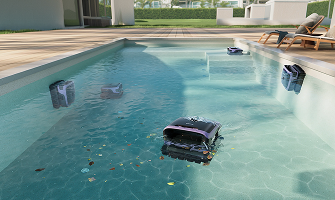
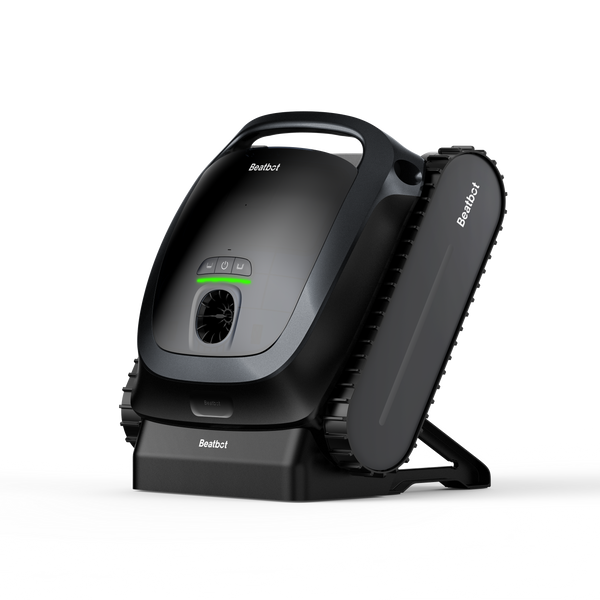
Robotic pool cleaners with purpose-built water-surface cleaning capability handle this differently. The Beatbot Sora 70 robotic pool cleaner features an industry-first JetPulse Technology system: two water jets positioned on either side of the robot project water flows both inward and outward simultaneously, creating four coordinated streams that guide floating debris toward the suction inlet as the robot moves across the surface. This captures debris on the first pass rather than relying on the skimmer to catch what the robot pushes aside. The Beatbot Sora 70 also covers the full pool from surface to floor, including walls, waterline, shallow areas, and platforms, with up to 7 hours of runtime in surface cleaning mode, so the entire pool is addressed in a single automated cycle rather than requiring separate tools or manual follow-up.
What Are Pool Platforms and Shallow Areas, and Why Are They Harder to Clean?
Many pools include tanning ledges, benches, step entries, or sun shelves that sit at very shallow depths, typically 6 to 12 inches of water. These features are popular for lounging and gradual entry, but they sit outside the range most pool cleaning equipment was designed to reach.
Standard robotic pool cleaners are optimized for standard pool depths. Their buoyancy, wheel geometry, and weight distribution make them unstable in shallow water, and they typically stall, tip, or reverse before reaching platform surfaces. The result is that these areas accumulate algae and sediment and require regular manual brushing regardless of how capable the rest of the cleaning setup is.
Pools with significant platform coverage benefit from cleaners specifically built to handle those zones. The Beatbot Sora 70 uses ultrasonic sensors to detect and adapt to shallow-water areas as low as 8 inches, cleaning surfaces that most other robotic pool cleaners skip entirely.
How Does Pool Chemistry Affect the Physical Structure?
Pool water chemistry is not just about clarity or swimmer comfort. Unbalanced chemistry attacks the pool's physical components directly, and the damage accumulates over time in ways that become expensive to reverse.
Low pH (acidic water) corrodes metal fittings, etches plaster, and degrades vinyl liners. It also irritates eyes and skin at the same time, so pH below 7.2 creates both chemical and physical damage simultaneously. High pH causes calcium carbonate to precipitate out of solution, leaving scale on surfaces, inside the filter, and around return jets where water flow patterns concentrate mineral deposits.
Low calcium hardness causes the water itself to become aggressive. Water that is undersaturated with calcium will draw minerals from whatever surface it contacts, which means it etches and pits plaster over time. High calcium hardness pushes the opposite problem: scaling accelerates, particularly at the waterline where evaporation concentrates minerals further.
Cyanuric acid stabilizes chlorine against UV degradation in outdoor pools, which is necessary in sunlit environments. When it accumulates past 80 to 100 ppm, however, it suppresses chlorine's effectiveness even when chlorine levels test correctly. This is called chlorine lock, and it results in algae growth despite apparently normal sanitizer readings. Partially draining and refilling the pool is the only way to lower cyanuric acid once it builds up.
Every component of the pool structure interacts with water chemistry. Understanding that relationship is what makes the difference between reactive maintenance and a pool that stays predictably clean.
FAQs
What is the difference between a skimmer and a main drain?
A skimmer sits at the waterline and pulls water from the surface, where most debris and oils collect. A main drain sits at the pool's lowest point and draws water from the bottom. Both feed the pump simultaneously, and together they ensure the full water column moves through filtration, not just the surface or the floor.
Which pool shell material requires the least maintenance?
Fiberglass requires the least ongoing maintenance among the main shell types. Its non-porous gel coat resists algae adhesion, reduces chemical demand, and does not need resurfacing the way plaster does. The trade-off is limited shape options and higher upfront cost compared to vinyl liner pools.
Can a robotic pool cleaner clean the water surface?
Most cannot. Standard robotic pool cleaners are designed to work submerged, cleaning the floor and walls. A small number of models include purpose-built surface cleaning systems. The Beatbot Sora 70 features JetPulse Technology, which actively captures floating debris at the water surface rather than leaving it for the skimmer to handle.
Why does my pool waterline keep getting a dark ring even after cleaning?
The ring forms because oils, sunscreen residue, and mineral deposits concentrate at the waterline and adhere to the surface. Keeping pH between 7.4 and 7.6 and calcium hardness below 400 ppm slows the buildup, but high bather load and hard water make it persistent. Regular waterline scrubbing or a robotic pool cleaner that actively cleans the waterline is the most practical long-term solution.
What is cyanuric acid and why does too much of it cause problems?
Cyanuric acid stabilizes chlorine by protecting it from UV degradation in sunlit pools. When it builds up past roughly 80 to 100 ppm, it bonds with chlorine in a way that reduces its sanitizing effectiveness even when chlorine test readings appear normal. The only reliable fix is a partial drain and refill to dilute it back into range.