Most Popular


 Sora Series


 AquaSense Series

 Skimmer & Bundle

 Retail Edition


 Accessories


Pool test strips turn water chemistry into a row of colors. Each pad measures one part of the water, such as chlorine, pH, alkalinity, stabilizer, or hardness. To get a useful result, match every pad with the correct row, read it at the right time, and act on the number shown—not the overall color of the strip.
Pool Test Strip Color Chart
A pool test strip color chart shows the values that match each test pad. Line up the wet strip beside the chart and compare each pad with its own row.
This Clorox Pool&Spa chart is designed for the matching Clorox test strips. Do not use it to read strips from another brand because pad order, colors, timing, and target ranges may differ.

( Source: Clorox® Pool&Spa™. Shown as a brand specific test strip color chart example.)
Read the chart one row at a time:
-
Match the chlorine pad only with the chlorine row.
-
Match the pH pad only with the pH row.
-
Match the alkalinity pad only with the alkalinity row.
-
Choose the closest color block.
-
Record the number beside that block.
Do not compare one pad with every row. Also, use the printed chart on the original bottle for the final result.
Pool Test Strip Results: Low, Ideal, and High
Use the following ranges as clear working targets for a residential outdoor pool.
| Test | Low | Ideal Range | High | What to Do |
|---|---|---|---|---|
| Free chlorine | Below 1 ppm | 1–4 ppm | Above 4 ppm | Add chlorine when low. Stop dosing and retest when high. |
| Combined chlorine | Above 0.4 ppm is a problem | 0–0.4 ppm | Above 0.4 ppm | Confirm with a liquid test and treat the chloramine problem. |
| pH | Below 7.2 | 7.2–7.8 | Above 7.8 | Use pH increaser or reducer based on the product label. |
| Total alkalinity | Below 80 ppm | 80–120 ppm | Above 120 ppm | Correct alkalinity before making small pH changes. |
| Cyanuric acid | Below 30 ppm | 30–50 ppm | Above 50 ppm | Add stabilizer when low. Stop adding it when high. |
| Calcium hardness | Below 200 ppm | 200–400 ppm | Above 400 ppm | Raise calcium when low. Control scale and consider dilution when high. |
CDC lists 1–4 ppm as a typical chlorine range and 7.0–7.8 for pH. It also recommends at least 2 ppm free chlorine when cyanuric acid or stabilized chlorine is present. Hayward uses working targets of 80–120 ppm alkalinity, 30–50 ppm cyanuric acid, and 200–400 ppm calcium hardness .
The number on your own test strip bottle remains the final reference. A strip with a limited color scale may show 1, 3, and 5 ppm rather than every number between them.
What Each Pool Test Strip Color Means
Free Chlorine
Free chlorine is the chlorine still available to sanitize the water.
A result below 1 ppm means the pool does not have enough active sanitizer. In a pool using cyanuric acid, keep free chlorine at 2 ppm or higher . A normal working range for most residential pools is 1–4 ppm .
When free chlorine is low:
-
Calculate the pool volume.
-
Add chlorine according to the product label.
-
Run the circulation system.
-
Retest after the product’s stated circulation time.
When free chlorine is above 4 ppm , stop adding chlorine and retest before swimming. Follow the chlorine product label for the allowed swimming level and waiting time.
A chlorine pad that appears blank after a large shock dose may not mean zero chlorine. Chlorine above 10 ppm can bleach some tests and create a false low or zero result. Confirm it with a DPD test kit before adding more chlorine.
Total Chlorine
Total chlorine includes free chlorine and combined chlorine.
Calculate combined chlorine with:
Combined chlorine = Total chlorine − Free chlorine
For example:
-
Total chlorine: 3 ppm
-
Free chlorine: 2 ppm
-
Combined chlorine: 1 ppm
Combined chlorine should stay at 0.4 ppm or below . A higher result means chloramines have built up in the water. Chloramines can cause a strong pool smell and irritate swimmers.
Color strips may not show a small difference clearly. Use a DPD or FAS-DPD liquid test when total chlorine and free chlorine appear different.
pH
pH shows whether the water is acidic or basic.
Keep pool pH between 7.2 and 7.8 . CDC’s broader health range is 7.0–7.8 , but 7.2–7.8 is a clearer day-to-day operating target.
A result below 7.2 means the water is too acidic. Low pH can corrode metal parts and damage equipment.
A result above 7.8 means the water is too basic. High pH can make chlorine less effective and increase the risk of cloudy water or scale. Chlorine loses more germ-killing strength as pH rises, especially above 8.0.
Use a measured dose of pH increaser or reducer based on the pool volume and product directions. Do not estimate a chemical dose from color alone.
Total Alkalinity
Total alkalinity helps keep pH stable.
The target range is 80–120 ppm .
Below 80 ppm , pH may change quickly after rain, chemical treatment, or heavy pool use.
Above 120 ppm , pH can remain high or continue drifting upward.
Correct alkalinity before making small pH adjustments. Otherwise, the pH may move out of range again soon after treatment.
Cyanuric Acid
Cyanuric acid is also called CYA, stabilizer, or conditioner. It protects chlorine from sunlight.
For an outdoor pool, keep CYA between 30 and 50 ppm . Indoor pools do not need CYA because the water is not exposed to direct sunlight.
Below 30 ppm , sunlight can break down chlorine more quickly.
Above 50 ppm , stop adding stabilizer and check whether you are using trichlor tablets or dichlor granules, which add more CYA to the water.
A result above 100 ppm requires closer attention. CYA does not fall quickly on its own. Partial draining and refilling is the usual way to reduce a very high level.
Calcium Hardness
Calcium hardness measures dissolved calcium in the water.
A practical target for many pools is 200–400 ppm .
Below 200 ppm , water can become more corrosive to plaster, grout, and equipment.
Above 400 ppm , the risk of white scale and rough deposits increases, especially when pH is also high.
Pool surface matters. Plaster pools need enough calcium to protect the surface, while vinyl and fiberglass pools may use different manufacturer limits. Before making a large adjustment, confirm the result with a liquid test.
What If the Test Strip Color Falls Between Two Values?
When a pad falls between two color blocks, record it as a range.
For example, when the pH color sits between 7.2 and 7.8, write:
pH: between 7.2 and 7.8
Do not call the result exactly 7.5. A test strip does not provide that level of precision.
Use this process:
-
Check the color in natural daylight.
-
Compare it with the correct row only.
-
Choose the nearest block.
-
Test again with a fresh strip.
-
Confirm the result with a liquid kit before making a large chemical adjustment.
When most of a pad matches one color but the center looks lighter, use the color covering most of the pad. LaMotte advises reading the majority color rather than focusing on a small lighter area.
When two neighboring pads bleed into each other, discard the strip and test again. Keep the next strip level so water does not run from one pad into another.
Why Pool Test Strip Colors May Be Wrong
| Problem | Likely Cause | Clear Fix |
|---|---|---|
| Every pad looks weak | The strips are expired or moisture entered the bottle | Replace the bottle |
| One pad looks streaked | Water moved across the strip | Keep the next strip level |
| The colors keep changing | The strip was read too late | Use the exact reading time |
| Indoor results look different | Warm lighting changed the color | Read the strip in daylight |
| Chlorine appears to be zero after shocking | Very high chlorine bleached the test | Confirm with a DPD test |
| New strips give random results | Wet fingers touched the strips | Replace contaminated strips |
| The result changes near a return jet | The sample did not represent the whole pool | Test away from jets and feeders |
| The pads do not line up with the chart | The wrong bottle or brand chart was used | Use the strip’s original chart |
Store the bottle indoors in a cool, dry place. Remove strips with dry hands and close the lid immediately. Heat and moisture can damage the reagent pads before the expiration date.
Are Pool Test Strips Accurate?
Pool test strips are useful for routine checks. They can show whether chlorine is low, pH is out of range, alkalinity has moved, or stabilizer is building up.
They are not the best tool for exact chemical dosing.
Use a liquid DPD or FAS-DPD test when:
- Chlorine may be above 10 ppm.
- Total and free chlorine do not match.
- The pool is green or heavily cloudy.
- Two new strips give different results.
- A result falls outside the printed scale.
- You plan to make a large chemical correction.
CDC states that test strips are less accurate than DPD testing for chlorine and pH.
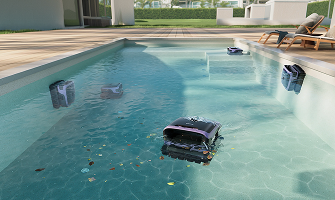
Beatbot robotic pool cleaners will not fix chlorine, pH, alkalinity, CYA, or hardness, so you still need to test and balance the water. What it can do is take care of the everyday mess, including leaves, dirt, and fine debris.
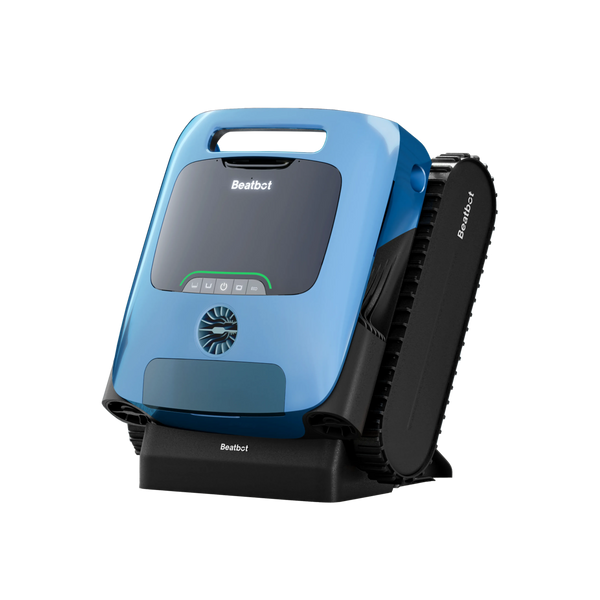
If you’re willing to spend more, the Beatbot AquaSense 2 Ultra smart robotic pool cleaner gives you the most complete cleaning setup. The Beatbot Sora 70 pool robot is a more affordable option that still cleans from the water surface to the pool floor, while the Beatbot Sora 30 pool vacuum robot is a better fit when surface skimming is not essential. For a very large pool, especially one surrounded by trees, pairing the cleaner with a Beatbot iSkim Ultra pool skimmer can help keep floating leaves and pollen under control.
How Long Should You Wait to Read a Pool Test Strip?
For most common pool strips, the result must be read within 15 to 30 seconds , but the exact sequence depends on the product.
Clorox requires the comparison to be completed within 15 seconds of wetting . HTH requires a 20-second development time after a two-second dip. LaMotte tells users to begin reading immediately, read the pH pad after about 10–20 seconds , and finish all results before 30 seconds .
| Brand and Product | Dip Time | After Removal | Correct Reading Time |
|---|---|---|---|
| Clorox Pool&Spa test strips | Dip and remove immediately | Shake once and hold level | Complete the comparison within 15 seconds of wetting |
| HTH Pool Care 6-Way Test Strips | 2 seconds | Do not shake; hold level with pads facing up | Wait 20 seconds, then compare |
| LaMotte Insta-TEST pool and spa strips | 2 seconds for most products | Shake once and begin reading from the end pad | Read immediately; read pH at 10–20 seconds and finish before 30 seconds |
Do not wait until the strip dries. Results read after the stated time are no longer reliable.
For LaMotte strips, start with the end pad immediately after removal. Read the pH pad last because it needs about 10–20 seconds to develop fully. Complete the full reading before 30 seconds have passed.
How to Use Pool Test Strips Correctly
Follow these steps after you understand the color chart and target ranges.
1. Use Dry Hands
Remove one strip without touching the colored pads. Close the bottle immediately.
2. Test Away From Jets
Take the sample away from return jets, skimmers, and chemical feeders. Water near these points may not represent the whole pool.
3. Put Every Pad Underwater
Lower the test end to the depth required by the brand. Clorox specifies elbow depth, HTH specifies wrist depth, and LaMotte specifies at least six inches for most pool and spa strips.
4. Use the Correct Dip Time
-
Clorox: remove immediately.
-
HTH: two seconds.
-
LaMotte: two seconds for most pool and spa strips.
5. Remove the Strip Correctly
Clorox and LaMotte direct users to shake once. HTH says not to shake. Follow the instruction for the exact product.
6. Keep It Level
Hold the pads facing upward. This prevents water from running between them.
7. Read It at the Correct Time
Use a phone timer. Compare the strip at the time shown in the brand table above.
8. Record the Numbers
Write down chlorine, pH, alkalinity, CYA, and hardness before adding any chemicals. This gives you a clear starting point and prevents unnecessary treatment.
Common Pool Test Strip Mistakes
Using a Chart From Another Brand
Pad order and colors are not universal. Read the strip only with its original bottle chart.
Touching the Test Pads
Water, sunscreen, dirt, and pool chemicals on your fingers can change the reaction.
Shaking the Wrong Strip
HTH says not to shake its 6-Way strip. Clorox and LaMotte tell users to shake once. Use the instructions for the product in your hand.
Reading Too Early
An HTH result read before 20 seconds has not fully developed.
Reading Too Late
LaMotte directs users to complete the reading before 30 seconds. Waiting several minutes makes the color unreliable.
Testing Beside a Return Jet
A fresh chemical concentration near a jet can give a result that does not match the rest of the pool.
Adding Chemicals From One Unclear Result
Repeat the strip test first. Confirm the number with a liquid kit before making a large adjustment.
Using Expired or Damp Strips
Replace strips that have expired, changed color inside the bottle, or been exposed to moisture.
Conclusion
Match every test pad with its correct row, read the strip within the stated brand time, and record the numbers before adding chemicals. Focus first on free chlorine and pH, then check alkalinity, CYA, and hardness. When a color is unclear or outside the chart, repeat the test and confirm it with a liquid kit.
FAQs
Which End of a Pool Test Strip Goes in the Water?
Put the end with the colored reagent pads into the water. Hold the plain end with dry fingers.
Should You Read a Pool Test Strip Wet or Dry?
Read it while wet and within the product’s stated time. Do not wait for it to dry.
What Color Should Free Chlorine Be?
There is no universal free chlorine color. Match the chlorine pad with the free chlorine row on the original bottle chart. The number, not the shade by itself, is the result.
What Does a White Chlorine Pad Mean?
It may mean chlorine is very low. After a shock treatment, it may also mean chlorine is above 10 ppm and has bleached the test. Use a DPD test to confirm it.
How Often Should You Test Pool Water?
For a home pool, check chlorine and pH regularly and test more often after heavy use, rain, extreme heat, or chemical treatment. CDC advises testing chlorine and pH at least twice per day for pools under active operation.
Can You Read a Pool Test Strip From a Photo?
A photo can help record the result, but screen brightness and camera settings can change the colors. Use the printed bottle chart for the final comparison.
Why Do Two Pool Test Strips Give Different Results?
The bottle may have been exposed to moisture, the strip may have been read at the wrong time, or the sample may have been taken near a return jet. Repeat the test with dry hands, a fresh strip, and water from a different part of the pool.