Sora Series


 AquaSense Series



 Skimmer & Bundle

 Retail Edition


 Accessories

 Extended Warranty


The right algaecide dose comes down to three things: your pool volume, the label on the product you bought, and what you are trying to do with it. Start by confirming your pool gallons. Then check the label rate. After that, match the dose to the job.
That matters because two products can give very different directions for the same 10,000 gallons. A weekly maintenance dose can be much lower than a startup dose or a treatment dose for visible algae. If you want an accurate answer, use the math first and the bottle second.
What Determines the Right Amount of Algaecide?
Three things control the dose:
-
Your pool volume
-
The product’s label rate
-
Why you are using it
Pool size comes first because most algaecide directions are written as an amount per 10,000 gallons. The label comes next because formulas are not all the same. One product may call for a light weekly dose. Another may call for a higher startup or treatment dose. Your reason for using it matters too. Preventing algae takes a different dose than dealing with algae you can already see.
A general chart can help you sanity check the math. The label on your bottle tells you what to use in your pool.
Calculate Your Pool Volume Before Adding Algaecide
Before you add anything, make sure you know how many gallons your pool holds.
For a rectangular pool with the same depth, use:
Length × width × depth × 7.5 = gallons
If your pool has a shallow end and a deep end, use the average depth:
Length × width × average depth × 7.5 = gallons
For a round pool, use:
3.14 × radius × radius × depth × 7.5 = gallons
If your pool is oval, kidney shaped, or irregular, divide it into smaller regular sections and add the totals. If the shape is tough to measure with confidence, check your builder paperwork or ask a pool professional to confirm the number.
A lot of people make the same mistake here. They measure the pool wall instead of the actual water depth. Use the water depth for your calculation.
If your estimate falls between two numbers, round up. It is better to base the dose on 18,000 gallons than on 17,900 gallons and come in low.

Use This Formula to Calculate Your Algaecide Dose
Once you know your pool volume, the calculation is straightforward:
Pool gallons ÷ 10,000 × label dose = amount to add
Here is a simple example.
If your pool holds 20,000 gallons and the label says:
-
3 fl oz per 10,000 gallons for weekly maintenance
-
12 fl oz per 10,000 gallons for an initial treatment
Your weekly dose is:
20,000 ÷ 10,000 × 3 = 6 fl oz
Your initial treatment dose is:
20,000 ÷ 10,000 × 12 = 24 fl oz
The formula stays the same. The label rate is what changes.
That is why there is no point in memorizing one standard number. Algaecides come in different chemistries and different strengths. Some standard products use a small weekly dose. Some copper based products use different rates. Some combination products are more dilute and call for a larger ounce amount. Use the label on the product you actually have.

How Your Algaecide Dose Changes by Situation
The same pool can need different amounts at different times. Match the label rate to the job you are doing.

Weekly Maintenance
This is the lowest dose use case. You are trying to keep algae from taking hold, so labels usually call for a smaller amount on a regular schedule.
If your pool gets heavy rain, extreme heat, cloudy water, or other unusual water issues, do not rush to add more product. Test and watch the water more closely first. Add another treatment only if the label and the pool condition support it.
Pool Opening
Opening a pool involves more than algaecide. You may use it as part of startup, and opening still includes cleaning, circulation, water balancing, and sometimes shock. If the pool opens clear, use the startup or preventive dose listed on the label. If it opens with visible algae, treat it as an algae problem instead.
Winterizing
Some pool owners add a winter algaecide when closing the pool. The amount still depends on the product and on the condition of the pool, especially if the cover lets in debris or winter temperatures stay mild.
A common rule is to close the pool when the water stays below 65°F, since warmer water gives algae a better chance to grow. Many winterizing routines use a Polyquat 60 type of algaecide, and the exact amount still comes from the label. If your cover lets in leaves and dirt, or your area gets warm spells after closing, you may need closer monitoring or an extra off season treatment.
Visible Algae or a Green Pool
This is where people often get the dose wrong. A green pool needs more than a simple weekly amount. If algae is already visible, brush and vacuum the pool, balance the water, shock as needed, and keep the filter running long enough to clear the water. Algaecide can support that process. It does not replace cleanup, circulation, or filtration.
Keep going after the shock treatment. Vacuum out the dead algae, and clean or backwash the filter if it starts loading up with debris. If you skip that step, the water can stay cloudy and the cleanup can drag on.
How to Add Algaecide Safely
Once you have the right amount, apply it the right way.
-
Keep the pump running so the product can circulate through the pool.
-
Pour it slowly around the perimeter unless the label gives a different method.
-
Do not mix pool chemicals together in a bucket.
-
Keep circulation and filtration going after you add it.
Adding extra algaecide will not improve the result. Too much can create a second problem. Depending on the formula, overdosing can lead to foam, cloudy water, or staining risk. Dose by pool size and by label, not by guesswork.
If your pool struggles with poor circulation, heavy debris, or dirty surfaces, chemical treatment has more work to do. Better cleaning helps keep the water in better shape between treatments.

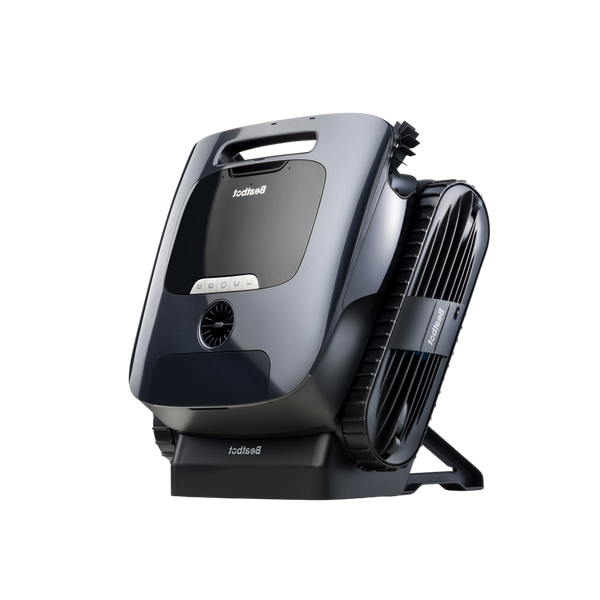
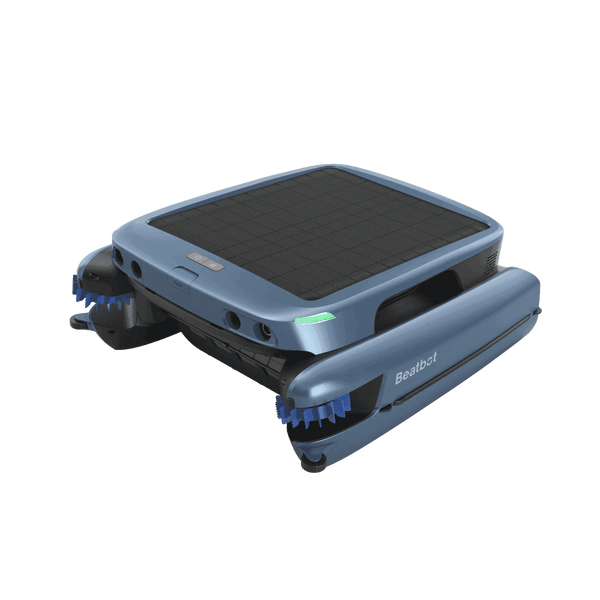
If your pool keeps collecting leaves, pollen, and floating debris, a Beatbot Sora 70 robotic pool cleaner can help with the part chemicals do not handle well on their own: removing that debris before it settles and adds to the cleanup load. Its JetPulse™ twin jet surface skimming pulls floating debris inward instead of pushing it away. The Beatbot Sora 70 also cleans beyond the surface, covering the waterline, walls, floor, and shallow platforms in water as shallow as 8 inches. With 6,800 GPH suction power, it helps keep the pool cleaner between chemical treatments, which makes steady maintenance easier to hold.
Before you swim again, follow the label on your product. Re entry time varies by formula, so do not assume one wait time fits every bottle.
A Quick Algaecide Dosing Checklist
Use this checklist before you pour anything into the pool:
-
Measure or confirm your pool gallons
-
Read the label rate for your exact product
-
Choose the dose that matches your situation
-
Add it with the pump running and keep the water circulating
Those four steps will give you a better dosing decision than copying a random ounce amount online.
FAQ
When’s the best time of day to put algaecide in your pool?
Late afternoon or evening is usually the best time to add algaecide with the pump running. That gives the product time to circulate with less sun exposure and fewer swimmers in the water. Follow the label if it gives a different schedule.
How long does it take for algaecide to work?
Algaecide starts circulating right away, and visible results usually take 24 hours or longer. If algae is already active, you still need brushing, filtration, and often shock. It works best as prevention and does less on its own when a pool is already green.
How do you know if your pool needs algaecide?
Your pool may need algaecide when you are following a preventive maintenance routine, opening or winterizing the pool, or dealing with recurring algae after heat, rain, or heavy debris. It works alongside proper water balance and cleaning.
Do you shock a pool first or add algaecide first?
If algae is already visible, shock the pool first. Then brush, vacuum, and keep the filter running. Use algaecide as a follow up or support step if the label calls for it. For routine prevention, use the maintenance dose on the label.
Why is my pool still green after adding algaecide?
A pool can stay green after adding algaecide when algae is already established, the water is out of balance, or the filter is not removing dead algae and debris. Algaecide alone usually will not clear a green pool. Shock, brushing, vacuuming, and filter cleaning may still be needed.
Should I brush the pool after adding algaecide?
Yes. If algae is visible, brush the pool after adding algaecide. Brushing loosens algae from the walls and floor so sanitizer and filtration can remove it more effectively. For preventive dosing in a clean pool, brushing still helps, though it matters less.