Most Popular


 Sora Series


 AquaSense Series

 Skimmer & Bundle

 Retail Edition


 Accessories


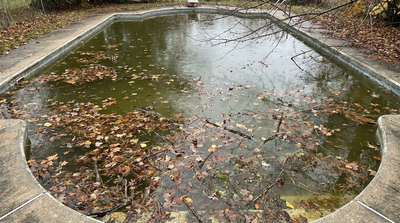
A heavy storm can turn a clean pool into a mess overnight. You may wake up to leaves across the surface, dirt on the steps, a layer of silt on the floor, and cloudy water that still looks dirty after the biggest debris is gone. Post-rain cleanup can feel endless if you try to handle everything at once. The easier approach is to work through the mess in stages, and use the right tools for each type of debris. For leaves, dirt, and sediment, a robotic pool cleaner such as Beatbot can take care of much of the repetitive cleaning.
How to Clean a Pool After Heavy Rain
Here is the basic order to follow:
- Check the pool area for storm damage.
- Remove branches and other large debris.
- Bring the water back to its normal level if necessary.
- Empty the skimmer and pump baskets.
- Remove floating debris from the surface.
- Clean leaves, dirt, sand, and sediment from the pool.
- Run the filtration system and clean the filter as needed.
- Test and rebalance the pool water.
A short rain shower may leave almost nothing behind, while a windy thunderstorm can fill a pool with leaves and deposit a visible layer of dirt across the floor.
1. Check the Pool Area Before You Start Cleaning
Do not begin with the water. Begin by checking what the storm may have damaged.
Look around the pool for:
- Broken glass
- Sharp metal or roofing material
- Fallen branches
- Downed electrical lines
- Damaged pool equipment
- Flooded pumps, control panels, outlets, or other electrical components
Electrical equipment that has been damaged or exposed to flooding should stay powered off until it has been inspected. Wet conditions and damaged electrical components are not something to troubleshoot beside the pool.
A pool that simply took on extra rainwater and wind-blown debris can usually be handled with normal post-rain cleaning. Outside floodwater is a different situation. It can carry bacteria, wastewater, lawn chemicals, mud, and other contaminants into the pool, so the cleanup needs to be treated more seriously.
2. Remove Large Debris First
Do not ask the pool filter or robotic cleaner to handle everything the storm dropped into the water.
Start by manually removing:
- Large branches
- Large piles of leaves
- Stones
- Toys or outdoor objects blown into the pool
- Sharp or unusually heavy debris
A leaf rake or skimmer net works well for most oversized debris.
Removing these items first makes the next stage easier and reduces the chance of blocking a skimmer, pump basket, filter, or pool cleaner.
3. Check the Water Level
A long period of heavy rain may push the pool level above its normal operating range.
If the water is too high, bring it back to the level recommended for your pool and skimmer system. Depending on the equipment installed, this may be done through a waste setting, suitable pump, or another drainage method specified for the pool.
However, do not completely drain an in-ground pool simply because the water is dirty after a storm. Saturated soil can create substantial groundwater pressure around the shell, and draining the pool can increase the risk of structural problems.
If the water level is already normal, there is no reason to remove water simply because it rained.
4. Empty the Skimmer and Pump Baskets
Wind-driven rain often fills the pool system with leaves much faster than normal daily use.
Check and empty the:
- Skimmer basket
- Pump strainer basket
- Leaf canister, if your system uses one
This is a small step, but skipping it can reduce water flow just when the filtration system has more work to do.
If the storm dropped an unusually heavy amount of debris into the pool, check these baskets again during the cleanup rather than assuming one emptying will be enough.
5. Remove Floating Leaves and Surface Debris
Once the largest objects are gone, the next priority is anything still drifting across the surface.
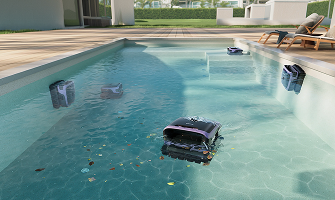
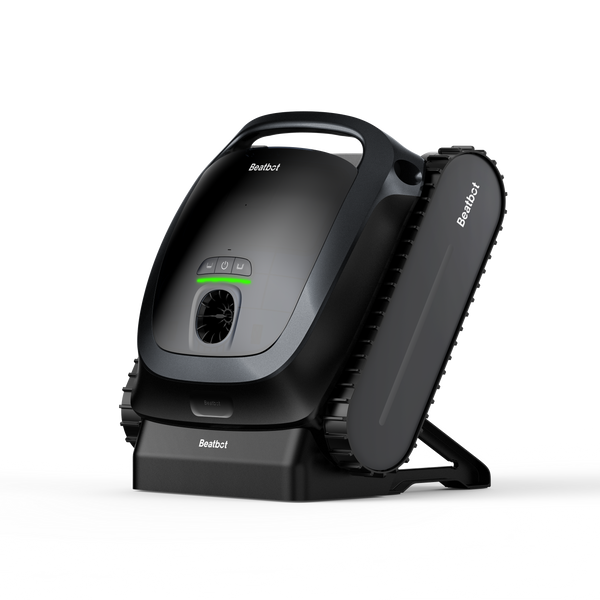
After a storm, that usually means leaves, grass, pollen, flower petals, small twigs, insects, and seeds blown in from nearby trees. A handheld net is enough when the debris load is light, but larger amounts can become tedious to remove manually. A Beatbot robotic pool cleaner can take much of that repetitive work off your hands, especially when debris is spread across more than one area of the pool. You can either pair two robots—one dedicated to the surface and another for the floor, walls, and waterline—or use an all-coverage cleaner that handles both jobs.
For pools where most of the mess is still floating, the Beatbot iSkim Ultra is built specifically for surface cleaning. Its dual side brushes and front roller brush help guide debris into a 9 L basket, while intelligent navigation helps it move around the pool more systematically instead of simply drifting with the water.
For that kind of two-robot setup, iSkim Ultra can handle the surface while a cleaner such as the Sora 30 takes care of the floor, walls, waterline, and shallow areas. Its 6,800 GPH suction and long floor-cleaning runtime make it better suited to leaves, dirt, and sediment that have already settled.
If you prefer one cleaner to cover more of the pool, the Sora 70 combines surface cleaning with floor, wall, waterline, and shallow-area cleaning. It delivers 6,800 GPH suction, uses a 6 L debris basket, and can run for up to 7 hours on the surface or 5 hours on the floor.
The AquaSense 2 Ultra is another all-coverage option for heavier post-storm cleanup. It cleans the surface, floor, walls, and waterline, delivers 5,500 GPH suction, and can run for up to 5 hours underwater. Its dual-layer filtration system includes a 4.0 L outer basket and 3.7 L inner basket, giving it substantial capacity for mixed storm debris. AI-powered debris detection also helps it identify dirtier areas and spend more cleaning time where leaves and other material have accumulated.
6. Clean Leaves, Dirt, Sand, and Sediment From the Pool
The water surface is usually only half the problem.
Rain and runoff may leave the floor covered with:
- Sunken leaves
- Small twigs
- Soil
- Sand
- Fine sediment
- Grass
- Organic debris
This is where vacuuming becomes more important than skimming.
Start with the pool floor and remove the larger debris first. A robotic cleaner such as the Beatbot Sora 70 or AquaSense 2 Ultra can handle leaves, dirt, sand, and other debris spread across the bottom, reducing the amount of repeated manual vacuuming.
Once the larger debris is gone, the next challenge is often the finer material left behind. Mud, silt, and very small particles can be harder for a standard basket to capture, so finer filtration becomes much more important. Beatbot offers an Ultra-Fine Dual Filter Basket for the Sora 70, Sora 30, and Sora 10, with filtration down to 3 μm for fine sediment and other small particles.
Do Not Forget the Walls and Waterline. Storm debris does not always stay on the floor. Wind, changing water levels, and dirty water can leave material along the walls, corners, steps, waterline, and shallow ledges.
Both the Beatbot AquaSense series and Sora series can clean beyond the pool floor, including walls and the waterline. This can reduce the amount of manual brushing needed after a storm, although corners, stubborn buildup, and tightly adhered debris may still need some hand cleaning.
7. What to Do If Fine Silt Keeps Coming Back
This is where post-rain cleanup can become frustrating.
The leaves may be gone and the pool may look much better, but a thin gray or brown layer can still reappear on the floor a few hours later.
That does not always mean the cleaner missed the area. Very fine soil, dust, and silt can stay suspended while the pool is being cleaned, then settle again once the water becomes calm.
Give the pool some time after the first cleaning cycle, then inspect the floor again. If another layer has settled, run a second cleaning cycle rather than assuming the first pass failed.
It also helps to keep the main pool filtration system running, since suspended particles in the water are handled differently from debris already resting on the pool floor.
For pools that repeatedly collect fine silt after storms, using a finer filter basket during the robotic cleaning cycle can make a noticeable difference.
8. Run the Pool Filtration System
After the visible debris is removed, run the pool filtration system continuously for about 24 hours, or until the water is clear. A heavily clouded pool may need longer filtration. Leslie’s uses 24 hours as a rule of thumb for clearing heavily contaminated pool water.
During that time:
- Empty the skimmer and pump baskets whenever they fill up. After a storm, leaves and other debris can refill them quickly.
- Check the filter pressure regularly. Clean or backwash the filter once the pressure rises about 8–10 psi above the clean starting pressure. Pentair uses the same 8–10 psi increase as its service point for pool filters.
- For a cartridge filter: shut the system down safely, remove the cartridge, and rinse accumulated dirt from the pleats before restarting it.
- For a sand filter: backwash according to the manufacturer’s procedure once the pressure reaches the cleaning point.
- For a D.E. filter: backwash or clean it according to the filter manual, then replace the required D.E. before returning it to normal filtration.
Do not wait until the next regular maintenance day to check the filter. Fine soil, pollen, and storm debris can load it much faster than normal, and a clogged filter will slow the cleanup even when the pump is still running.
After 24 hours, check the water again. If it is clear, you can return to your normal filtration schedule. If it is still cloudy, clean the filter again if necessary and move on to testing and correcting the water chemistry.
9. Test and Rebalance the Pool Water
Once the debris is out and the filter has been running, test the water before anyone gets back in.
Check these four things first:
- Free chlorine: aim for at least 1 ppm in a residential pool, and typically 2–4 ppm if your normal pool target is in that range.
- pH: bring it back to about 7.2–7.8.
- Total alkalinity: keep it roughly in the 80–120 ppm range unless your pool system or chemical program specifies otherwise.
- Cyanuric acid: check it if the pool received a large amount of rainwater or overflowed, since heavy dilution can lower stabilizer levels.
If chlorine is low, add sanitizer according to the product label and your pool volume. If the pool is cloudy, has a strong organic load, or chlorine demand is unusually high after the storm, shocking the pool may be appropriate—but dose from an actual test result rather than adding a fixed amount just because it rained.
Adjust pH and alkalinity before making repeated chlorine corrections, especially when the readings are far outside their normal range. Poor pH can reduce chlorine effectiveness and make the water harder to stabilize.
After treatment, keep the pump running and retest the water before swimming. Do not rely on clear-looking water alone; the pool can look clean while sanitizer levels are still too low.
| Test | Post-Rain Target |
|---|---|
| Free chlorine | 1–4 ppm |
| pH | 7.2–7.8 |
| Total alkalinity | 80–120 ppm |
| Cyanuric acid | Check after major dilution |
Can You Use a Robotic Pool Cleaner After Heavy Rain?
Yes, in most normal post-rain situations. Once the storm has passed, the pool area is safe, and oversized or hazardous objects have been removed, a robotic cleaner can be an effective way to collect leaves, dirt, sand, and sediment.
The important part is knowing when the robot is the right tool.
| Situation After Rain | Use a Pool Robot? |
|---|---|
| Small leaves and twigs | Yes |
| Dirt or sand on the floor | Yes |
| Fine settled silt | Yes, preferably with suitable fine filtration |
| Floating leaves | Use a surface-cleaning robot or skimmer |
| Large branches | Remove manually first |
| Unknown floodwater contamination | Address contamination first |
| Flooded or damaged electrical equipment | Do not restart equipment until it is safe |
| Large piles of heavy debris | Remove the bulk manually first |
A pool robot should make storm cleanup easier. It should not be used as a substitute for inspecting the pool after severe weather.
Which Beatbot Cleaner Is Best After Heavy Rain?
The best choice depends less on the fact that it rained and more on where the storm debris ended up.
Beatbot iSkim Ultra
Choose iSkim Ultra when the biggest post-storm problem is debris still floating on the water surface.
It is built specifically for surface cleaning, using dual side brushes and a front roller brush to guide leaves, grass, pollen, flower petals, and other floating debris into its large 9 L basket. Its intelligent navigation helps it move around the pool more systematically, which is useful when wind has scattered debris across the entire surface.
Because wet leaves eventually sink, running a surface skimmer soon after the storm can reduce how much debris later ends up on the pool floor. iSkim Ultra works especially well as a dedicated surface cleaner alongside a separate robot for the floor, walls, and waterline.
Beatbot Sora 70
Choose Sora 70 when a storm leaves debris both on the water surface and throughout the pool, and you want one robot to handle most of the cleanup.
It cleans the surface, floor, walls, waterline, and shallow areas, delivers 6,800 GPH suction, and uses a 6 L debris basket for leaves, dirt, and other mixed storm debris. It can run for up to 7 hours on the surface or 5 hours on the floor, which is useful when debris is spread across multiple areas after heavy rain.
For finer mud and silt left behind after the larger debris is gone, Sora 70 can also be paired with Beatbot’s optional 3 μm Ultra-Fine Dual Filter Basket. Its JetPulse system helps pull floating debris inward, so it is particularly useful when a storm leaves both wet leaves on the surface and sediment below.
Beatbot Sora 30
Choose Sora 30 when most of the post-storm debris has already sunk and the main cleanup is on the floor, walls, waterline, and shallow areas.
It delivers 6,800 GPH suction and can run for up to 5 hours, giving it enough cleaning time for leaves, dirt, sand, and other debris spread across the pool after heavy rain. Because it does not clean the water surface, it works best when floating debris has already been skimmed or handled by a separate surface cleaner.
For pools that regularly collect fine mud or silt after storms, Sora 30 can also be paired with Beatbot’s optional 3 μm Ultra-Fine Dual Filter Basket, which helps capture much smaller particles than a standard debris basket.
Beatbot AquaSense 2 Ultra
Choose AquaSense 2 Ultra when storm debris is scattered unevenly around the pool and you want broader whole-pool coverage with more advanced navigation and debris detection.
It cleans the surface, floor, walls, and waterline, delivers 5,500 GPH suction, and can run for up to 10 hours on the surface or 5 hours underwater. Its dual-layer filtration system includes a 4.0 L outer basket and 3.7 L inner basket, giving it substantial capacity for mixed post-storm debris.
Its AI-powered debris detection can identify dirtier areas and spend more time where leaves and other material have accumulated, which is useful after storms that leave some parts of the pool much dirtier than others.
What If the Pool Is Still Cloudy After Cleaning?
If the leaves and visible dirt are gone but the water still looks cloudy, the remaining problem may no longer be something the pool robot can solve alone.
Possible causes include:
- Fine suspended particles
- A dirty or overloaded pool filter
- Poor circulation
- Water chemistry that moved outside its normal range
- Organic contamination introduced during the storm
Continue filtering the water, inspect and clean the pool filter as required, and retest the water.
If fine material eventually settles onto the floor, another vacuum or robotic cleaning cycle can then remove it more effectively.
How to Reduce Pool Cleanup After the Next Heavy Rain
You cannot stop rain from entering an outdoor pool, but you can reduce how much work follows it.
Keep surrounding landscaping maintained. Trim branches and remove loose leaves before storm season when practical.
Empty skimmer baskets before major weather. Starting with an already full basket leaves little capacity for storm debris.
Remove floating debris early. Leaves are easier to skim from the surface than to remove after they become waterlogged and sink.
Keep the filter maintained. A filter already overdue for cleaning has less capacity to deal with the additional suspended material brought in by a storm.
Choose filtration based on what enters your pool. Large leaves demand capacity, while recurring fine soil and silt demand finer filtration. Many pools need both.
Final Thought
After heavy rain, clean the pool in stages. Remove large debris first, restore the water level if needed, clear the baskets, and then clean floating and settled debris.
Pay extra attention to fine silt, which may require finer filtration than leaves and twigs. Finish by running the main filtration system and testing the water before swimming again.
FAQs
Why is my pool cloudy after heavy rain?
Heavy rain can bring in fine dirt, pollen, organic debris, and runoff while also diluting sanitizer levels. Remove visible debris first, keep the filtration system running, clean the filter if pressure rises, and then retest the water chemistry. Reddit users frequently describe pools turning cloudy immediately after several days of heavy rain.
Why does fine dirt keep coming back after I clean the pool?
Very fine silt can stay suspended while the pool is being cleaned and settle again a few hours later. Let the water calm, then run another cleaning cycle with finer filtration if needed. This is a common complaint after storms and heavy runoff.
Should I drain my pool after heavy rain?
Usually, no. Extra rainwater can normally be treated by restoring the correct water level, removing debris, filtering, and rebalancing the water. Outside floodwater or serious contamination is a different situation and may require more extensive treatment.
Can I run a robotic pool cleaner after heavy rain?
Yes, once the storm has passed and large or hazardous debris has been removed. A robot works well for leaves, dirt, sand, and settled sediment, but very fine silt may require a finer filter basket. Reddit users with dust- and storm-prone pools often note that standard baskets may let very fine material pass through.
Why does my pool turn green after several days of rain?
Rain itself does not directly create algae, but heavy rain can introduce organic debris and dilute chlorine, making it easier for algae to grow. Check the chlorine level, pH, circulation, and filtration after a major storm.