Most Popular


 Sora Series


 AquaSense Series

 Skimmer & Bundle

 Retail Edition


 Accessories



No, you should not put Epsom salt in a hot tub. Epsom salt (magnesium sulfate) raises total hardness and sulfate levels in ways that corrode the jets, pump components, and heater element over time. It also interferes with the sanitizer chemistry that keeps hot tub water safe.
Most hot tub manufacturers explicitly exclude Epsom salt damage from warranty coverage, which means any repair costs that follow come out of pocket.

Why You Should Not Put Epsom Salt in a Hot Tub
The core issue is that Epsom salt (magnesium sulfate) introduces two elements into a closed recirculating system that neither the water chemistry nor the equipment is designed to handle at elevated concentrations: magnesium and sulfate. In a standard bathtub, both rinse away immediately. In a hot tub, they accumulate with every session.
It raises total hardness and causes scale
Epsom salt dissolves into magnesium ions, which contributes to total hardness. Total hardness above 400 ppm makes water prone to precipitation, calcium and magnesium compounds drop out of solution and deposit as white scale on the shell surface, inside the jets, and on the heater element.
Scale on a heater element reduces its efficiency and can cause it to overheat and fail. Once scale builds up inside the jet nozzles and plumbing, it is difficult to remove without an acid flush that requires draining and treating the entire system.
Sulfate accelerates corrosion in metal components
The sulfate component of Epsom salt is more damaging than the magnesium. Sulfate ions attack metal components in the pump, heater housing, and jet fittings at a rate that increases with temperature.
Hot tub water is held at 100 to 104°F, which accelerates the corrosion process significantly compared to a room-temperature bath. Stainless steel components that are designed to handle normal sanitizer chemistry are not rated for sustained elevated sulfate concentrations. The damage is cumulative and often not visible until a component fails.
It disrupts sanitizer chemistry
Epsom salt changes the ionic balance of the water in ways that affect how chlorine and bromine (the two most common hot tub sanitizers) behave.
Elevated magnesium and sulfate can reduce sanitizer stability and alter pH, which means the water that reads correctly on a test strip may not actually be providing adequate protection. Hot tub water at high temperatures already depletes sanitizer faster than a pool. Adding a variable that further destabilizes the chemistry compounds the problem.
It voids most manufacturer warranties
Hot tub warranties typically list unauthorized additives as a cause for coverage exclusion. Epsom salt is not an approved additive for any major hot tub manufacturer.
If a pump, heater, or jet component fails after Epsom salt use and the manufacturer or technician identifies residue or corrosion patterns consistent with elevated sulfate, the repair will not be covered. Given that hot tub heaters and pump assemblies are expensive to replace, this is not a theoretical risk worth taking.

What to Use Instead of Epsom Salt in a Hot Tub
The relaxation and muscle recovery benefits associated with Epsom salt baths come primarily from the combination of heat, buoyancy, and hydrotherapy, not from magnesium absorption through the skin, which research suggests is minimal regardless of bath duration. The hot tub itself delivers the therapeutic value. There are ways to enhance that experience without introducing compounds that damage the system.
Hot tub-specific aromatherapy products
Several manufacturers produce liquid aromatherapy additives formulated specifically for hot tub chemistry, designed to be compatible with chlorine and bromine sanitizers and to leave no residue that affects water balance.
These are the only type of scented additive that is safe to use in a hot tub. They come in forms such as eucalyptus, lavender, and citrus, and provide the sensory experience of a therapeutic soak without altering water chemistry. Always confirm the product is labeled as hot tub-safe, not simply marketed as a bath product.
Proper water temperature management
The primary driver of muscle relaxation in a hot tub is heat, not dissolved minerals. Water at 100 to 102°F for 15 to 20 minutes produces vasodilation and reduces muscle tension effectively on its own. If the therapeutic goal is recovery rather than relaxation, contrast therapy, alternating between hot tub soaks and cooler water, produces measurable circulatory benefits that Epsom salt does not add to.
Colloidal oatmeal or skin-specific products used before soaking
If the skin-softening effect associated with Epsom salt baths is the goal, those benefits are better achieved through body care products applied before or after a hot tub session rather than additives introduced into the water itself. The hot tub is not the right delivery mechanism for skin treatments designed for a bathtub environment.
What to Do If You Have Already Added Epsom Salt to Your Hot Tub
If Epsom salt has already been added, the priority is dilution followed by a full water change if the amount was significant. A small amount (a tablespoon or two used once) is unlikely to cause immediate damage, though it still raises sulfate and hardness readings. A cup or more, or repeated additions over time, requires a faster response.
Start by testing the water for total hardness and sulfate levels. Most standard 6-in-1 test strips do not include a sulfate pad, so a professional water panel at a pool supply store will give a more complete picture. If total hardness has risen above 400 ppm or sulfate readings are elevated, the most reliable fix is a full drain and refill with fresh water.
Before refilling, inspect the jet nozzles and any accessible plumbing fittings for early signs of scale. A white or grey film that rinses off with water is mineral precipitation beginning to form.
If scale is already visible inside the jets, a diluted citric acid flush before refilling will dissolve it and prevent it from hardening further once the system is back in operation.
Follow the hot tub manufacturer's recommendations for any internal cleaning procedure, as some shell materials and jet materials are sensitive to acid treatments.
After refilling, rebalance chemistry from scratch: test alkalinity first, then pH, then sanitizer, before running the hot tub at temperature.
A fresh fill with unbalanced chemistry is more damaging in the first 24 hours than a well-maintained older fill, because the water is actively seeking equilibrium and will pull minerals from whatever surfaces it contacts.

Common Misconceptions About Epsom Salt and Hot Tubs
"Epsom salt is natural, so it must be safe"
Natural and chemically inert are not the same thing in a recirculating water system. Epsom salt is safe for human contact and harmless in a single-use bath. The problem is accumulation inside a closed system with metal components, recirculating pumps, and a heater.
Salt in any form, including magnesium sulfate, is corrosive to metal under sustained exposure, particularly at the elevated temperatures a hot tub maintains. The source of the compound does not change its chemical behavior.
"A small amount will not matter"
A small amount added once is unlikely to cause visible damage immediately. The risk is cumulative. Each addition raises the sulfate and hardness baseline in the water, and because hot tub water is not changed frequently, that baseline does not reset between sessions.
What seems like a minor addition repeated over a season accumulates to a level that produces measurable corrosion and scale, by which point the damage is already done and visible only when a component fails or a technician inspects the system.
"I can just use a water softener to balance it out"
Water softeners reduce calcium hardness by exchanging calcium ions for sodium ions, but they do not reduce sulfate. Adding softened water to offset high total hardness from Epsom salt use does not address the sulfate problem, and the additional sodium introduces another variable into sanitizer chemistry.
Trying to chemically compensate for Epsom salt addition makes water balance progressively harder to manage without solving the underlying issue.
"Epsom salt is the same as pool salt"
Pool salt used in saltwater pool and hot tub systems is sodium chloride, the same compound as table salt, but at a specific purity grade. Epsom salt is magnesium sulfate, a chemically different compound with different effects on water chemistry and equipment.
Saltwater hot tub systems are designed to handle sodium chloride at specific concentrations through a chlorine generator.
They are not designed for magnesium sulfate, and adding Epsom salt to a saltwater hot tub does not increase the salt reading on the system's display, it just adds sulfate and magnesium to the water with no corresponding benefit to the sanitization system.
How to Keep Your Hot Tub and Pool Clean After Chemistry Corrections
Whether the issue is Epsom salt residue, a chemistry imbalance, or the routine buildup that accumulates in any heavily used water feature, the maintenance work after a correction is the same: drain if necessary, rebalance chemistry from scratch, and maintain consistent filtration and cleaning to prevent residue from re-establishing on surfaces.
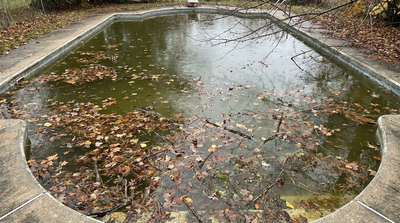
The waterline and floor of a hot tub or pool collect the concentrated residue of whatever has been in the water, mineral precipitation, body oils, and fine particulates that the filter captures slowly but surfaces collect fast.
In a hot tub, the shell interior and jet surrounds need manual wiping at each water change. In a larger pool environment connected to a hot tub or spa, where bather load and chemical additions affect a larger water volume, keeping the floor and walls free of sediment and biofilm accumulation is what prevents chemistry corrections from becoming a recurring cycle rather than a one-time fix.
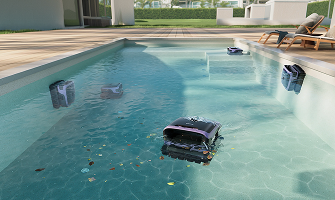
For pool owners managing this alongside a spa or hot tub, robotic pool cleaners that cover the full pool, floor, walls, and waterline, reduce the manual maintenance load between water changes significantly.
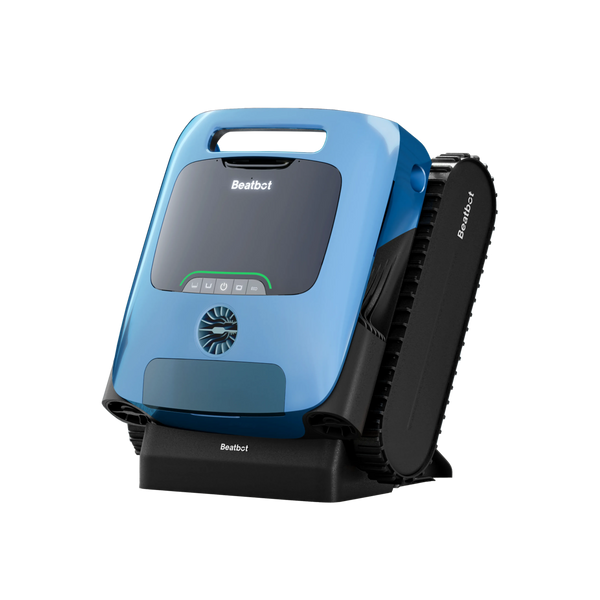
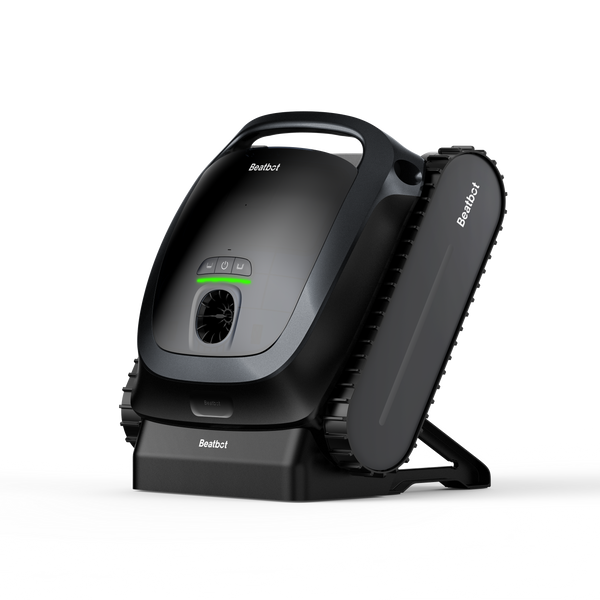
The Beatbot Sora 30 cleans all three zones in a single cycle using its HydroBalance® suction system at 6,800 GPH, scrubbing the waterline where mineral deposits and body oil residue accumulate first, and reaching shallow platforms and steps as low as 8 inches that manual brushing often misses.
After a chemistry correction that has stirred up settled debris from the pool floor, running a cleaning cycle before the next test gives a more accurate baseline because the water column is not carrying suspended particulates from disturbed sediment.

FAQs
Can you put Epsom salt in a hot tub with a saltwater system?
No. Saltwater hot tub systems use sodium chloride run through a chlorine generator. That is a chemically different compound from Epsom salt (magnesium sulfate).
Adding Epsom salt to a saltwater hot tub does not register as usable salt on the system and does not contribute to sanitization. It only adds sulfate and magnesium to the water, creating the same corrosion and scale risk as in any other hot tub.
How much Epsom salt is too much in a hot tub?
Any amount used repeatedly is too much. A single small addition may not cause immediate visible damage, but because hot tub water is not replaced frequently, sulfate and hardness levels accumulate with each addition. There is no safe recurring dose. The risk is cumulative, not per-session.
What are the signs that Epsom salt has damaged a hot tub?
Early signs include white or grey scale on the shell surface and jet surrounds, reduced jet pressure from narrowed nozzles, and pH that becomes harder to hold in range.
More advanced damage shows up as corrosion on metal fittings, pump seal failure, or heater element burnout. A technician can identify sulfate-related corrosion patterns during a service inspection.
Can you use bath salts in a hot tub instead of Epsom salt?
Standard bath salts are not designed for hot tub use and carry the same risks as Epsom salt plus additional ones: most contain dyes, fragrances, and oils that clog filters and leave residue on the shell. Only products specifically labeled as hot tub-safe aromatherapy additives are appropriate for use in a hot tub.
How long after draining and refilling can you use a hot tub?
After a full drain and refill, test and balance the water chemistry before heating the tub to operating temperature. Adjust alkalinity first, then pH, then sanitizer.
Once all parameters are in range and the sanitizer has had time to circulate, typically a minimum of 30 minutes with the jets running, the hot tub is ready to use.
Do not skip the chemistry step on a fresh fill; unbalanced fresh water at 104°F is more aggressive on surfaces and components than balanced water.