Most Popular


 Sora Series


 AquaSense Series

 Skimmer & Bundle

 Retail Edition


 Accessories


A saltwater pool still runs on chlorine. The difference is that a saltwater chlorine generator (SWG) makes chlorine from dissolved salt, so you manage chlorine production and water balance instead of pouring in sanitizer as often.
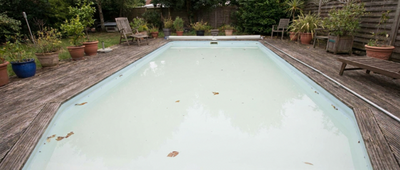
When a saltwater pool turns cloudy, starts to green up, or throws SWG alarms, it usually comes back to the same basics drifting out of range: salt level, water temperature, flow, stabilizer (CYA), free chlorine (FC), or overall balance that drives scale and corrosion.
Saltwater Pool Basics

SWG stands for saltwater generator. Pool water passes through the salt cell, electricity runs across the plates, and the system produces chlorine in small, steady amounts. That’s why saltwater does not mean chlorine-free. You still test and manage chlorine; you’re just generating it on-site.
Two test readings help you read the water correctly. FC (free chlorine) is the active sanitizer that keeps the water safe and helps prevent algae. CC (combined chlorine) is chlorine that has already reacted with contaminants. If CC is elevated, it usually points to a buildup in the water that needs attention, not a simple increase in SWG output.
Saltwater pools are only lightly salty, nothing like the ocean. Most systems run within a narrow, manufacturer-recommended salt range. If salt is low, many SWGs reduce output or shut down and trigger a low-salt warning. If salt reads high, you may see an alarm as well. Right after adding salt, readings can be unreliable until it fully mixes.
You’ll see many pool readings in ppm (parts per million), which is a concentration unit. In pool water, 1 ppm is roughly 1 milligram per liter (mg/L).
Saltwater Generator
The cell generates chlorine, and it can only do that when water is moving through it. The controller runs safety checks such as flow, salt, and temperature, then applies your output setting. If the controller does not see acceptable conditions, the cell will not produce chlorine even if the system has power.
Circulation Pump
The pump provides the flow the SWG needs and helps keep chemicals evenly distributed. If the pump does not run long enough, the SWG simply does not get enough time to keep up. Short run times can also lead to uneven circulation, which often shows up as FC that will not stabilize.
Filter
The filter removes the fine particles that make water look dull even when chemistry is close. A dirty filter can also restrict flow, which can trigger low-flow conditions and stop chlorine generation.
Skimmer
The skimmer pulls debris off the surface before it sinks and breaks down. That matters because decaying leaves, pollen, and oils raise chlorine demand. A full skimmer basket can also restrict flow, one of the quickest ways to trigger SWG alarms and see FC drop.
The Key Saltwater Numbers
Saltwater pool care is easier when you treat testing as a short list of priorities. Some numbers determine whether your SWG can generate chlorine at all.
Others determine how fast chlorine gets used up. The rest influence whether the pool tends toward scale or corrosion.

The Seven Numbers That Matter Most
|
Parameter |
Why it matters |
Typical concern |
|
Salt (ppm) |
Required for SWG chlorine generation |
Low salt reduces output or triggers shutdown; high salt can trigger alarms or unstable readings |
|
Water temperature |
Limits SWG operation in cold water |
Cold water can reduce output or stop generation |
|
Flow |
Needed for safe generation through the cell |
Dirty filter, low water level, or blocked baskets can cause low-flow alerts |
|
CYA (stabilizer) |
Protects chlorine from sunlight and affects target FC |
Low CYA burns off chlorine quickly; high CYA increases the FC needed for protection |
|
FC (free chlorine) |
Active sanitizer that helps prevent algae |
Low FC raises cloudiness and algae risk |
|
pH and TA |
Affects comfort and scale/corrosion tendency; TA affects pH stability |
Many salt pools drift toward higher pH over time |
|
CH and LSI |
Helps predict scale vs. corrosion overall |
Imbalance can scale the cell or stress equipment and surfaces |
Why the Order Matters in Saltwater Pool Maintenance
If you want fewer surprises, correct the basics in a sensible order instead of chasing the number that looks most wrong.
Start by confirming the SWG can actually produce chlorine. Salt should be within the system’s range, water temperature should be high enough for normal operation, and flow should be strong enough that the system is not protecting itself.
Next, set CYA based on sun exposure and how the pool is used. CYA is often the difference between a pool that holds chlorine and one that loses it quickly in full sun.
Then manage FC. Once the SWG is operating and CYA is appropriate, FC is the clearest indicator that output and pump time match demand.
After that, manage pH and TA. Salt pools commonly drift toward higher pH. Staying on top of that trend helps reduce scaling risk in the cell.
Last, evaluate CH and LSI. LSI is useful because it summarizes whether the overall balance leans toward scale or corrosion, which affects the cell, heaters, metal fittings, and certain stone finishes.
Common pH Behavior in Saltwater Pools
High pH is common in saltwater pools. The goal is not perfect pH forever. The goal is keeping the water out of a scale-prone range so the cell can stay efficient.
Low pH is less common but higher risk. Water that stays too acidic can stress metal components and some surfaces. If pH keeps running low, it is usually a sign the pool’s overall balance needs attention, not just a one-time correction.
Salt Cell Settings and Alerts
A salt cell only produces chlorine when several conditions are met at the same time: pump running, adequate flow, workable temperature, and salt within range. Most cases of an SWG not producing come down to one of those gate conditions, not a broken cell.
How SWG Chlorine Production Actually Works
Output percentage and pump run time work together. Think of output as how much of your pump’s run time the cell spends generating. That’s why a percentage by itself does not tell you much. Two pools can use very different settings and still hold the same FC.
How to Set Output and Pump Run Time
There is no one right output setting. Pool size, sun, temperature, bather load, rain, and debris all change chlorine demand. A practical goal is to run the SWG only as hard as needed to keep FC stable.
In many residential pools, a common reference point is keeping FC around 3 ppm, then adjusting based on CYA and real-world demand. Many salt cells last about 8,000 to 10,000 operating hours under typical residential use, so avoiding unnecessary run hours is a reasonable long-term approach.
If you want a quick way to sanity-check settings, remember that output is tied to time. Ten hours at 50 percent can land in the same neighborhood as five hours at 100 percent, because you are changing how long the cell is actually generating.
If FC stays low, it is usually smarter to confirm you are giving the system enough pump run time before you keep pushing the output percentage higher. The SWG cannot generate when the pump is off, and low-flow conditions can shut down production even when the percentage is high.
Seasonal adjustment is normal. Some pools can run in the low teens in cooler shoulder seasons and need to move into the 40 to 50 percent range in peak summer. The right setting is the one that keeps FC steady, not the one that matches someone else’s pool.
Manual chlorine still matters. After a heavy debris event, a big pool party, early algae pressure, or during cold periods when SWG output drops, liquid chlorine can restore FC faster than waiting for the SWG to catch up.
Common Salt System Alerts

Check Flow / Low Flow
The controller is not detecting enough water movement to run the cell safely, so it pauses chlorine generation.
-
Confirm the pump is running and valves are set for normal circulation.
-
Empty the skimmer basket and pump basket.
-
Check the water level and make sure the pump is not pulling air.
-
Check filter pressure for signs of a dirty filter and clean or backwash if needed.
-
If the alert persists, look for restrictions or air leaks that could be reducing flow.
Low Salt
The system believes salinity is below its operating minimum, which can reduce output or shut the cell down.
-
Confirm salinity with an independent salt test.
-
Review recent dilution events such as heavy rain, backwashing, splash-out, or refilling after leaks.
-
If salt was recently added, allow time for full mixing and retest.
-
If the water tests normal but the system still reads low, suspect sensor drift or a control issue.
High Salt
The system believes salinity is above its normal range, or the reading is abnormal.
-
Confirm with an independent salt test before taking corrective action.
-
If salt was recently added, wait for full mixing and retest.
-
If the pool tests normal but the system still reads high, suspect sensor drift or calibration issues.
Inspect Cell / Clean Cell
The system is flagging possible plate buildup or reduced efficiency, often linked to calcium scale.
-
Visually inspect the cell for white, hard deposits.
-
If scale is present, clean only using the manufacturer’s dilution and handling guidance.
-
If the cell looks clean, re-check the gate conditions like flow, salt, and temperature, since those can also trigger cell warnings.
Low Amps / Low Output / Cell Error
The cell is not drawing normal current, so chlorine production may be reduced or stopped.
-
Confirm salt and water temperature are within the SWG’s operating range.
-
Inspect for visible scale on the plates.
-
Confirm strong, steady flow through the system.
-
If those are normal, consider aging cell plates or a power or control issue and review warranty or service guidance.
Cold Weather Reminder
Many SWGs reduce output or stop generating in cold water. The only reliable indicator is your FC test result. If FC drifts down during cold periods, use manual chlorine to maintain sanitation until water temperature rises and the SWG can operate normally.
Scale and Corrosion Prevention
Salt does not automatically ruin pool equipment. The bigger risk is water balance that pushes the pool toward scale or corrosion, and the salt cell often shows the damage first.
Why Scale Forms in Saltwater Pools
Scale is more likely when pH, alkalinity, and calcium are high, especially in warm water. Once scale builds on the plates, chlorine production can drop and alerts become more frequent. Turning the SWG up higher can increase wear without fixing the underlying cause.
When a Salt Cell Actually Needs Cleaning
Clean a cell when there is a clear reason: reduced output, repeated cell-related alerts, or visible white deposits on the plates. Over-cleaning with acid can shorten cell life, so it pays to be conservative. If cleaning is needed, follow the manufacturer’s dilution and handling guidance. A simple safety rule is water first, acid second.
Why LSI Balance Protects Equipment
LSI is useful because it captures the overall tendency toward scale or corrosion. Water that leans toward scale can shorten cell life and foul heaters. Water that leans toward corrosion can stress metal components and some surfaces.
For sensitive materials such as travertine, metal fixtures, and heaters, stable balance is often the main protection. In some setups, more corrosion-resistant heater materials like titanium or cupronickel heat exchangers add margin, but they do not replace good balance.
Robotic Pool Cleaners for Saltwater Pools

A saltwater pool is easier to maintain when debris is removed before it breaks down. Leaves, pollen, insects, and oily residue all raise chlorine demand. When that load stays low, algae pressure stays lower and you usually burn through less sanitizer to keep FC stable.
For above ground pools, including common Dolphin-style setups, match the robotic pool cleaner to your surface and your debris. Pebble and other textured finishes tend to hold onto fine grit and film, so traction and scrubbing matter more than they do on smoother surfaces.
If a waterline ring shows up often, prioritize real waterline scrubbing and wall climbing instead of floor-only cleaning. Wi-Fi can be convenient, but many owners do not need it to get the maintenance payoff. What matters more is consistent coverage, easy retrieval, and filtration that matches what actually lands in your pool.
Filtration is the piece that most directly affects how clear the water looks between chemical checks. A pool-cleaning robot that only catches big debris can still leave fine dust and pollen suspended, which keeps the pool looking dull and quietly increases chlorine demand.
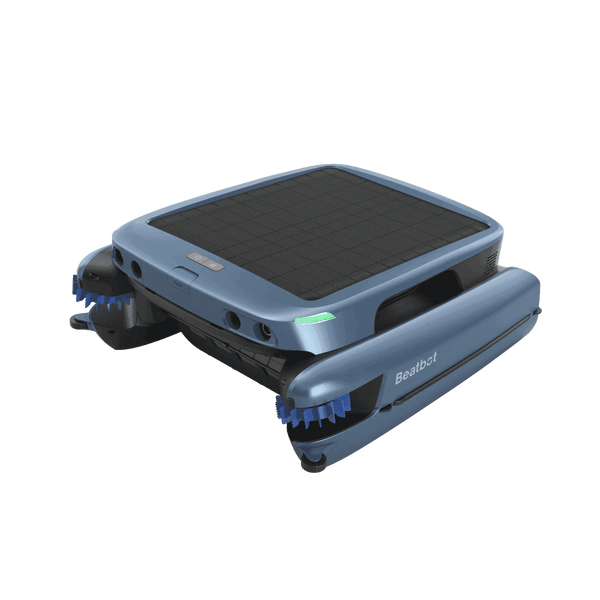
Filtration specs vary by model. Beatbot AquaSense X self-cleaning robotic pool cleaner has filtration density up to 150 μm. Beatbot AquaSense 2 Ultra uses dual-layer ultra-fine filtration down to 150 μm. Beatbot Sora 70 pairs a standard 150 μm filter with an optional 3 μm ultra-fine filter designed to trap very small particles such as dust and pollen.
Surface skimming is another decision point. If you have trees nearby, frequent wind, or heavy pollen, a pool robot with surface cleaning is more valuable because it removes debris before it sinks and starts consuming chlorine. If your surroundings are clean and your built-in skimmer already keeps the surface clear, dedicated surface-skimming features can be less critical.
If reducing routine maintenance is the priority, Beatbot AquaSense X is built around automation and capacity. It pairs all-in-one coverage, including surface skimming and waterline scrubbing, with an AstroRinse self-cleaning station that rinses the filter and empties debris automatically in about three minutes. The station’s 22L debris capacity is designed for long stretches between emptying, including leaf-heavy conditions.
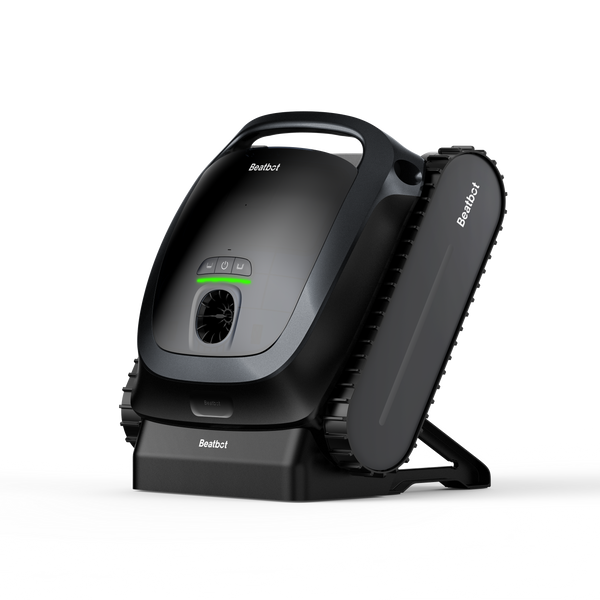
If your pool layout is more complex and you want one automatic pool cleaner to handle the core cleaning tasks, Beatbot AquaSense 2 Ultra automatic pool vacuum leans on 5-in-1 cleaning plus AI features.
It uses AI pool mapping and intelligent path optimization to avoid wasted movement and missed spots. It also supports an AI Quick Mode example that shortens a refresh cycle, about 45 minutes versus a 96-minute normal cycle shown on-page, which is useful after a windy day when you want the pool back in shape quickly.
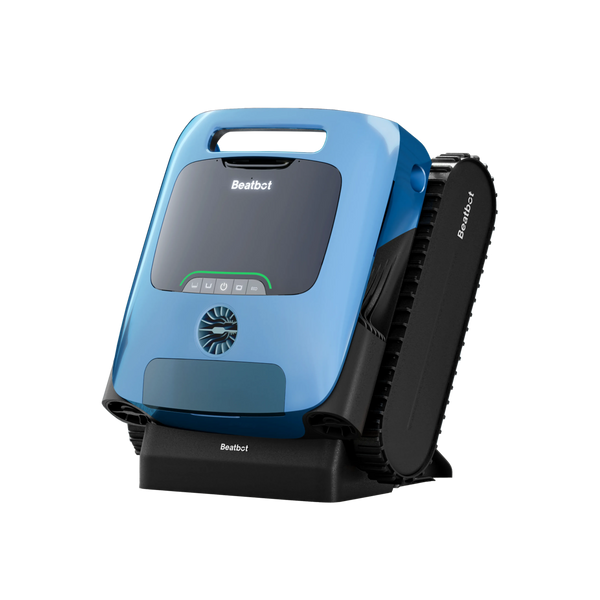
If you want strong results without stepping up to a flagship price, Beatbot Sora 70 robot pool vacuum is positioned as the value pick. It focuses on full pool coverage and practical performance details, such as 6,800 GPH suction, a 6L debris capacity, and the option to switch from a standard 150 μm filter to a 3 μm ultra-fine filter when dust and pollen are the real problem. It also supports shallow-water and platform cleaning, which can matter in many above-ground layouts.
|
Pool robot |
Best for |
Key maintenance-related strength |
|
Beatbot AquaSense X |
Heavy debris pools |
AstroRinse self-cleaning station plus 22L station capacity |
|
Beatbot AquaSense 2 Ultra |
Complex pool shapes |
5-in-1 cleaning with AI mapping and AI Quick Mode |
|
Beatbot Sora 70 |
Fine-debris seasons |
Value pick with optional 3 μm ultra-fine filtration |
Seasonal Saltwater Pool Maintenance Tips by Region
What feels normal changes by region because sunlight, temperature, and rain patterns change chlorine demand and SWG behavior.
In the Southeast and parts of North Carolina (Charlotte, Raleigh), many owners keep pools open year-round. The main risk is cold snaps that reduce SWG output, so a backup chlorine plan matters even if you do not close the pool.
In Texas and other high-sun, high-heat areas such as Houston, summer demand is the main challenge. Strong sun, warm water, and heavy swimming can pull FC down quickly, so CYA and FC control are the levers that keep the pool clear.
In South Florida, rain season and intense sun can swing chemistry. Heavy rain can dilute salt and sanitizer, and repeated storms can lead to low-salt alarms or falling FC unless you re-check and adjust.
In northern states where closing is common, closing with clean, balanced water typically makes spring opening easier. When opening, the priority is to re-establish sanitation and basic balance first, then rely on the SWG once salt, temperature, and flow support steady chlorine generation.
FAQ
Is a saltwater pool hard to maintain?
Not usually. An SWG automates chlorine production, so you add sanitizer manually less often. You still need routine testing and basic cleaning. Most issues come from low flow, cold water limiting output, or pH drifting upward.
How often do you need to add salt to a saltwater pool?
Salt usually lasts for months. You mainly lose it when water leaves the pool through splash-out, backwashing, draining, or overflow after heavy rain. Most owners add salt only to restore the level recommended by their SWG.
Why does pH keep rising in a saltwater pool?
It’s common. Aeration and the way chlorine is generated in the cell tend to push pH higher over time, especially when alkalinity is higher. Regular testing and small acid adjustments help keep pH in range.
What is the downside of a saltwater pool?
Upfront equipment costs are higher, and the salt cell will eventually need replacement. Saltwater pools also need closer pH and scale control. If the water becomes scale-prone, mineral buildup can reduce cell efficiency and increase maintenance.