Flagship


 Sora Series


 AquaSense Series


 Skimmer & Bundle

 Retail Edition


 Accessories



 Extended Warranty


Pollen is one of the most frustrating contaminants for pool owners because it looks like algae, passes through standard skimmer baskets, and keeps coming back every time the wind blows. Unlike leaves or insects, pollen grains are small enough to suspend in water for hours, forming a yellow-green film on the surface and gradually clouding your pool from top to bottom.
Removing pollen does not require draining your pool or dumping in extra chemicals. A combination of continuous filtration, surface skimming, brushing, and the right clarifier can turn a hazy pool back to clear water within a day or two.

Why Is Pollen So Hard to Remove from a Pool?
Pollen grains typically measure between 10 and 100 microns, which is small enough to pass through most skimmer baskets and standard filter cartridges. Even when pollen lands on the surface, its waxy outer coating makes the grains slightly hydrophobic, so they float and spread into a film rather than sinking toward the main drain.
Volume is the other challenge. Wind-pollinated species like oak, pine, cedar, and birch produce massive amounts of airborne pollen. A single oak tree can release billions of grains in one season. Peak pollen season runs from late February through May in most of the United States, and during that window a pool surrounded by trees can collect millions of grains per day.
Run Your Pool Filter 24/7 During Pollen Season
The single most effective step is running your pool pump and filter 24 hours a day during peak pollen weeks. Running the pump nonstop keeps water moving toward the skimmer and through the filter, catching particles before they accumulate on the surface.
If 24/7 is not practical for your electricity budget, aim for at least 12 to 16 hours per day and schedule the pump to run during the windiest part of the day, usually afternoon and early evening. Check your filter pressure gauge more often than usual. Pollen clogs filters quickly, so you may need to backwash a sand or DE filter every two to three days, or hose down cartridge elements twice a week, rather than the usual weekly cycle.

Skim Pool Pollen with a Fine-Mesh Net
A standard leaf skimmer net will not catch most pollen because the mesh is too coarse. You need a fine-mesh skimmer net, sometimes sold as a pollen net or dust net, with openings small enough to trap the fine particles.
Skim the surface at least once in the morning and once in the evening during heavy pollen days. Focus on the downwind side of the pool where pollen concentrates, and work slowly so you do not push the film deeper into the water.
Skimmer socks are another simple tool. These fine-fabric sleeves fit over your skimmer basket and act as a secondary filter, trapping pollen and fine dust before they reach the main filter. Replace or rinse them every one to two days during peak season, because a clogged sock reduces flow and makes your pump work harder.
Brush Your Pool Daily to Dislodge Settled Pollen
Pollen that sinks to the bottom or clings to pool walls will not reach the filter on its own. Brushing the floor, walls, and waterline once a day dislodges settled pollen and pushes it back into circulation. Use a nylon-bristle brush for vinyl, fiberglass, and painted pools, or a stainless-steel brush for unpainted concrete and plaster. Pay extra attention to corners, steps, and low-flow areas where pollen tends to collect.
After brushing, let the filter run for several hours before swimming. If pollen buildup is particularly heavy, vacuum to waste rather than recirculating through the filter. This sends pollen-laden water directly out of the pool instead of giving fine particles another pass through the system.
How a Pool Clarifier Helps Remove Pollen
A pool clarifier binds microscopic particles into larger clumps that your filter can actually capture. Pollen grains are often too small for a standard 150-micron pool filter on their own, but a clarifier causes them to stick together into clusters large enough to settle for vacuuming or get trapped during normal circulation. For pools with persistent pollen haze, this is often the step that makes the biggest difference.
Not all clarifiers are the same. Many conventional pool clarifiers are chemical-based polymers that require careful dosing and can irritate skin or eyes if overused. Chitosan-based clarifiers use a natural compound derived from crustacean shells that carries a positive charge, attracting negatively charged particles like pollen, algae, oils, and fine sediment. The clumping effect is the same, but without harsh chemicals in the water.

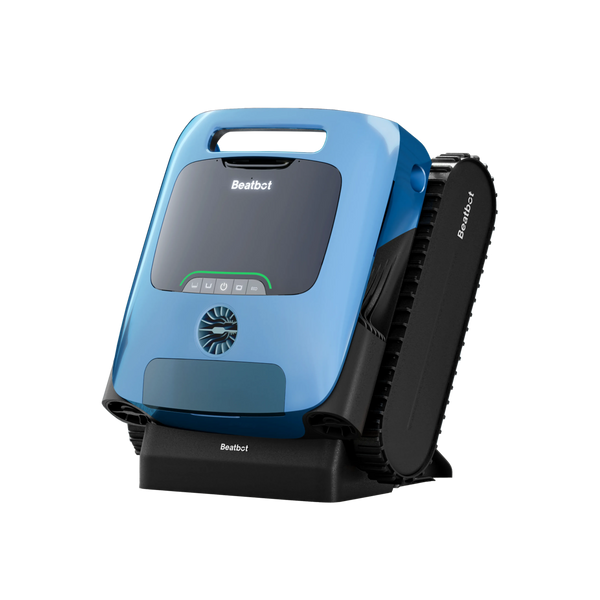
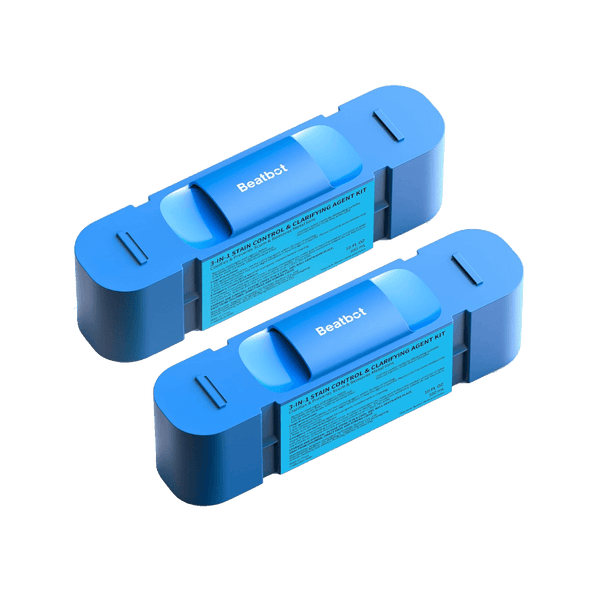
The Beatbot AquaSense 2 Ultra robotic pool cleaner takes this approach further with its built-in ClearWater™ Clarification System. Instead of manually mixing and pouring a clarifier into the pool, the AquaSense 2 Ultra automatically dispenses a chitosan-based clarifier while it cleans.
The clarifier is made from recycled crab shells, is biodegradable, and is safe for skin. It binds pollen, algae, dirt, oils, and metal residues into larger particles that either sink to the pool floor for the robot to vacuum up or get captured by the pool's main filter.
One 300ml clarifier kit treats up to 99,000 gallons of water and lasts about a month with weekly use. You can activate or schedule dispensing through the Beatbot app, so the clarifier is distributed evenly across the pool during the cleaning cycle rather than dumped in one spot. Beatbot's data shows the ClearWater™ system works four times faster than traditional clarifiers, which typically take 24 to 48 hours to show visible results.
Using a Robotic Pool Cleaner to Remove Pollen
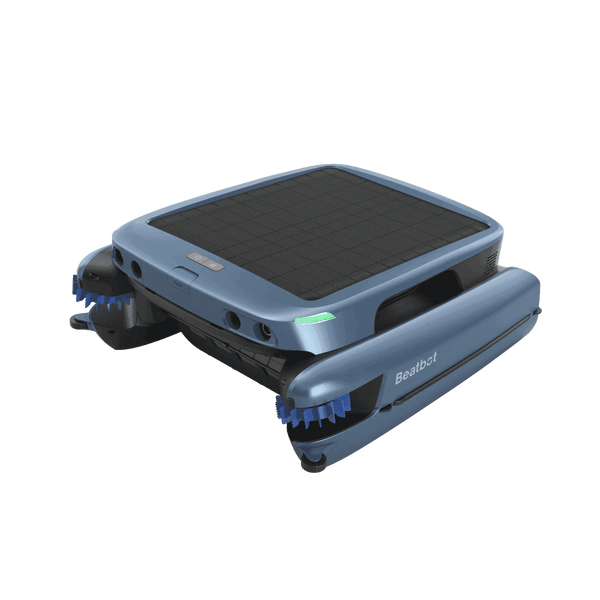
A floor-only robotic cleaner misses the surface film where most pollen collects. The Beatbot AquaSense 2 Ultra, which includes the ClearWater™ system covered above, cleans the floor, walls, waterline, and water surface while dispensing clarifier in the same cycle. That combination means pollen gets clumped and captured whether it is floating on top, suspended in the water column, or settled on the bottom.

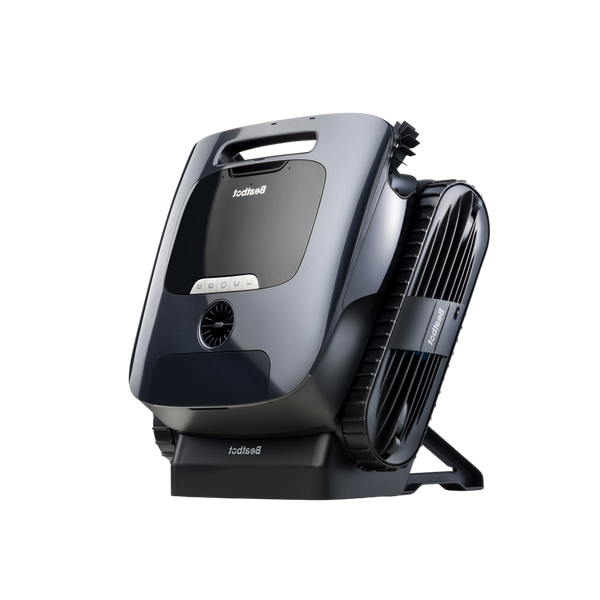
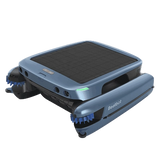
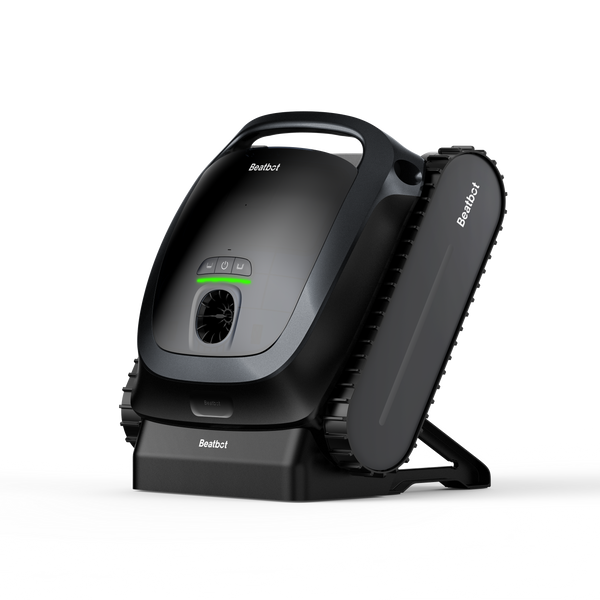
The Beatbot Sora 70 robotic pool cleaner is a strong option for pools where surface debris is the primary concern. The Sora 70 features JetPulse™ water surface cleaning with twin water jets that create four coordinated streams, pulling floating pollen toward the suction inlet instead of letting it bypass around the sides. It cleans floors, walls, and the waterline, and handles platforms and shallow areas as low as 8 inches deep.
With 6,800 GPH suction power and a 6-liter debris basket, it processes high volumes of pollen and leaves without clogging mid-cycle. For heavy pollen haze that clouds the entire water column, pairing the Sora 70 with a standalone clarifier gives you both physical removal and particle binding.
Does Pollen Affect Pool Chemistry?
Pollen introduces organic material into the water, which consumes chlorine as it breaks down. During heavy pollen weeks, free chlorine levels can drop faster than normal. Test your water at least every other day during pollen season and adjust chlorine to keep free chlorine between 2 and 4 ppm.
If chlorine drops too low, pollen-fed bacteria can multiply and what started as a cosmetic problem becomes a water quality issue.
Pollen also contains phosphorus, a nutrient that feeds algae. High pollen loads can raise phosphate levels and make algae blooms more likely. If you notice green tinting that does not respond to normal chlorine levels, test for phosphates and consider adding a phosphate remover. Keep your pH between 7.2 and 7.6 and alkalinity between 80 and 120 ppm so your sanitizer and clarifier both work efficiently.
How to Prevent Pollen from Getting into Your Pool
A pool cover is the most effective pollen barrier. Using a solar cover or safety cover overnight and during the hours you are not swimming blocks the majority of windblown pollen before it hits the water. Even a liquid solar cover, which creates a thin invisible layer on the surface, can reduce pollen accumulation by limiting direct contact between airborne particles and the water.
Landscaping choices matter too. If you are planning new plantings near your pool, choose insect-pollinated species like hibiscus, roses, or crepe myrtles rather than wind-pollinated trees like oak, pine, or juniper. Trimming back branches that hang directly over the pool reduces the amount of pollen that drops straight in.
A windbreak such as a hedge, fence, or screen on the upwind side of the pool can deflect a significant portion of airborne pollen before it reaches the water.

Hosing down your pool deck and surrounding hardscape before swimming also helps. Pollen settles on concrete, pavers, and furniture around the pool, and foot traffic or a gust of wind can blow it right back into the water. A quick rinse with a garden hose pushes pollen away from the pool edge.
FAQs
Will pollen turn my pool green?
Pollen itself gives pool water a yellow-green tint, not a true green. If your pool turns solid green and the surfaces feel slimy, that is algae, not pollen. Pollen can contribute to algae growth indirectly because it raises phosphate levels in the water, which feeds algae. Removing pollen quickly and keeping chlorine levels steady prevents that chain reaction.
How can I tell if it is pollen or algae in my pool?
Pollen floats on the surface and forms a dusty film that breaks apart when you disturb the water. Algae clings to surfaces, feels slimy, and tends to grow on walls and in shaded corners. Scoop a sample with a bucket: if the particles float freely, it is pollen. If the greenish layer sticks to the sides, it is algae.
Will shocking my pool get rid of pollen?
Shocking oxidizes the organic coating on pollen grains, which can make them easier to filter, but it does not physically remove pollen from the water. You still need filtration, skimming, or a clarifier to pull the particles out.
Does pollen stain a pool?
Pollen alone does not permanently stain pool surfaces. It can leave a temporary yellow residue along the waterline if it mixes with body oils or sunscreen and sits for several days without being brushed. Regular waterline brushing during pollen season prevents any lasting discoloration.