


 Flagship


 Sora Series


 AquaSense Series


 Skimmer & Bundle

 Retail Edition


 Accessories



 Extended Warranty


A solar pool skimmer and a robotic pool cleaner are not competing products. They do different jobs. A solar skimmer works on the water surface, catching leaves, pollen, and insects before they sink. A robotic pool cleaner works on the floor, walls, and waterline, scrubbing away algae, fine sediment, and debris that has already settled. Which one your pool needs depends on where debris is actually accumulating, and whether you need to solve one problem or both.
How Does a Solar Pool Skimmer Work?
A solar pool skimmer floats autonomously across the water, using solar power to drive small propellers that pull floating debris into an onboard filter basket. It runs without a cord or external power supply, so it can operate continuously throughout the day without any input from the pool owner.
The benefit is preventive. Leaves and organic debris float for a limited window before they absorb water, sink to the floor, and begin to decompose. Decomposing debris raises phosphate levels and accelerates algae growth. A solar skimmer intercepts that process at the surface, which means fewer sunken leaves for your floor cleaner to handle and less strain on your pool's filtration system overall.
Solar skimmers do not scrub surfaces. They cannot remove algae from walls, clean the waterline, or pick up fine sediment that has already settled on the floor.

How Does a Robotic Pool Cleaner Work?
A robotic pool cleaner drives across the floor and climbs walls using motorized tracks or wheels, scrubbing surfaces with roller brushes while drawing water through an internal filter. Depending on the model, it covers the floor, walls, and waterline in a single cycle without connecting to your pool's skimmer port.
Its strength is remediation. Once debris has sunk and fine particles have settled, a robotic cleaner is the most efficient way to remove them. High-suction models handle everything from sand and pollen to whole leaves and stubborn algae, and fine filtration catches particles that a pool's main circulation system often misses.
A robotic cleaner does not maintain the surface. It runs on a scheduled cycle, so floating debris that falls between sessions will sink before the next run.
The Real Difference: Prevention vs. Remediation
A solar skimmer is a continuous prevention device. It is always on, always moving, always intercepting. The value compounds over days and weeks because it reduces the total debris load your filtration system and floor cleaner ever have to handle.
A robotic cleaner is a scheduled remediation device. You deploy it when the pool needs a deep clean: after heavy use, after a storm, before a gathering. It addresses what has already accumulated.
A pool that uses only a solar skimmer will still accumulate fine sediment and algae on the floor. A pool that uses only a robotic cleaner will still have floating debris between sessions. The skimmer keeps the surface clean. The cleaner keeps the bottom clean.
|
Solar Pool Skimmer |
Robotic Pool Cleaner |
|
|---|---|---|
|
Cleaning Zone |
Water surface only |
Floor, walls, waterline |
|
Cleaning Logic |
Continuous prevention |
Scheduled remediation |
|
Power Source |
Solar (no cords) |
Battery or corded |
|
What It Removes |
Floating debris |
Sunken debris, algae, sediment |
|
What It Cannot Do |
Clean floors or walls |
Work the surface |
|
Runtime |
Continuous (daytime) |
Per-session (hours) |
|
Best For |
Ongoing debris maintenance |
Deep cleaning cycles |
Which Type of Pool Benefits from Each
Pools near trees, gardens, or open spaces accumulate heavy surface debris continuously. A solar skimmer makes the most visible difference here because without it, every robotic cleaning session has to handle debris that could have been caught at the surface days earlier.
Pools with heavy foot traffic, direct sunlight, and warm climates tend to build up algae and fine sediment on the floor and walls. A robotic pool cleaner earns its value in these conditions, where the problem is bottom accumulation rather than debris falling from above.
Most residential pools deal with both through a full season. The skimmer handles daily surface maintenance. The robotic cleaner handles weekly or biweekly deep cleaning. Together, they reduce manual skimming time and the frequency of chemical corrections.

When One Robot Handles Both
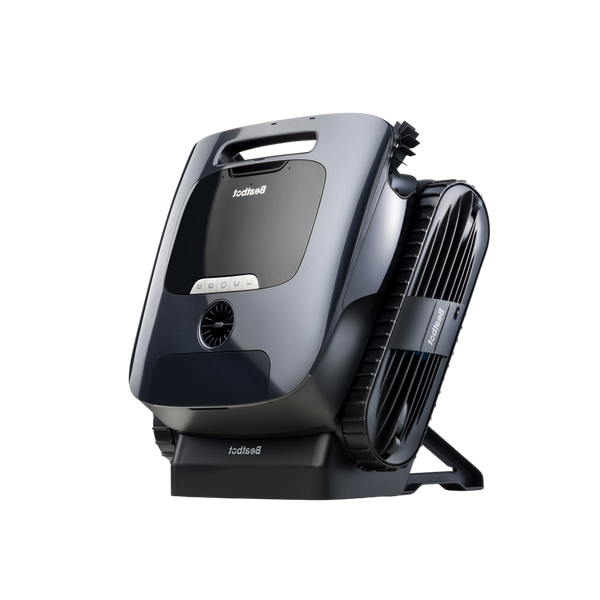
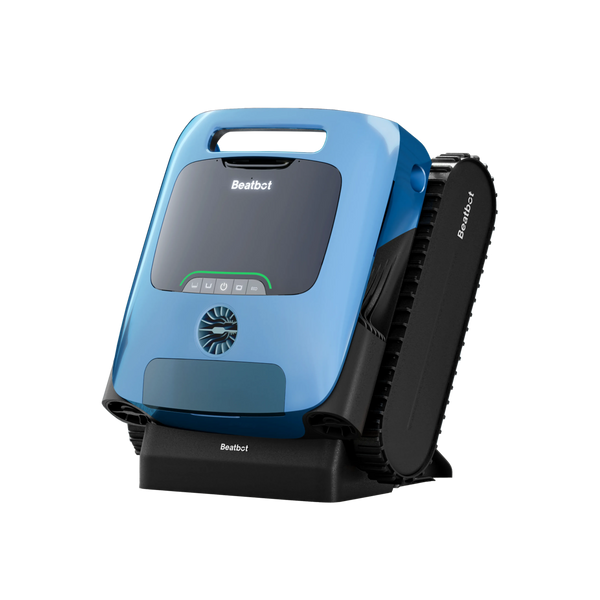
The Beatbot Sora 70 robotic pool cleaner is designed to clean the floor, walls, and waterline in the standard robotic cleaner pattern, and it also includes an industry-first JetPulse water surface cleaning system. Rather than relying on passive intake, the Sora 70 uses dual converging jets positioned on both sides of the robot to actively pull floating debris toward the central suction inlet during surface cleaning passes.
The Sora 70 also reaches shallow-water areas and platforms as low as 8 inches deep using ultrasonic sensors for real-time path adjustment, which matters in pools with step platforms or zero-entry sections that most floor robots skip. With a 6,800 GPH flow rate and a 6L debris basket, it handles heavy debris loads without stopping mid-cycle, and a 10,000mAh battery provides up to 5 hours of floor cleaning runtime per charge.
When a Dedicated Solar Skimmer Is the Right Choice
A dedicated solar skimmer makes the most sense when continuous, autonomous surface maintenance is the priority and deep floor cleaning is handled separately.
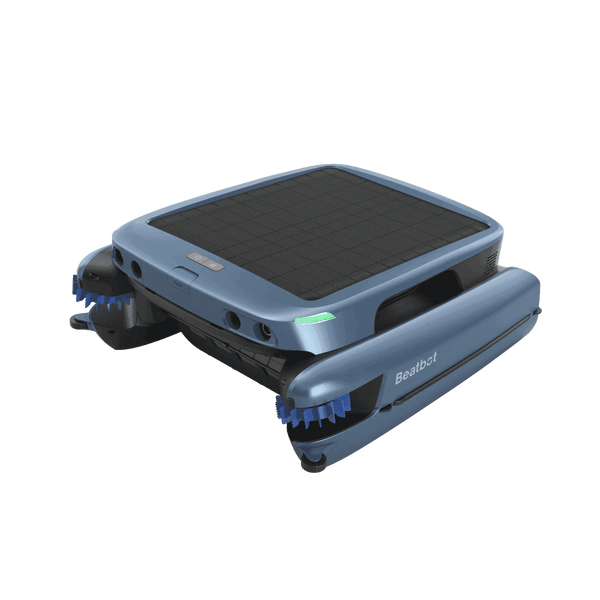
The Beatbot iSkim Ultra robotic pool skimmer is built for pools with high surface debris loads. Its 24W solar panel, equipped with the SolarTrack light energy tracking system, keeps the robot running through the day and optimizing its path as sunlight conditions shift.
When sunlight is insufficient, the robot actively seeks out better-lit areas to recharge rather than stopping. When daylight ends, a 10,000mAh onboard battery takes over for overnight operation.
The iSkim Ultra uses 20 onboard sensors, including a tri-ultrasonic array, to navigate an S-shaped cleaning path across the full water surface before transitioning to edge and corner cleaning.
Industry-first dual side brushes extend debris capture beyond the robot's direct path, directing more material toward the 9L filter basket. The built-in ClearWater clarification system dispenses a natural, skin-safe clarifier during the cleaning cycle for pools where water clarity is an additional concern.

Solar Pool Skimmer, Robotic Cleaner, or Both?
If surface debris is the recurring problem, a solar skimmer addresses it directly. If algae or sediment is building up on the floor and walls, a robotic cleaner is the more pressing investment. If both are accumulating, the choice is between pairing a dedicated skimmer with a separate robotic cleaner or buying a single robot that covers both zones.
Larger pools with high debris input benefit most from a dedicated solar skimmer running continuously, because a single robot alternating between surface and floor cycles may not keep pace. Smaller pools or pools with manageable surface loads are better candidates for an all-in-one robot.
A solar skimmer requires basket emptying every few days. A robotic floor cleaner requires deployment, retrieval, and filter cleaning after each session. Running both adds some maintenance overhead. Running an all-in-one robot reduces the device count but does not eliminate the maintenance steps.
FAQs
Can a solar pool skimmer replace my pool's built-in skimmer?
No. A solar skimmer collects floating debris into its own basket. Your pool's built-in skimmer is part of the circulation system that pulls water through the filtration loop. They serve different functions, and using a solar skimmer reduces the load on your built-in skimmer basket rather than replacing it.
How often should a robotic pool cleaner be run?
For most residential pools, two to three times per week is sufficient during active swim seasons. Pools near trees or in dusty environments may need more frequent cycles. After storms or heavy use, an immediate run prevents debris from settling and becoming harder to remove.
Does a solar skimmer work in cloudy weather or at night?
Solar skimmers with onboard batteries can continue operating in low-light conditions and at night. Models with large-capacity batteries like the Beatbot iSkim Ultra are designed for all-day and overnight operation, with the solar panel focused on continuous recharging rather than acting as the sole power source.
Is it worth using a solar skimmer if I already have a robotic pool cleaner?
Generally yes, if your pool accumulates significant surface debris. A robotic floor cleaner does not address floating material, so debris that is not intercepted at the surface will eventually sink and add to the floor cleaner's workload. Using both reduces total cleaning time and chemical costs over a season.


