


 Flagship

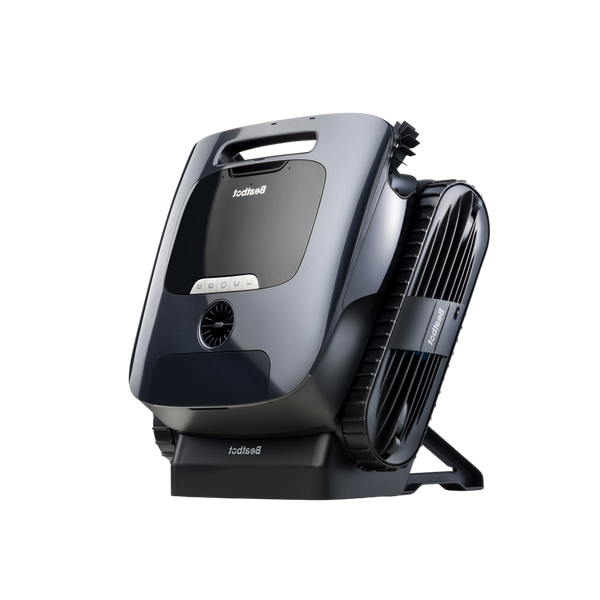

 Sora Series


 AquaSense Series


 Skimmer & Bundle

 Retail Edition


 Accessories


 Extended Warranty


Depth changes everything for a pool robot. A machine that cleans a 4-foot above-ground pool flawlessly can lose wall traction, miss the floor entirely, or end up stuck at the bottom of an 8-foot deep end with no way to get it out.
The Beatbot AquaSense 2 Ultra robotic pool cleaner and the Beatbot Sora 70 cordless pool cleaning robot are the two models best suited for deep in ground pools. The AquaSense 2 Ultra is the right call when AI-guided coverage, water clarification, and a large pool footprint (up to 3,875 sq ft) matter most.
The Sora 70 delivers stronger raw suction at 6,800 GPH and a larger 6L filter, which gives it an edge when debris volume is high. Both are fully cordless, both climb walls at any angle, and both park themselves at the surface when the cycle ends.
What Makes Deep Pools Harder for Robot Cleaners
The main problems are wall traction, suction consistency at depth, and retrieval. A pool that drops to 8 or 9 feet creates a longer vertical surface to clean, and the robot has to generate enough suction and brush contact to stay anchored all the way up, not just for the first 3 feet. Retrieval compounds the problem: a robot that sinks to the bottom when the cycle ends becomes a lifting issue without a cable to pull it by.
What to Look for in a Pool Robot for a Deep Pool
Six factors determine whether a robot performs in a deep pool or just cleans a shallow one adequately: pool size match, suction power, wall traction, retrieval method, filter capacity, and water clarification.
Pool Size Match
A deep pool that is also large needs a robot rated for the full square footage. Coverage ratings are listed in square feet and tied directly to battery capacity: a robot that runs out of power mid-cycle leaves the deep end unfinished, which is usually the zone that matters most.
Suction Power
At depth, fine debris like sand and algae spores settle with more force and compact at the bottom. Suction is measured in GPH, and higher output means the robot pulls more water per hour, drawing that settled material into the filter rather than disturbing it without capturing it. For moderate debris loads, anything above 5,000 GPH is sufficient. For pools under heavy tree cover or with seasonal debris, the upper end of the range makes a practical difference in how thoroughly the robot cleans in one pass.
Wall Traction
Suction and brush contact working together are what keep a robot anchored to a pool wall. The steeper the wall and the deeper the pool, the longer the robot has to hold that contact without slipping. Look for track wheels or brush systems with documented success on vertical walls, and check whether the wall climbing spec covers the full 90-degree range or only gentler slopes. Fiberglass and smooth tile offer less grip than concrete, so brush design matters independently of suction power.
Retrieval
In pools deeper than 7 feet, retrieval becomes a physical problem without a cable to pull the robot by. Corded robots solve this with a long cord, but cords tangle and add a step to every cleaning cycle. Cordless robots need a buoyancy system that actively brings the robot to the surface and parks it at the pool edge. Passive floating is not enough: the robot needs to navigate to the edge reliably, not just drift.
Filter Capacity
Filter capacity determines how often you interrupt a cleaning cycle. A small basket fills fast in a deep pool with leaf cover, and once it clogs, suction drops and the robot stops cleaning effectively. Some robots offer multi-stage filtration, with a coarser outer layer handling large debris and a finer inner layer capturing smaller particles. An optional ultra-fine filter is worth considering if your pool deals with pollen or fine algae spores on top of regular leaf debris.
Water Clarification
Most pool robots handle physical debris but do nothing about the fine particles and oils that make water look dull or cloudy. A built-in clarification system dispenses a clarifying agent as the robot cleans, binding microscopic particles into larger clumps that the filter can capture. In a deep pool with a large water volume, this reduces how often you need to add separate chemical treatments manually.
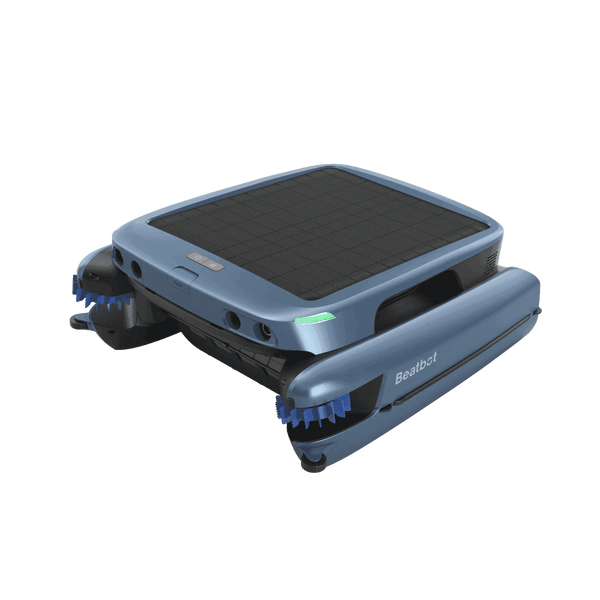
Beatbot AquaSense 2 Ultra: AI Coverage for Large, Complex Deep Pools
The Beatbot AquaSense 2 Ultra robotic pool cleaner covers pools up to 3,875 square feet and operates in water from 1.6 ft to 11.5 ft deep.
Navigation is the capability that most directly benefits complex deep pools. The 27-sensor HybridSense™ system, including an AI camera, dual TOF sensors, four ultrasonic sensors, and two infrared sensors, maps the pool before cleaning and adjusts the path in real time based on what it detects.
In an irregular pool, that means the robot covers the actual shape of the floor rather than running a fixed grid that misses corners or reverses over the same area. The AI camera identifies over 40 types of plant debris, and AI Quick Mode targets those spots specifically without a full cycle.
For deep pools with multi-level platforms or shallow tanning ledges, AI Adaptive Platform Cleaning extends autonomous coverage. Downward-facing ultrasonic sensors detect the platform height, the robot climbs to clean areas as shallow as 13.7 inches, and edge detection prevents it from going over.
The 5-in-1 cleaning system covers the floor, walls, waterline, water surface, and water clarification in one cycle. The ClearWater™ system dispenses chitosan-based clarifier as the robot moves, binding microscopic particles and oils into larger clumps the filter captures more easily.
The 11-motor system, 5,500 GPH suction, dual-group roller brushes, two side brushes, and TPU track wheels deliver up to 5 hours of floor cleaning or 5 hours of wall and waterline cleaning on a single charge.

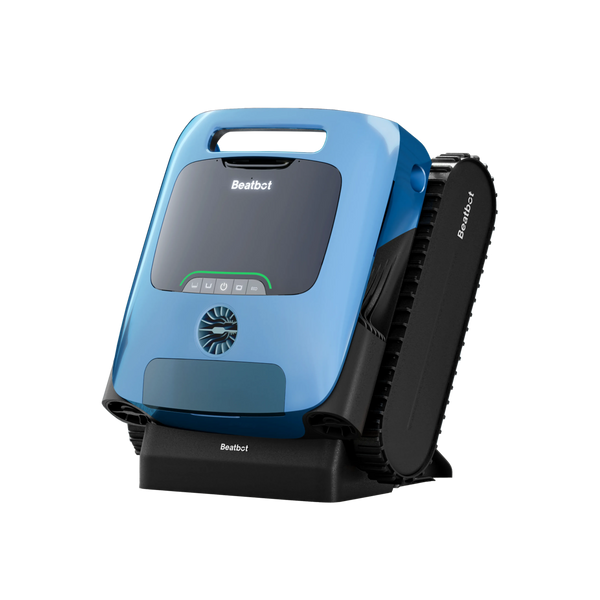
Beatbot Sora 70: High-Volume Cleaning for Deep Pools with Heavy Debris
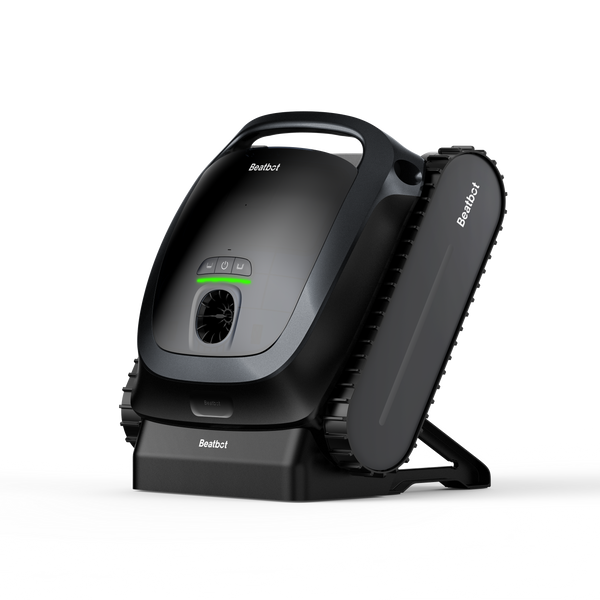
The Beatbot Sora 70 cordless robotic pool cleaner delivers 6,800 GPH of suction, the highest in this comparison. For a deep pool that takes on heavy debris, that output translates to more debris captured per pass.
The 6L filter basket is the practical advantage for pools with leaf cover or seasonal debris. Its 6.7-inch extended suction inlet takes in whole leaves and twigs that a standard inlet would clog on.
An optional 3-micron ultra-fine filter adds coverage for fine particles like pollen, sand, and algae spores when the season demands it. The result is fewer mid-cycle interruptions: you place the robot in, let it finish, and empty the basket when the cycle is done rather than managing it partway through.
Wall traction is documented at 100% climbing success across slopes from 0 to 45 degrees and vertical walls from 45 to 90 degrees.
The dual-group roller brush system runs twin 5-inch brushes with independent left-right speed control, creating a 10-inch cleaning path that maintains contact on steep pool walls. Shallow platforms and tanning ledges as low as 8 inches deep are cleaned autonomously, lower than the 13.7-inch minimum on the AquaSense 2 Ultra.
Surface cleaning uses JetPulse™ twin jets that project water inward and outward simultaneously. Inward flows guide floating debris toward the central suction inlet; outward flows act as barriers that prevent debris from slipping past the robot at the sides.
AquaSense 2 Ultra vs. Sora 70: Deep Pool Spec Comparison
|
Feature |
Beatbot AquaSense 2 Ultra |
Beatbot Sora 70 |
|---|---|---|
|
Price (MSRP) |
$3,450 |
Check beatbot.com |
|
Cleaning Zones |
5-in-1: floor, walls, waterline, surface, water clarification |
4-zone: floor, walls, waterline, surface + platforms |
|
Suction Power |
5,500 GPH |
6,800 GPH |
|
Filter Capacity |
4.0L (outer) / 3.7L (inner) |
6L |
|
Battery Runtime (Floor) |
Up to 5 hours |
Up to 5 hours |
|
Pool Coverage |
3,875 sq ft |
3,230 sq ft |
|
Max Pool Depth |
Up to 11.5 ft (3.5 m) |
Cordless; no depth spec listed |
|
Navigation |
HybridSense™ AI camera + 27 sensors |
Dual ultrasonic sensors (SonicSense™) |
|
AI Debris Detection |
Yes (HybridSense™, 40+ debris types) |
No |
|
Water Clarification |
Yes (ClearWater™) |
No |
|
Platform Cleaning |
Yes (AI-adaptive, min. 13.7 in depth) |
Yes (down to 8 in depth) |
|
Wall Climbing |
Yes |
Yes (0–45° slopes, 45–90° walls, 100% success rate) |
|
Cordless |
Yes |
Yes |
|
Warranty |
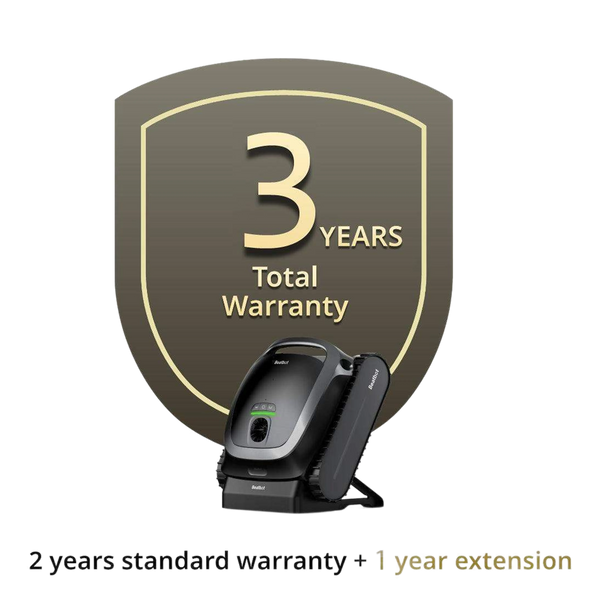
3-year full machine replacement |
3-year full machine replacement |
|
Best For |
Large or complex deep pools, full water care |
Heavy debris loads, deep pools up to 3,230 sq ft |

Which Pool Robot Should You Buy for Your Deep Pool?
|
Your Deep Pool |
Better Match |
|---|---|
|
Large or complex shape, up to 3,875 sq ft |
Beatbot AquaSense 2 Ultra |
|
Multi-level platforms or shallow entry ledges |
Beatbot AquaSense 2 Ultra |
|
Want water clarification and AI debris targeting |
Beatbot AquaSense 2 Ultra |
|
Heavy weekly debris, tree cover overhead |
Beatbot Sora 70 |
|
Need the largest filter and highest suction |
Beatbot Sora 70 |
|
Platforms as shallow as 8 inches |
Beatbot Sora 70 |
The AquaSense 2 Ultra is the precision option for large or complex pools; the Sora 70 is the high-capacity option for pools that generate more debris than a standard filter can handle in one pass.
FAQs
Can cordless pool robots really clean a 9-foot deep pool?
Yes. The Beatbot AquaSense 2 Ultra is rated to 11.5 ft. The Beatbot Sora 70 is designed for in ground pools at standard residential depths. Both use active buoyancy systems to return to the surface after cleaning rather than relying on a cable for retrieval.
Do these pool robots work in saltwater pools?
Both are built for saltwater and chlorinated pools. The AquaSense 2 Ultra is rated for salinity up to 5,000 PPM and chlorine up to 4 PPM. Pool material is not a limiting factor either; both models clean concrete, tile, vinyl, and fiberglass.
Which Beatbot model is better for pools with heavy leaf fall?
The Beatbot Sora 70. Its 6L filter basket, 6.7-inch extended suction inlet, and 6,800 GPH suction handle high debris volume. The optional 3-micron ultra-fine filter covers fine seasonal particles. The AquaSense 2 Ultra is the stronger choice when precision, pool size, and water clarification matter more than raw debris capacity.
Do either of these robots detect debris without running a full cycle?
The Beatbot AquaSense 2 Ultra does. Its AI Quick Mode uses the HybridSense™ AI camera to identify and target organic debris on the floor without completing a full cleaning path. The Sora 70 does not have this feature.


