


 Flagship


 Sora Series


 AquaSense Series


 Skimmer & Bundle

 Retail Edition


 Accessories


 Extended Warranty


Most robotic pool cleaners do return to the surface after cleaning, but not all of them do it automatically, and not all of them actually float. Whether a robot surfaces on its own, stays at the bottom, or parks itself at the pool edge depends on which generation of technology it uses. That difference determines how much physical effort you spend retrieving it after every cleaning cycle.
Why Pool Robot Retrieval Is the Real Pain Point
A robotic pool cleaner weighs several pounds dry. Submerged and full of water, it feels much heavier, and reaching into the deep end to grab one from the bottom puts real strain on your back and shoulders. Retrieval is consistently one of the top frustrations pool owners report, regardless of how well the robot cleans.
Many robots simply stop wherever they are when their cycle ends. If one finishes on the pool floor at the far end, you need a hook or have to lean over the edge to pull it out. That is the default behavior for most corded robots and many lower-cost cordless models, and it is rarely what buyers expect when they purchase a robot that markets itself as smart or automated.
What Happens When a Pool Robot Finishes Cleaning
Pool robots handle end-of-cycle behavior in three distinct ways. The most basic stop wherever they are when the timer runs out. Motors cut, and the robot rests on the pool floor until you retrieve it manually with a pole or by reaching in.
A step up is waterline parking. Some robots, when the cycle ends, climb toward the waterline and hold position against the wall. It reduces the depth you have to reach, but the robot is still submerged and still full of water. You are lifting it out from below the waterline, not off the surface.
True surface parking is a different outcome entirely. The robot uses buoyancy control to rise above the waterline and float on the surface near the pool edge. You are lifting it off the water, not out of it, and models with automatic water drainage reduce the weight further before you even touch it.

How Surface Parking Works on a Pool Robot
Robots that surface use one or more buoyancy chambers, internal cavities managed by peristaltic pump motors that pull water out to create lift and push it back in when the robot needs to submerge. When a cleaning cycle ends, the robot activates these chambers, rises to the surface, then uses its drive system to navigate to the pool edge.
On models with app integration, you can also trigger surface parking manually with a single tap, pulling the robot to the edge on command even if it has drifted. The SmartDrain system, used in several surface-parking models, expels accumulated internal water as the robot rises, which is why these robots feel noticeably lighter to pick up than pulling a water-logged unit off the pool floor.
Does Every Pool Robot Surface After Cleaning?
No. Surface return is a deliberate design feature, not a standard capability. Corded pool robots cannot truly float to the surface while connected to their power cable. Some can be commanded to climb toward the waterline via a remote or app, but retrieval still requires lifting from a submerged position.
Among cordless robots, surface parking tends to appear in more capable models because it requires additional buoyancy hardware and software. Many cordless robots at the lower end simply stop at the bottom when the battery triggers end-of-cycle. If easy retrieval is a priority, confirm that any robot you are considering has genuine surface parking rather than waterline-stop behavior.
How the Beatbot Sora 70 Returns to the Surface
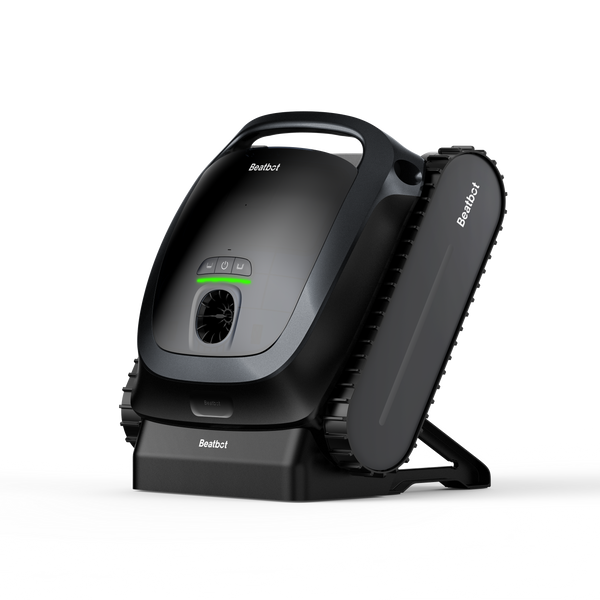
The Beatbot Sora 70 robotic pool cleaner uses true surface parking. When the cleaning cycle completes or the battery drops below 12%, the robot activates its buoyancy system, rises to the water surface, and navigates to the pool edge. SmartDrain releases internal water as it surfaces, so what you lift is already lighter than it was in the pool.
If the Sora 70 drifts from the edge after surfacing (common when the pool pump is running), a single tap in the Beatbot app brings it back. The propellers stay active for up to 20 minutes after the robot parks, then stop to preserve battery while the robot continues to float. App-triggered retrieval also works on demand mid-cycle, not just at the end, so you are never waiting on the robot's schedule to get it out of the water.
Should You Retrieve Your Pool Robot Immediately After It Surfaces?
Yes. Surface parking is built for end-of-cycle pickup, not storage. Chlorine and UV exposure at the surface accelerate wear on seals and plastic components, and leaving the robot in water rather than storing it dry shortens its service life over time.
After retrieval, empty the filter basket, rinse the robot with fresh water, and store it out of direct sunlight. A partially blocked filter reduces suction and makes the robot work harder in subsequent cycles, so filter maintenance after every run is worth the two minutes it takes.

FAQs
Does Surface Parking Work in All Pool Shapes and Sizes?
Surface parking works in most standard residential pool shapes, including rectangular, kidney, and freeform. Very deep pools or pools with unusual obstructions can slow the robot's path to the edge, but the buoyancy mechanism itself is not affected by pool depth or shape. The Beatbot Sora 70 covers pools up to 3,230 square feet on a single charge.
Does the Pool Pump Interfere With Automatic Surface Return?
It does not prevent the robot from surfacing, but a running pump can push a floating robot away from the pool edge once it has parked. On the Beatbot Sora 70, you can pull it back to the edge with a single tap in the app, or turn the pump off briefly before retrieval if you prefer a stable position.
Why Does My Robot Feel Lighter When I Pick It Up After It Surfaces?
Models with SmartDrain technology expel internal water as the robot rises. The robot will still be damp, but meaningfully lighter than pulling a water-logged unit off the pool floor.
Is It Safe to Leave a Pool Robot Floating at the Surface Overnight?
Not recommended. Chlorine and UV exposure at the surface wear down seals and plastic components faster than dry storage. Retrieve the robot after each cycle and store it out of direct sunlight.


