

 Flagship


 Sora Series


 AquaSense Series


 Skimmer & Bundle

 Retail Edition


 Accessories


 Extended Warranty


A Beatbot robotic pool cleaner picks up nearly every type of debris that ends up in a residential pool, from large floating leaves and twigs down to fine sand, pollen, and algae spores.
The exact range depends on which filter is installed and where the debris sits, but across the Beatbot Sora line a single cleaning cycle handles coarse organic matter, settled sediment, and the microscopic particles that cloud the water. That reach comes from strong suction, a wide intake, and a dual filtration system that lets you match the filter to the job.
What Are the Main Types of Pool Debris?
Pool debris falls into three groups: large organic matter, settled sediment, and fine suspended particles. Large organic matter is leaves, twigs, pine needles, acorns, insects, and the seeds and berries that drop from nearby trees. Settled sediment is the dirt and sand that sinks to the floor and collects in low spots.
Fine suspended particles are pollen, dust, dead algae, and microscopic grit, the debris that leaves water hazy even when the floor looks clean.
Each group is removed differently. Large debris needs a wide intake and enough suction to lift heavier material without clogging. Sediment needs consistent floor contact so nothing is skimmed over. Fine particles need a tighter filter mesh, since a standard filter lets the smallest material pass straight back into the water.

Can a Beatbot Pool Cleaner Pick Up Leaves and Large Debris?
Yes. Whole leaves, twigs, insects, and seasonal seeds are what the standard Beatbot filter is built for. Across the Sora line, the cleaner runs a 150-micron filter that captures coarse, everyday debris without clogging, holding suction steady even when the pool is heavily loaded after a storm or an autumn leaf drop.
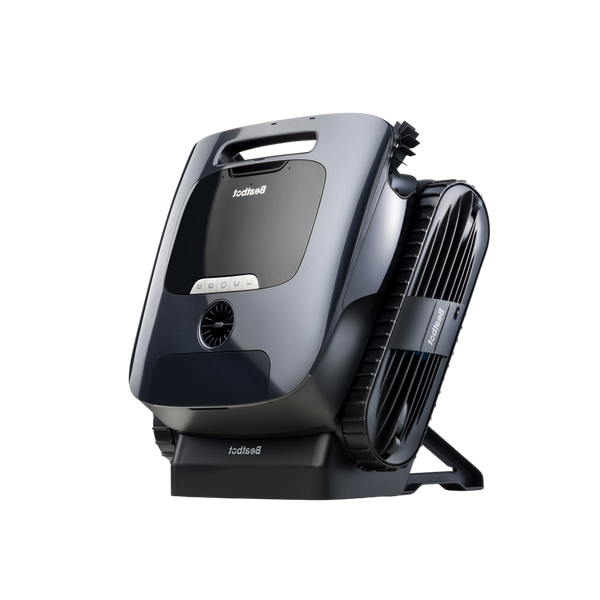
Suction and intake size handle the heaviest material. The Beatbot Sora 70 and Beatbot Sora 30 robotic pool cleaners both generate a 6,800 GPH flow rate, enough to lift waterlogged leaves rather than push them around, and the Beatbot Sora 70 pool cleaning robot adds an extended 6.7-inch suction inlet that swallows whole leaves and twigs narrower inlets would jam on.
Basket size decides whether the job finishes in one pass. The Beatbot Sora 70 holds 6L of debris; the Beatbot Sora 30 holds 5L and captures more than 650 leaves in a single session. The larger the basket, the slower the filter fills, so suction stays stable through a full cycle during peak debris season.

Does It Remove Sand, Dirt, and Fine Sediment?
Yes. Sand and fine sediment on the pool floor come up during a normal floor cleaning cycle, captured by the same 150-micron standard filter that handles larger debris.
Sediment is easy to glide over because it sits in a thin layer and collects in corners, slopes, and low spots. Beatbot Sora cleaners use a bottom-hugging design that keeps the suction inlet in close contact with the floor across the whole pass, and optimized S-shaped paths cover the floor systematically so no strip is left for dirt to rebuild on.
Heavier sediment needs sustained pull to move at all. The HydroBalance structure in the Sora line is a center-mounted pump design that reduces water flow resistance, delivering more of the 6,800 GPH flow to the inlet. That pull lifts compacted dirt and coarse sand instead of stirring it into a cloud that resettles later.
Can It Pick Up Pollen, Dust, and Fine Algae Particles?
Pollen, fine dust, and dead algae are picked up too, but they need the optional ultra-fine filter. The 150-micron standard filter has a mesh too open to trap particles this small, so they pass through and return to the pool.
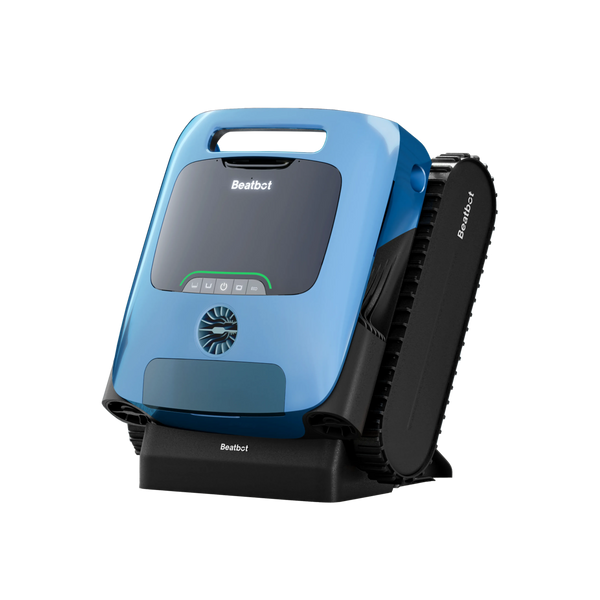
Both the Beatbot Sora 70 and Beatbot Sora 30 support a replaceable 3-micron ultra-fine filter that captures particles up to 50 times smaller than what standard cleaners leave behind, including pollen, fine sand, dust, dead algae, algae spores, and small insect eggs. With it installed, the cleaner polishes the water rather than just collecting debris.
The tighter mesh suits low-debris conditions, so the practical routine is to run the standard filter to clear leaves and sediment first, then switch to the ultra-fine filter for a polishing pass. Used this way, it also cuts how often you need chemical clarifiers and how frequently the main pool filter needs backwashing.

Can It Handle Algae Buildup and Waterline Grime?
Yes, though this is scrubbing rather than filtering. Algae on pool walls and the greasy ring of oils and lotion along the waterline cling to surfaces, so the cleaner removes them by physical contact.
Beatbot Sora cleaners use dual-group roller brushes at the front and back of the unit. As the Beatbot Sora 70 or Beatbot Sora 30 cordless pool robot climbs a wall, the brushes loosen algae film so it can be drawn into the intake. Beatbot's proprietary motor system targets one-pass removal of stubborn algae, so walls usually do not need a second cycle.
The waterline gets its own step. Both models pause at the waterline as they climb and scrub the band where oils, sunscreen, and other stains build up. Most cleaners skip this band, which is why a visible grime line can persist in an otherwise clean pool.
Does It Pick Up Floating Debris Before It Sinks?
This depends on the model. The Beatbot Sora 70 cleans the water surface, collecting floating leaves, insects, and pollen before they waterlog and drop to the floor. The Beatbot Sora 30 does not clean the surface; it works the floor, walls, waterline, and shallow areas.
Floating debris is easiest to remove before it sinks and starts staining or breaking down on the floor. The Sora 70 uses a JetPulse system with twin water jets that create converging streams to guide floating debris toward the central intake instead of letting it bypass around the robot's sides. Under heavy tree cover, this cuts down what reaches the floor in the first place.
For a pool that rarely collects floating debris, the floor-focused coverage of the Beatbot Sora 30 is enough. Where overhanging trees drop leaves onto the water daily, the surface cleaning of the Beatbot Sora 70 removes a step you would otherwise do by hand with a net. Both models also reach shallow zones and platforms as low as 8 inches deep, so debris on tanning ledges and swim-outs is not left behind.
Beatbot Sora 70 and Sora 30 Debris Handling Compared
Both models pick up the same core range of debris and differ mainly in basket capacity and surface reach.
|
Debris Factor |
Beatbot Sora 70 |
Beatbot Sora 30 |
Why It Matters |
|
Suction Power |
6,800 GPH |
6,800 GPH |
Lifts heavy and waterlogged debris |
|
Debris Capacity |
6L basket |
5L basket |
More capacity means fewer mid-cycle stops |
|
Standard Filter |
150 micron |
150 micron |
Captures leaves, twigs, insects, sediment |
|
Ultra-Fine Filter |
3 micron, optional |
3 micron, optional |
Captures pollen, dust, algae, fine sand |
|
Surface Cleaning |
Yes, JetPulse system |
No |
Catches floating debris before it sinks |
|
Coverage Zones |
Surface, floor, walls, waterline, shallow areas |
Floor, walls, waterline, shallow areas |
Determines which debris locations are reached |
Where the two overlap, they clear the same debris, so the water surface is the deciding factor. Choose the Beatbot Sora 70 for pools with recurring floating leaves, and the Beatbot Sora 30 where debris mostly settles on the floor and walls.
FAQs
Is there any debris a Beatbot pool cleaner cannot pick up?
Large rigid objects such as fallen branches, pool toys, and stones are outside its scope, since they will not fit through the suction inlet. Remove those by hand first, then let the cleaner handle the leaves, sediment, and fine particles around them.
Will the cleaner clog if my pool has heavy leaf cover?
Clogging is unlikely, since the standard filter mesh and large basket are sized for heavy loads. Emptying the basket after each heavy cycle keeps suction strong for the next run.
Do the two filters work in the same cleaning cycle?
No. Only one filter is fitted at a time, so the standard and ultra-fine filters run as separate cycles. Most owners run the standard filter regularly and reserve the 3-micron filter for an occasional polishing pass.
How do I handle floating leaves with a cleaner that lacks surface cleaning?
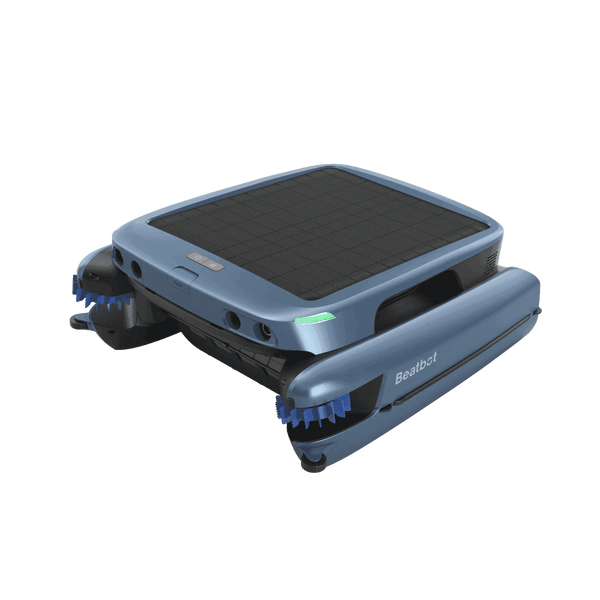
Pair it with a dedicated skimmer. The Beatbot Sora 30 cleans the floor, walls, waterline, and shallow areas, so adding the Beatbot iSkim Ultra robotic pool skimmer covers the water surface that the Sora 30 leaves untouched.
The iSkim Ultra is built for pools near trees or in windy areas, removing floating leaves and debris before they sink. For a pool with little overhead foliage, skimming by hand net before the leaves waterlog is enough.


