


 Flagship

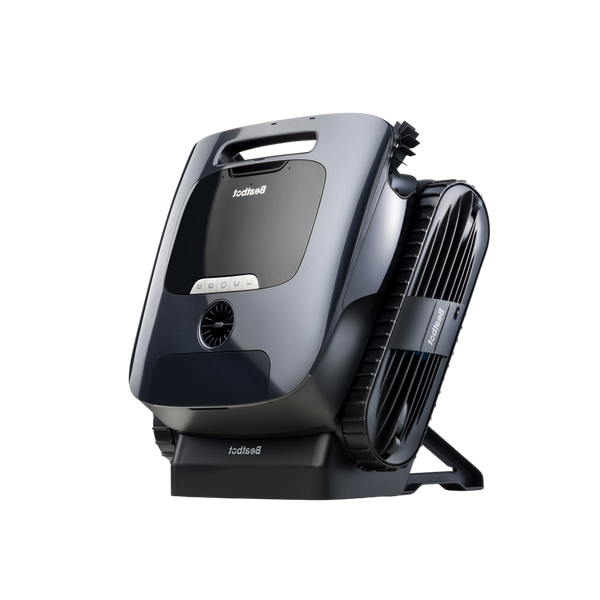

 Sora Series


 AquaSense Series


 Skimmer & Bundle

 Retail Edition


 Accessories


 Extended Warranty


The price gap between a $250 entry-level robotic pool cleaner and an $800-plus premium model reflects real differences in where the robot cleans, how it navigates, how long it lasts, and how much manual work remains after each cycle. The right tier comes down to pool size, debris load, and how much of that remaining work you are willing to do yourself.
What a $200 to $500 Robotic Pool Cleaner Gets You
Entry-level robotic pool cleaners are floor-focused machines. They pick up leaves, dirt, and debris that settle at the bottom of the pool without requiring a pump connection or a hose.
Most are cordless or use a short tether, which makes them easy to drop in and pull out. For above ground pools or compact in ground pools with simple shapes and light debris, that coverage is sufficient.
Navigation relies on basic random-bounce or simple systematic patterns rather than any form of mapping, so the robot may miss sections of the pool on a given run and rarely climbs walls past the waterline.
Filtration handles larger particles well but leaves finer debris like pollen, fine sand, or algae spores in the water. Debris baskets are smaller, requiring more frequent emptying during heavy debris seasons.
Durability reflects the cost target. Most budget pool robots have realistic lifespans of two to three years with regular use.

What $800 to $2,000+ Adds
Premium robotic pool cleaners extend cleaning coverage to pool walls, the waterline, and in some models, the water surface. Algae, body oils, sunscreen residue, and organic buildup concentrate at the waterline; a robot that stops at floor level leaves that ring for you to scrub manually.
Navigation uses ultrasonic sensors or, in the most advanced models, AI camera systems to map the pool and plan systematic cleaning paths. Coverage is more consistent across complex pool shapes, including L-shapes, kidney pools, and pools with raised platforms and shallow entry zones.
Filtration in premium models often reaches 3 µm, versus 100 µm or coarser in budget units. Ultra-fine filtration captures fine sand, pollen, dead algae, and microscopic debris, resulting in noticeably cleaner water between chemical treatments.
Runtime spans four to seven hours per charge, and debris baskets are two to three times larger than budget equivalents, reducing mid-cycle interruptions. App connectivity adds scheduling, mode selection, and cleaning history. Most premium models carry longer manufacturer warranties.
Key Differences Between Cheap and Premium Pool Robots
The differences cluster in four areas that determine real-world performance: what the robot can reach, how well it filters, how it navigates, and how long it lasts. The table below sets the two tiers side by side across the dimensions that affect both cleaning quality and total ownership cost.
|
Feature |
Cheap Robotic Pool Cleaner ($200–$500) |
Premium Robotic Pool Cleaner ($800–$2,000+) |
|
Cleaning Coverage |
Floor only or limited wall climbing |
Floor, walls, waterline, and water surface (select models) |
|
Navigation |
Basic random or systematic bounce patterns |
Ultrasonic or camera-assisted path planning |
|
Filtration |
Standard mesh, larger particle capture |
Fine to ultra-fine (as low as 3 µm) |
|
Debris Basket |
Smaller capacity, more frequent emptying |
Larger capacity, fewer interruptions |
|
App Control |
None or basic Bluetooth-only scheduling |
Wi-Fi connected with scheduling, modes, and history |
|
Retrieval |
Manual pickup from pool floor |
Automated surface parking or smart retrieval systems |
|
Waterline Cleaning |
None or minimal |
Dedicated scrubbing cycle |
|
Lifespan (typical) |
2–3 years |
5–8 years |
|
Best For |
Small or above ground pools, light debris |
Large in ground pools, heavy debris, busy households |
Cleaning Coverage Is the Biggest Gap
The waterline collects oils, lotions, and organic film that cause the ring stain commonly called the bathtub line. Pool walls accumulate algae and fine debris between chemical treatments. A robot that cannot reach these zones leaves you brushing manually, which accounts for a significant share of pool maintenance time.
Budget robots are floor machines. Some claim wall climbing, but performance on slopes greater than 45 degrees is inconsistent. Premium robots are engineered to climb walls reliably, pause and scrub at the waterline, and in certain models, actively clean the water surface.
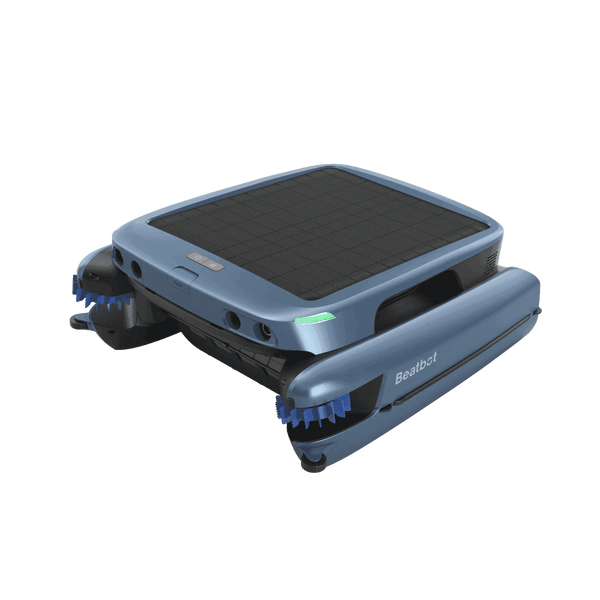
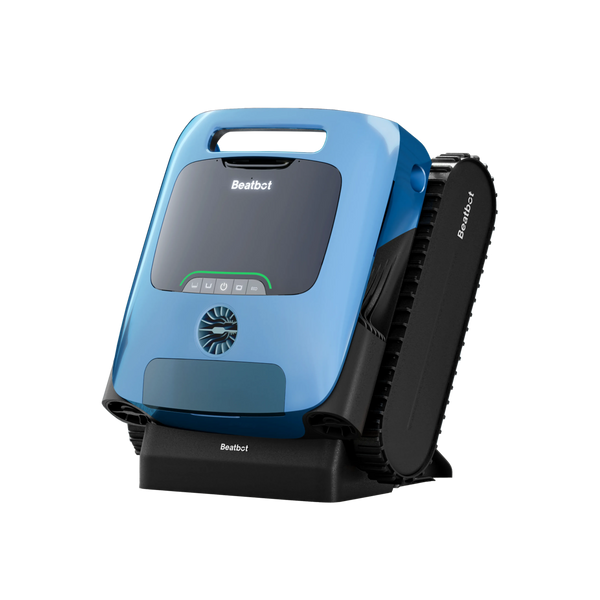
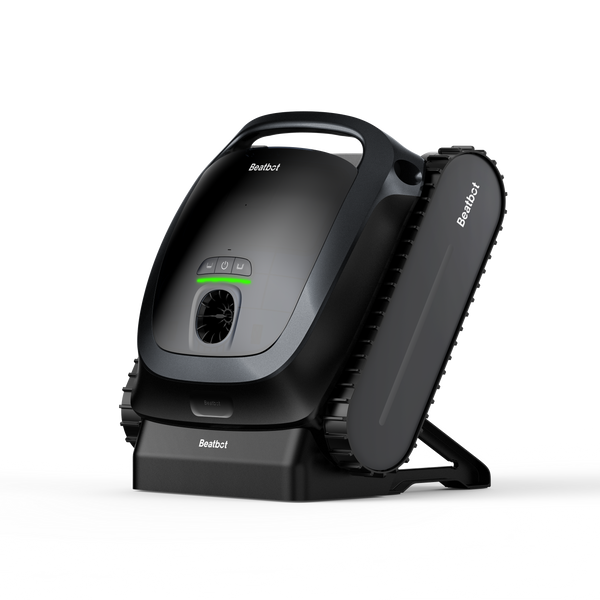
The Beatbot Sora 70 robotic pool cleaner is a specific example of how this coverage gap has been addressed in the mid-to-premium segment.
It covers four cleaning zones: the pool floor using optimized S-shaped path planning, walls with dual-group roller brushes rated for slopes from 0 to 90 degrees, the waterline with a dedicated scrubbing cycle, and the water surface using an industry-first JetPulse system that pulls floating debris inward using converging water jets.
It also handles shallow areas as low as 8 inches and raised platforms that most robots bypass.

When a Cheap Pool Robot Is the Right Choice
A budget robotic pool cleaner makes sense for small or above ground pools with simple rectangular shapes and light debris loads. If the pool stays chemically balanced with little effort and you are comfortable doing occasional waterline brushing yourself, paying more for coverage you do not need is a waste of money.
Budget robots also work as supplements. Some pool owners use an inexpensive robot for routine floor sweeping and handle surface and waterline maintenance manually or with a skimmer. In that context, the $200 to $500 price point delivers reasonable value for its defined role.
Where budget robots consistently fall short is the large in ground pool with heavy debris, irregular shapes, or persistent waterline buildup.
When a Premium Robotic Pool Cleaner Is Worth the Money
A premium robotic pool cleaner is worth the price when the pool is large enough that a budget model cannot finish in one cycle, when debris loads are consistently high, or when the manual maintenance left behind by a cheaper robot would cost more time than the price difference is worth.
Large pools above roughly 1,000 square feet need a robot with the runtime and navigation to complete the job in a single cycle. A budget robot may run out of battery or miss significant sections before finishing. The Beatbot Sora 70 covers up to 3,230 square feet on a single charge, which is enough for most residential in ground pools.
Pools with heavy debris from nearby trees, seasonal pollen, or frequent use by multiple people benefit from higher suction and larger capacity. The Beatbot Sora 70 delivers 6,800 GPH suction power, a 6-liter debris basket, and the option to switch between a 150 µm standard filter for daily cleaning and an optional 3 µm ultra-fine filter for precision water polishing.
Busy households benefit from automation features that do not appear at the budget tier. Smart surface parking allows the robot to rise to the water surface and navigate to the pool edge automatically. App-based scheduling and one-tap retrieval commands reduce the hands-on time to well under what any budget model requires.
Total Cost of Ownership Over 5 Years
A budget robot priced at $300 that lasts two to three years before needing replacement will cost $600 to $900 over five years, not counting replacement filters, potential repairs, or the time spent manually scrubbing zones the robot cannot reach.
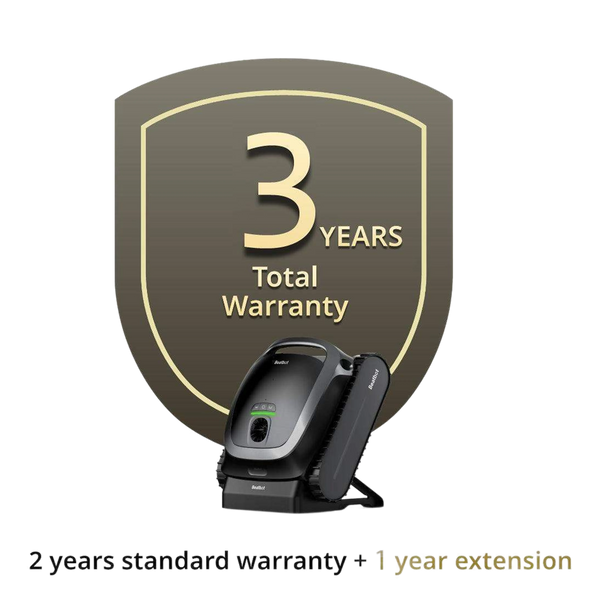
A premium robot priced at $800 with a five-to-eight-year lifespan costs the same or less over that window, with more complete cleaning, less manual maintenance, and reduced chemical clarifier use if the finer filtration offsets the need for additives. Longer manufacturer warranties lower the risk of out-of-pocket repair costs in the early years.
FAQs
Do robotic pool cleaners replace manual brushing completely?
Not entirely. Even premium robots that scrub walls and the waterline cannot reach every corner of a complex pool, and stairs, tight steps, and decorative features often still need occasional manual attention.
The difference is frequency: budget robots leave most non-floor brushing to you, while premium models reduce manual work to the occasional touch-up.
What filtration level do I actually need?
Standard 100–150 µm filtration handles leaves, twigs, insects, and general sediment. For visibly cloudy water, pollen-heavy seasons, or pools near construction, ultra-fine filtration at 3 µm captures particles standard filters miss and can reduce the need for chemical clarifiers.
How often should a robotic pool cleaner run?
Most pool owners run a robotic cleaner two to three times per week during the active swimming season, and once or twice a week during shoulder seasons. Higher-debris environments like heavily wooded yards may need daily runs. Premium robots with longer runtimes and larger debris baskets handle that frequency without mid-cycle interruptions.
Can a premium robot handle above ground pools?
Most premium robotic pool cleaners, including corded and cordless models, work with above ground pools. The performance gains from advanced coverage and filtration are less necessary in smaller above ground pools, so the value equation shifts toward budget options unless you have a large above-ground pool or specific water quality concerns.
What pool shapes and surfaces work with a robotic pool cleaner?
Most robotic pool cleaners work on standard pool surfaces including vinyl, fiberglass, concrete, and ceramic tile. Pool shape is the bigger variable: budget models perform best in rectangular pools, while premium models with ultrasonic or AI navigation handle L-shapes, kidney pools, freeform designs, and pools with raised platforms or shallow entry zones more reliably.


