Most Popular


 Sora Series


 AquaSense Series

 Skimmer & Bundle

 Retail Edition


 Accessories


For many residential pools, the difference between a 1 HP and 1.5 HP pool pump is smaller than it seems. A 1 HP pump is often enough for pools with simple plumbing and standard circulation needs, while a 1.5 HP pump makes more sense for larger pools, higher system resistance, attached spas, or water features.
The right choice depends less on horsepower alone and more on flow rate, Total Dynamic Head (TDH), filter capacity, and pipe size. A bigger pump is not automatically better, and oversizing can increase energy use without improving filtration.
Why Horsepower Is Not the Whole Story
Horsepower tells you how much power the motor draws, not how much water the pump actually moves. What matters for your pool is flow rate in gallons per minute (GPM), and flow rate depends on both the motor's power and the resistance in your plumbing system.
Two pumps with different horsepower ratings from different manufacturers can produce nearly identical GPM at the same system resistance. A pump that is engineered for high efficiency at lower power can outperform a higher-horsepower model from a different product line.
This is why pool professionals size pumps by GPM at your system's Total Dynamic Head (TDH), not by horsepower alone. Once you know the flow rate your pool needs and your system's TDH, you can match those numbers to a pump's performance curve and pick the right unit regardless of what the HP label says.
What the Actual Flow Rate Difference Looks Like
At typical residential TDH values of 30 to 50 feet of head, the GPM gap between a 1 HP and 1.5 HP pump in the same product line tends to be around 10 to 20 GPM. That translates to a meaningful difference in turnover time for larger pools, but a negligible one for smaller pools that either pump handles comfortably.
For a 15,000-gallon pool needing one turnover in 8 hours, you need at least 31 GPM. Both a 1 HP and a 1.5 HP pump deliver well above that threshold. The extra capacity of the 1.5 HP pump sits unused. For a 25,000-gallon pool, the minimum is 52 GPM. At 40 feet of TDH, a 1 HP pump may be near its limit while a 1.5 HP pump has headroom to spare. That is where the upgrade genuinely earns its place.
|
1 HP Pump |
1.5 HP Pump |
|
|
Best Pool Size |
10,000–20,000 gallons |
20,000–30,000 gallons |
|
Typical Flow Rate (at 40 ft TDH) |
40–55 GPM |
50–70 GPM |
|
Energy Use |
Lower |
Higher |
|
Works With Spas or Water Features |
Sometimes |
More reliably |
|
Oversizing Risk |
Lower |
Higher if pool is small |
|
Variable-Speed Option Available |
Yes |
Yes |

When 1 HP Is Enough
A 1 HP pump is the right choice for most pools between 10,000 and 20,000 gallons with straightforward plumbing, a single filtration loop, and no attached spa or water features. At standard above-ground pool TDH values of 20 to 30 feet, a 1 HP pump delivers ample GPM and runs efficiently without oversizing the system.
Oversizing is a real problem. A pump that moves more water than your filter is rated for pushes water through the media too quickly for proper filtration. It also creates higher velocity at suction points like the main drain, which is a safety concern, and it draws more electricity without improving water quality. If a 1 HP pump meets your pool's turnover requirement at your system's TDH, there is no reason to go larger.
When 1.5 HP Makes a Real Difference
The 1.5 HP pump earns its value in four specific situations. First, pools larger than 20,000 gallons where a 1 HP pump cannot hit the required GPM at the system's actual TDH. Second, pools with an attached spa that runs on the same pump, which requires higher flow to heat and circulate a smaller water volume quickly. Third, pools with long pipe runs or multiple valves and fittings that push TDH above 50 feet. Fourth, pools with waterfalls or water features that add resistance and demand more consistent pressure.
Outside those four situations, the 1.5 HP pump's extra output mostly generates higher electricity use rather than cleaner water.
Pool Size Reference Guide
Use the table below as a starting point. Your actual system TDH, pipe diameter, and filter rating all affect the final answer.
|
Pool Volume |
Recommended HP |
Notes |
|
Under 15,000 gal |
3/4 HP or 1 HP |
Most above-ground and small in ground pools |
|
15,000–20,000 gal |
1 HP |
Standard residential in ground pools |
|
20,000–30,000 gal |
1–1.5 HP |
Depends on TDH and plumbing layout |
|
30,000+ gal |
1.5–2 HP |
Large pools, pools with spas or water features |
Pipe diameter also limits what the pump can deliver. A 1.5-inch pipe maxes out at around 60 GPM regardless of pump size. If your pool has 1.5-inch plumbing and your 1 HP pump is already close to that ceiling, a 1.5 HP pump will not help. Moving to 2-inch pipe, which handles up to 100 GPM, is the more effective upgrade in that case.
Variable-Speed Pumps Change the Calculation
Variable-speed pumps largely make the 1 HP vs. 1.5 HP debate less relevant. A variable-speed pump adjusts its RPM to deliver exactly the flow rate your pool needs at any given time. During routine filtration it runs slowly and quietly, drawing far less electricity than a single-speed pump of any horsepower. When higher flow is needed for backwashing or running features, it ramps up.
Many U.S. states now require variable-speed pumps for new or replacement installations over 1 HP. If you are buying new, a variable-speed model is worth considering before committing to either horsepower rating in a single-speed unit.
What Your Pump Does Not Cover
A properly sized pool pump handles water circulation and filtration, but it does not remove leaves, dirt, and debris sitting on the pool floor, walls, waterline, or surface. That part of pool maintenance still requires separate physical cleaning.
For many pool owners, a robotic pool cleaner is the most practical way to handle that side of maintenance. It works alongside the pump system rather than replacing it, helping keep debris from building up on pool surfaces while the pump focuses on circulation and filtration. This makes the overall system easier to manage and helps reduce the organic load that would otherwise stay in the pool.
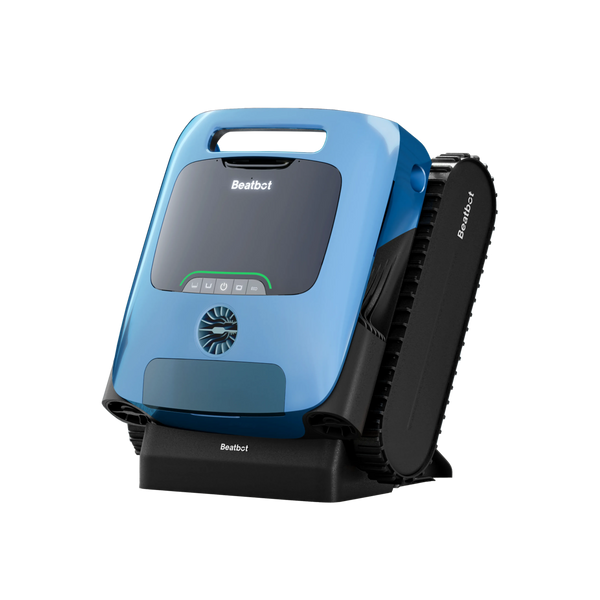
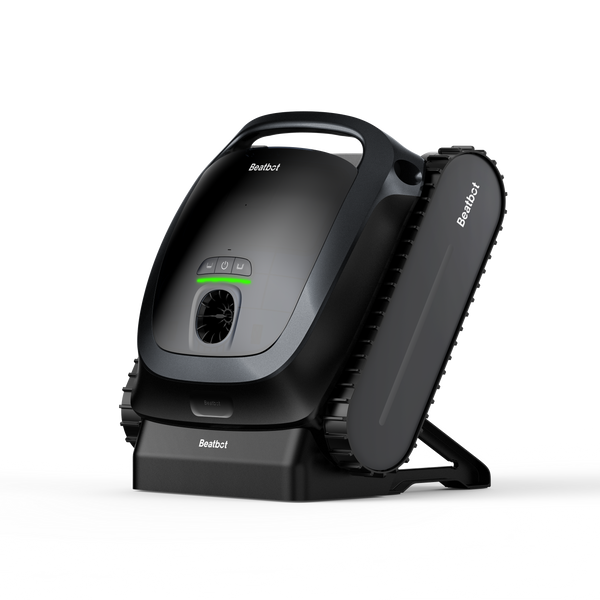
The Beatbot Sora 70, Sora 30, and Sora 10 are cordless robotic pool cleaners designed to complement a properly sized pump setup. The Sora 70 is the better fit when surface debris is also a concern, while the Sora 30 and Sora 10 are better suited to underwater cleaning across areas such as the floor, walls, and waterline. If your pool includes shallow platforms or steps, the Sora 30 and Sora 10 are designed to handle those zones as well.
In other words, the pump and the robot do different jobs. The pump keeps water moving through the filter, while the robotic cleaner handles the debris and buildup the circulation system does not remove on its own. For a complete pool care setup, the two work best as complementary parts of the same maintenance routine.
FAQs
Is a 1.5 HP pool pump better than a 1 HP pump?
Not necessarily. A 1.5 HP pump delivers more flow at any given system resistance, but only pools that require that extra flow benefit from it. For pools under 20,000 gallons with simple plumbing and no attached spa, a 1 HP pump typically provides everything needed. Upsizing to 1.5 HP without needing the extra flow raises electricity use without improving water quality.
Can I replace my 1 HP pump with a 1.5 HP?
Yes, but check three things first. Your filter must be rated for the higher flow rate the 1.5 HP pump will produce. Your plumbing pipe diameter must support the increased GPM without exceeding the pipe's maximum flow capacity. And your electrical setup must supply the correct voltage, since some 1.5 HP pumps require 230V rather than 120V.
Does a 1.5 HP pump use significantly more electricity?
A 1.5 HP pump draws more power than a 1 HP pump running at full speed. The actual cost difference depends on how many hours per day the pump runs and your local electricity rate. Variable-speed versions of both sizes can run at lower speeds for routine filtration, which cuts energy use substantially regardless of the rated horsepower.
What happens if my pool pump is too powerful?
An oversized pump can push water through the filter faster than the media can clean it, reducing filtration quality. It also creates higher velocity at suction points like the main drain, which is a safety concern, particularly for children. Higher flow than your pipe diameter supports produces turbulence and backpressure that can stress fittings and reduce the pump's actual output.
Do I need a bigger pump if I add a spa or water feature?
Possibly. Spas and water features add resistance to the system and often require higher flow rates than a standard filtration loop. If your current 1 HP pump is already near its capacity for the pool alone, adding a spa on the same loop may require upgrading to 1.5 HP or separating the spa onto its own pump.