Most Popular


 Sora Series


 AquaSense Series

 Skimmer & Bundle

 Retail Edition


 Accessories


Clear, comfortable pool water isn't a mystery—it's a routine. To keep perfect pool water balance, you need consistent pool water testing and a straightforward plan for what to do with the results. This guide breaks down pool water chemistry in plain English so you can maintain pool water balance with fewer surprises, fewer last-minute fixes, and a lot more confidence.
What Pool Water Balance Really Means (and Why Testing Matters)
“Balanced water” sounds like pool-pro talk, but it's actually simple: your key water levels stay in healthy ranges at the same time. When one drifts, it can throw the rest off.
You'll usually notice imbalance fast. Water turns dull or cloudy, algae pops up, eyes sting, surfaces feel rough, or equipment starts scaling. And that strong “chlorine smell” doesn't always mean the pool is extra clean—sometimes it's a sign something isn't working as well as it should.
Regular testing keeps you in control. Instead of guessing and tossing in chemicals, you spot small changes early and make small corrections. That's what makes pool care feel steady instead of stressful.
Key Pool Water Levels You Need to Test Regularly
You don't need a lab setup. You just need to track a handful of numbers that affect comfort, clarity, and long-term wear on your pool.
Exact targets can vary by pool type and sanitizer system, so use the ranges below as typical guidelines and follow your product or system recommendations if they differ.
|
Parameter |
Ideal range (typical) |
If too low |
If too high |
|
pH |
~7.2–7.8 |
Water can feel harsh; corrosion risk increases; sanitizer may act “too strong” |
Cloudy water and scaling risk; sanitizer may be less effective |
|
Total Alkalinity |
~80–120 ppm |
pH swings easily and becomes hard to control |
pH can feel “stuck”; scaling/cloudiness becomes more likely |
|
Sanitizer (e.g., free chlorine) |
System-dependent |
Higher algae risk; unsafe water; odor can show up |
Irritation; wasted chemical; faster wear on some components |
|
Calcium Hardness |
~200–400 ppm (varies) |
Etching/corrosion risk for some surfaces |
Scaling, cloudiness, rough surfaces |
|
Stabilizer (CYA) |
~30–50 ppm (outdoor chlorine pools) |
Sun burns off chlorine too quickly |
Chlorine can be less effective unless managed properly |
A homeowner-friendly way to think about it:
-
Comfort is most sensitive to pH and sanitizer.
-
Clarity depends on sanitizer effectiveness, balanced pH, and how much debris is breaking down in the water.
-
Surfaces and equipment are affected over time by pH and calcium hardness (scale vs. corrosion).
How Often Should You Test Pool Water?
The best schedule is the one you'll actually keep.

A simple baseline that works for most pools
During swim season, testing at least weekly is a solid minimum for most homeowners. If you're dealing with cloudy water, algae, or fast pH swings, bump it up to two or three times a week for a short stretch. That extra data helps you avoid overcorrecting.
“Trigger” testing (when you should test more often)
Some weeks, your pool changes faster. A quick extra test is worth it when any of these happen:
-
A heat wave or sudden temperature jump
-
Heavy rain, storms, or windy weather
-
A pool party or heavy swimmer load
-
You add a large amount of fresh water
-
You make a major chemical adjustment
-
The water looks or feels off (cloudy, slippery, unusual odor)
Seasonal considerations
Peak season usually means more sun, more swimmers, and more debris—so your water shifts faster. Shoulder seasons can be sneaky: chemistry drifts slowly, then problems show up when you're not paying attention. If you open or close your pool seasonally, treat those weeks as “high-change windows” and test more often until things settle.
How to Test Pool Water Correctly
Testing doesn't have to be complicated, but it does need to be consistent. A lot of “impossible pool” stories come down to sampling and timing.
The basics that improve accuracy immediately
-
Test around the same time each time you test. Random timing makes results harder to compare.
-
Pull the sample from the right spot—away from returns and skimmers, about mid-depth.
-
Follow the timing instructions on strips and kits. A few seconds early or late can change what you think you're seeing.
Choosing the right testing method
There's no universal best option—just the best fit for your habits.
Test strips work well for quick check-ins and trend tracking. They're convenient, but they're also easier to misread, especially in poor light or if you don't follow the timing.
Liquid test kits are a better choice when you want more accuracy. They're especially helpful when you're trying to dial in pH or troubleshoot recurring issues. The tradeoff is time and technique.
Digital or automated testing options can be a great fit if consistency is your biggest struggle. They help reduce human error and make it easier to stay on schedule. The tradeoff is setup, storage, and ongoing device care.
Common testing mistakes to avoid
If your numbers keep bouncing around, check the process before assuming the pool is the problem:
-
Sampling too close to jets or the skimmer
-
Reading strips too early/late or in poor lighting
-
Using expired reagents or storing them in heat/humidity
-
Testing immediately after adding chemicals
-
Not recording results—so you miss patterns and end up chasing numbers
A quick note in your phone is enough. Once you can see a pattern, the pool gets a lot easier to manage.
How to Adjust Pool Water Balance Based on Test Results
This is where most people stall: “Okay, I tested… now what?” The trick is to correct in an order that keeps your next test meaningful.
Why adjustment order matters
Some levels act like a foundation for others. If you try to fix pH while alkalinity is unstable, pH can swing right back and you'll feel like you're spinning your wheels.
A simple adjustment sequence you can rely on

For most pools, this order prevents the most frustration:
-
Total alkalinity first
-
pH second
-
Sanitizer last
That doesn't mean other levels don't matter. It just keeps your corrections from fighting each other.
Practical decision guidance
Use product directions for dosing, but keep your approach steady: adjust, circulate, retest.

If alkalinity is low:
pH tends to bounce. Raise alkalinity gradually, circulate, and retest before making big pH changes.
If alkalinity is high:
pH can feel stubborn. Make careful adjustments, and don't stack multiple changes without retesting.
If pH is low:
Water can feel harsh and corrosion risk goes up over time. Bring pH up slowly, then confirm it holds.
If pH is high:
Cloudiness and scaling become more likely. Lower pH, circulate, and retest to make sure it stays in range.
If sanitizer is low:
Treat that as urgent for safe swimming and algae prevention. Restore sanitizer to your target, then test more frequently until it holds.
If stabilizer (CYA) is off:
Too low and sunlight burns off chlorine fast. Too high and chlorine can be less effective unless managed correctly. Think of stabilizer as a longer-term setting—not something you want to swing up and down.
If calcium hardness is off:
This one is about long-term protection: too low can stress some surfaces; too high encourages scale. Correct gradually and keep the overall system stable.
Chemical handling safety rules
-
Never mix pool chemicals together
-
Add chemicals separately, with time in between, and only as directed
-
Avoid big, one-time corrections that swing multiple levels
-
Store chemicals sealed, dry, and away from heat
-
If anything reacts unusually (heat, fumes, clumping), stop and reassess before adding more
Common adjustment mistakes (and how to avoid them)
If you've ever felt like you're “chasing your tail,” it's usually one of these:
-
Adjusting pH before alkalinity is stable
-
Changing multiple things at once without retesting
-
Retesting too soon and overcorrecting
-
Treating cloudy water without confirming what's actually off
-
Fixing symptoms repeatedly instead of addressing the drift pattern underneath
When in doubt: small change → circulate → retest → repeat.
Common Pool Water Balance Problems and How Regular Testing Prevents Them
Most pool issues aren't random. They're drift plus timing. Regular testing helps you catch drift early—before it turns into a weekend project.

Cloudy water
Cloudiness often shows up when sanitizer isn't doing its job effectively, pH is out of range, or there's a lot of fine debris breaking down in the water.
Start by checking sanitizer and pH. If you suspect scale (rough surfaces, chalky film), take a closer look at alkalinity and calcium hardness too. Weekly testing, plus quick trigger tests after storms or heavy use, usually prevents the slow slide into cloudy water.
Algae growth
Algae is often a “window of opportunity” problem: sanitizer dips, the water warms up, debris feeds growth, and it takes off.
Check whether sanitizer is staying stable over time—not just a single reading. Then review pH and stabilizer (for outdoor pools), since they affect sanitizer performance. Testing more often during hot spells and high-use weeks can keep algae from getting a foothold.
Rapid pH swings
Fast pH movement usually points back to alkalinity—or inconsistent timing with testing and adjustments.
Check alkalinity first. Then look at your routine: are you testing at random times, or retesting too soon after adding chemicals? Stabilizing alkalinity and making smaller moves typically calms the “pH yo-yo.”
Strong chemical smell despite “normal” readings
A strong smell can show up when water quality is off even if things look fine at a glance. Confirm sanitizer and pH, then think about what changed recently—heavy bather load, storms, or extra debris. Consistent testing and steadier maintenance make this a lot less common.
Building a Simple Pool Water Testing Routine You Can Stick To
The best routine isn't fancy—it's repeatable.
A routine that's easy to keep
Pick one weekly test day and stick to it. Tie it to something you already do (Saturday morning, yard day, trash night). Record results so you can spot drift early. Then use your trigger list—storms, parties, major adjustments—as your rule for a quick extra test.
Reduce the variables that make balance harder
Even if you test perfectly, water balance won't stay steady if the pool is constantly being re-contaminated.
Debris, fine particles, and sediment increase sanitizer demand. Organic buildup can make results fluctuate and turn simple adjustments into a back-and-forth cycle. The cleaner the pool stays between tests, the more predictable your chemistry becomes.
A natural way to reduce workload without changing your testing plan

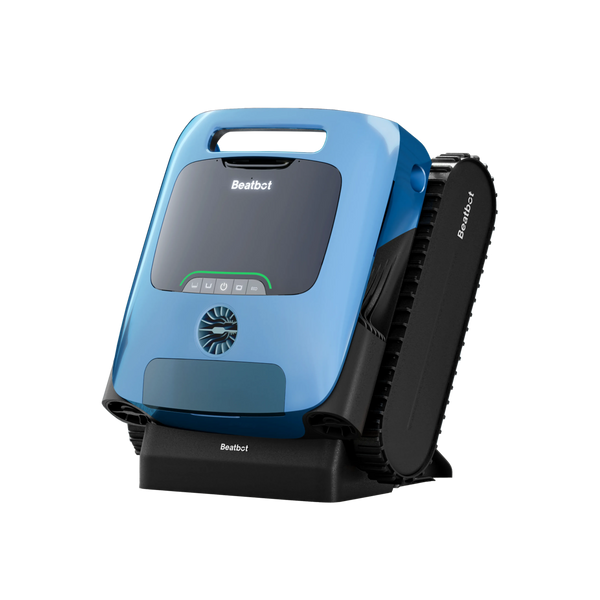
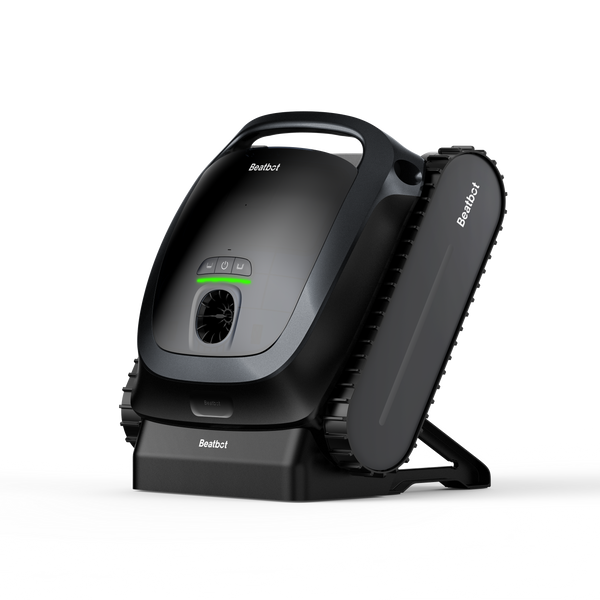
Some pool owners make water balance easier by reducing how much debris breaks down in the water between tests. Automated cleaning solutions such as Beatbot pool cleaning robots can support a stable testing routine by regularly removing debris from the pool floor and walls.
If you're considering an automated option, focus on day-to-day usability. Features like cordless operation, self-contained battery power, and fully automated cleaning cycles help keep the pool consistently clean without adding another chore to your weekly schedule.
What that often means in practice:
-
Fewer surprise chemistry swings tied to organic debris
-
More consistent test results from week to week
-
An easier path into maintenance mode, with fewer “surprise fixes”
Automated cleaning supports water balance, but it doesn't replace testing or chemical adjustments. It just takes some of the grind out of staying consistent.
How to Know When Your Pool Water Is Balanced (and When You're in Maintenance Mode)
Balanced water isn't one perfect reading. It's stability over time.
What “balanced” looks like in practice
Your key readings stay in range across multiple tests. The water stays clear and comfortable. And you're making fewer corrections overall.
Signs you've moved from correction to maintenance
You'll feel the shift when:
-
Consecutive tests stay within your target ranges
-
Adjustments get smaller and less frequent
-
The same issues stop repeating (cloudiness, algae, pH swings)
What changes in maintenance mode
Maintenance mode is calmer by design. You test on schedule, respond to triggers, and avoid panic-fixing every small fluctuation. The goal becomes early detection and steady consistency—so balance stays in place instead of constantly being rebuilt.
FAQs
What is the ideal pool water balance?
Ideal pool water balance means pH, alkalinity, sanitizer, and hardness stay in healthy ranges together so the water stays clear, comfortable, and stable over time.
How often should I test my pool water?
For most pools, pool water testing at least weekly during swim season is a solid baseline, with extra tests after storms, heavy use, heat waves, or major chemical adjustments.
Can I rely on test strips alone?
Test strips are fine for quick checks and trend tracking, but a liquid test kit (or a reliable digital option) is better when you need accuracy to maintain pool water balance confidently.
How long should I wait before retesting after adding chemicals?
Give the water time to circulate and mix thoroughly, then retest before making another major change. Retesting too soon is a common reason people overcorrect pool water chemistry.
Why does my pool water keep going out of balance?
Most often it's inconsistent testing, adjusting in the wrong order, or making multiple changes at once—plus debris and heavy use that increase sanitizer demand and destabilize pool water balance.