Most Popular


 Sora Series


 AquaSense Series

 Skimmer & Bundle

 Retail Edition


 Accessories


Pool opening chemicals do not need to turn into a guessing game. Most pools open cleanly when four decisions happen in the right order. Know which chemicals belong on the opening list.
Know which ones only make sense in certain conditions. Know the order to add them. Wait to swim until chlorine is back in a normal range. For most backyard pools, the real plan is shorter than many opening kits suggest.
Test the water, balance alkalinity and pH, shock the pool, then use sanitizer, stabilizer, clarifier, flocculant, or algaecide only when the water actually needs them.
What Pool Opening Chemicals Do You Actually Need?
Most pool owners need a test kit, alkalinity increaser, pH increaser or decreaser, shock, sanitizer, and a way to correct calcium hardness if that reading is off. That is the core set of pool opening chemicals.
Those products handle the balance and sanitation work that the rest of the opening depends on.
A second group only matters when a specific problem shows up. That group includes metal sequestrant, clarifier, flocculant, algaecide, and extra stabilizer. These products have a place, but they are not automatic opening chemicals for every pool. Opening a pool is not about pouring in more products. It is about using the right products for the water you actually have.
Starter kits can still make sense when convenience matters more than precision. The downside is easy to see. A kit may include chemicals your pool does not need right away. If you already use stabilized chlorine, extra cyanuric acid may not belong on opening day. If your pool has no stain history, a metal sequestrant may stay on the shelf. If the water clears after shock and filtration, clarifier or flocculant may never be needed.

What Order Should You Add Pool Chemicals?
Balance first, then shock. That order keeps the opening cleaner and cuts down on wasted chemicals.
-
Test the water.
-
Handle metal risk early if your pool has it.
-
Adjust total alkalinity.
-
Adjust pH.
-
Adjust calcium hardness if needed.
-
Shock the pool.
-
Run the filter, then retest.
-
Move into your regular sanitizer plan.
-
Add stabilizer only if your setup needs it.
One part of the process gets skipped all the time. Let each chemical circulate before adding the next one. A good working rule is at least 30 minutes between additions with the pump and filter running. Then retest before moving on. Shock often needs longer, so the label on that product still sets the timing for that step.
The order itself is not random. Alkalinity helps hold pH steady, so it comes first. pH needs to be in range so chlorine can work the way it should. Calcium hardness protects surfaces and equipment, though it is not as urgent as sanitizer and pH.
Shock comes after balance, not before it. Routine sanitizer and extra stabilizer make more sense after the heavy cleanup work is done. In a saltwater pool, salt comes after the opening shock has finished working and chlorine has dropped back into a normal range.

How Much Shock Do You Need, and When Is It Safe to Swim?
A pool opening usually takes more shock than routine weekly care. A common opening target is a double shock, which means two pounds of pool shock per 10,000 gallons of water.
That opening dose is meant to kill algae spores, bacteria, and winter buildup fast enough to reset the water. The final dose still has to match your pool volume and the product label in your hand.
The type of shock matters too. Cal hypo is often a strong fit for green water or algae heavy openings. Liquid chlorine or dichlor can make more sense for some saltwater pools, since extra calcium is not always a good fit there. Small pools need extra care with dosing. A standard bag can push chlorine too high very quickly in a low volume pool.
Swim timing depends on the product used and the chlorine reading after treatment. The practical rule is to wait until free chlorine returns to a normal operating range before anyone gets in.
For many residential pools, that means 1 to 3 ppm. If you use cal hypo, eight hours is a common minimum wait. In many openings, the safer move is to wait until the next day and retest.
A few safety rules do not change. Add shock with the pump running. Wear gloves and goggles. If you use cal hypo, add it at night or near dusk so sunlight does not burn it off too quickly. Never add pool shock to the skimmer. Shock and residual chlorine can react in a tight space and create a serious gas hazard.

Do You Need Clarifier, Flocculant, Algaecide, or Metal Sequestrant?
These are situational chemicals. They solve specific opening problems. They do not belong in every pool by default.
Clarifier makes sense for mild cloudiness after shock and filtration. It works by clumping very small particles into larger ones that the filter can catch. It is easy to use and it does not require manual vacuuming, but it works more slowly.
A clarifier often needs a day or more to finish the job, and it works best after the water is balanced and any algae problem has already been handled.
Flocculant is the stronger option for stubborn cloudiness. It pulls fine particles together quickly and drops them to the pool floor.

That speed comes with more work. You have to vacuum the settled material out manually, usually on the waste setting, and you will lose some water in the process.
Floc is not a fit for cartridge filter systems. If your pool is only a little cloudy, clarifier is usually the cleaner choice. If the water is packed with fine suspended debris and you want a faster reset, floc can do more.
Algaecide can help, but it gets misunderstood all the time. It works better as prevention or as a way to contain an early bloom. It is not the main opening fix for established algae, and it will not fully kill algae on its own. If algae is already present, shock is the first move that matters. Many pools do not need algaecide at opening if the water is balanced and shocked the right way.
Metal sequestrant belongs in a smaller group of pools. If you fill from well water, deal with rust colored or green staining, or know your water carries metal content, add it early in the opening process. Its job is to bind metal particles so they do not settle onto surfaces and leave stains.
| Product | Best used when | Not the right fit when |
| Clarifier | The pool is mildly cloudy after shock and filtration | You need a fast drop to the floor for manual vacuuming |
| Flocculant | Fine debris is suspended throughout the water and you want a faster reset | You have a cartridge filter or only light cloudiness |
| Algaecide | You want prevention or need help containing an early bloom | You are trying to fix established algae without shock |
| Metal sequestrant | Your pool has well water, metal content, or repeat staining | There is no real metal or staining issue |
How Do You Know the Water Is Balanced After Opening?
The water is balanced when the key readings are back in range and the pool looks clean enough to move from opening mode into normal maintenance. For most backyard pools, that means total alkalinity around 100 to 150 ppm, pH around 7.4 to 7.6, and free chlorine around 1 to 3 ppm.
Cyanuric acid usually lands around 30 to 50 ppm for most outdoor pools. Calcium hardness matters too, though it has more to do with long term protection than same day swim readiness.
Vinyl and fiberglass pools often sit around 175 to 225 ppm. Concrete and plaster pools often sit around 200 to 275 ppm.
In practice, the pool is ready when four things line up at the same time. The water is clear. Free chlorine is back in its normal range. pH is in range.
Your ongoing sanitizer plan is running, whether that means tablets, liquid chlorine, or a salt system. If you use stabilized chlorine, your CYA may already be covered, so there is no reason to add more just to add more.
This is where many pool owners create extra work for themselves. They keep adding products after the water has already moved into a good range. A clean opening is not about chasing perfect numbers with extra chemicals. It is about reaching safe, stable water and letting regular maintenance take over.
Do Above Ground and Inground Pools Need Different Opening Chemicals?
Most of the chemistry stays the same. Above ground pools still need balanced alkalinity, balanced pH, an opening shock, a normal sanitizer plan, and stabilizer if the system calls for it. Inground pools follow the same chemistry order.
The main difference is scale. Smaller above ground pools can swing harder from the same chemical dose, so measuring matters more.
A product amount that feels modest in a large inground pool can overshoot a small pool very quickly. That is one reason shock dosing and pH adjustment need more care in compact pools.
There is one useful exception. If your pool is a temporary seasonal setup that gets drained and refilled each year, calcium hardness is less urgent than it is in a permanent pool. Low calcium does its damage over time, so long term surface protection matters more in permanent installations.

How to Finish Pool Cleanup After Opening Chemicals
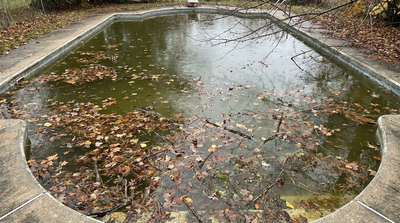
Once the chemistry is in line, the last job is physical cleanup. Brush the walls, skim the surface, and vacuum any debris that settled during the opening process.
If the water is still a little hazy after shock and filtration, a clarifier can help the filter finish the job. If the pool is carrying a heavy load of settled fine debris, manual vacuuming may still be the faster reset.
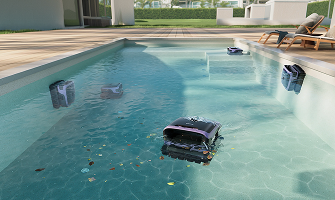
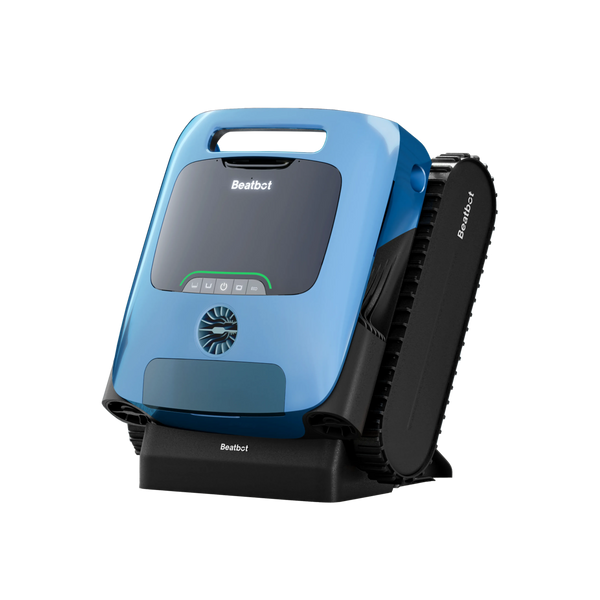
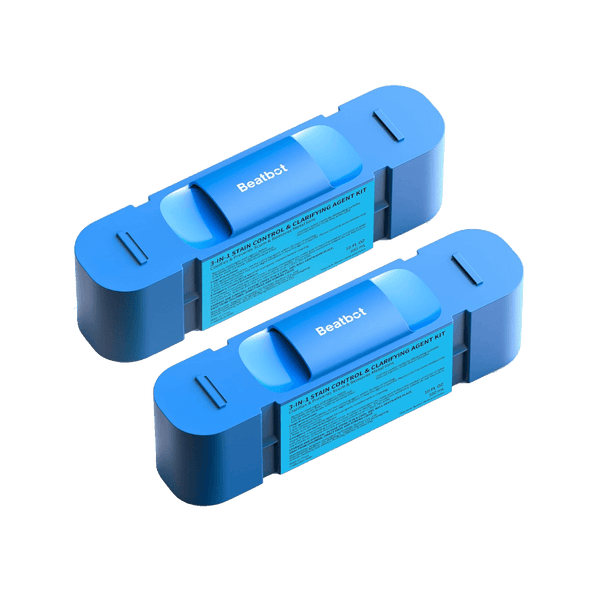
This is also where Beatbot AquaSense X and Beatbot Sora 70 start to make sense for different reasons. Beatbot AquaSense X fits the clarity side of the cleanup phase. Its ClearWater system uses AquaRefine, a natural clarifier made from recycled crab shells, to target fine particles, oils, metal ions, and scale.
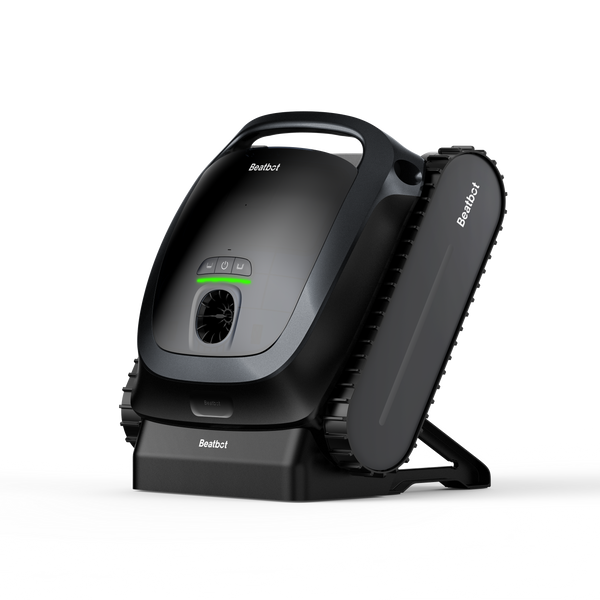
Beatbot Sora 70 fits the debris side. Its JetPulse twin-jet skimming is built to pull floating debris inward instead of pushing it away, which makes it a better match for the leaves, pollen, and surface mess that often remain after opening.
Neither one replaces testing, balancing, shock, or sanitizer. They make more sense after the chemistry is handled, when the job shifts from water correction to cleanup.
FAQ
Do You Use Shock or Chlorine When Opening a Pool?
Use shock for the opening cleanup, then switch to your regular chlorine plan once free chlorine drops back into the normal range. Shock handles winter buildup and algae spores. Routine chlorine handles ongoing sanitation.
Should I Add Chemicals as Soon as the Pool Is Open?
Test the water first. Then start with alkalinity and pH, not with a random mix of opening chemicals. A clean opening comes from the right order, not from adding everything at once.
Do You Just Pour Shock Directly Into the Pool?
Follow the product label for the exact application method. Keep the pump running, wear protective gear, and never add shock to the skimmer. That is the one place shock should never go.
What Is Better, Flocculant or Clarifier?
Clarifier is better for mild cloudiness when you want the filter to do the cleanup. Flocculant is better for heavier suspended debris when you are willing to vacuum the settled material out manually.
How Much Algaecide Should You Add When Opening a Pool?
There is no universal opening dose, and many openings do not need algaecide at all. If you use it, follow the product label and use it for prevention or early algae pressure, not as a replacement for shock.
Can You Put Too Much Shock in Your Pool?
Yes. Too much shock can push chlorine above a safe swim level and delay the rest of the opening process. Match the dose to the pool volume and retest before swimming.