Most Popular


 Sora Series


 AquaSense Series

 Skimmer & Bundle

 Retail Edition


 Accessories


A drop in your pool water level is almost always evaporation, not a leak. A typical uncovered residential pool in the United States loses about a quarter-inch of water per day under normal summer conditions, and more during hot, dry, windy weather. The question is whether what you are seeing fits that range or points to something structural. A 24-hour bucket test, run against the benchmarks below, answers that question before you pay for leak detection.

How Much Water Evaporates From a Pool per Day?
Normal daily evaporation runs from 1/8 inch in cool coastal climates up to 1/2 inch in the arid Southwest during peak summer. The U.S. Geological Survey's pan evaporation data shows annual rates varying from under 30 inches in the Pacific Northwest to over 100 inches in the desert Southwest, which translates directly to pool surface loss in hot months. Pool size affects total gallons lost but not the inches-per-day rate: a 15-foot and a 40-foot pool in the same yard drop by the same amount each day.
A full summer in the arid Southwest commonly removes 15,000 to 25,000 gallons from an uncovered in ground pool. Winter losses are smaller but not zero, since cold dry air still pulls moisture from a warm pool surface.
|
Climate Zone |
Typical Daily Loss |
Weekly Loss Range |
|---|---|---|
|
Arid Southwest |
3/8 to 1/2 inch |
2 to 3 inches |
|
Humid Southeast |
1/4 inch |
1.5 to 2 inches |
|
Midwest and Plains |
1/4 to 3/8 inch |
1.5 to 2.5 inches |
|
Coastal and Northeast |
1/8 to 1/4 inch |
1 to 1.5 inches |
Losses within the range for your region are evaporation. Consistent losses above the top of the range signal something else.

What Makes a Pool Evaporate Faster?
Four conditions accelerate evaporation: high water temperature relative to air, low humidity, direct sun, and wind across the surface. When all four line up, a pool can lose close to half an inch in 24 hours without anything being wrong. Late summer and early fall produce the biggest overnight drops because cool nights widen the temperature gap while the water is still warm from the day.
Wind matters more than most of the other variables combined. A steady breeze sweeps away the humid air that otherwise settles above the surface, replacing it with drier air and accelerating the rate at which water leaves the pool. An exposed yard can evaporate noticeably more than the same pool sheltered by fencing, landscaping, or a windbreak. Heaters, attached spas, and water features such as fountains or waterfalls compound the effect by raising surface temperature and increasing exposed surface area.
Heavy swimming in hot weather adds to the total through splash-out, which is not evaporation but shows up the same way on the waterline. Heat waves can briefly double your normal loss rate until the weather resets.
How Do I Tell if It's Evaporation or a Leak?
The bucket test separates evaporation from a leak by exposing a container of pool water and the pool itself to the same weather for 24 hours, then comparing how much each dropped. The Florida Swimming Pool Association recommends this as the first step before calling for leak detection.
To run the test, fill a five-gallon bucket with pool water and set it on the top step of the pool so the bucket sits partially submerged. Mark the water level inside the bucket with tape or a waterproof marker, then mark the pool water level on the outside of the bucket at the same moment. Turn off the pump and any water features. Wait 24 hours without swimming and without rain, then compare the two marks.
If the inside and outside marks dropped by the same amount, both the pool and the bucket lost water to evaporation, and you do not have a leak. If the pool level outside the bucket dropped noticeably more than the water inside, a leak is likely somewhere in the pool shell, plumbing, or equipment.
Repeat the test with the pump running to narrow down whether the leak is in the circulation system versus the pool structure itself. A significantly bigger drop with the pump on points toward a pressure-side plumbing leak.

What Are the Signs of a Pool Leak?
A leak rarely shows up only as a dropping water level. Wet spots or soft ground in one section of the deck, persistent puddles at the equipment pad, and visible mineral deposits around fittings or lights each point to a specific leak location worth checking before you run the bucket test.
Inside the pool, look for cracks in the plaster or liner, especially around returns, skimmers, lights, and stair tread corners. A leak at a specific fitting will often lower the water to that fitting and then stop, which is why a pool that drops to the level of the skimmer or light and holds steady is almost always leaking at that exact point. A pool that drops past a return fitting and keeps going has a leak below that point.
Chemistry behaves differently with leaks versus evaporation. Evaporation concentrates minerals, salt, and stabilizer because water leaves while those compounds stay behind, so you will see calcium hardness, cyanuric acid, and salinity creep upward over a month.
A leak dilutes these as you top off with fresh water, so persistently low salt readings on a saltwater pool, or chronically low CYA, can be a secondary clue that more water is leaving than evaporation alone can explain.
Where Do Pool Leaks Usually Happen, and What Does It Cost to Fix?
Most pool leaks happen at the points where two materials meet: around the skimmer throat where plastic bonds to concrete, at fittings for returns and main drains, behind light niches, and at seals inside the pump and filter housings. The pool shell itself fails less often than these connection points, which is why a dye test around fittings finds the source before excavation becomes necessary.
Repair costs follow the location more than the pool size. Data from Angi and HomeGuide puts skimmer seal repairs at roughly $100 to $250, pool light or gasket replacements at $100 to $450, and pump motor repairs at $50 to $300. Underground plumbing leaks run $500 to $1,500 because they usually require cutting into the deck or digging.
Full skimmer or main-drain replacement sits at the upper end, typically $1,200 or more. Professional leak detection itself adds $100 to $500 on top of the repair, and most pros credit the detection fee against the repair if they handle both.
Saltwater pool owners have one extra category to watch. A long-running leak at a return fitting or underground line dilutes salt concentration faster than top-offs can replace it, which can push the chlorinator into low-salt shutdown well before the water loss itself looks alarming.
How Do I Keep the Waterline Clean During High-Evaporation Months?
Heavy evaporation drops the water level below the original waterline, leaving a band of exposed tile coated with oils, sunscreen residue, pollen, and mineral deposits. Under direct sun, that residue hardens into the tile within days and turns progressively harder to remove. Scrubbing the waterline on every cleaning cycle is what stops the ring from curing, and the fastest way to do that without a hand brush is a robotic cleaner with a dedicated waterline mode.
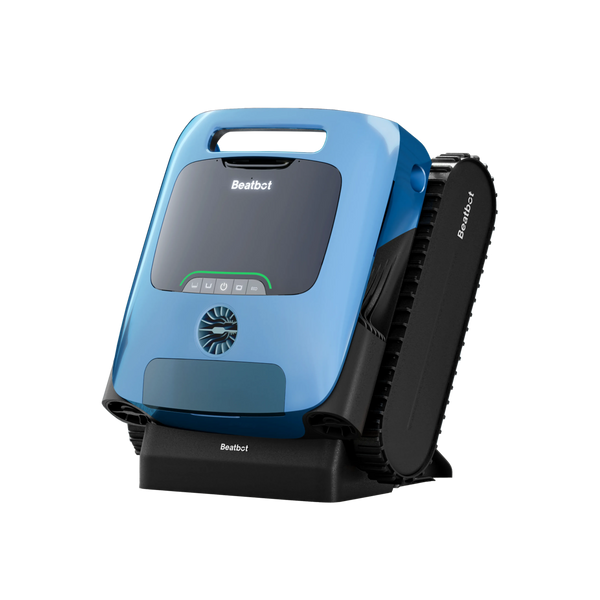
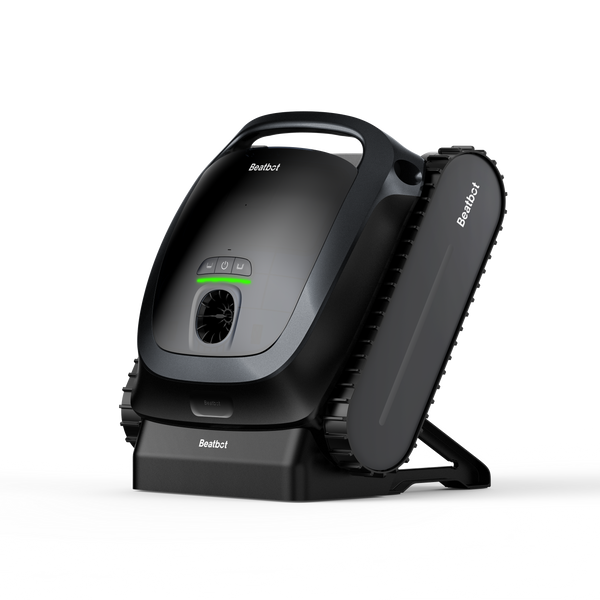
The Beatbot Sora 70 cordless robotic pool cleaner is built for this problem. Its Intensive Waterline Cleaning mode runs the brushes along the waterline on every cycle, lifting oils, lotions, and biofilm before they cure into the tile. The same pass covers floor, walls, and water surface, so a single session handles the full pool up to 3,230 sq ft on a 10,000 mAh battery. For pools with a tanning ledge or sun shelf, it also reaches platforms as shallow as 8 inches.
For pools without a surface-cleaning need, the Beatbot Sora 30 pool cleaning robot keeps the same floor, walls, and waterline coverage and reaches the same 8-inch shallow platforms, with a 4.5-hour runtime on a full cycle.
The Beatbot Sora 10 cordless pool cleaner adds Smart Waterline Parking: at the end of every cycle it moves itself to the pool edge and waits there for pickup within 10 minutes. During high-evaporation weeks when you are already lifting the cleaner out to check water levels and top off, that retrieval position removes the one part of the routine that wastes the most time.

When Should I Refill My Pool or Call a Professional?
Top off your pool whenever the water drops more than an inch below the middle of the skimmer mouth. Below that point, the skimmer starts pulling air, the pump loses prime, and both the filter and heater can be damaged in a matter of hours. Use a garden hose with the end below the water surface to avoid splashing, and add water slowly enough to test chemistry before rebalancing.
Call a leak detection professional if your bucket test shows a pool-side drop more than double the bucket-side drop, if you are losing more than half an inch of water per day across different weather conditions, or if you see wet ground, sinkholes, or undermined decking.
Pool leak specialists use pressure testing on plumbing lines and dye testing at suspected structural points, which isolates the source faster and cheaper than excavating the wrong area. Give the bucket test a full week of varied weather before drawing conclusions, since a single hot, windy day can double your normal loss and a single cool, humid day can mask a small leak.
FAQs
Can a Pool Lose More Than an Inch of Water Overnight From Evaporation Alone?
Yes, but only when several conditions line up at once. Hot water, cold dry air, strong wind, and a running water feature or heater can together push loss past an inch in 24 hours. A drop that size in normal weather suggests a leak or a sudden equipment failure, not evaporation.
Does a Pool Cover Really Reduce Evaporation?
A solid pool cover reduces evaporation by roughly 90 to 95 percent when in place, and even a basic solar cover cuts it by 50 to 70 percent. Covers also slow heat loss, which reduces the temperature gap that drives evaporation at night.
Why Does My Pool Lose More Water When the Heater Is Running?
A heater raises the water temperature above ambient air, which widens the vapor pressure gap and speeds up evaporation. Expect 20 to 40 percent higher daily loss on a heated pool compared to the same pool unheated, especially in cool weather.
Why Is My Inground Pool Losing Water but No Leak?
When the bucket test confirms no leak, the loss is coming from evaporation compounded by splash-out, backwash cycles, a running heater or spa spillover, or automatic top-off valves that failed in the off position. Check each of these in turn before scheduling professional leak detection. A single windy, 95 °F week alone can remove two inches of water from an otherwise sound pool.
Is It Normal for My Pool Water Level to Drop in Winter?
Yes. Cold, dry winter air still pulls moisture from a pool surface, and unheated pools typically lose 1/8 inch a day in winter across most of the country. An uncovered pool in a dry winter region can lose several inches a month. Winter cover installation reduces this loss by 90 percent or more.