Most Popular


 Sora Series


 AquaSense Series

 Skimmer & Bundle

 Retail Edition


 Accessories


For most pools, muriatic acid is the better routine choice. Both muriatic acid and dry acid lower pH, and both can reduce total alkalinity.
The real difference is what repeated use leaves behind. Dry acid adds sulfates to the water.
Muriatic acid does not add sulfates. That makes muriatic acid the better long term fit for salt pools, plaster pools, and any pool that needs frequent pH correction.
Muriatic Acid vs. Dry Acid for Pools
These two products solve the same short term problem, but they are not the same long term choice. Muriatic acid is liquid hydrochloric acid. Dry acid is usually sodium bisulfate in granular form.
If your only goal is to lower pH once, either one can work. If your pool needs acid regularly, the comparison changes.
Muriatic acid is the better default because it lowers pH without adding sulfates. Dry acid is easier to carry, store, and measure, which is why many pool owners find it less intimidating.
That convenience is real, but it matters less in a pool that needs acid over and over through the season.
What Each One Leaves in the Water
The clearest way to compare these acids is to look at what stays in the water after the pH correction is done.
Dry Acid Adds Sulfates
Dry acid adds sulfate every time you use it. A small one time dose is usually not the issue. The problem starts when dry acid becomes the main acid for a pool with steady pH drift. In that setup, sulfate keeps accumulating with each correction.
That is why dry acid is better treated as an occasional option, not the standard acid for every pool.
Muriatic Acid Does Not Add Sulfates
Muriatic acid does not add sulfate to the water. That does not mean it leaves nothing behind. It means it avoids the specific residue that creates the bigger long term concern in this comparison.
That single difference is the main chemistry reason muriatic acid is the stronger routine choice for most pools.
Why Sulfates Matter More Than TDS
It is not enough to say sulfates only raise total dissolved solids. TDS is a broad reading. It shows that dissolved material is present, but it does not tell you whether one part of that material creates a bigger problem than another.
In this case, the concern is not just that something stays in the water. It is that sulfate buildup can be harder on certain pool surfaces and systems over time.

Why Salt Pools Usually Avoid Dry Acid
Salt pools usually need acid more often than traditional chlorine pools. A salt chlorine generator tends to push pH upward, so repeated pH correction becomes part of normal care. Once acid use is routine, dry acid becomes a poor match because each adjustment adds more sulfate.
That is why salt pools usually stay with muriatic acid. It handles the pH drift without adding the residue that makes long term management harder.

What Dry Acid Can Damage Over Time
The risk with dry acid is usually gradual, not immediate. Repeated sulfate buildup can be hard on cement based materials such as plaster, grout, gunite, pebble finishes, and tile beds. Those surfaces are more sensitive to the long term downside of choosing the wrong acid as a routine product.
That is why the same dry acid dose can be less concerning in a vinyl or fiberglass pool than in a plaster or stone heavy pool. The chemistry is the same. The materials around that chemistry are not.
When Dry Acid Makes Sense
Dry acid still has a valid use case. It makes the most sense when acid demand is low, handling comfort matters a lot, and the pool is not a salt pool or a cement heavy pool that needs frequent correction.
That usually means occasional use in vinyl or fiberglass pools, small pools, or spas where pH does not keep climbing week after week. In that role, dry acid can be practical. The mistake is turning that occasional product into the main acid for a pool that needs regular adjustment.
Dry acid is not a direct one to one substitute for muriatic acid, so dosing should never be guessed. Even when both products can reach the same pH target, the amount needed depends on product strength, pool volume, current pH, and total alkalinity.
What to Use by Pool Type
If the pool is salt, use muriatic acid. If the pool has plaster, gunite, pebble, grout, or a lot of cement based finish work, muriatic acid is still the better routine choice. If the pool is vinyl or fiberglass and only needs occasional correction, dry acid can be acceptable.
That is the simplest way to make the decision. Frequent acid demand points toward muriatic acid. Low acid demand leaves some room for dry acid.
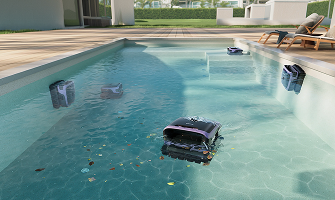
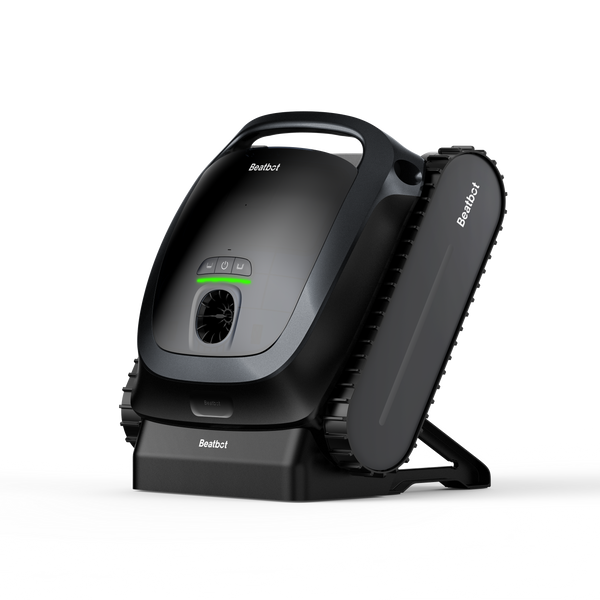
Frequent chemical correction often starts when debris, oils, and fine particles stay in the water too long. Beatbot AquaSense X helps reduce that load with a 22 L debris basket and automatic filter cleaning, and Beatbot Sora 70 supports the same goal with a 150 µm filter designed for daily debris removal. They do not replace proper chemical care, but they can help limit the buildup that leads to more frequent correction.
How to Store Pool Acid Safely
Store pool acid in its original labeled container in a cool, dry, well ventilated area. Keep it away from direct sun, heat, moisture, children, pets, and other pool chemicals.
Muriatic acid needs extra caution because of its fumes. Dry acid has less fume risk, but it still needs to stay sealed and dry. Never store acid next to chlorine, and never mix the two. If a product label says pre-dissolving is required, add the chemical to water, never water to the chemical.
FAQ
Is muriatic acid the same as pool acid?
Usually, yes. In pool care, “pool acid” often means muriatic acid, which is diluted hydrochloric acid used to lower pH and total alkalinity. Dry acid is a different product, usually sodium bisulfate.
How much dry acid equals muriatic acid?
There is no fixed one to one conversion. The right amount depends on product strength, pool size, current pH, and alkalinity. Two products can lower pH by a similar amount and still require very different doses, so always use the label or a reliable pool calculator.
Do I run the pump when adding muriatic acid to the pool?
Yes. The pump should be running so the acid disperses through the water instead of sitting in one concentrated area.
How long after adding muriatic acid can I add chlorine?
Wait until the acid has fully dispersed with the pump running, then follow the chlorine product label. The main rule is to keep acid and chlorine from meeting in concentrated form.
What happens if you add dry acid directly to a pool?
If dry acid lands and sits on a surface before dissolving, it can create a very harsh local concentration. That is why it should be added only as the product label directs, not scattered blindly into the pool.