Most Popular


 Sora Series


 AquaSense Series

 Skimmer & Bundle

 Retail Edition


 Accessories


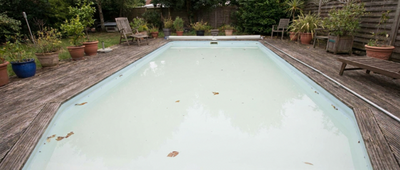
If you're looking at green water, chances are algae took off when sanitizer got low and the weather did the rest. Shock can bring it back when you push chlorine high enough to stop algae in one strong hit, then keep circulation going so the filter can remove what the chlorine killed.
Draining is rarely the move. When shock doesn't work, it usually comes down to one of three misses. The dose was too light, the chlorine didn't spread well, or the filter didn't run long enough.
Expect a normal color change on the way back. Green often turns cloudy blue first, then clears as dead algae and fine debris get captured.
Swim timing is based on your test kit and whether you can see the pool floor, not a countdown timer.
What Turns Pool Water Green
Green pool water is algae growing faster than your sanitizer can keep up with. Low free chlorine is the usual trigger, and warm sunny days speed up growth. Water balance matters too. When pH runs high, chlorine tends to hit softer, so algae can keep moving even if you still read some chlorine on a test.
The shift can happen fast. A pool can look fine, then turn green over a weekend. The good news is most green pools bounce back with the right chlorine shock dose plus long filtration.
It's common to see the water look worse before it looks better. When green turns into cloudy blue, that's often dead algae suspended in the water so the filter can grab it.

Before You Shock
Shock goes further when chlorine isn't fighting leaves, dirt, and slime at the same time. Skim out big debris and brush walls and steps so the algae film lifts into the water.
Keep water moving and make sure the filter is ready for a heavy load. A clogged pump basket, a dirty cartridge, or a sand filter that needs backwashing can slow clearing even when the shock dose is solid.
A quick test of free chlorine and pH before you start can save a lot of back and forth.

How Much Shock to Use for a Green Pool
A practical starting point for granular chlorine shock is 1 lb per 10,000 gallons, then scale up based on how green the water is. Think of it as a rule of thumb, not a fixed rule for every pool.
Quick shortcut Pool gallons ÷ 10,000 equals pounds of granular shock for a standard shock dose
Light green means you can still see the floor clearly. Medium green means the color is obvious and the floor looks hazy. Dark green or very cloudy means you can't see the floor.
Quick Dose Reference for Granular Shock
|
Pool size |
Baseline dose |
Light green |
Medium green |
Dark green or very cloudy |
|
10,000 gallons |
1 lb |
1 to 2 lb |
2 to 3 lb |
3 to 4 lb |
|
20,000 gallons |
2 lb |
2 to 4 lb |
4 to 6 lb |
6 to 8 lb |
|
30,000 gallons |
3 lb |
3 to 6 lb |
6 to 9 lb |
9 to 12 lb |
Use the product label as your final rule. The greener and cloudier the pool is, the more likely you'll need the higher end of the range and a repeat shock after you test again the next day.

Granular vs. Liquid Chlorine Shock
A green pool usually gets shocked with either granular chlorine shock or liquid chlorine. Both can raise chlorine fast enough to stop algae. What changes is what they add to the water and how easy they are to spread evenly.
Granular shock is usually one of these types.
Calcium hypochlorite, often called cal hypo, is a strong algae killer and a common pick for green water. Many cal hypo products list available chlorine around 65 percent or 73 percent. Over time, it adds calcium.
Sodium dichloro-s-triazinetrione, often called dichlor, is stabilized chlorine that raises cyanuric acid, your stabilizer. Many dichlor products list available chlorine around 55 percent or 62 percent. Used often, it can push stabilizer too high.
Trichloro-s-triazinetrione, often called trichlor, is more common as tablets. It runs more acidic and it raises stabilizer, so it's not the usual choice for a green pool shock.
Non-chlorine shock, often labeled MPS, helps oxidize organics and reduce odor, yet it doesn't replace chlorine shock when algae is the problem.
Liquid chlorine is sodium hypochlorite. You'll usually see these strengths.
10 percent is common in pool-grade jugs. 12 percent to 12.5 percent is very common and often sold as liquid pool shock.5 percent to 8.25 percent lines up with many household bleach products.12.5 percent to 15 percent shows up more in commercial or bulk channels.
For shock work, 10 percent or 12 percent to 12.5 percent is usually the easiest to dose. Lower-strength bleach can work, yet you'll be pouring a lot more volume and it's easier to miss the target.

How To Choose Between Granular And Liquid Shock
|
If this sounds like your pool |
Better fit |
Why it helps |
|
You want the simplest pour and fast mixing |
Liquid chlorine |
It disperses quickly and is easy to spread around the pool |
|
Your stabilizer is already high |
Cal hypo or liquid chlorine |
These don't add more stabilizer the way dichlor or trichlor can |
|
You're watching calcium levels |
Liquid chlorine or dichlor |
Cal hypo adds calcium over time |
|
The pool is very green and you want a compact dose |
Cal hypo |
High strength per pound makes it efficient for heavy algae pressure |
|
You need something easy to store and carry |
Granular shock |
A few bags are simpler than multiple jugs |
How to Shock a Green Pool With Granular or Liquid Chlorine
Start with circulation. Turn the pump on before dosing and keep it running so chlorine reaches the whole pool. Many pools clear faster when shock happens at night or early morning since sunlight burns off unstabilized chlorine quickly.
With granular shock, pre-dissolve it. Fill a clean plastic bucket with pool water, add granules to the water, stir until dissolved, then pour slowly around the pool near a return jet so the flow carries it. Rinse the bucket with pool water and pour that in too. After dosing, check the floor. If you see residue sitting in one spot, brush it right away so it doesn't discolor vinyl, fiberglass, or decorative finishes.
With liquid chlorine, pour slowly around the perimeter, or pour slowly in front of a return jet in the deep end so it mixes fast instead of sinking in one area. Keep the pump running and plan on at least 8 hours of circulation. An overnight run is a common choice. Test the next day, then rebalance pH and alkalinity as needed. If you maintain your pool mainly with liquid chlorine, cyanuric acid in a common backyard range like 30 to 50 ppm helps chlorine last longer in sun.
This is concentrated chemical work. Wear gloves, eye protection, long sleeves, and closed-toe shoes. Pour slowly to limit splash. Don't add shock through the skimmer, since concentrated chemicals can sit in the line or equipment and cause damage. Store unused shock in a cool, dry, ventilated place away from anything flammable.
Swimming should follow your test kit. Wait until free chlorine drops back into the safe range shown on your kit, and the water is clear enough to see the pool floor. Many pools need around 24 hours after a heavy shock, and longer when the bloom was severe.
After Shocking, Getting the Pool Clear Again
Shock kills algae. It doesn't remove it. The cloudy stage is usually dead algae and fine particles suspended in the water. The fastest way through that stage is long filtration, brushing, and vacuuming. Keep an eye on baskets and the filter during cleanup, since a loaded filter can slow progress.
This is where a robotic cleaner can really speed things up, since it helps remove what keeps getting stirred back into the water. Once the pool flips from green to cloudy blue, dead algae can settle on the floor, then get kicked up again and again.
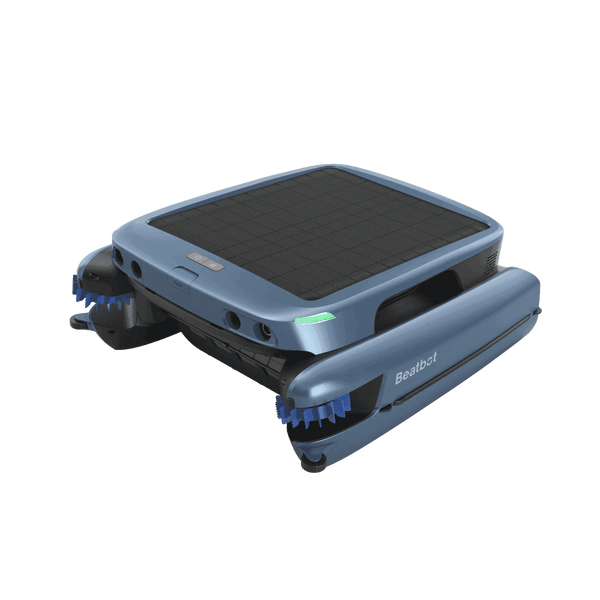
Beatbot AquaSense X is built for that cleanup with 5-in-1 coverage across the water surface, floor, walls, and the waterline, plus dual intakes that pull debris from the surface and the bottom. Its suction flow rate is about 113 gallons per minute (25.7 m3 per hour), and it can run surface skimming up to 8 hours or run floor and wall cleaning up to 5 hours. Its debris setup, with a 5.3-gallon base station tank (20 L) plus a 1.2-gallon onboard bin (4.5 L), helps cut down on how often you stop to empty and restart.
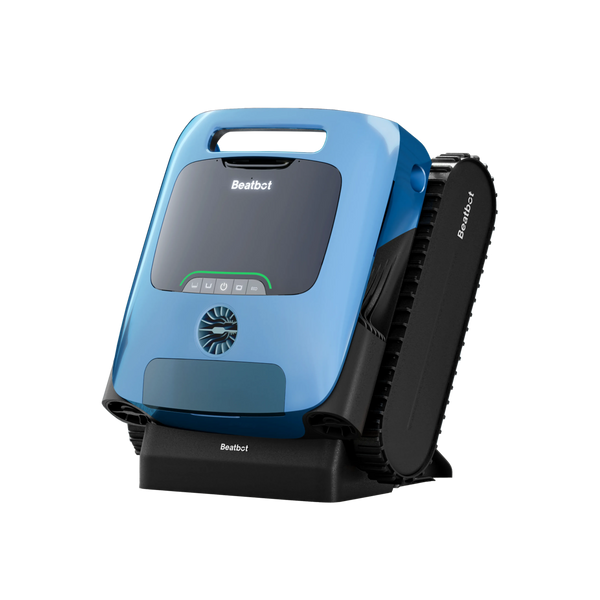
If the green is gone yet the pool stays milky, fine particles are a common reason. AquaSense 2 Ultra adds ClearWater natural clarification that binds algae and tiny particles into larger clumps that a filter can catch more easily. It pairs that with ultra-fine filtration down to 150 microns. Think of it as cleanup help after chlorine has done the kill, then keep circulation running until you can see the floor.
Troubleshooting When the Pool Stays Green
Did chlorine stay high long enough
If the pool is still green the next day, chlorine likely dropped too fast. Retest free chlorine, then shock again if the level is still low and the water is still green.
Did the water mix and filter long enough
Weak circulation and a dirty filter can make a correct dose look useless. Brush the pool, clean baskets, service the filter, then run longer. A green pool often needs an overnight run to get past the cloudy stage.
3.Is stabilizer pushing chlorine into a weak zone
Very high cyanuric acid can make chlorine feel less aggressive against algae. If the pool keeps turning green after repeat shocks, test stabilizer and fix that before you keep adding more chlorine.
FAQ
Why is my pool still green after shocking twice
Most pools stay green when chlorine didn't stay high long enough, circulation time was short, or the filter is dirty. Brush, clean the filter, run the pump longer, then retest and shock again if needed.
Can I put shock in the skimmer
Skip it. Shock in the skimmer can leave strong chemicals sitting in plumbing or equipment and cause damage. Add shock to the pool water with the pump running so it mixes fast.
What happens if I put too much pool shock in my pool
Chlorine can spike high enough to irritate skin and fade liners, suits, and covers. Keep swimmers out, run circulation, and retest until levels return to the safe range on your kit.
Do you add algaecide or shock first
Shock first. Chlorine is the main algae killer for green water. Algaecide fits later as support, after chlorine drops, mainly to reduce the chance of a quick return.
Is pool shock basically bleach
They're closely related. Many pool shocks and bleach rely on chlorine chemistry, yet products vary by form and strength. For dosing, follow the pool product label and your test results, not the name.