


 Flagship

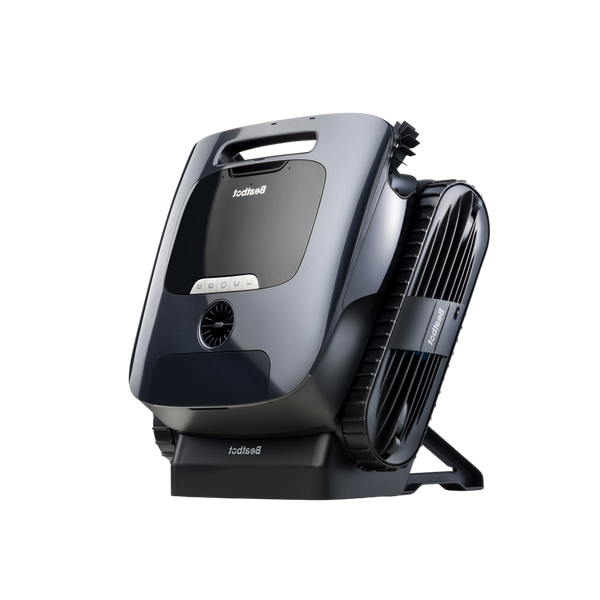

 Sora Series


 AquaSense Series


 Skimmer & Bundle

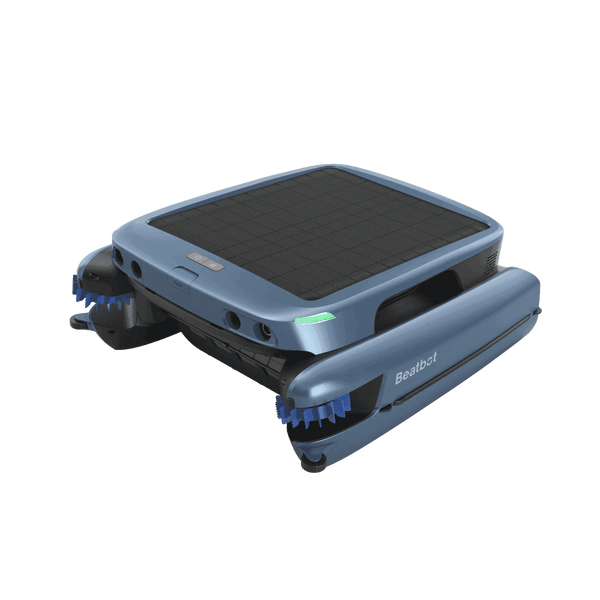
 Retail Edition
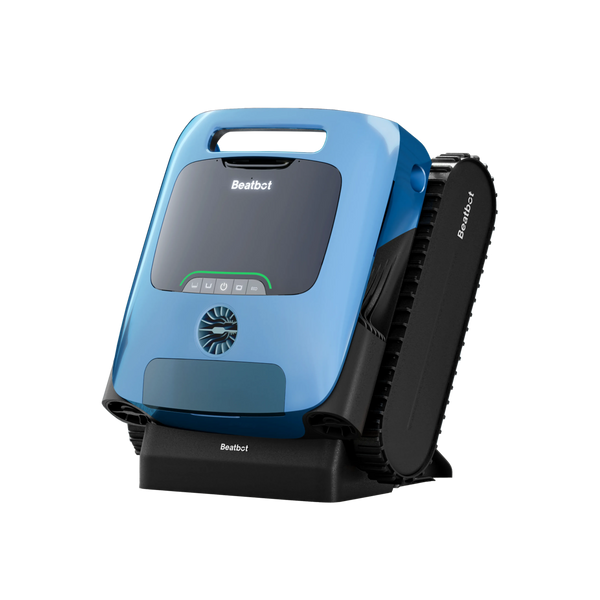


 Accessories



 Extended Warranty


A robot may clean the pool floor well, then lose effectiveness on walls, or leave fine debris behind after repeated cycles.
Through repeated structural evaluations, we found that this inconsistency is rarely caused by insufficient motor power. More often, it comes down to how water moves inside the machine. When water enters from different directions, travels uneven distances, or changes direction repeatedly before reaching the pump and filter, internal losses build up quickly—weakening suction and making filtration uneven.
Beatbot stepped back to rethink the hydraulic structure itself. The goal was no longer to correct uneven flow after it occurs, but to create a layout where water enters the system in a balanced, controlled way from the start. This structural rethink is where the HydroBalance™ approach begins.
Structural Constraints in Conventional Robotic Pool Cleaner Waterflow Systems
Most conventional robotic pool cleaners employ an offset pump layout, with the pump positioned toward one side or one end of the housing. This configuration results in an inherently asymmetric hydraulic system.
In such layouts:
-
Suction inlets are located at different distances from the pump
-
Water paths vary in length and geometry
-
Multiple directional changes occur before water reaches the pump
From a fluid dynamics perspective, these conditions introduce persistent flow resistance and localized turbulence. Portions of incoming water form vortices or recirculation zones, dissipating energy without contributing to filtration.
As a result, the system's challenge is not generating suction, but delivering suction predictably and consistently. Effective negative pressure fluctuates as internal flow conditions change, particularly as the robot transitions between different positions during operation.
Cleaning Performance in a Robotic Pool Cleaner Is Fundamentally a Hydraulic Challenge
Across robotic pool cleaner designs, we consistently see the same pattern: when suction and filtration feel inconsistent, the root cause is usually in the internal water path—not in peak motor output.
Rather than asking how to compensate for uneven flow after it occurs, the design team focused on a more basic question:
Can the hydraulic structure itself prevent imbalance, instead of correcting it downstream?
Answering this required moving away from compensatory pipe routing and internal flow correction features. Those approaches treat turbulence and pressure imbalance as unavoidable side effects. Our objective was to eliminate their primary causes through geometry.
Explore More Beatbot AI Tech (AI 2.0) The intelligent Technology Behind Pool Cleaning Robots
The HydroBalance™ Structure and Its Center Pump Layout
The HydroBalance™ Structure centers the pump within the system and uses that position to define the geometry of the entire water path.
With the pump positioned centrally, all suction inlets sit at nearly the same distance from the pump. This means water doesn't need to be redirected, slowed down, or rebalanced once it enters the system. Instead, it converges naturally along symmetrical paths.
From a structural standpoint, this leads to three immediate changes:
-
Water flow paths become shorter and more consistent
-
Sharp directional changes inside the system are reduced
-
Pressure builds and distributes in a more uniform way
Rather than dealing with turbulence after it appears, we designed the structure so those conditions are far less likely to form in the first place. That's the key difference.
In operation, this shows up as steadier suction behavior and a filtration system that works as a whole. On Sora 70, the same center-pump architecture helps maintain consistent negative pressure as the robot changes orientation, while allowing incoming water to spread more evenly across the filter surface—so filtration performance doesn't depend on localized flow peaks.
What This Structure Changes in Real Cleaning Conditions
Once the hydraulic structure is balanced, the changes show up immediately in how the system behaves during real cleaning.
Simpler and More Direct Internal Water Flow
With the pump placed at the center, water from each suction inlet travels along a similar path length before reaching the pump. Inside the body, there is less redirection, fewer sharp turns, and far fewer areas where water slows down or circulates unnecessarily.
This reduces internal energy loss early in the process. Instead of spending power overcoming internal resistance, more of the motor's output is preserved and carried through the system in a controlled way.
More Stable and Predictable Suction Delivery
That change in water movement directly affects suction.
Because internal flow is more balanced, negative pressure no longer relies on short peaks to overcome uneven resistance. As the robot moves across the pool floor, climbs walls, or changes orientation, suction remains available instead of rising and falling with internal pressure shifts.
Debris pickup becomes less dependent on position or timing. Suction is present when and where it's needed, rather than appearing only at specific moments.
Even Use of the Filter Surface
Filtration behavior changes for the same structural reason.
When water reaches the filter chamber under more even pressure, the filter no longer loads heavily on one side first. Debris distributes across the filter surface instead of concentrating near a single entry area, and the entire filter works at the same time.
This makes fine particle capture more consistent and prevents early loss of effective filtration area caused by localized clogging.
What's important here is that these changes are not managed or corrected after the fact. We did not tune suction behavior separately, and we did not redesign the filter to compensate for uneven flow. All of these effects come directly from balancing the water path itself.
HydroBalance™ Structure shows what happens when the water path is designed correctly from the start. Once the structure is balanced, suction and filtration no longer need to be managed—they simply work.
This is the foundation behind designs like Sora 70. Because the water path is already balanced before it reaches the pump and filter chamber, the suction of Sora 70 stays even instead of pulling debris toward one side. Fine particles and larger debris are carried in smoothly under the same flow and pressure conditions, so everything gets captured more consistently from the start.
With a clean, symmetrical water path, the full filter surface stays active, and localized clogging is far less likely. For the user, the difference is easy to notice: cleaner results, more consistent performance, and less need to step in or make adjustments.


