Hot
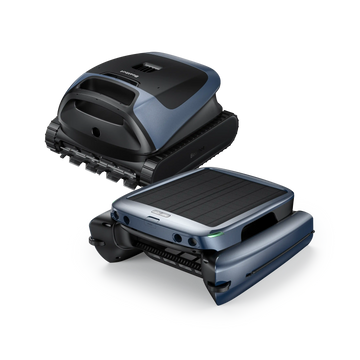
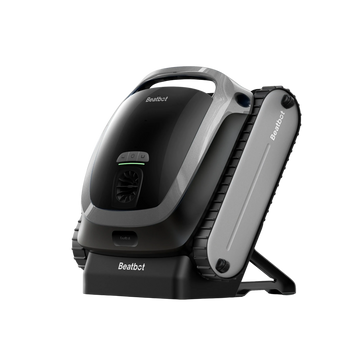
AquaSense 2 Ultra
The World's First AI-Powered 5-in-1 Robotic Pool Cleaner
Learn More

Our Most Advanced Pool Cleaning Innovations
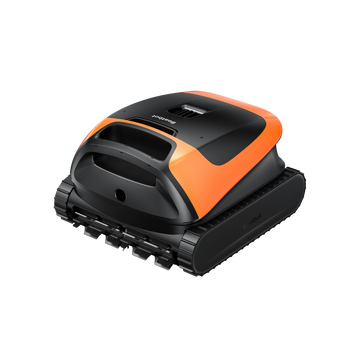
Powerful Superior-Cleaning Performer
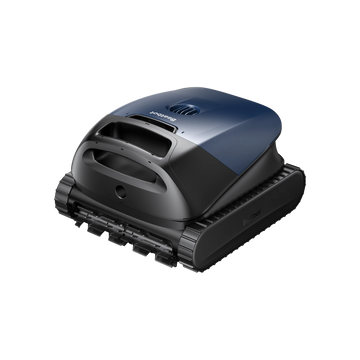
Comprehensive Pool-Coverage Intelligent Cleaning Flagship
Intelligent Surface Cleaning Specialist
Our Most Advanced Pool Cleaning Innovations
The World's First AI-Powered 5-in-1 Robotic Pool Cleaner
Learn More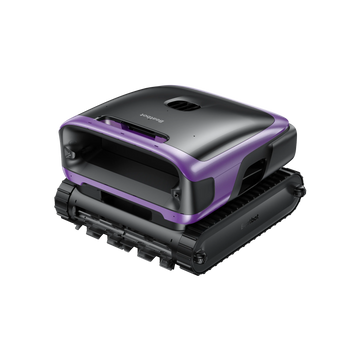
4-in-1 All-Purpose AI High-Efficiency Pool Cleaning Robot
Learn More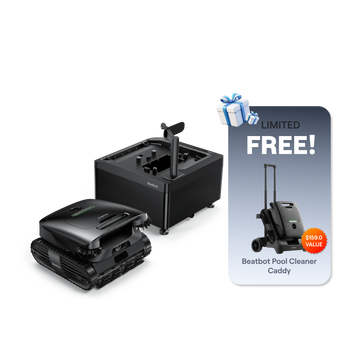
The AI Mastermind of Pool Cleaning with Intelligent Self-Cleaning
Learn MoreComprehensive Pool-Coverage Intelligent Cleaning Flagship
The AI Mastermind of Pool Cleaning with Intelligent Self-Cleaning
Learn MoreThe World's First AI-Powered 5-in-1 Robotic Pool Cleaner
Learn More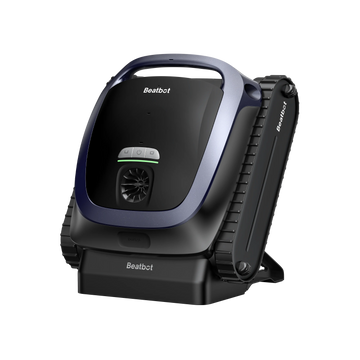
The World's First 3-in-1 Robotic AI Pool Cleaner
Learn MoreAccessories for your Beatbot products
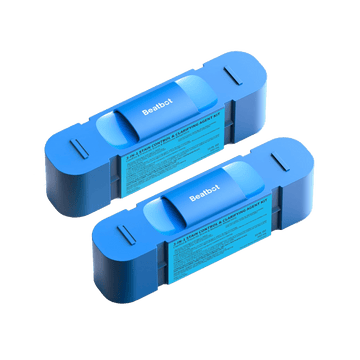
Natural, Skin-Safe & Eco-Conscious: Made from recycled and biodegradable ingredients like crab shells and other c...
Learn More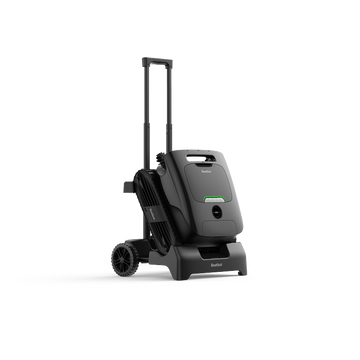
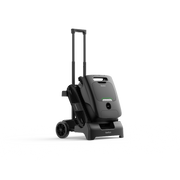
Used for transporting Beatbot main device (except iSkim and iSkim Ultra), reducing the burden of manual lifting. - On...
Learn More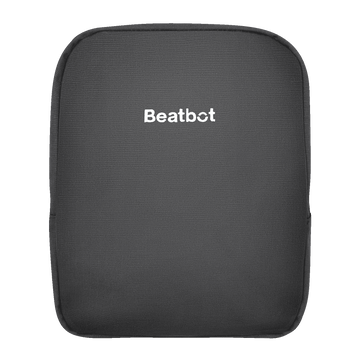
【The Greatest All-Inclusive Weather Protection】This high-quality cover shields your Beatbot robotic pool cleaner from...
Learn More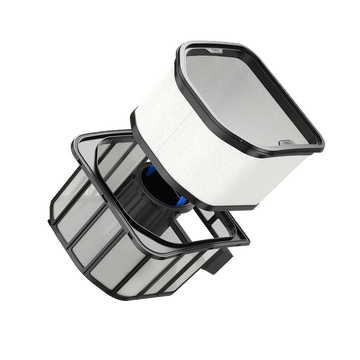
Compatible with Sora 70 only. Not intended for surface cleaning. Designed as a supplement for handling extremely fi...
Learn More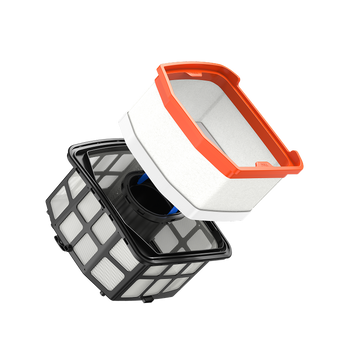
Compatible with Sora 30 only, designed as a supplement for handling extremely fine dust that the original dustbin can...
Learn MoreAccessories for your Beatbot products
Natural, Skin-Safe & Eco-Conscious: Made from recycled and biodegradable ingredients like crab shells and other c...
Learn MoreUsed for transporting Beatbot main device (except iSkim and iSkim Ultra), reducing the burden of manual lifting. - On...
Learn More【The Greatest All-Inclusive Weather Protection】This high-quality cover shields your Beatbot robotic pool cleaner from...
Learn MoreCompatible with Sora 70 only. Not intended for surface cleaning. Designed as a supplement for handling extremely fi...
Learn MoreCompatible with Sora 30 only, designed as a supplement for handling extremely fine dust that the original dustbin can...
Learn MoreSmart Navigation — Ideal for Complex Pools

HybridSense® Pool Mapping with AI Camera
Advanced AI Cruise Debris Detection
5-in-1 Cleaning Including Water Clarification
Full Coverage — Ideal for Standard Pools

Advanced JetPulse™ Water-Surface Cleaning
Complete Pool Coverage: Water-Surface, Shallow & Platforms, Waterline, Wall, Floor
Smart Water-Surface Parking
Ideal for Pools with Heavy Surface Debris

Extra-large 9L Filter Basket
Up to 28 Hours of Runtime
3-Year Warranty

Innovative 3D Pool Cleaning System
24/7 Cleaning with Less Maintenance
Large-Capacity Debris Handling (Total 11L)

Total Pool Care System: Water-Surface, Shallow & Platforms, Water Clarification, Waterline, Wall, Floor
6,800 GPH Unmatched Suction Sora 30, 24/7 Water-Surface Cleaning iSkim
9L Filter Skimmer & 5L Filter Cleaner


AquaSense X is suitable for various shapes and pool materials, including underground and above-ground pools made of concrete, vinyl, fiberglass, ceramic tiles, stainless steel and more.
We recommend a location with level ground, good ventilation, strong Wi-Fi coverage, and proximity to power outlets and a water source. To ensure optimal performance, avoid placing the station in direct sunlight, high temperatures, or high-humidity areas. To allow for proper heat dissipation and piping installation, please maintain a clearance of at least 3.3 feet (1 meter) between the back of the station and the wall.
Yes, AquaSense X is fully capable of cleaning saltwater pools with concentrations up to 5,000 ppm. Rest assured, our research shows that almost all residential saltwater pools stay well within this limit, and we have specifically engineered the AquaSense X to thrive in saltwater environments.
AquaSense X effectively captures debris of all sizes, including leaves, hair, sand, and insects. It features a high-precision filtration system capable of capturing particles as small as 150 microns.
From large organic waste like leaves and twigs to fine inorganic particles like sand and silt, AquaSense X handles it all. Its multi-stage filtration ensures your pool remains crystal clear.
Yes. You can remotely switch modes and control the AquaSense X via the app while the robot is on the water surface.
We offer a standard 3-year warranty for the main product. This includes the drive box with battery, PCB, motor, sensor, plastic parts, and power supply. If your product experiences any faults within 36 months, we will replace it with a brand-new unit. Pre-Order Extended Warranty: Customers who place a deposit during the pre-order period and are among the first 500 to complete the final payment will receive a 4-year warranty instead of the standard 3 years.
We provide a 30-day free return window, starting from the day you receive your product. If you are not fully satisfied with your purchase for any reason, you can return it within this period for a full refund. This policy applies to AquaSense X units purchased directly from beatbot.com.
We cover the shipping costs for free.
The Sora 70 is compatible with swimming pools of all shapes and materials, including both in-ground and above-ground pools made of concrete, vinyl, fiberglass, ceramic tile, stainless steel and more.
The Sora 70 is capable of cleaning saltwater pools, provided that the salt concentration is below 5000 PPM.
The Sora 70 is capable of cleaning infinity pools. First, the device will perform a three-line exploration of the pool along a zigzag path. After the exploration is completed, it will clean along the longest side of the pool. Once the first cleaning pass is finished, the device will rotate 90 degrees and then perform a supplementary cleaning along the longest side again to ensure optimal cleaning results.
The weight of the machine is 23.1 lbs (10.5 kg), and its dimensions are 17.1" x 16.9" x 11.2" (434 mm × 430 mm × 285 mm).
6L.
1. The Sora 70 can effectively capture debris of all sizes, including leaves, hair, sand, insects,acorn and more. It is capable of filtering particles as small as 150 micrometers (μm). 2. The size of the suction inlet is 0.98" × 6.69" when cleaning underwater, and 25 × (0.98" × 6.69") when cleaning the water surface.
0.7ft-11.5ft (0.2m-3.5m)
Yes. You can clean the stairs/steps using either Standard Mode or Pro Mode. Tips: 1. The water depth of the stairs/steps must be greater than 0.7 ft (0.2 m), and both the length and width of the stairs/steps should be no less than 3.3 ft (1 m). 2. For optimal cleaning results, we recommend removing any debris from the stairs/steps before starting the cleaning process.
10000mAh, fully charges in 4.5h with 65W fast charging (110-240V).
The Sora 70 supports 2.4G/5G/Bluetooth.(Wi-Fi range: 130 ft; Bluetooth range: 65 ft)
Users can control the Sora 70 remotely and switch its modes via the App, but this operation is only available when the robot is on the water surface.
AquaSense 2 Ultra is suitable for various shapes and pool materials, including underground and above-ground pools made of concrete, vinyl, fiberglass, ceramic tiles, stainless steels and more.
AquaSense 2 Ultra is capable of cleaning saltwater pools. As long as the concentration of saltwater is required to be below 5000PPM. We have fully considered the saltwater environment in our product design. After our research, almost all household swimming pools will not exceed this limit.
AquaSense 2 Ultra is a home swimming pool cleaner that can clean pools with an area of up to 320 square meters (3,444 square feet) in a single cycle. If your pool is larger than this, it can still be cleaned, but the process may take more than one cycle. When the battery power drops below 15%, the robot will resurface next to the pool edge, you need to recharge it untill it can continue cleaning, and place the robot near the area of the pool that has not been cleaned yet.
AquaSense 2 Ultra comes with a two-layer filter (150μm+250μm) that can effectively capture debris of all sizes, including leaves, hair, sand, insects, and more. It can filter particles as small as 150 micrometers (μm).
AquaSense 2 Ultra is a pool cleaning robot that can work in a depth range of 1.31 to 9.84ft. While most pool cleaning robots cannot clean steps, AquaSense Ultra can clean steps if the steps are wide enough to support cleaning operations and the water depth on the steps is greater than 0.98 ft.If you have concerns or want to reduce the water depth limit, you can provide the parameters of the step size and water depth, and we can ask the completion staff to give you an accurate reply.
AquaSense 2 Ultra will clean corners during edge exploration and planned cleaning.
Up to 10 hours Continuous Runtime for Surface CleaningUp to 5 hours Continuous Runtime for Floor CleaningUp to 4.5 hours Continuous Runtime for Walls + Waterline Cleaning
The battery capacity of the AquaSense 2 Ultra is 13400mAh,but the AquaSense 2 Ultra only take 4.5h to fully charge.
AquaSense 2 Ultra supports Dual Connectivity - 5G/2.4G WiFi or 2.4G Bluetooth
Users can remotely control AquaSense 2 Ultra and switch modes through the app, but only when operating on the water surface
AquaSense 2 Ultra use a Clarifying Agent Kit which is the same as the previous ones.
The battery capacity is 13,400 mAh. Typically, the robot can be fully charged in about 4.5 hours. However, if the temperature is below 77 ℉ (25 °C), the charging time may be longer.
AquaSense 2 Pro comes with a two-layer filter (150μm+250μm) that can effectively capture debris of all sizes, including leaves, hair, sand, insects, and more. It can filter particles as small as 150 micrometers (μm).
AquaSense 2 Pro comes with a two-layer filter (150μm+250μm) that can effectively capture debris of all sizes, including leaves, hair, sand, insects, and more. It can filter particles as small as 150 micrometers (μm).
AquaSense 2 Pro has efficient cleaning capabilities that can effectively remove passing garbage and algae. However, some algae are very slippery and have strong grip, AquaSense 2 Pro may not be able to remove them directly. In this case we suggest spreading algae removal agents in the water first. After the algae are deactivated, use our machine to remove them in conjunction with the swimming pool circulation system.
AquaSense 2 Pro is designed for swimming pools with a working depth in the range of 0.5–3 m and up to 0.4m for shallow end or Baja shelf.
AquaSense 2 Pro can work in a depth range of 0.5 to 3 meters. While most pool cleaning robots cannot clean steps, AquaSense 2 Pro/AquaSense can clean steps if the steps are wide enough to support cleaning operations and the water depth on the steps is greater than 0.4 meters. We will also continue optimizing step-cleaning functions.
AquaSense 2 Pro can draw a pool map in most cases, but if the bottom and walls of your pool are curved, ultrasonic waves may be reflected upwards at the bend and cannot be received by the machine, so there is a possibility that it cannot be drawn in this situation
Users can remotely control the machine through the app, but only on the water surface
AquaSense 2 Pro can remotely return to the shore through the APP during the cleaning the water surface.
The battery capacity is 10000 mAh. Typically, the robot can be fully charged in about 3.5 hours. However, if the temperature is below 77 ℉ (25 °C), the charging time may be longer.
AquaSense 2 is capable of cleaning saltwater pools. As long as the concentration of saltwater is required to be below 5000PPMBut don't worry, we have fully considered the saltwater environment in our product design. After our research, almost all household swimming pools will not exceed this limit.
AquaSense 2 can clean the walls and water lines of infinity pools, but it cannot clean the water surface.
AquaSense 2 comes with a two-layer filter (150μm) that can effectively capture debris of all sizes, including leaves, hair, sand, insects, and more. It can filter particles as small as 150 micrometers (μm).
AquaSense 2 comes with a two-layer filter (150μm) that can effectively capture debris of all sizes, including leaves, hair, sand, insects, and more. It can filter particles as small as 150 micrometers (μm).
AquaSense 2 is a pool cleaning robot that can work in a depth range of 1.31 to 9.84ft. While most pool cleaning robots cannot clean steps, AquaSense 2 can clean steps if the steps are wide enough to support cleaning operations and the water depth on the steps is greater than 0.98 ft.We will also continue to optimize the function of step cleaning, such as reducing the water depth limit, improving cleaning capabilities, etc. If you want to experience it, you only need to upgrade its firmware.If you have concerns, you can provide the parameters of the step size and water depth, and we can ask the completion staff to give you an accurate reply.
0.5m-3m / 1.6ft-9.8ft
AquaSense 2 can switch modes in water or on shore through the app
AquaSense 2 cannot be controlled to return through the APP during the cleaning process
AquaSense 2 can automatically recognize obstacles and avoid them, the obstacle avoidance function of which is the same as AquaSense Pro
Currently, the device's networking WiFi only supports 2.4GHz. Dual-band WiFi that supports both 5GHz and 2.4GHz is also compatible. If your home WiFi is currently set to 5GHz only, you can contact your router service provider to enable 2.4GHz.
The Beatbot iSkim Ultra is suitable for various shapes and pool materials, including underground and above-ground pools made of concrete, vinyl, fiberglass, ceramic tiles, stainless steel, and more.
iSkim Ultra is suitable for use in saltwater pools. Beatbot takes into account the presence of salt and chlorine in the water when designing its products. We use highly corrosion-resistant materials and processes to ensure the durability of our products. Our product can be safely used in saltwater with a concentration not exceeding 5000 ppm and a chlorine content not higher than 4 ppm.
Yes, iSkim Ultra can work well with Infinity pool.
iSkim Ultra is highly effective in removing hair, leaves, branches, flowers, grass, seeds, pollen, and other vegetation, as well as small insects or animals. It can filter debris as small as 380 micrometers (μm).
The iSkim Ultra comes equipped with a magnetic wireless charger. Using this charger, it takes approximately 5 hours to fully charge. Additionally, our device features a solar panel, allowing for convenient solar charging.
Please rest assured that our product has a wide voltage and can adapt to 100V to 240V.
The filter basket's capacity of iSkim Ultra is 9L.
Yes, you can easily maneuver the machine to move the robot forward, backward, left, and right based on your preferences.
A robotic pool cleaner is an automated pool cleaning device that crawls along the bottom and sides of your pool, vacuuming up dirt, dust, and debris. Some advanced models can also purify the water, saving you the trouble of pool maintenance. They are powered by electricity or batteries, so they don't require the same effort as manual cleaning or old-fashioned suction systems. Robotic cleaners like the AquaSense 2 series are precise and easy to use, and they’re the only robotic pool cleaners on the market that clean both the pool floor and water surface, so you can clean your pool with only one machine.
These pool cleaners are moved through the pool's skimmer or suction hose by the suction power of the pool pump to pick up debris such as leaves and dirt. They are quite affordable, costing between $100 and $400, and are ideal for small above-ground or in-ground pools, especially those that don't have a lot of debris. However, they can carry debris into the pool's filter, which requires more frequent cleaning and a little attention.
Pressure cleaners connect to the pool's return nozzle and use water pressure to sweep debris into a special bag. They generally cost between $200 and $800. They are ideal for large pools or yards with lots of trees, leaves, or branches because they won't clog the main filter. Some models require an additional booster pump, which can cost an additional $100 to $300. These cleaners are great for environments with a lot of debris, but they don't offer as many features as robot models.
The best automatic pool cleaners, like the AquaSense 2 series, are high-tech, with built-in filters and brushes that can clean pool floors, walls, and even pipes. Prices range from $500 to $2,000, and they are high-end options with advanced features such as app control and smart navigation. If you want peace of mind and efficiency, these cleaners are definitely worth considering.
If your pool is primarily filled with small particles like pollen or algae, look for a cleaner that has a high-resolution filter (2-5 microns). If you frequently have large debris like leaves and twigs, look for a pressure or robotic cleaner with a large debris bag for hassle-free cleaning and less maintenance.
First look at whether your pool is above or below ground, whether it’s made of vinyl, concrete, or fiberglass, and the size of your pool (30 feet is considered small, 50 feet and up is considered large). If your pool is smooth, a tracked or four-wheel-drive robotic cleaner will be a great choice; if your pool is small and simple, a suction cleaner may be enough.
Look for a cleaner with an easy-to-clean filter basket and durable materials, preferably one that’s compatible with chlorinated pools or salt water. A corded robotic cleaner is powerful, but the cord can get tangled easily; a cordless model is convenient, but may require recharging if your pool is too large.
Excellent pool cleaning robots have strong suction power and some models also use double-layer filtration to easily remove a variety of dirt from tiny algae to large leaves. They can clean floors, walls, and various surfaces, and even handle complex pool shapes such as steps and sundecks, thanks to AI-driven systems equipped with multiple sensors (e.g., cameras, ultrasound, infrared) for precise navigation. Moreover, they offer full-coverage, hands-free cleaning, automatically handling every part of your pool—floors, walls, waterlines, and even the surface—without you lifting a finger.
Top cleaners have UL-certified, IP68-rated waterproof batteries and are certified cyber-safe. Features such as smart recycling simplify operation, and the cleaner floats to the edge of the pool and drains the accumulated water. These features ensure the durability and safety of the cleaners in various pool environments.
Top models use natural clarifiers (such as those derived from recycled materials) to reduce dependence on harsh chemicals and achieve sustainable clarity.
Some leading models offer app-based timer control, mode switching and status monitoring, and some models also provide 2D cleaning path maps.
These robots often come with a robust three-year product warranty for quality assurance, giving you peace of mind and ensuring long-term reliability in all kinds of pool environments.