Most Popular


 Sora Series


 AquaSense Series

 Skimmer & Bundle

 Retail Edition


 Accessories


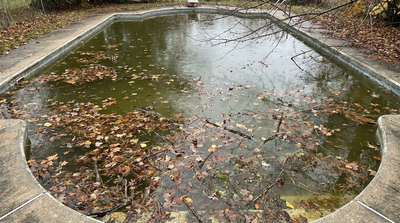
Green pool water is maddening. It can look like it showed up overnight. Most times, it didn't. A pool turns green after something shifts in the water, then the color makes that change obvious. Green water almost always comes from one of two sources.
An algae bloom that colors the water, or metals like copper or iron tinting the water. Water balance issues like high pH or too much stabilizer can make sanitizer hit softer, and weak circulation can let problems build in dead zones.
Green Pool Water Usually Means One of Two Things
Most green pool water points to algae in the water or metal tint in the water, and the quickest clue is clarity. Cloudy green usually means algae. Green that stays clear and looks almost “dyed” often points to metals or a chemistry shift that brings out metal color.
Algae Problem
Algae is the most common reason a pool goes green. It's a tiny plant-like organism that multiplies fast once sanitizer stops holding it back. Green algae shows up in a few ways.
Free-floating cells are too small to see one by one, yet enough of them can turn the whole pool green or yellow-green. When algae starts on walls, steps, and corners, it can break loose as clumps or fragments that drift through the water.
Over time, algae and bacteria can form a slippery biofilm on surfaces. Pieces of that film can shed into the water and leave a dull green haze. Organic debris like leaf dust, soil, pollen, and insect bits can feed the bloom and deepen the color.
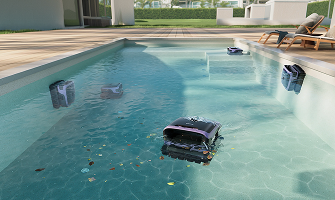
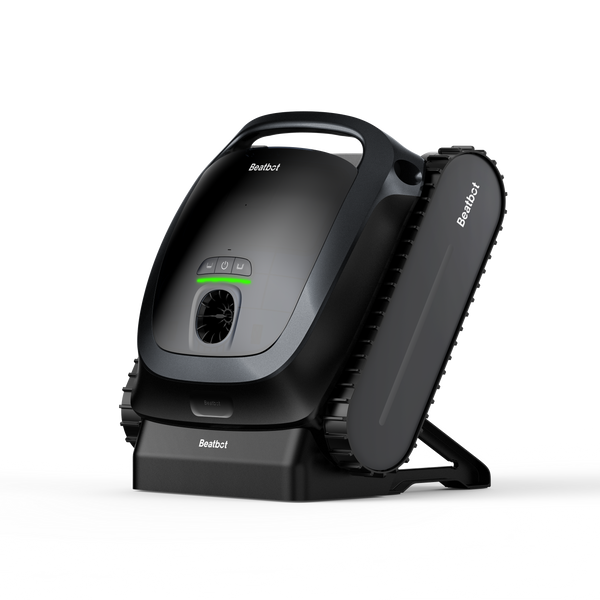
That physical load is where a Beatbot robotic pool cleaner can make a real difference. During an algae bloom, the water holds tiny algae cells, slick biofilm residue, and fine organics that keep chewing through free chlorine.
When that material stays in the pool, chlorine ends up oxidizing debris instead of keeping algae in check. A high-flow cleaner helps pull that load out faster.
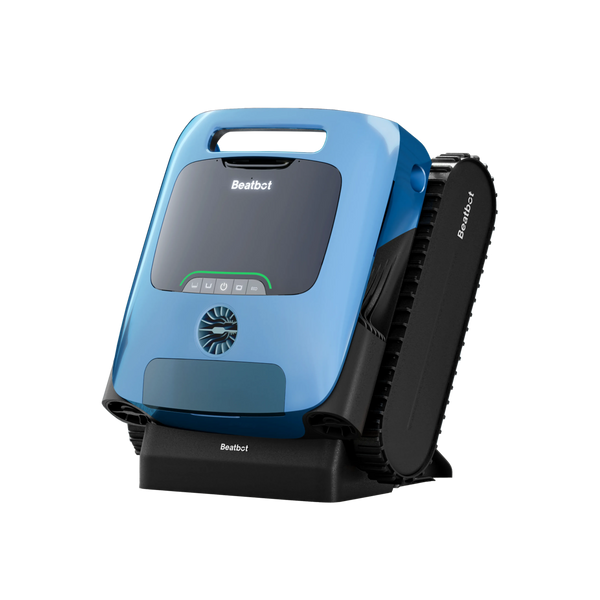
Beatbot AquaSense X self-cleaning robotic pool cleaner is rated for up to 25.7 m³ per hour of suction flow, which helps remove suspended algae fragments and fine debris so your filtration can catch up. Water chemistry still does the killing, yet lowering the physical load makes it easier for chlorine to regain control.
Metal Problem
Metals can turn a pool green even when the water still looks clear. Copper and iron can exist in water in a dissolved form you can't see. Then a chemistry change, like adding sanitizer or shifting pH, can bring out color or create extremely fine particles that tint the water green or yellow-green.
Two patterns show up a lot.If the metal stays mostly dissolved, the pool can look clear but green-tinted, like someone added a drop of dye. If the metal forms very fine particles, the water can look a bit hazy or “smoky” on top of the green tint.
Green Pool Water Starts With Algae
Algae is always around in the environment. What changes is your pool's ability to keep it suppressed. Once algae hits exponential growth, it feels sudden, yet the build-up has been in motion.
The biggest trigger is not “did you add chlorine.” It's whether you kept enough effective free chlorine in the water to hold algae down. A test can show free chlorine present, and algae can still win if chlorine gets neutralized fast, tied up by stabilizer, or dulled by high pH.
Heat and strong sun speed up the problem on both sides. Warm water and sunlight help algae reproduce faster, and strong UV can burn off chlorine fast in outdoor pools. That combo is why green water shows up so often in hot, high-UV regions.
In the US, that risk runs high across the Sun Belt and in high-UV Southwest desert states. Places like Florida, Texas, and much of the Gulf Coast run long swim seasons with strong sun, so chlorine demand stays high for months.

(Source: United States Enviromental Protection Agency)
Storms can flip a pool from “fine” to “trouble” in a single afternoon. After heavy rain or wind, your pool may get a sudden dump of organics like dust, leaves, grass clippings, insects, and pollen. That debris feeds algae and burns through chlorine at the same time. When the sun comes back out, the pool may be set up for a fast bloom.
Here's how it tends to play out across the US.
|
Region Pattern |
What Pushes Pools Toward Green |
Common Timing |
|
South and Southeast coastal |
Long heat plus strong sun, then storm debris loads |
Summer, with the busiest storm stretch often late summer into early fall |
|
Gulf Coast |
Heat, humidity, frequent heavy rain events, wind-blown organics |
Summer into fall |
|
Southwest deserts |
High UV and heat, plus fast summer thunderstorm events that bring dust and debris |
Monsoon builds in June, peaks mid-summer, fades toward September |
|
Great Plains and Midwest |
Spring and early summer storm systems that dump debris and spike chlorine demand |
Spring into early summer |
In those high-sun or high-storm windows, cleaning frequency matters. Skimming and removing debris fast keeps it from breaking down into fine organics that keep feeding the water. That's where a robotic pool cleaner can take pressure off your routine.
In heavy leaf or storm-debris conditions, a larger debris capacity helps capture more material before it turns into chlorine demand, and surface cleaning helps pull out what would keep drifting back into corners.
If your pool gets hammered by storms, nonstop surface fallout, or a mix of both, the right cleaner is the one that matches what keeps landing in the water.
For storm season pools that get hit with leaves, grit, and blown-in organics, Beatbot AquaSense X is built for scale. It is rated to cover up to 3,875 sq ft per cycle and pulls up to 25.7 m³ of water per hour through its suction flow. That reach and throughput help clear heavy debris sooner, before it breaks down and spikes chlorine demand. Smart Debris Management and a 20 L base station reservoir mean fewer times you have to empty the robot after a messy day.
Beatbot AquaSense 2 Ultra pool vacuum robot takes the all-zones route with 5-in-1 cleaning. It skims the surface, scrubs the waterline, cleans walls, cleans the floor, and supports water clarification. ClearWater natural clarification helps fine debris and algae fragments clump, making them easier for filtration to catch.
Some pools fight a different battle, floating grit, pollen, and leaf dust that keeps circling back after wind or rain.
Beatbot Sora 70 pool vacuum robot leans into surface cleanup with JetPulse, a jet assisted surface cleaning feature that helps push and corral debris toward the intake, paired with suction rated up to 6,800 GPH. Keeping that top layer clean cuts the organics that would otherwise sink, break down, and start feeding green water.
Why Chlorine Sometimes Doesn't Work
When chlorine “doesn't work,” one of two things is usually going on. The chlorine isn't staying in the water long enough to keep up, or the chlorine is present on paper yet weaker in real use.
Sunlight Burns It Off Faster Than You Think
Outdoor pools in strong sun can lose chlorine quickly to UV breakdown. You can add chlorine in the morning and see a big drop by afternoon, especially during high-UV stretches.
Stabilizer helps protect chlorine from sunlight, with a tradeoff if it climbs too far. More on that below.
Organics Use It Up
Chlorine does two jobs at once. It sanitizes, and it oxidizes organic contamination. Leaves, dust, pollen, sweat, sunscreen, insects, and rain-washed dirt all consume chlorine. When the pool is dirty, chlorine spends its time “cleaning” the mess, and there may not be enough left doing the algae-control work you expected.
High Ph Makes Chlorine Slower
Pool chlorine in water exists in two main forms that shift with pH. One form does most of the algae-killing work.
-
HOCl, hypochlorous acid, does the heavy lifting against algae
-
OCl⁻, hypochlorite ion, hits much softer
As pH rises, the balance shifts toward the weaker form. That means you can test a decent free chlorine number and still struggle, since the test counts both forms. It can feel backwards. Chlorine shows up on the test, yet algae keeps gaining ground.
High Cya Can Hold Chlorine Back
Chlorine tablets are a common way to maintain sanitizer, and a key detail gets missed. Many tabs add stabilizer as part of the product. Over time, stabilizer can pile up.
CYA, cyanuric acid, protects chlorine from sunlight, so chlorine lasts longer outdoors. The catch is that too much CYA reduces chlorine activity, like chlorine is partially locked up. Your chlorine reading can look fine, yet the active portion that fights algae can be lower than you expect, so the pool can still turn green.
Why High pH Makes Green Water Worse
High pH makes green water more likely and tougher to clear, since it weakens chlorine's algae-killing power and can push metals to show color more readily.
The frustrating part is that pH can drift up for everyday reasons.
Topping off water is one of the big ones. Evaporation, backwashing, leak refill, or seasonal fill-ups can add a lot of fresh water. In many areas, tap water trends alkaline with higher alkalinity, which nudges pool pH upward.
Hard water regions add a second push. Hard water carries higher mineral content, and it often comes with higher alkalinity. Alkalinity acts like a buffer that resists dropping, so pH can sit high more easily and climb more easily once it starts moving.
Aeration can raise pH too, even with no chemicals added. Pool water holds dissolved carbon dioxide. When you drive a lot of air-water mixing, CO2 leaves the water and the water becomes less acidic, so pH rises.
This is common with features that churn the surface, fountains, waterfalls, spillovers, spa jets, bubblers, and return jets aimed at the surface that keep the water rolling.
Once pH trends high, chlorine gets less sharp at the job that keeps algae from taking hold. If metals are present, high pH can be part of the chemistry shift that makes the water look green even if clarity stays decent.
Low Flow Areas Invite Algae
Algae usually starts where water barely moves. In low-flow zones, sanitizer reaches slower, debris sits longer, and biofilm gets time to develop. Common dead spots are steps, shallow corners, edges that returns don't hit, behind ladders, and around handrails.
A common misconception is that a running pump guarantees good circulation. If return flow is weak, jets point the wrong direction, run time is short, or a filter is loaded up, the pool can have circulation on paper yet still leave pockets of stagnant water where algae can settle in.
Why Pools Turn Green Overnight
An overnight green shift is usually a fast algae bloom triggered by a sudden drop in effective sanitizer, plus conditions that help algae multiply fast. Metal tint is a smaller slice of cases, and it can mimic the look.
|
What Lkely Happened |
Can You Swim |
What to do Right Away |
|
Effective chlorine fell behind fast, from heavy contamination or chemistry that slowed chlorine down |
If the water is green and cloudy, you can't see the bottom, surfaces feel slick, or there's a strong smell or irritation, stay out |
Get sanitizer back to an effective level and keep circulation running so water doesn't sit in dead zones |
|
A storm dumped organics, feeding algae and consuming chlorine at the same time |
Treat it like an algae situation if the water looks dull or hazy |
Remove debris, keep filtration moving, and brush the high-risk areas like steps, shallow corners, and behind ladders |
|
Circulation or filtration wasn't keeping up, so a small problem spread from a corner into the whole pool |
If you can't see the bottom, treat it as unsafe |
Keep the system running and address the dead-spot surfaces so attached growth breaks loose and can be filtered out |
|
Clear green tint with decent visibility, more like dyed water, can point to metals showing color |
Swimming decisions still come back to water test results and comfort, but clear green leans away from an active algae bloom |
Quick check for the pattern. Green and cloudy points to algae. Green but clear points to metal tint or chemistry-driven color |
The fastest first check is the one you can do with your eyes. Green and cloudy is algae until proven otherwise. Green but clear is often metals or a chemistry shift that makes metals show color.
Beatbot Robotic Pool Cleaner Helps Reduce Green Pool Water
A pool turns green when algae gains momentum, metals show color, or water balance and circulation make either issue easier to show up. The fix is not a single product. It's keeping sanitizer effective, keeping pH in range, and keeping water moving through filtration so dead zones don't become algae nurseries.
A pool turns green when algae gets a head start or metals tint the water. The usual trigger looks simple, sanitizer falls behind after heavy debris, pH drifts high, or circulation leaves quiet pockets where growth takes hold.
Getting back to clear water comes down to three basics. Keep chlorine effective, keep pH in range, keep water moving through filtration.
Beatbot fits into that routine on the physical side. Early algae often begins as a thin film on steps, corners, and the waterline, then it breaks loose into a fine haze that keeps chewing through free chlorine.
By brushing and vacuuming those spots and pulling out leaves, pollen, and grit before they break down, you cut the load chlorine has to burn through day after day. That's the part most pools lose during a messy week.
Beatbot's newer cleaners push that idea further with smarter coverage and more complete cleanup.
AquaSense 2 Ultra and AquaSense X robotic pool vacuum use AI to guide their cleaning and both deliver 5-in-1 cleaning that skims the surface, scrubs the waterline, cleans walls, cleans the floor, and supports water clarification.
For pools where the surface is the constant problem after wind or rain, Sora 70 adds JetPulse, a jet assisted surface cleaning feature, to keep floating debris moving toward pickup instead of drifting back to the edges.
The goal stays simple. Keep the pool clean enough that chlorine can focus on sanitation instead of chasing a steady stream of organics.
FAQ
Why is my pool green even though chlorine reads high?
It can happen when chlorine is less effective, not absent. High pH shifts chlorine into a weaker form, and high stabilizer can reduce the active portion that fights algae. A dirty pool can burn through chlorine fast.
Why did my pool turn green after I shocked it?
Shock can oxidize dissolved metals and tint the water green even if it stays clear. It can break up algae into fine particles that hang in the water until filtration removes them.
Can a saltwater pool turn green?
Yes. A generator makes chlorine gradually, so heat, storms, or heavy debris can outpace it. Check free chlorine against stabilizer, keep pH in range, adjust run time, and clean the cell if output looks low.
Do phosphate removers fix a green pool?
Not quickly. Lower phosphates can slow future growth, and it won't kill algae that is already blooming. Clear the bloom with sanitizer, brushing, and filtration first, then use phosphate control as prevention.