Most Popular


 Sora Series


 AquaSense Series

 Skimmer & Bundle

 Retail Edition


 Accessories


If you're deciding between a salt water pool vs chlorine, you're really deciding what kind of upkeep you want. Both systems keep water clear and safe when they're maintained. The difference is how chlorine gets into the water, how hands-on you want to be week to week, and what your equipment needs to handle over time.
Saltwater pools make chlorine from salt through a saltwater chlorine generator, so you buy fewer chlorine products. Traditional chlorine pools rely on adding tablets or liquid chlorine on a regular basis. Upfront cost, replacement parts, and your local climate can all push the choice one way or the other.
What Is a Saltwater Pool?
A saltwater pool is still a chlorine pool. The key difference is where the chlorine comes from.
Instead of adding chlorine products, a saltwater system uses a saltwater chlorine generator, often called a salt cell or SWG. You add plain sodium chloride to the water, then the cell uses electricity to convert a small amount of that salt into chlorine. In the water, that chlorine becomes hypochlorous acid, the active sanitizer that does the disinfecting in any pool.
The salt level is far below ocean water. Most pools run roughly in the 2,500 to 4,000 parts per million range, so the water usually doesn't taste salty. Salt doesn't evaporate, but it leaves when water leaves. Splash-out, draining, backwashing, and heavy rain overflow can all lower salinity, so salt testing still matters.
One thing that surprises new saltwater owners is pH. The electrolysis process can push pH upward over time, so saltwater pools often need steadier pH attention than people expect.
Saltwater vs. Chlorine Pools: Which One Should You Choose?
If you want the quick answer, use this: If you care most about a steadier day-to-day feel and fewer chemical add-ins, saltwater usually fits better. If you care most about lower upfront cost and simpler equipment, a traditional chlorine pool usually fits better.
Both pool types can look great and stay sanitary. The tradeoffs show up in cost, the way you maintain the water, and the wear and tear on equipment.

Upfront vs Ongoing Cost
Cost is where most people get stuck, so it helps to separate start-up cost from ownership cost. A saltwater pool usually costs more up front since you're buying and installing a chlorine generator.
Over time, you may spend less on chlorine products, but you still pay for salt, balancing chemicals, and eventually a replacement cell. A chlorine pool tends to cost less to start, then you keep buying chlorine products month after month, especially in peak swim season.
The budget ranges below focus on converting an existing chlorine pool to saltwater. New builds swing a lot based on design choices and site work, so they don't fit neatly in a simple salt vs chlorine price table.
|
Cost area (typical U.S. ranges) |
Saltwater pool |
Chlorine pool |
|
Upfront equipment + install (conversion) |
$750–$1,750 is a common range, with broader ranges from $500 up to about $3,200 depending on pool size and setup |
$0 if you stay chlorine (no conversion equipment) |
|
Salt to reach target level (first fill) |
About $50–$250 in salt (depends on pool volume) |
$0 |
|
Ongoing chemicals (DIY, chemicals only) |
Salt top-ups often land around $100–$400/year, plus normal balancing chemicals |
Many pool owners spend about $175–$750/year on chemicals (chlorine + balancing) |
|
Salt cell replacement |
Commonly $700–$1,100 when it's time to replace the generator cell; many cells last around 3–7 years depending on water balance and use |
Not applicable |
Maintenance Style
Maintenance feels different even when you're using the same test kit. With saltwater, you set the SWG output and adjust when weather, sun, or swimmer load changes. With chlorine, you add tablets or liquid regularly and correct levels when storms, heat, or heavy use knock things off balance.
No matter which system you choose, the same water checks still matter. You're watching free chlorine, pH, total alkalinity, stabilizer (CYA) for outdoor pools, and calcium hardness. Saltwater pools often need closer pH attention since pH can drift upward faster. Chlorine pools can swing more when dosing isn't steady.
Water Feel and Smell
Many swimmers say saltwater feels softer and less sharp on the eyes, and the pool can smell lighter when the water is balanced. A traditional chlorine pool can feel just as comfortable when chemistry stays stable.
That sharp pool smell most people blame on chlorine usually comes from chloramines and water that's out of balance, not from clean free chlorine at the right level
Corrosion and Equipment Risk
Saltwater deserves a realistic look at corrosion. Salt makes water more conductive, which can speed up electrochemical corrosion on metals. Chloride ions are rough on some stainless steels and aluminum, especially around welds and tight seams.
Risk climbs fast when salinity runs high, pH stays low for long stretches, the water keeps swinging, chloramines and dissolved solids build up, or bonding and grounding are off. Coastal air adds another layer since salty air already stresses metal.
The parts that tend to show issues first are handrails, ladders, screws, light hardware, metal jets, and heater heat exchangers when materials aren't matched to salt use.
This doesn't mean a saltwater pool automatically ruins equipment. It means you want salt-rated parts, steady water balance, and proper electrical work. Near the ocean, corrosion-resistant hardware (many owners aim for 316 stainless on exposed metal) and solid bonding and grounding are worth the attention.
Best Pool Type for Different US Regions

Your region can matter as much as your pool type. Climate affects how fast sanitizer is used, how often water gets diluted, and how hard your equipment has to work.
In hot, sunny places like Florida, South Texas, Arizona, Nevada, and Southern California, sanitizer demand is high and water can swing fast. A saltwater system can feel easier in these regions since it generates small amounts of chlorine every day and smooths out peaks and dips.
Outdoor pools in strong sun still need stabilizer since UV burns through chlorine quickly when CYA is too low. A salt system isn't hands-off, but steady generation can make the routine calmer.
In humid, rainy regions like parts of the Southeast, the Gulf Coast, and the Pacific Northwest, storms and frequent top-offs can change your water more often. Rain dilutes saltwater pools and can drag in debris.
Rain can dilute any pool, so post-storm testing matters either way. With saltwater, you may see salinity drift after big rain. With chlorine, you may see chlorine drop and pH shift. The workload rises with weather, not with the label on the pool.
In cold winter regions like the Northeast, the Upper Midwest, and mountain areas, many homes have a shorter swim season and a bigger focus on closing and opening. A traditional chlorine pool can be attractive here since the equipment is simpler and you may not be running a generator for long stretches.
Saltwater can work, yet many salt cells slow down in cold water and some stop producing chlorine around 60°F. Early spring and late fall often mean you'll lean more on manual chlorine support even in salt pools.
In hard water areas, scaling is the real fight. When calcium hardness and pH run high, scale can form on pool surfaces and inside equipment. Salt cells are sensitive to scale buildup since scale on the plates cuts chlorine output.
This doesn't rule out saltwater in hard water regions. It means you want steady balance and periodic salt cell checks. If you want fewer equipment-focused chores, a standard chlorine setup can feel simpler. If you don't mind routine cell care, saltwater still works well.
Coastal regions deserve their own callout. Salty air speeds corrosion on metal furniture, rails, and equipment even before pool water enters the picture. If you choose saltwater near the coast, material choices and electrical bonding and grounding matter more. Keep salinity in the target range, avoid letting pH sit low for long periods, and pick hardware made for salt exposure.
|
Climate pattern |
What tends to change |
What you may notice |
|
Hot + strong sun |
UV breaks down sanitizer faster |
Bigger day-to-day swings in chlorine demand |
|
Humid + rainy |
Rain dilutes water and brings debris |
More post-storm testing and cleanup |
|
Cold winters / short season |
Cold water can reduce salt cell output |
Shoulder seasons may need manual chlorine support |
|
Hard water |
Minerals raise scaling risk |
More attention to calcium scale, especially on cells |
|
Coastal |
Salty air stresses metal hardware |
Corrosion risk rises without good materials and bonding |
Saltwater for Indoor vs Outdoor Pools
A saltwater pool doesn't mean zero chlorine. It means the pool makes chlorine on-site, so indoor vs outdoor comes down to what the environment does to your water and your air.
For outdoor saltwater pools, the big pressures are sun and constant debris. UV light burns through sanitizer fast, and leaves, dust, pollen, and insects keep adding organic load. A salt system helps by generating chlorine steadily, yet it can't keep up if the pool stays dirty or filtration is weak. Outdoor pools do best when testing is consistent and stabilizer stays in a healthy range.
Salt level can drift after rain, splash-out, and refills, so the number on day one won't be the number all season. Total alkalinity matters here too since it buffers pH and helps keep pH from bouncing around when weather and refill water keep changing the mix. A pool cover can reduce evaporation and keep debris out, which lowers the sanitizer demand you're trying to manage.
For indoor saltwater pools, air quality runs the show. Indoor pools can build up sharp odor and irritation when chloramines collect in the air and ventilation isn't strong enough. Saltwater can feel softer to some swimmers, but it won't fix poor airflow.
Solid ventilation and a real dehumidification plan often matter more than salt vs chlorine for indoor comfort. Habits like rinsing off before swimming and keeping the water balanced help keep chloramines down, which makes the room easier to be in.
Indoor pools add another layer for materials and electrical systems. High humidity is rough on metal and electronics. Saltwater raises conductivity, so sloppy bonding or grounding can raise the risk of corrosion and electrical issues. A salt indoor pool can be great, but it asks for extra care on materials, ventilation, and electrical work.
Robotic Pool Cleaner For Saltwater Pools
A robot pool vacuum is one of the easiest ways to keep a saltwater pool stable since it removes debris before it burns through your chlorine and feeds chloramine formation. A generator can keep sanitizer levels steadier, but it can't pull out leaves, sand, and fine film from surfaces on its own.
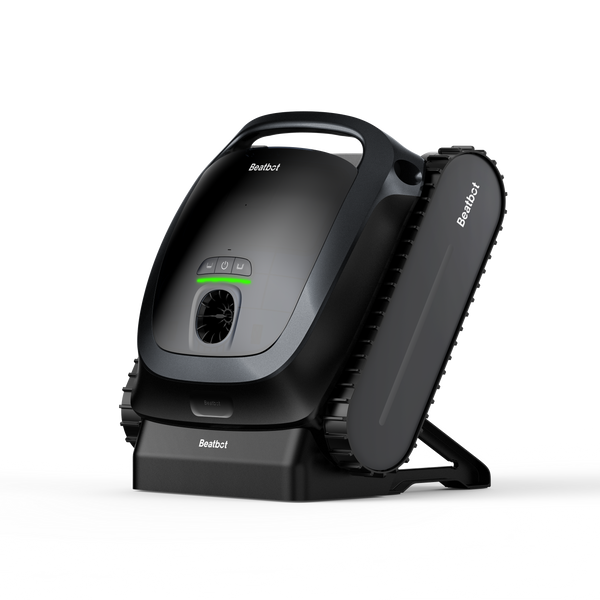
Beatbot AquaSense X self-cleaning robotic pool cleaner is the big-capacity, low-touch pick for pool owners who hate constant emptying and rinsing. Its self-cleaning station can rinse the filter and empty the debris bin in about three minutes, and the station's 22L capacity is built to handle heavy debris loads (up to about 3,000 leaves) so you can go longer between cleanouts.
On top of that, the AI camera and sensor system is built to map the pool, spot obstacles, and even target specific debris areas when you want a faster cleanup. The station itself uses corrosion-resistant materials designed for pool chemicals and saltwater, which matters when the gear lives outdoors year-round.
Beatbot Sora 70 pool vacuum robot is the strong-value choice if your pool has shallow zones that stay dirty. Its four-in-one approach covers the parts owners notice most: water surface pickup, waterline scrubbing, wall cleaning, and floor cleaning. It also pushes farther into shallow-water and platform zones down to about 8 inches.
That shallow reach can be the difference between a ledge that always looks dusty and a ledge that stays clean without a brush in your hand. It also leans into surface work with a JetPulse system that actively pulls floating debris inward, so you spend less time chasing leaves with a net.
Beatbot AquaSense 2 Ultra automatic pool cleaner fits the one-robot buyer who wants AI help and broad coverage. It's built around AI pool mapping and debris detection, then pairs that with a 5-in-1 cleaning approach that includes water clarification in the same run.
It can operate in water as shallow as about 14 inches and clean platforms and large stairs, which is useful for modern pool designs with multiple levels and wide ledges.
A robot doesn't change the saltwater vs chlorine decision. It changes how much work you do after you decide. Less debris in the water usually means steadier sanitizer levels, fewer ugly swings after storms, and a pool that stays guest-ready with less manual effort.
FAQs
How sanitary are salt water pools?
Saltwater pools sanitize with chlorine made on-site. If free chlorine stays in range and the filter runs, they're as sanitary as any chlorine pool.
Does rain lower salt in the pool?
Heavy rain and overflow dilute salt. After big storms or lots of refill water, recheck salinity and bring it back to the generator's target range.
Do saltwater pools attract bugs?
Bugs show up for water, lights, and nearby plants. Salt doesn't draw them in. Keeping the surface clean cuts down what hangs around.
Why do hotels have salt water pools?
Many hotels like steady chlorine production and the softer feel guests expect. It can reduce daily chemical handling, but the system still needs regular testing.
What is the most low maintenance pool?
No pool is hands-off. A salt system paired with a solid cover and a robotic cleaner usually means fewer manual chemical add-ins and less skimming.